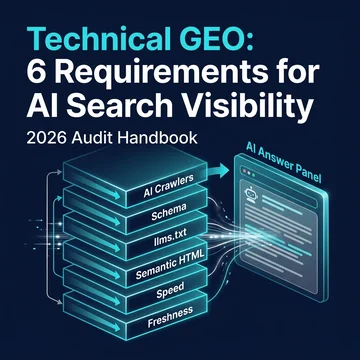
Technical GEO: 6 Requirements for AI Search Visibility in 2026
The six technical requirements that determine whether AI search engines can crawl, parse, trust, and cite your content—plus a 5-step audit workflow and checklists for each layer.


Tag
Start here
The six technical requirements that determine whether AI search engines can crawl, parse, trust, and cite your content—plus a 5-step audit workflow and checklists for each layer.
Tag

A2AO, or Agent-to-Agent Optimization, is a practical way to prepare content, evidence, and service information for AI agents that retrieve, compare, and act. Start with the four layers that make a brand easier to retrieve and safer to select.
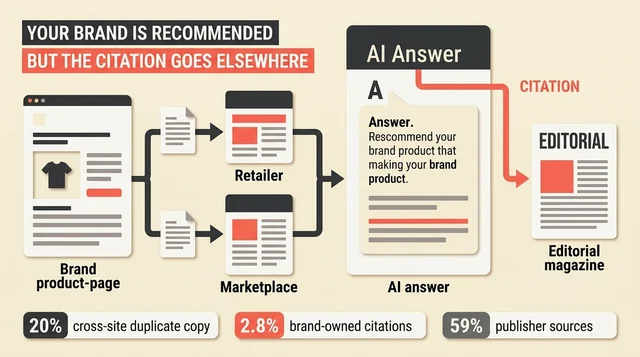
A study of 1,000 Shopify stores found that brands can appear in AI buying answers while the citation and click go to a publisher, retailer, or marketplace. The deeper problem is not simply thin copy. It is weak attribution when the same product description appears everywhere.
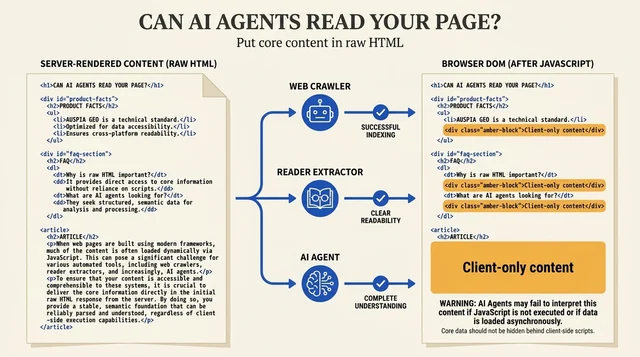
If core facts appear only after JavaScript runs, AI agents may never retrieve them. Use a raw HTML versus rendered DOM audit to make GEO content accessible and citable.

Learn how to refresh existing pages for ChatGPT GEO by improving answer blocks, entity clarity, prompt coverage, evidence, comparison context, freshness, and structure.

Claude GEO is the work of making your brand, pages, and evidence easy for Claude to understand, retrieve, summarize, and cite.
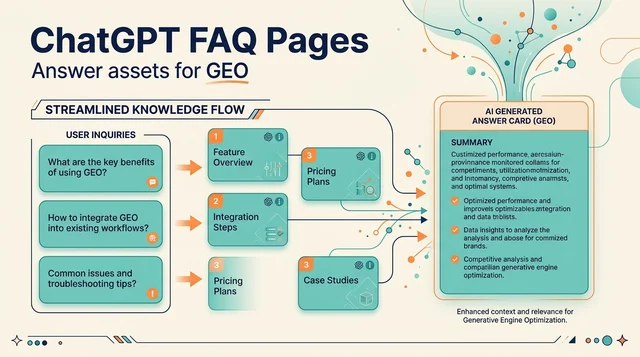
Learn how to build FAQ pages for ChatGPT GEO with real question clusters, standalone answers, proof links, schema-safe structure, and AI-ready answer assets.
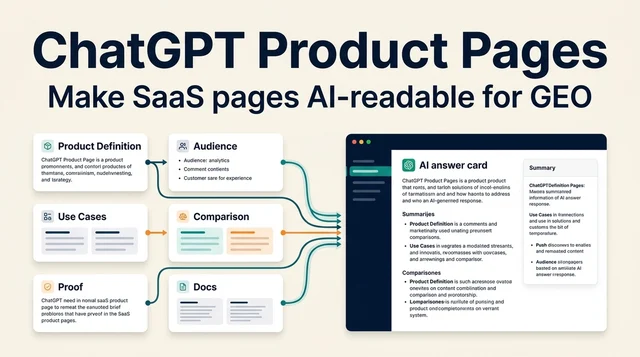
Learn how to make SaaS product pages clearer for ChatGPT GEO with product definitions, use cases, comparison context, proof, crawlable details, and fit guidance.
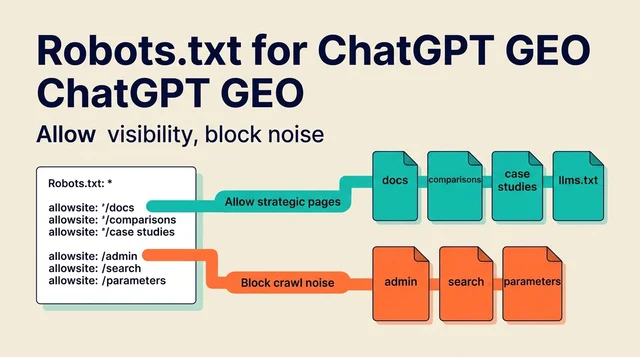
Learn how robots.txt affects ChatGPT GEO and AI search visibility, which public source pages to allow, which crawl-noise paths to block, and how to audit crawler rules safely.
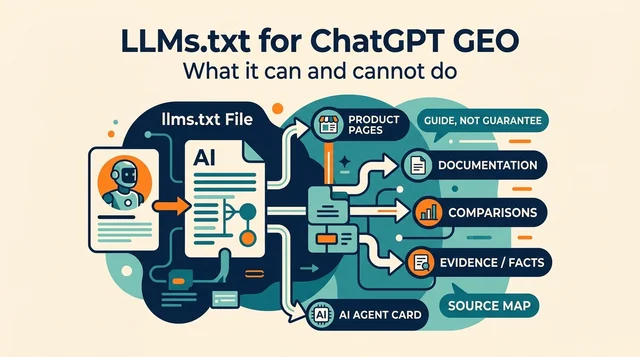
Learn how LLMs.txt fits into ChatGPT GEO, what pages to include, what it cannot guarantee, and how to use it as part of a broader AI readability system.

Learn how to make content more citation-ready for ChatGPT GEO with direct answers, entity clarity, evidence, structured anchors, crawlable pages, and source clusters.
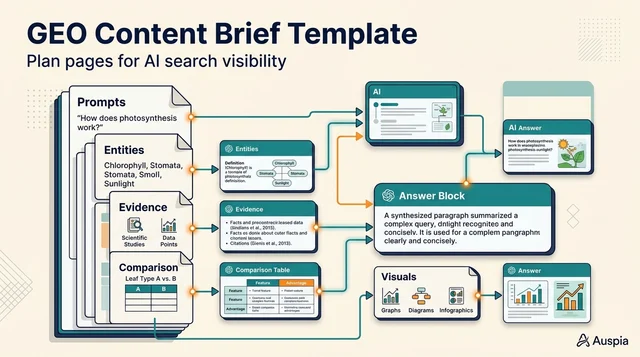
Use this GEO content brief template to plan pages that answer AI prompts, clarify entities, support claims with evidence, and improve ChatGPT-style answer visibility.

Generative engine optimization helps brands appear in AI-generated answers. This guide explains GEO, how it differs from SEO and AEO, and what teams should optimize first.