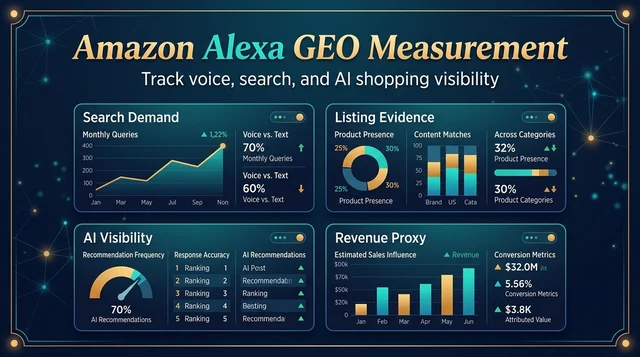
Amazon Alexa GEO Measurement: Track Voice, Search, and AI Shopping Visibility
A measurement framework for Amazon sellers tracking Alexa GEO across query demand, listing assets, AI visibility checks, and business outcomes.

Tag
27 posts
Start here
A measurement framework for Amazon sellers tracking Alexa GEO across query demand, listing assets, AI visibility checks, and business outcomes.
Tag
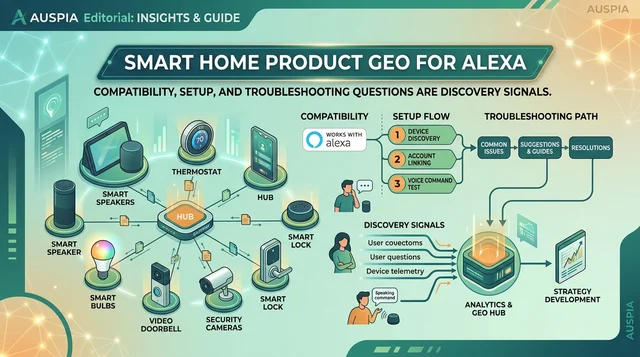
A practical Alexa GEO guide for smart home brands: answer compatibility, setup, command, routine, and troubleshooting questions before buyers leave the listing.
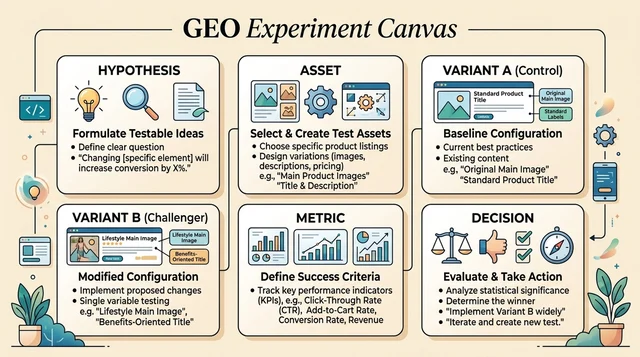
A practical GEO testing guide for Amazon sellers using Manage Your Experiments to validate product titles, images, bullets, descriptions, A+ Content, and Brand Story hypotheses.
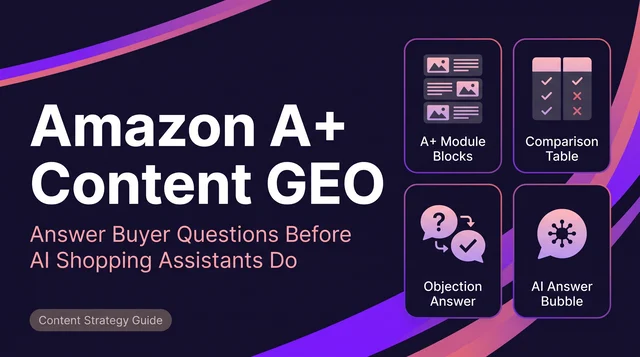
A practical guide to using Amazon A+ Content as GEO answer modules for comparison, proof, objections, variant choice, routine use, and repeat-purchase decisions.

A practical guide to using Amazon Sponsored Products search term data as a GEO learning loop for listing answers, organic discovery, and voice-shopping intent.
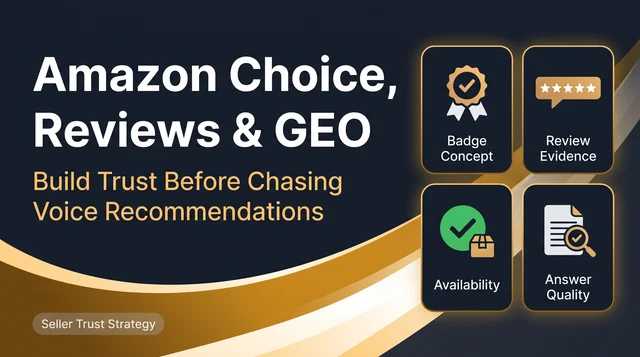
A trust-first GEO guide for Amazon sellers on Amazon Choice, product reviews, Q&A, availability, delivery, and why voice recommendations should not be overpromised.

A practical Alexa Shopping List GEO guide for brands selling grocery, household, pet, and personal care products where list behavior can become repeat purchase intent.
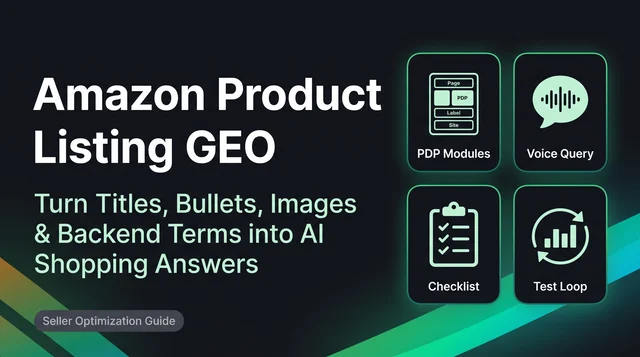
A seller guide to turning Amazon titles, bullets, images, A+ Content, Q&A, and backend search terms into clear AI shopping answers without keyword stuffing.
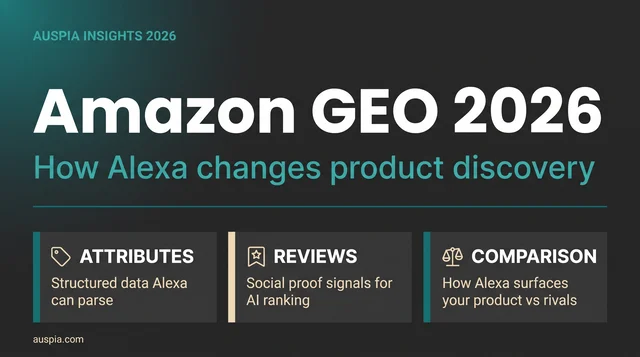
Amazon's AI shopping surfaces are making listing structure, product attributes, review language, and comparison-ready evidence more important for discovery. This 2026 Amazon GEO playbook shows sellers what to audit now.
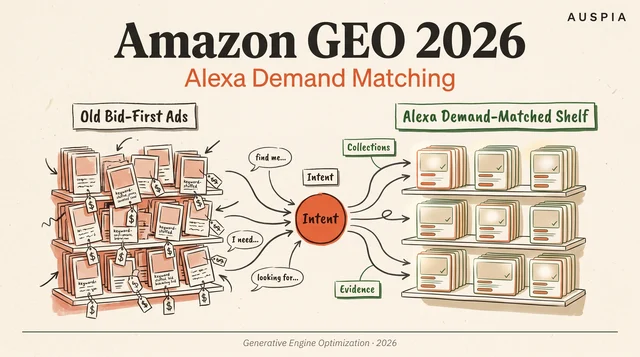
Amazon's 2026 ad updates point to a practical shift for marketplace teams: product discovery is moving from bid-first placement toward intent-matched collections shaped by Alexa, Rufus, listing evidence, and catalog relationships.
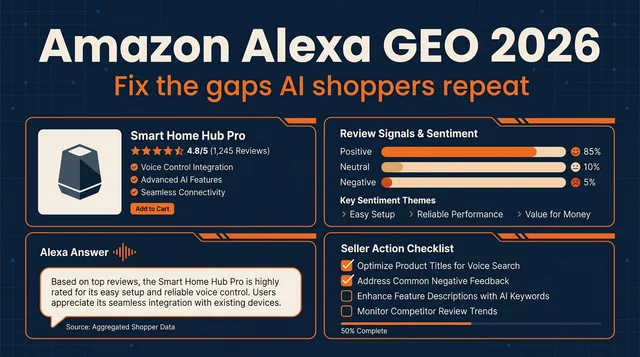
Amazon Alexa GEO in 2026 is about more than keywords. Learn how repeated product complaints can move from reviews into AI shopping answers, and how sellers can audit listings before conversion leaks grow.
A practical Amazon Alexa GEO guide for sellers: how voice shopping changes query research, product listings, reviews, shopping lists, and reorder visibility.
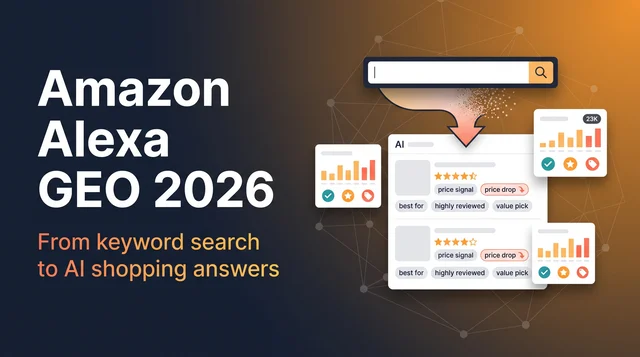
Amazon's 2026 Alexa for Shopping update turns product discovery into a conversational, evidence-led AI experience. Here is what sellers should fix in listings, reviews, pricing, and Q&A before AI shopping answers shape more buyer decisions.
Amazon's Alexa for Shopping makes AI-assisted product discovery more important for sellers in 2026. Learn how to make listings easier for AI shopping assistants to understand, compare, and recommend.
Amazon GEO in 2026 is less about keyword stuffing and more about giving Alexa for Shopping enough evidence to match products with long-tail buyer intent.
Amazon GEO in 2026 is no longer just keyword optimization. This guide shows how sellers can prepare listings, reviews, prices, and off-site evidence for AI shopping assistants such as Alexa-style recommendation layers.
Amazon GEO in 2026 is shifting from keyword ranking to AI-assisted product matching. Here are six Alexa shopping rules sellers should use to make listings easier to summarize, compare, and recommend.
Amazon's 2026 Alexa for Shopping rollout folds Rufus into a more personal shopping assistant. For sellers, the work shifts from keyword stuffing to answer-ready product facts, use-case fit, review language, and price trust.
Amazon listing rewrites are safer when sellers keep core keyword coverage and add clear intent signals for Alexa for Shopping, Rufus, and COSMO. This 2026 guide shows what to change, what to test, and what to avoid.
Amazon's Alexa for Shopping changes Amazon GEO from keyword matching to AI-assisted product decisions. Here is what sellers should update in listings, reviews, pricing, and repeat-purchase signals in 2026.
Amazon listing optimization in 2026 is no longer just keyword placement. This playbook shows how to make titles, bullets, images, reviews, and Q&A easier for COSMO and Alexa Shopping to understand.
Amazon shopping discovery is moving from keyword matching to intent matching. Here is how sellers should rewrite titles, bullets, A+ content, Q&A, and review loops for Rufus/Alexa-style AI shopping assistants in 2026.
Amazon listing optimization in 2026 is no longer just keyword SEO. This guide turns two recent e-commerce AI search papers into a practical Rufus GEO workflow for titles, bullets, product descriptions, Q&A, and testing.
A practical 2026 Amazon GEO playbook for sellers: build buyer questions, product fact tables, answer units, listing modules, attributes, Q&A, and monitoring loops that help AI shopping assistants understand and recommend your products.
Amazon GEO in 2026 is not about prompting Rufus thousands of times. It is about making listings, reviews, Q&A, attributes, and off-Amazon proof readable enough for AI shopping assistants to retrieve and recommend.
Amazon GEO is becoming a practical ecommerce discipline in 2026: listings need to help AI shopping assistants understand, compare, and recommend products, not only rank for keywords.
Amazon Rufus has made marketplace visibility less keyword-only and more answer-driven. This 2026 playbook shows how to make product pages easier for AI shopping assistants to understand, trust, and recommend.