Quick answer
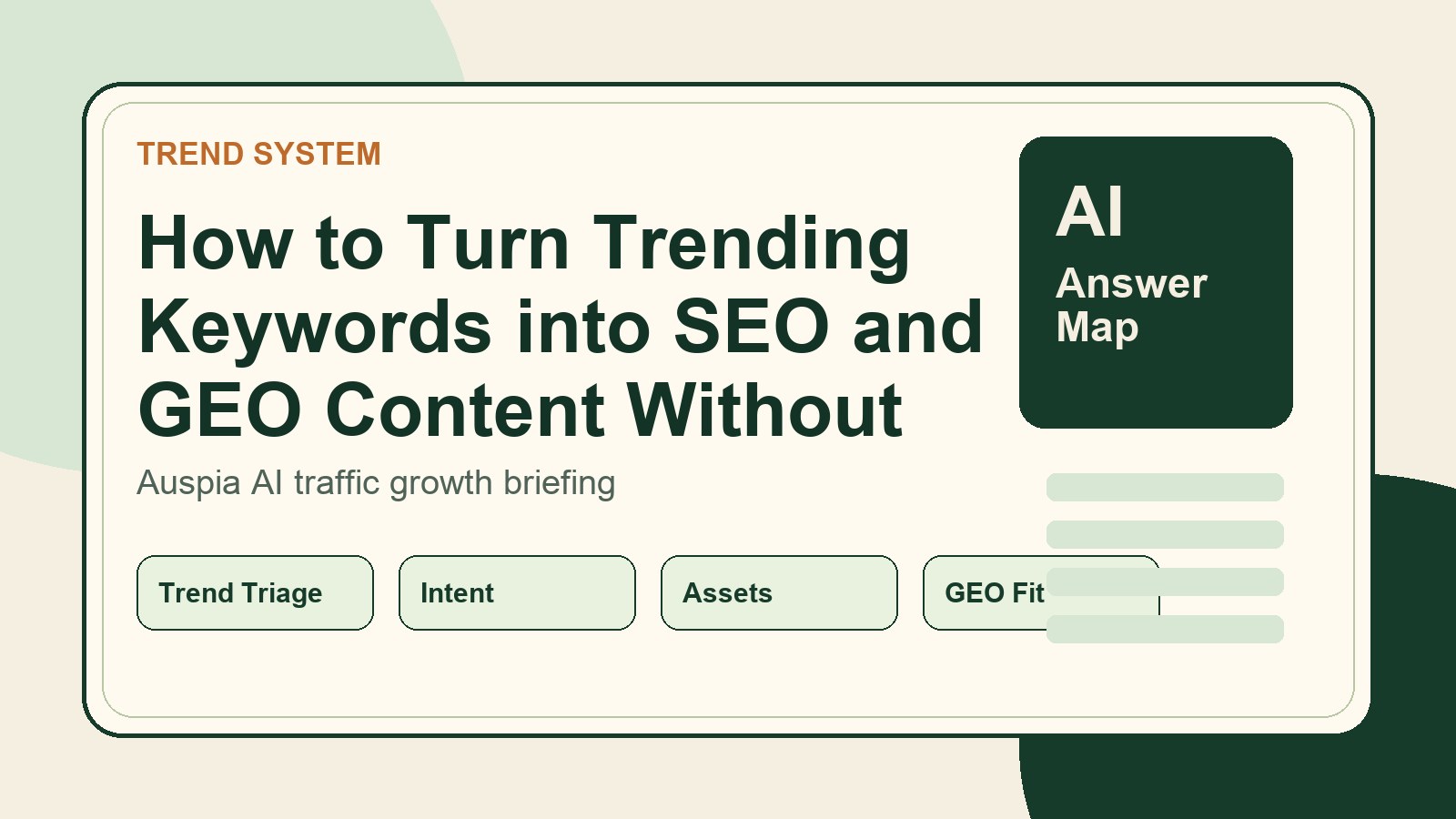
The best use of a trend list is not to chase every term. It is to extract query patterns that reveal what search and AI systems are rewarding this week.
For growth teams, the practical question is not whether the keyword is trending. The question is whether the query can teach you how people ask, how AI systems summarize, and what kind of source earns trust. Auspia treats these topics as search-behavior signals, then turns the useful ones into durable SEO, GEO, or AEO assets.
Signal | What to check | Why it matters |
|---|---|---|
Intent | What does the user need now? | Prevents traffic chasing |
Source standard | Who would AI trust? | Shapes citation strategy |
Freshness | How fast does the answer change? | Defines update cadence |
Business fit | Can this support a buyer journey? | Keeps content useful |
The trend triage problem
A raw trend list mixes celebrities, sports, recalls, lawsuits, weather, stocks, products, and breaking news. Most terms will not fit your business. The mistake is asking "can we write about this?" The better question is "what search behavior does this reveal?"
Content decision | Recommended action |
|---|---|
If the query changes daily | Use a dated brief or live page |
If the query is evergreen | Build a durable guide or glossary page |
If trust is the issue | Add sources, evidence, and entity facts |
If AI misdescribes the brand | Rewrite the core entity page first |
Sort by intent pattern
Group trends into real-time news, YMYL safety, local emergency, entity lookup, comparison, shopping, finance, and entertainment freshness. Then decide which patterns connect to your product or audience.
Choose the asset type
Some trends deserve a daily brief. Some deserve an evergreen explainer. Some should only appear as examples inside a methodology article. Do not turn every spike into a standalone post.
GEO fit score
Score each idea by answer likelihood, source authority requirement, business relevance, freshness burden, and internal-link value. A high-volume trend with low business relevance is still a bad Auspia article.
Workflow
Build a weekly trend review. Pick one timely post, one evergreen asset, and one internal update to an existing page. Track whether the content earns search impressions, AI mentions, backlinks, or sales-team usefulness.
What Auspia would do next
Auspia would not start by publishing ten disconnected posts. We would build a prompt set, map it to pages, check current AI answers, then decide which page type has the best chance to improve visibility. For many teams, the first useful action is a small visibility audit with the AI Search Visibility Checker, followed by a page rewrite and a repeat check two to four weeks later.
FAQ
Is this topic mainly SEO or GEO?
It is both. SEO helps the page become crawlable, indexable, and competitive in search. GEO adds the answer-readiness layer: clear entities, extractable claims, trustworthy evidence, and measurement across AI answer surfaces.
How should a small team start?
Start with one high-intent query group, rewrite the page that should answer it, add a concise table or checklist, and test the page against five AI prompts before expanding the project.
What should we measure?
Track rankings, impressions, AI mentions, citation URLs, description accuracy, branded search lift, assisted conversions, and sales notes. One metric will not explain the full impact.
Author: Clara Bennett, 10-Year Content Strategy Practitioner at Auspia. Clara writes about editorial systems, topic maps, repeatable content operations, and SEO/GEO production workflows.