ChatGPT GEO Roadmap: A 90-Day Plan for AI Search Visibility
Use this 90-day ChatGPT GEO roadmap to move from prompt baseline and entity cleanup to category pages, use-case pages, proof assets, reporting, and repeatable AI visibility operations.
Tag
20 posts
Start here
Use this 90-day ChatGPT GEO roadmap to move from prompt baseline and entity cleanup to category pages, use-case pages, proof assets, reporting, and repeatable AI visibility operations.
Tag
A practical 2026 GEO playbook for B2B teams: build the knowledge base first, map the audience, analyze real demand, then publish content in layers.
In 2026, GEO is no longer just a content tactic. It is an operating system for making brand knowledge understandable, verifiable, and reusable by AI answer engines and user agents.
Hermes Agent can turn GEO from a manual monthly audit into a scheduled operating loop: monitor AI answers, find citation gaps, draft fixes, request approval, publish evidence, and recheck results.
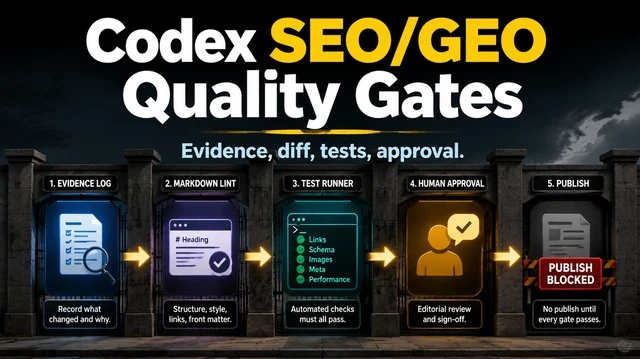
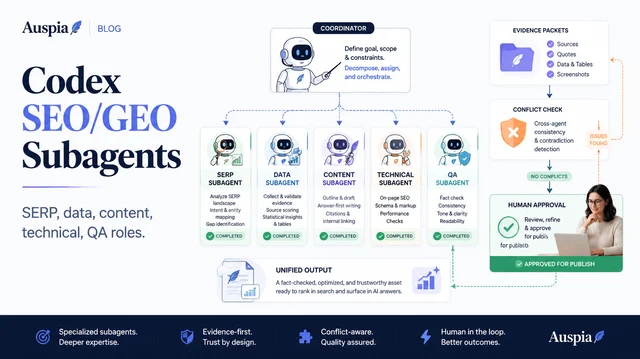
Codex can turn GEO from a one-off content project into a repeatable operating loop: prompt testing, crawl audits, source checks, answer-ready rewrites, and weekly AI visibility reports with human approval gates.
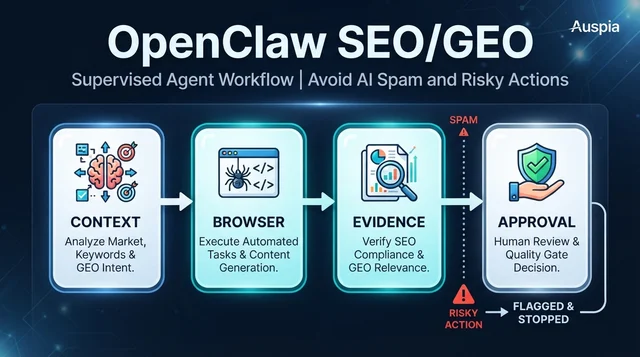
A practical workflow for using OpenClaw Agent to monitor AI search visibility, audit crawl access, refresh answer-ready content, and turn GEO into a repeatable operating loop.
AI search is moving from links to answers to actions. This 2026 guide explains how brands can turn SEO, GEO, product data, proof, and agent-ready interfaces into a practical growth system.
A practical GEO onboarding workflow for a new brand: diagnose how AI systems describe the company, map competitor evidence, build a brand fact base, then publish content that AI answers can actually cite.
The next phase of GEO will not be won by technical, content, SEO, or PR labels. Brands need an operating loop that connects demand signals, entity facts, evidence, delivery, and measurement.
A practical GEO playbook for teams that want to appear in AI answers: map real prompts, publish crawlable evidence, build third-party trust, and measure citations by platform.
GEO is not a shortcut for tricking chatbots. It is the work of making your expertise easy for AI answer engines to find, verify, and cite.
GEO works differently from classic SEO because AI answers are built around intent-rich situations, not isolated search terms. This guide shows how to turn keyword lists into scenario maps that AI systems can understand, cite, and recommend.
GEO will not replace SEO. Learn how to upgrade existing SEO content so AI answer systems can understand, verify, cite, and recommend your brand.
Most GEO programs fail because teams treat AI search like classic SEO. This playbook shows the four mistakes to fix before publishing more content.
GEO is more than getting mentioned by AI. The real value comes from building visibility, trust, and the standards AI systems use to compare your market.
GEO is not a one-off ranking project. If you stop refreshing evidence, competitors and new AI-search prompts can erode your citations, visibility, and qualified demand.
GEO does not need to start with more ad spend. Use Q&A pages, buyer checklists, and explainer pages to turn existing expertise into AI-citable content.
GEO starts with factual hygiene. Learn why AI systems misdescribe large brands and how to correct outdated names, products, domains, and source signals before chasing AI visibility.
Most GEO programs fail when teams treat them like ads, random content, or one-time projects. Use this 10-point checklist to build a system that AI answer engines can understand and cite.
SEO is not dead, but the operating model has changed. GEO combines technical access, AI-citable content, third-party proof, and continuous monitoring so brands can become trusted sources in AI answers.