Google Ads Removes Manual Language Targeting for Search Campaigns in September 2026
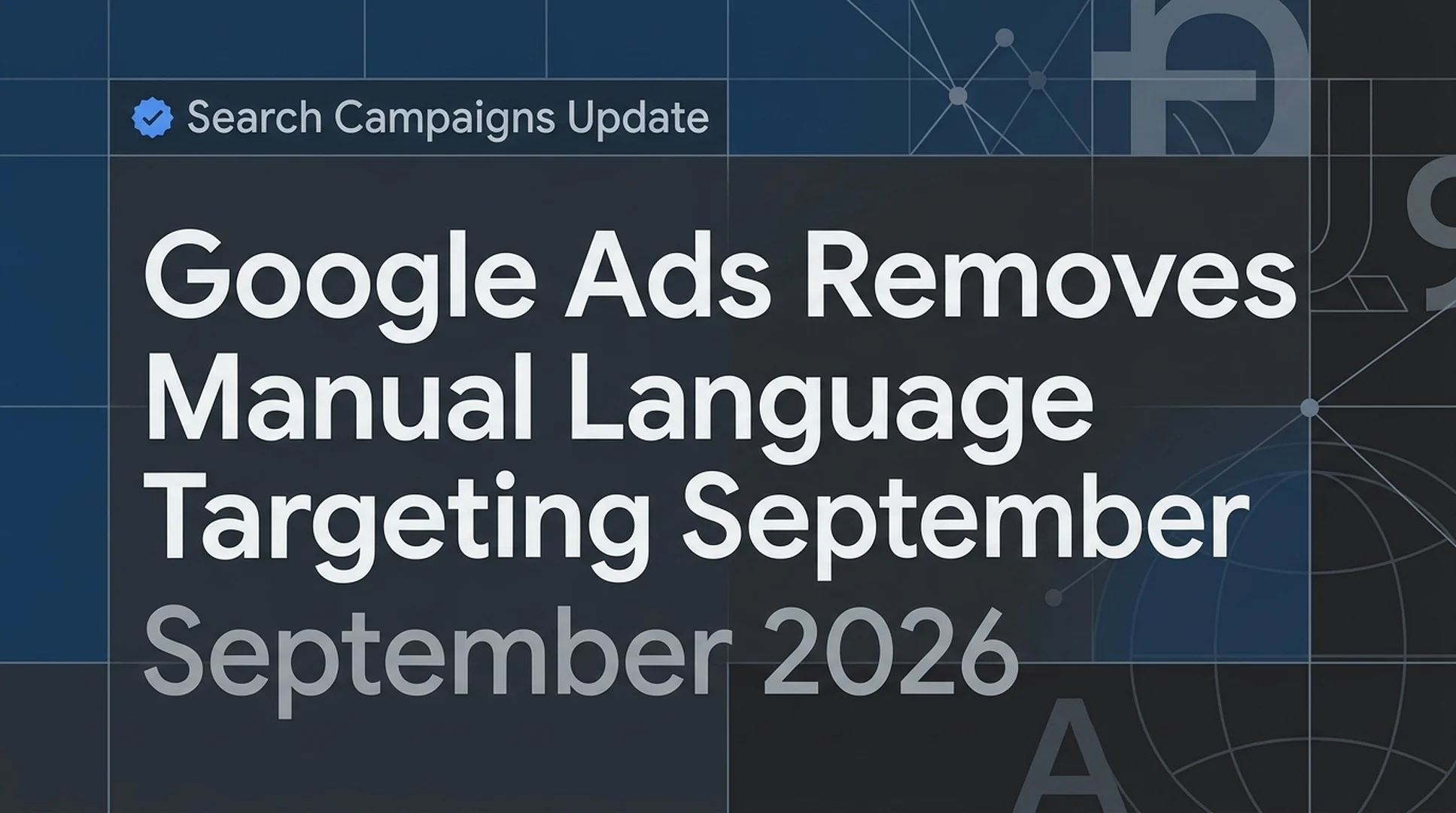
Google has updated its advertising documentation to confirm that manual language targeting settings will be removed from Search campaigns and the Search Network portion of Performance Max campaigns starting in September 2026. The change replaces campaign-level language controls with automatic language matching based on ad content and AI-driven prioritization.
What Changed
Google Ads currently allows advertisers to manually select campaign-level language targeting settings. After September 2026, this manual control will no longer apply to Search campaigns. Search ads will instead match automatically based on the language of the ads themselves, according to the updated Google Ads Help documentation.
For Performance Max campaigns, the campaign-level language setting will no longer apply to ads shown on the Google Search Network. These will function like standard Search campaigns. However, language settings will continue to apply to other channels within Performance Max campaigns, including YouTube, Display, Discover, and Gmail. Shopping ads within Performance Max are not affected by this change.
How Language Matching Will Work
The documentation states that Google Ads uses search-term language, the user's language settings, and preferences to determine which language the user understands. The system then attempts to serve the best ad available in a language the user can understand.
AI-based ad group prioritization will ensure that ad candidates are prioritized in the most relevant language for each user. When multiple eligible campaigns or ad groups exist within an account, Google's AI-driven prioritization will identify and select the most relevant ad language based on the user's search context.
For example, the documentation describes a scenario where a user understands both English and Spanish. While their mobile browser is set to Spanish, their activity on Google suggests they also understand English. The system may show ads in either English or Spanish when keywords match, depending on the user's context and preferences.
What Remains Unchanged
The documentation states that no action is required by advertisers for this change. Existing campaign structures will continue to function. If an account currently uses single-language campaign structures, such as one campaign dedicated to English and another to Spanish, these will continue to operate normally.
Language targeting does not currently support language exclusions, and this limitation remains after the update.
Google Ads API Changes
The update includes changes to the Google Ads API. For new Search campaigns, advertisers should stop including language criteria when creating or updating campaigns through API requests. For existing Search campaigns, advertisers may optionally remove existing language criteria for cleanliness, though this is not strictly required as the criteria will no longer apply.
The documentation advises advertisers to focus on ad and landing page language. Search ads will primarily use ad creative and landing page signals, alongside user language preferences, for matching.
Context
Language targeting in Google Ads has historically allowed advertisers to control which language-speaking audiences see their ads. The shift to automatic matching reflects Google's broader move toward AI-driven campaign management, where the system makes targeting decisions based on user signals rather than manual advertiser controls.
The documentation notes that multilingual users may find ads in a different language than they search if Google is confident the user understands the language of the ad. This behavior already exists and will continue under the new system.
What Has Not Been Confirmed
The documentation does not specify an exact date in September 2026 when the change will take effect. It also does not describe whether advertisers will retain any ability to influence language matching through alternative settings or signals.
The announcement does not address whether the change will affect ad performance, click-through rates, or conversion rates for multilingual campaigns. Google stated that no action is required, but did not provide guidance on how advertisers should monitor the transition or measure its impact.
Sources
- Google Ads Help, "About language targeting," updated August 2026. https://support.google.com/google-ads/answer/1722078