
How to Run Daily SEO/GEO Monitoring in Claude Code
Create a daily Claude Code monitoring workflow that stores snapshots, compares search and AI visibility data, and produces a conservative action queue.


Tag
Start here
Create a daily Claude Code monitoring workflow that stores snapshots, compares search and AI visibility data, and produces a conservative action queue.
Tag

Use Claude Code GitHub Actions and @claude review prompts to catch SEO/GEO risks in PRs before metadata, schema, robots, and content changes merge.

A copy-paste, beginner-friendly guide to connecting Google Search Console, GA4, Microsoft Clarity, and Bing Webmaster Tools to Claude Code through MCP, with the exact tokens, commands, and test prompts you need.
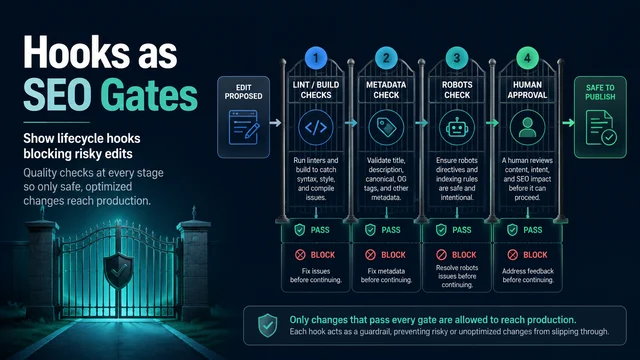
Use Claude Code hooks to run deterministic SEO/GEO checks for builds, metadata, robots, schema, analytics, and risky bulk edits.

Use Claude Code subagents to separate SERP research, AI answer auditing, entity checks, and technical eligibility without letting research agents publish.

Use Claude Code in VS Code to diagnose one page, review inline diffs, improve metadata and answer blocks, and validate before publishing.
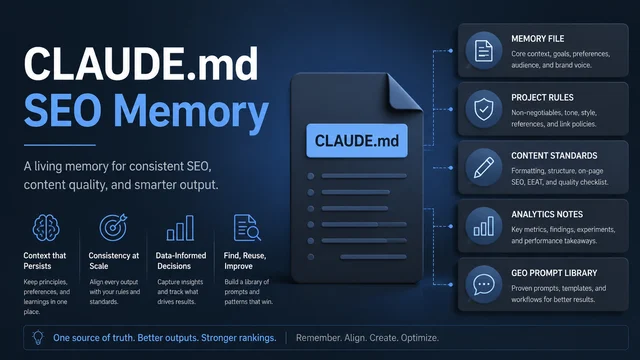
Write a beginner-safe CLAUDE.md for SEO/GEO work, separate durable rules from SOPs, and audit Claude Code memory without storing risky data.
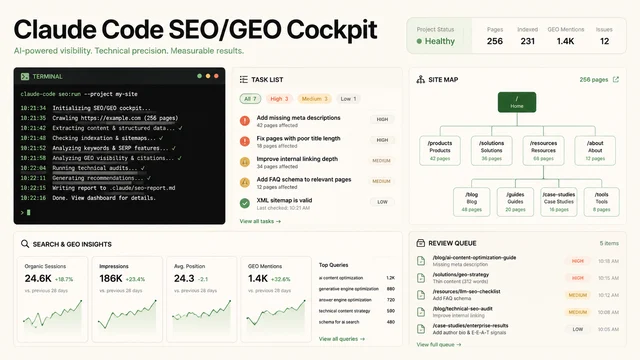
Turn a Claude Code repository into a practical SEO/GEO cockpit with briefs, exports, prompt libraries, QA reports, and safe one-page workflows.

A beginner-friendly Codex workflow for prompting, building, reviewing, deploying, and measuring a company website that is ready for SEO and GEO from day one.
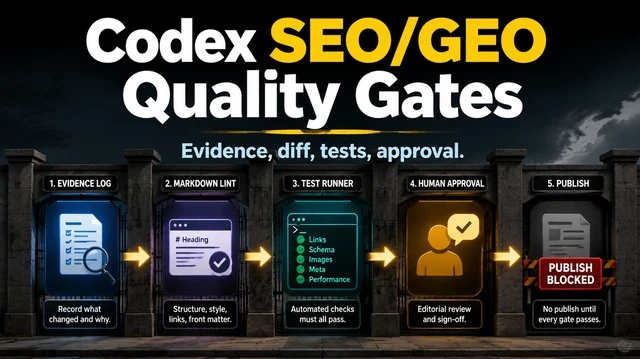
Add quality gates to Codex SEO/GEO workflows so evidence, diffs, tests, technical risk, and human approval block unsafe automation.
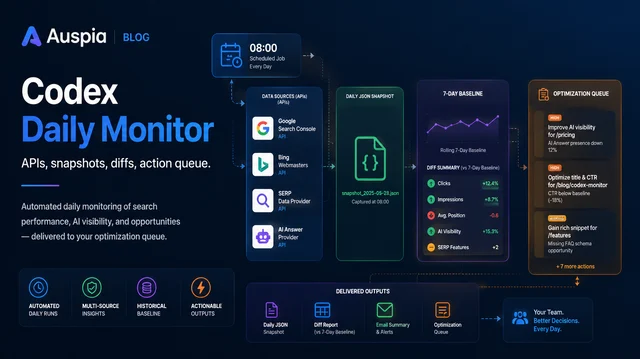
Create a daily Codex monitoring workflow that calls approved APIs, stores snapshots, compares visibility changes, and updates a human-reviewed action queue.
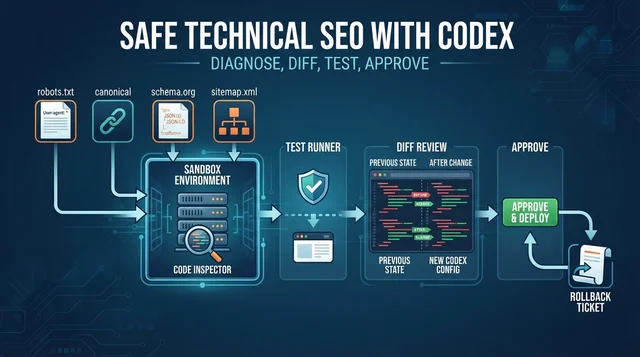
Use Codex to diagnose technical SEO/GEO issues, prepare safe diffs, run validation, and create approval-ready tickets before production changes.
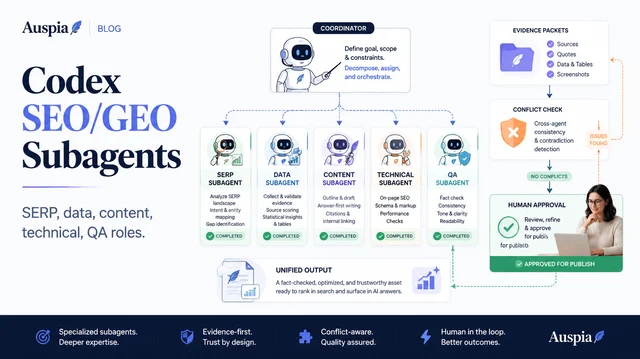
Use Codex subagents to separate SERP research, data analysis, content briefs, technical review, and QA without letting any agent publish automatically.


