Quick Answer
Tax relief GEO should not start with aggressive promises like "settle for pennies" or "erase IRS debt." High-intent searchers ask more careful questions: whether they qualify for an offer in compromise, how IRS payment plans work, what penalty relief requires, how wage garnishment can be stopped, and how to tell whether a tax relief company is trustworthy.
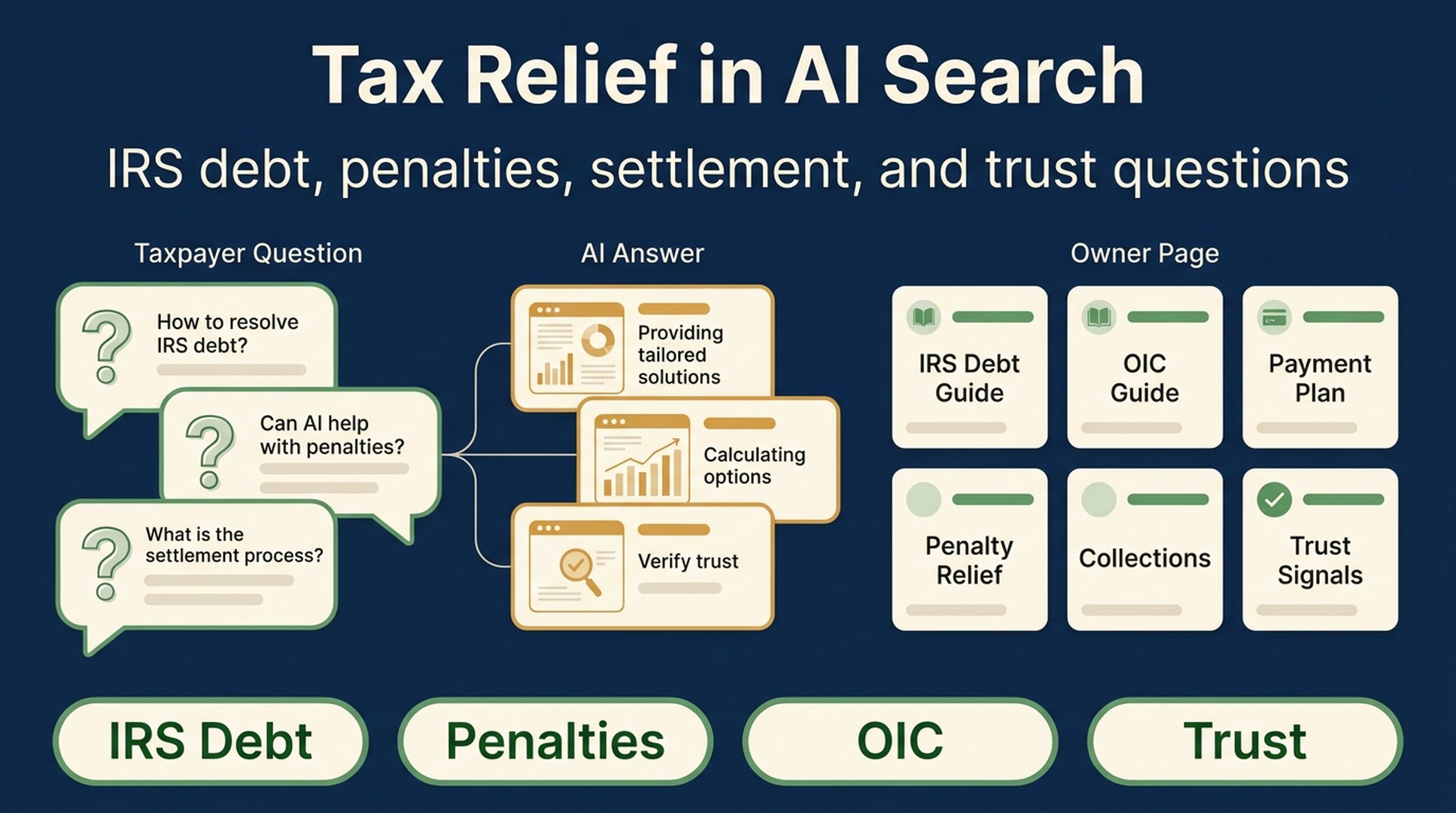
For tax resolution firms, enrolled-agent practices, CPA firms, tax attorneys, and lead-generation teams, the strongest AI Search content usually maps financial stress questions to six owner assets:
Taxpayer question | Best owner asset | Proof AI systems can extract |
|---|---|---|
Can I settle IRS debt for less? | Offer in compromise eligibility guide | Qualification factors, IRS caveats, required documentation |
What if I cannot pay now? | IRS payment plan guide | Installment options, current compliance, realistic tradeoffs |
Can penalties be removed? | Penalty relief guide | First-time abatement, reasonable cause, documentation examples |
How do I stop collection pressure? | Lien, levy, and wage garnishment page | Collection notices, resolution paths, urgency signals |
Is this company legitimate? | Tax relief trust page | Credentials, fee transparency, process, disclaimers, scam warnings |
What will representation cost? | Tax relief cost and process page | Fee models, scope, timeline, document checklist |
The goal is not to publish 100 thin pages. The goal is to build a small library of careful, evidence-rich pages that answer taxpayers' real questions without overpromising outcomes.
The IRS Resolution Trust Ladder
Tax relief buyers climb a trust ladder before they contact a firm. They are often anxious, skeptical, and worried about both the IRS and the company selling help.
Trust rung | What the taxpayer needs to understand | Content job |
|---|---|---|
Situation | What problem do I actually have? | Explain tax debt, notices, penalties, liens, levies, and wage garnishment |
Eligibility | Do I qualify for a resolution option? | Explain payment plans, offer in compromise, currently not collectible, and penalty relief factors |
Evidence | What documents prove my situation? | Show income, expenses, assets, returns, notices, and account transcripts |
Risk | What can happen if I wait? | Explain collection pressure without fear-based exaggeration |
Process | What steps happen after I call? | Show consultation, authorization, transcript review, strategy, submission, follow-up |
Cost | What will help cost? | Explain fee drivers and scope differences |
Trust | Can I believe this provider? | Show credentials, realistic claims, reviews, transparent process, and warnings |
Outcome | What can and cannot be promised? | Explain IRS discretion, eligibility, compliance, and documentation limits |
Auspia's recommendation: write tax relief content as a calm decision guide, not an ad script. AI systems and cautious buyers both need caveats, steps, and eligibility logic.
Why Tax Relief GEO Starts With Trust Risk
Tax relief is a high-CPC category because the lead value can be high and the user is under pressure. But pressure also makes the content risky. A taxpayer may search after receiving a CP14 notice, a lien notice, a levy warning, or a wage garnishment letter. They want fast answers, but they also fear scams.
Official IRS pages explain that an offer in compromise lets eligible taxpayers settle tax debt for less than the full amount owed, but eligibility depends on ability to pay, income, expenses, and asset equity. The IRS also offers payment plans and penalty relief options under specific conditions. See the IRS pages on Offer in Compromise, payment plans, and penalty relief.
That means a strong GEO page should avoid blanket guarantees. The better angle is to explain options, eligibility, documentation, timelines, and what a legitimate tax professional should and should not promise.
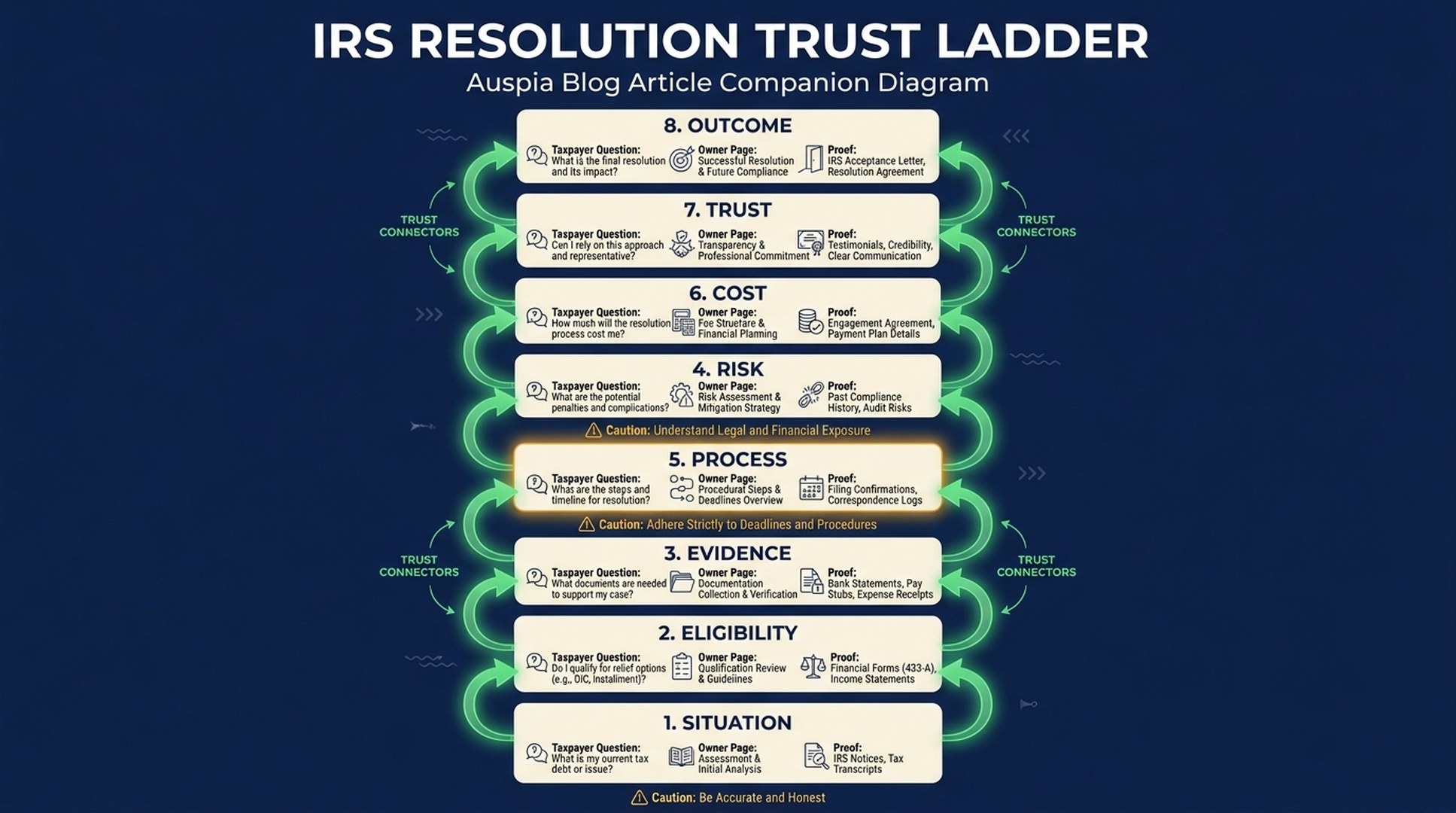
The IRS Resolution Trust Ladder turns tax-stress questions into pages that explain options, evidence, risk, process, cost, and realistic outcomes.
The 10 Query Types Tax Relief Teams Should Map
Query type | Typical user | Content that earns trust |
|---|---|---|
IRS debt basics | Individual, business owner | Notice guide, balance explanation, next-step checklist |
Offer in compromise | Taxpayer seeking settlement | Eligibility guide, document checklist, qualification caveats |
Payment plans | Taxpayer unable to pay now | Installment agreement guide and comparison table |
Penalty relief | Taxpayer with added penalties | First-time abatement and reasonable-cause page |
Collections | Taxpayer facing lien, levy, garnishment | Urgency page with notice-stage explanation |
Unfiled returns | Taxpayer behind on filing | Compliance catch-up guide |
Business payroll tax | Business owner | Trust fund recovery and payroll tax resolution guide |
Cost and process | High-intent buyer | Consultation, fee, timeline, and representation process page |
Provider trust | Skeptical taxpayer | Credentials, transparency, scam-warning, review page |
Scenario and role | Self-employed, retiree, contractor, small business | Situation-specific resolution pages |
How To Prioritize Tax Relief AI Search Questions
Score each query by urgency, eligibility sensitivity, and trust risk.
Factor | High-value signal | Page implication |
|---|---|---|
Collection urgency | Mentions levy, lien, garnishment, bank account, notice deadline | Collection response page |
Settlement intent | Mentions settle, compromise, reduce, pay less | Offer in compromise page with caveats |
Penalty concern | Mentions abatement, reasonable cause, first-time penalty | Penalty relief page |
Payment inability | Mentions cannot pay, monthly plan, hardship | Payment plan or currently-not-collectible page |
Trust concern | Mentions scam, legitimate, reviews, credentials, fees | Trust and provider evaluation page |
Business risk | Mentions payroll tax, trust fund, business account, employees | Business tax resolution page |
Queries with collection urgency and settlement intent should receive the most careful language. They convert, but they are also where overpromising can damage trust.
100 Tax Relief AI Search Questions
Use this as a prompt library, not a page list.
IRS Debt Basics Questions
- What should I do if I owe the IRS and cannot pay?
- How do I find out how much I owe the IRS?
- What does an IRS CP14 notice mean?
- What happens if I ignore IRS tax debt?
- Can the IRS take money from my bank account?
- How long does the IRS have to collect tax debt?
- Does IRS tax debt affect my credit?
- What is the difference between tax debt and tax penalties?
- Should I call the IRS myself or hire tax help?
- What documents should I gather before calling a tax relief firm?
Offer In Compromise Questions
- What is an offer in compromise?
- Can I settle IRS debt for less than I owe?
- Who qualifies for an offer in compromise?
- How does the IRS decide whether to accept an offer in compromise?
- What income and asset information is needed for an offer in compromise?
- How long does an offer in compromise take?
- Can an offer in compromise be rejected?
- What happens if I miss payments after an offer is accepted?
- Is an offer in compromise better than a payment plan?
- What should I ask before paying a company to file an offer in compromise?
Payment Plan Questions
- How do IRS payment plans work?
- Can I set up a monthly payment plan with the IRS?
- What is the difference between short-term and long-term IRS payment plans?
- How much will the IRS accept monthly?
- Can penalties and interest continue during an IRS payment plan?
- Can I change an IRS installment agreement?
- What happens if I miss an IRS payment plan payment?
- Is a payment plan better than tax settlement?
- Can a tax relief company negotiate an IRS payment plan?
- What documents are needed for an IRS installment agreement?
Penalty Relief Questions
- What is IRS penalty relief?
- What is first-time penalty abatement?
- What is reasonable cause penalty relief?
- Can IRS late filing penalties be removed?
- Can IRS late payment penalties be removed?
- What documents support reasonable cause penalty relief?
- Does illness qualify for IRS penalty relief?
- Does natural disaster qualify for IRS penalty relief?
- Can a tax professional request penalty abatement?
- What mistakes hurt an IRS penalty relief request?
Collection Pressure Questions
- What should I do if the IRS sends a levy notice?
- How can I stop IRS wage garnishment?
- Can the IRS levy my bank account?
- What is a federal tax lien?
- How do I remove or release an IRS tax lien?
- What is the difference between a lien and a levy?
- How fast should I respond to an IRS collection notice?
- Can a tax relief firm stop IRS collections immediately?
- What happens after a final notice of intent to levy?
- What should I do if the IRS already garnished my wages?
Unfiled Return Questions
- What should I do if I have unfiled tax returns?
- How many years of unfiled taxes do I need to file?
- Can I get a payment plan if I have unfiled returns?
- What happens if the IRS files a substitute return for me?
- Can unfiled returns block tax relief options?
- Should I file old returns before applying for tax relief?
- Can a tax professional help recreate missing records?
- What documents are needed for old tax returns?
- How do self-employed people catch up on unfiled taxes?
- What is the fastest safe way to become tax compliant again?
Business And Payroll Tax Questions
- What should a business do if it owes payroll taxes?
- What is trust fund recovery penalty?
- Can the IRS hold business owners personally responsible for payroll taxes?
- How can a business set up a payroll tax payment plan?
- Can a business qualify for an offer in compromise?
- What happens if a business misses payroll tax deposits?
- Can the IRS close a business for unpaid payroll taxes?
- What documents are needed for business tax resolution?
- How should a business owner handle IRS revenue officer contact?
- What tax relief options exist for struggling small businesses?
Cost And Process Questions
- How much does tax relief help cost?
- What affects tax resolution fees?
- Do tax relief companies charge upfront fees?
- What happens during a tax relief consultation?
- How long does tax resolution take?
- What does a tax resolution professional do after I sign?
- What forms allow a tax professional to talk to the IRS for me?
- What should be included in a tax relief service agreement?
- How do I compare tax relief quotes?
- When is tax relief help worth paying for?
Provider Trust Questions
- How do I know if a tax relief company is legitimate?
- What are red flags in tax relief advertising?
- Can tax relief companies really reduce IRS debt?
- What credentials should a tax resolution professional have?
- Should I choose a CPA, enrolled agent, or tax attorney?
- What reviews matter for tax relief companies?
- What should a tax relief company never promise?
- How do I avoid tax relief scams?
- What questions should I ask before hiring tax help?
- How transparent should tax relief fees be?
Scenario Questions
- What tax relief options exist for self-employed people?
- What tax relief options exist for retirees?
- What tax relief options exist after job loss?
- Can divorce create IRS tax debt problems?
- What if I owe taxes from a failed business?
- What if I owe state taxes and IRS taxes?
- What if I cannot pay taxes because of medical bills?
- What if I received a tax bill after selling crypto?
- What if a spouse created the tax debt?
- What if I owe back taxes and need to buy a house?
How To Turn Tax Relief Questions Into Citation-Ready Pages
Most firms should consolidate these questions into 8 to 12 strong pages.
Owner page | Query clusters it should cover | Conversion path |
|---|---|---|
IRS Debt First Steps Guide | 1-10 | Consultation checklist or transcript review |
Offer In Compromise Eligibility Guide | 11-20 | Qualification assessment |
IRS Payment Plan Guide | 21-30 | Payment plan consultation |
Penalty Relief Guide | 31-40 | Penalty abatement review |
IRS Collections Response Page | 41-50 | Urgent consultation CTA |
Unfiled Tax Return Catch-Up Guide | 51-60 | Compliance review |
Business Payroll Tax Resolution Guide | 61-70 | Business consultation |
Tax Relief Cost And Process Page | 71-80 | Fee and process explanation |
Tax Relief Company Trust Guide | 81-90 | Provider evaluation and consultation |
Scenario-Specific Tax Relief Pages | 91-100 | Self-employed, retiree, spouse, business pages |
Each page should include a direct answer, IRS option comparison, eligibility caveats, document checklist, realistic timeline, and a next step that does not imply a guaranteed outcome.
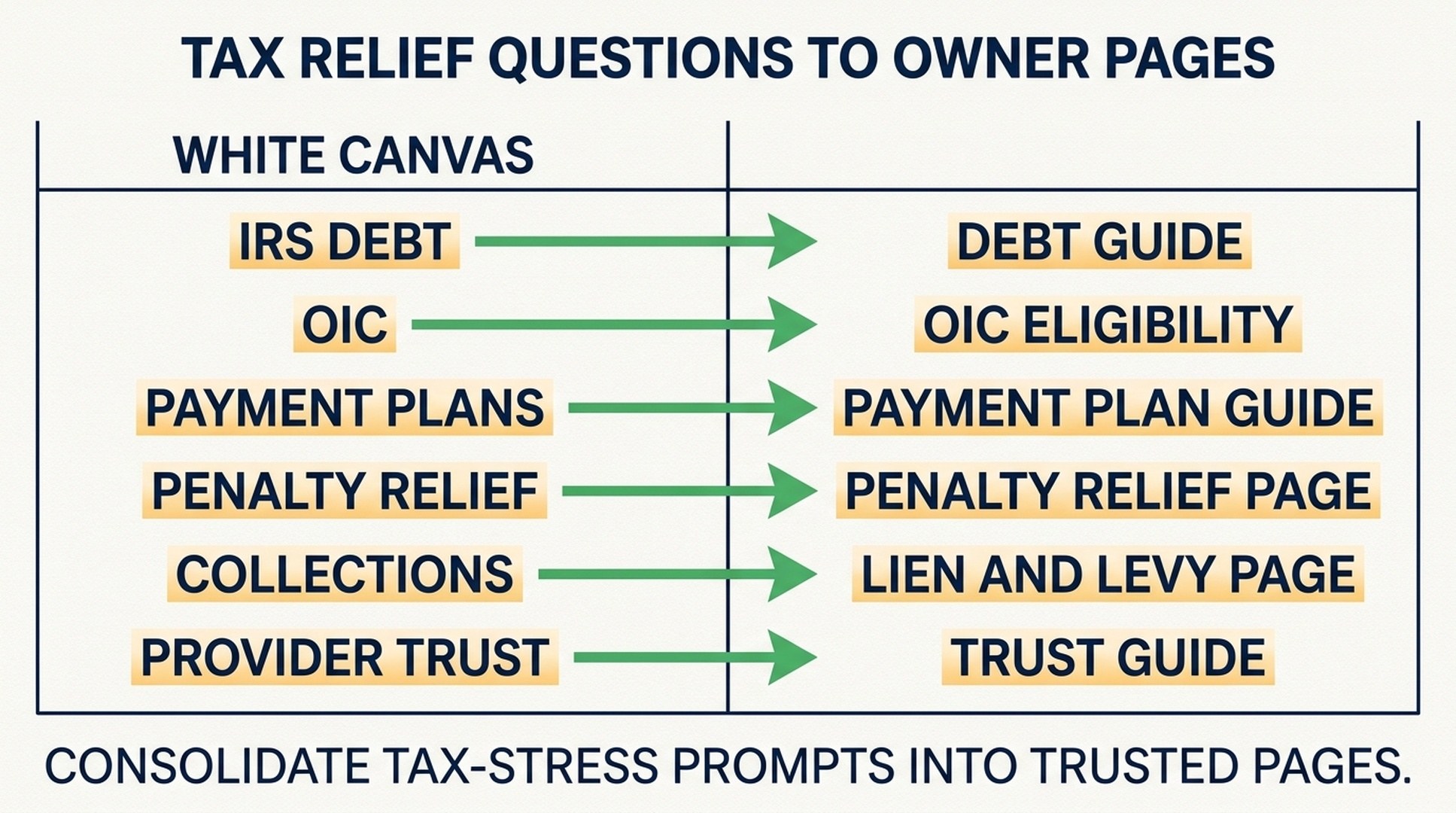
Map each high-anxiety tax relief question to one durable owner page instead of scattering near-duplicate answers across thin posts.
The First 20 Questions To Prioritize
Priority | Question | Best page |
|---|---|---|
1 | What should I do if I owe the IRS and cannot pay? | IRS Debt First Steps |
2 | Can I settle IRS debt for less than I owe? | Offer In Compromise Guide |
3 | Who qualifies for an offer in compromise? | OIC Eligibility Page |
4 | How do IRS payment plans work? | Payment Plan Guide |
5 | Is a payment plan better than tax settlement? | Option Comparison Page |
6 | What is first-time penalty abatement? | Penalty Relief Guide |
7 | What documents support reasonable cause penalty relief? | Penalty Evidence Page |
8 | How can I stop IRS wage garnishment? | Wage Garnishment Page |
9 | What is a federal tax lien? | Lien Guide |
10 | What should I do if the IRS sends a levy notice? | Levy Response Page |
11 | What should I do if I have unfiled tax returns? | Unfiled Returns Guide |
12 | Can unfiled returns block tax relief options? | Compliance Catch-Up Page |
13 | What should a business do if it owes payroll taxes? | Payroll Tax Guide |
14 | What is trust fund recovery penalty? | Business Tax Risk Page |
15 | How much does tax relief help cost? | Cost And Process Page |
16 | What happens during a tax relief consultation? | Consultation Page |
17 | How do I know if a tax relief company is legitimate? | Trust Guide |
18 | What are red flags in tax relief advertising? | Scam Warning Page |
19 | Should I choose a CPA, enrolled agent, or tax attorney? | Provider Comparison Page |
20 | What tax relief options exist for self-employed people? | Self-Employed Tax Relief Page |
30-Day Execution Plan
Days 1-5: Build The Taxpayer Question Inventory
- Pull questions from consultation calls, intake forms, chat logs, ad landing pages, and support emails.
- Tag prompts by IRS debt, offer in compromise, payment plan, penalty relief, collection pressure, unfiled returns, business tax, trust, and price.
- Separate urgent collection prompts from educational settlement prompts.
- Identify competitor pages and official IRS pages that AI systems already cite.
Days 6-10: Publish The Core Resolution Pages
- Build the IRS debt first-steps guide.
- Publish the offer in compromise eligibility guide and payment plan comparison page.
- Add IRS links and clear caveats.
- Include document checklists and realistic consultation steps.
Days 11-15: Build Penalty And Collection Pages
- Publish the penalty relief guide.
- Build pages for liens, levies, wage garnishment, and final notices.
- Avoid fear-based claims. Explain urgency without promising immediate collection stops.
- Add calls to action for consultation where timing is genuinely important.
Days 16-22: Build Trust And Scenario Pages
- Publish a tax relief company trust guide.
- Add cost and process pages with transparent fee drivers.
- Build pages for unfiled returns, payroll taxes, self-employed taxpayers, retirees, and spouse-related debt.
- Add provider comparison content for CPA vs enrolled agent vs tax attorney.
Days 23-30: Test AI Visibility And Improve
- Test the first 20 questions in ChatGPT, Perplexity, Gemini, Google AI Overviews, and Bing Copilot.
- Record whether your brand appears, which sources are cited, and whether answers overpromise.
- Improve pages with stronger caveats, clearer option tables, and better document examples.
- Review sensitive pages with qualified tax professionals before scaling traffic.
Common Mistakes
Mistake | Why it weakens GEO | Better move |
|---|---|---|
Promising to erase IRS debt | Buyers and AI systems need eligibility logic, not hype | Explain OIC qualification factors and caveats |
Treating all tax relief options as settlement | Payment plans, penalty relief, compliance, and hardship are different | Build option-specific pages |
Ignoring official IRS language | Users and AI systems need trustworthy references | Link to IRS resources and explain in plain English |
Using fear-based collection copy | It may convert poorly and reduce trust | Explain notices, deadlines, and next steps calmly |
Hiding fees | Taxpayers are already skeptical | Publish cost drivers and process scope |
Creating thin state or city pages | Repetition weakens quality | Build strong scenario pages with real process value |
Skipping unfiled returns | Many options require current compliance | Create a catch-up guide |
FAQ
Is tax relief GEO different from normal SEO?
Yes. Normal SEO often starts with keywords and landing pages. Tax relief GEO needs to answer eligibility, documentation, IRS option, collection, cost, and trust questions in a way that AI systems can summarize safely.
Should tax relief firms publish IRS settlement content?
Yes, but carefully. The content should explain options such as offer in compromise, installment agreements, and penalty relief without promising approval or debt reduction. Actual outcomes depend on IRS rules, taxpayer facts, documentation, compliance, and professional review.
Which tax relief pages should be built first?
Start with IRS debt first steps, offer in compromise eligibility, payment plans, penalty relief, liens and levies, unfiled returns, payroll tax debt, cost and process, and tax relief company trust signals.
Can official IRS pages help GEO content?
Yes. Linking to and explaining official IRS resources helps readers and AI systems distinguish educational content from unsupported claims. The goal is not to replace IRS guidance, but to make the decision path easier to understand.
How should tax resolution firms measure AI Search visibility?
Create a fixed prompt set, test it across AI answer platforms, record brand mentions and cited pages, and review answer quality. Sensitive prompts should be checked for overpromising, missing caveats, or outdated IRS option descriptions.
Auspia Takeaway
Tax relief GEO works when it builds trust before asking for the consultation. Taxpayers need to understand their IRS debt, resolution options, documentation, urgency, costs, and provider credibility. The firms that explain those pieces clearly give AI systems better content to cite and give anxious taxpayers a safer reason to reach out.
Author: Iris Campbell, Editorial Evidence Analyst, 2,500+ Sources Reviewed at Auspia. Iris writes about evidence quality, source-sensitive content, and careful answer design for high-trust search categories.