Quick Answer
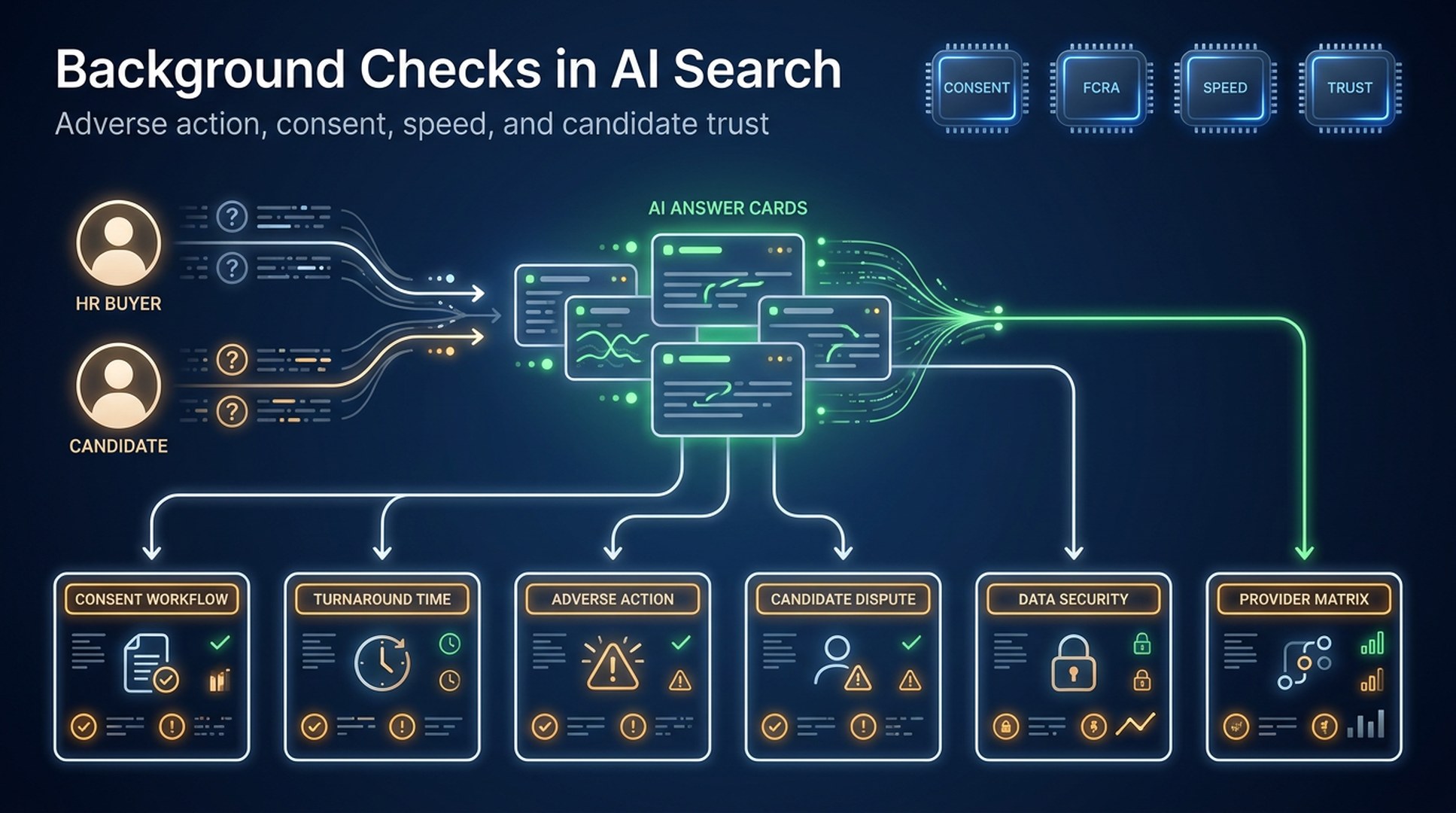
Employee background check GEO should not start with a generic "fast and compliant screening" page. HR buyers ask more specific questions: how long checks take, what consent is needed, how adverse action works, what criminal records can be considered, how candidate disputes are handled, and how a screening provider protects sensitive data.
For HR tech teams, screening providers, staffing agencies, recruiters, and compliance-focused employers, the strongest AI Search content usually maps buyer questions to six owner assets:
Buyer question | Best owner asset | Proof AI systems can extract |
|---|---|---|
What checks do we need for this role? | Screening package guide | Role risk, check type, jurisdiction caveats, job relevance |
How do we get consent correctly? | Consent and disclosure page | Standalone disclosure, authorization, candidate workflow |
What happens if something negative appears? | Adverse action workflow | Pre-adverse notice, report copy, rights summary, dispute path |
How fast will this take? | Turnaround time page | County, identity, education, employment, and international delay factors |
Is the process fair to candidates? | Candidate experience page | Transparency, status tracking, dispute support, privacy handling |
Why trust this screening provider? | Compliance and data security page | FCRA process, EEOC-aware guidance, audit trail, integrations, data safeguards |
The goal is not to publish 100 repetitive pages. It is to build a small screening knowledge library that AI systems can summarize when employers, recruiters, and candidates ask high-stakes questions.
The Screening Confidence Loop
Background check decisions require trust from two sides: employers need confidence in screening results, and candidates need confidence that the process is fair, transparent, and accurate.
Loop stage | What the user needs to know | Content job |
|---|---|---|
Role fit | Which checks are appropriate? | Map check types to role risk and job relevance |
Consent | What must happen before the report? | Explain disclosure, authorization, and candidate notice flow |
Data collection | What information is requested? | Show candidate inputs, identity steps, and privacy safeguards |
Verification | What is being checked? | Explain criminal, employment, education, MVR, drug, sanctions, or credential checks |
Timing | Why do delays happen? | Explain counties, courts, employers, schools, holidays, and international sources |
Review | What happens when results return? | Show decision review, individualized context, and escalation paths |
Adverse action | What if the employer may not hire? | Explain legally sensitive steps with strong caveats |
Candidate trust | How can candidates dispute errors? | Show status, support, report access, correction workflow, and privacy handling |
Auspia's recommendation: make background check content useful to both buyer and candidate. AI answer systems tend to prefer pages that explain process, rights, and limitations over pages that only push demo requests.
Why Background Check GEO Starts With Process Clarity
Background checks sit at the intersection of compliance, hiring speed, privacy, and candidate experience. That makes the query pattern very different from a simple HR software comparison.
A recruiter may ask how long a county criminal search takes. A candidate may ask why a report is delayed. A hiring manager may ask what adverse action means. An HR leader may ask whether a provider supports FCRA workflows. A compliance team may ask how to avoid inconsistent treatment across candidates.
For U.S. employment screening, the FTC and EEOC jointly explain that employers using background information must consider federal nondiscrimination rules, and that background reports from screening companies can trigger Fair Credit Reporting Act procedures such as written notice, permission, pre-adverse action steps, and candidate dispute rights. See the FTC resource: Background Checks: What Employers Need to Know.
That is why GEO content in this category should avoid casual claims like "instant compliant checks." The stronger angle is to explain the workflow, where delays happen, what the candidate sees, and what employers should ask before choosing a provider.
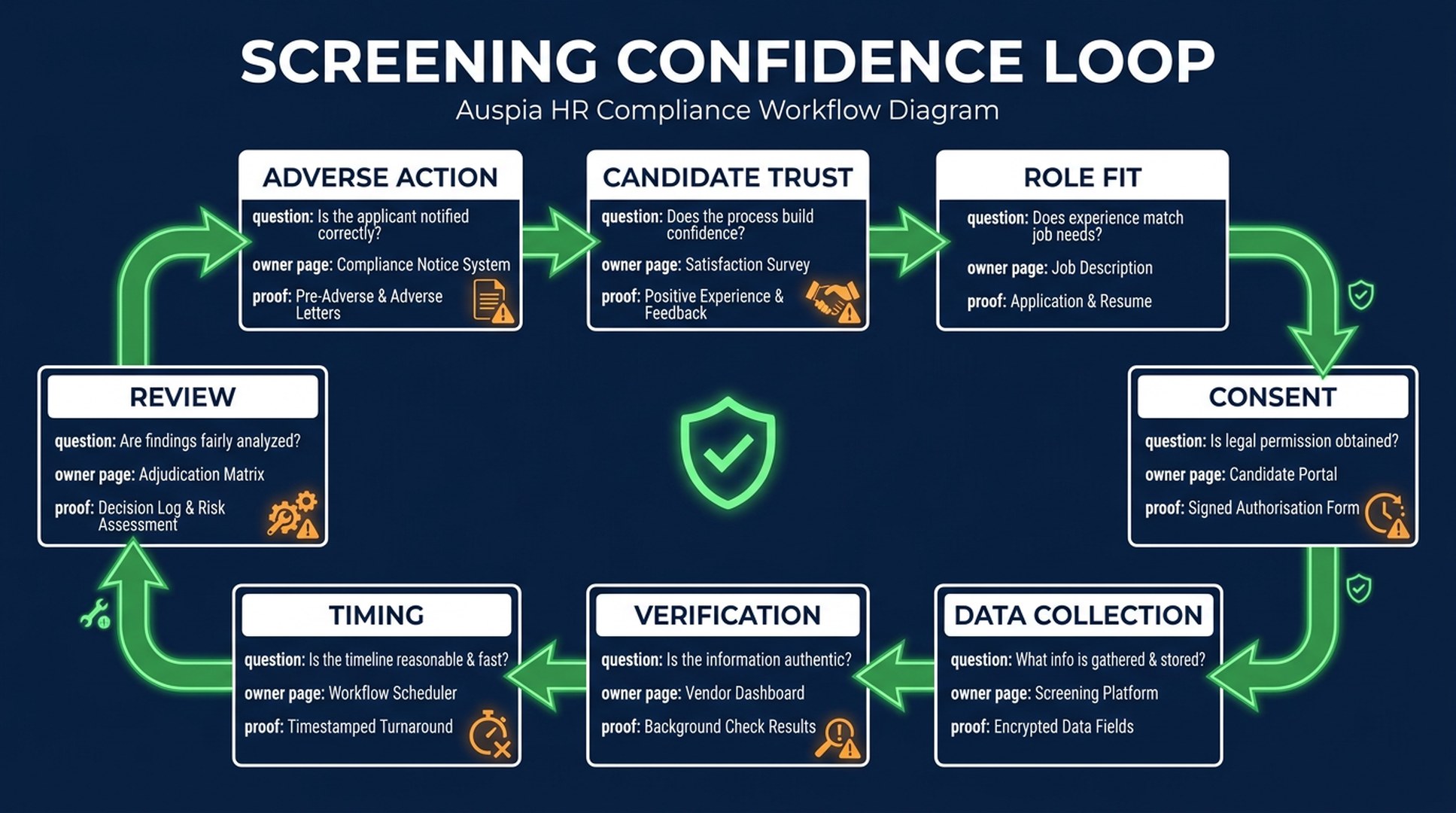
The Screening Confidence Loop connects employer confidence with candidate trust across consent, verification, timing, review, adverse action, and dispute workflows.
The 10 Query Types Background Check Teams Should Map
Query type | Typical user | Content that earns trust |
|---|---|---|
Screening scope | HR leader, recruiter, hiring manager | Role-based screening package guide |
Consent and disclosure | Compliance team, HR operations | Consent workflow and candidate notice page |
Turnaround time | Recruiter, candidate, hiring manager | Timing guide by check type and delay reason |
Criminal record review | HR, legal, candidate | Criminal background check explainer with caveats |
Adverse action | HR, compliance, recruiter | Adverse action workflow and checklist |
Candidate disputes | Candidate, support team | Dispute process and report correction page |
Data privacy and security | HRIS owner, security team | Data handling, retention, integration, and access control page |
Provider comparison | Buyer committee | Screening provider evaluation matrix |
Industry scenario | Healthcare, finance, education, logistics, gig work | Vertical-specific screening pages |
Pricing and packaging | HR buyer, finance | Cost drivers, package comparison, volume and integration pages |
How To Prioritize Background Check AI Search Questions
Score each query by risk, buyer pressure, and page fit.
Factor | High-value signal | Page implication |
|---|---|---|
Compliance sensitivity | Mentions consent, FCRA, adverse action, discrimination, dispute | Compliance workflow page |
Hiring urgency | Mentions delay, turnaround time, start date, offer | Timing guide and candidate status content |
Candidate impact | Mentions candidate rights, error, dispute, report copy | Candidate experience page |
Buyer evaluation | Mentions provider, vendor, best, compare, integration | Comparison and evaluation matrix |
Role risk | Mentions healthcare, drivers, finance, education, vulnerable populations | Industry or role-specific guide |
Pricing intent | Mentions cost, package, volume, international, drug testing | Pricing and package page |
Queries with both compliance sensitivity and buyer evaluation deserve the strongest editorial review. They are commercially valuable, but the language must be careful.
100 Employee Background Check AI Search Questions
Use this as a prompt library, not as 100 separate page ideas.
Screening Scope Questions
- What should be included in an employee background check?
- What background checks are common before hiring?
- How do employers choose the right background check package?
- What is the difference between criminal, employment, and education verification?
- Do all roles need the same background check?
- What background check is appropriate for remote employees?
- What background checks do employers run for managers?
- What checks are common for employees handling money?
- What checks are common for employees driving company vehicles?
- How should companies match screening depth to job risk?
Consent And Disclosure Questions
- Do employers need candidate permission for a background check?
- What is a background check disclosure form?
- What should a candidate authorization form include?
- Can background check consent be collected electronically?
- What does standalone disclosure mean for employment screening?
- Can an employer run a background check before a job offer?
- What should candidates see before a background check starts?
- Can consent cover future background checks during employment?
- What mistakes happen in background check consent workflows?
- How should HR teams explain background checks to candidates?
Turnaround Time Questions
- How long does an employee background check take?
- Why is my background check taking so long?
- What causes delays in county criminal searches?
- How long does employment verification take?
- How long does education verification take?
- Why do international background checks take longer?
- Can background checks be completed in one day?
- How do holidays and court closures affect screening time?
- How can recruiters reduce background check delays?
- What status updates should candidates receive during screening?
Criminal Record Review Questions
- What shows up on a criminal background check for employment?
- How far back do criminal background checks go?
- Can employers consider arrest records in hiring?
- How should employers review criminal records fairly?
- What is individualized assessment in background screening?
- What criminal records are job-related for hiring decisions?
- How do state laws affect criminal background checks?
- What is ban-the-box and why does it matter?
- Can a candidate explain criminal record information?
- How should HR document criminal record review decisions?
Adverse Action Questions
- What is adverse action in a background check?
- What is a pre-adverse action notice?
- What should be included in an adverse action workflow?
- When should an employer send a copy of the background report?
- What is the Summary of Rights under the Fair Credit Reporting Act?
- How long should employers wait after pre-adverse action?
- What happens if a candidate disputes a background report?
- Can an employer rescind an offer after a background check?
- What mistakes create adverse action risk?
- How can background check software support adverse action workflows?
Candidate Dispute Questions
- How can a candidate dispute a background check result?
- What should candidates do if a background report is wrong?
- How long does a background check dispute take?
- Can a candidate see their background check report?
- Who corrects incorrect background check information?
- What happens during reinvestigation of a disputed report?
- Can a candidate start work while a dispute is pending?
- How should employers communicate during a dispute?
- What support should a screening provider offer candidates?
- How can candidate portals improve background check trust?
Data Privacy And Security Questions
- What personal information is needed for a background check?
- How should background check providers protect candidate data?
- How long should employers keep background check records?
- How should old background reports be disposed of securely?
- Who can access background check results inside a company?
- How do background check platforms integrate with ATS and HRIS tools?
- What security questions should HR ask a screening vendor?
- How should background check data be handled for remote hiring?
- How do screening providers protect Social Security numbers?
- What audit trail should a background check platform provide?
Provider Comparison Questions
- How do I choose an employee background check provider?
- What should HR ask before buying background check software?
- What is the difference between a background check company and an HR screening platform?
- How should employers compare background check turnaround times?
- How should employers compare candidate experience across screening providers?
- What makes a background check provider compliant?
- How important are ATS integrations for background checks?
- What reporting should background check software provide?
- What should be in a background check vendor scorecard?
- How do enterprise screening providers differ from small business providers?
Industry Scenario Questions
- What background checks are common for healthcare workers?
- What background checks are common for finance roles?
- What background checks are common for delivery drivers?
- What background checks are common for education employees?
- What screening is needed for contractors and gig workers?
- What background checks matter for childcare roles?
- What background checks should staffing agencies run?
- How should companies screen remote international candidates?
- What checks are common for warehouse and logistics hiring?
- What background checks matter for senior care employees?
Pricing And Packaging Questions
- How much does an employee background check cost?
- What affects background check pricing?
- Why do county searches cost more in some places?
- How do background check packages differ?
- What is included in a basic employment background check?
- How much do international background checks cost?
- How does volume affect background check pricing?
- Are drug tests priced separately from background checks?
- How should HR budget for background screening?
- What background check package gives the best balance of speed, cost, and risk?
How To Turn Background Check Questions Into Citation-Ready Pages
Most screening providers should consolidate the 100 prompts into 8 to 12 strong owner pages.
Owner page | Query clusters it should cover | Conversion path |
|---|---|---|
Employee Background Check Scope Guide | 1-10 | Package selector or buyer checklist |
Consent And Disclosure Workflow | 11-20 | Compliance workflow demo |
Background Check Turnaround Time Guide | 21-30 | Candidate status and recruiter workflow page |
Criminal Record Review Guide | 31-40 | HR compliance content and industry pages |
Adverse Action Workflow | 41-50 | Platform workflow demo or compliance checklist |
Candidate Dispute And Experience Page | 51-60 | Candidate portal and support workflow |
Data Privacy And Security Page | 61-70 | Security review and HRIS integration page |
Provider Evaluation Matrix | 71-80 | Vendor comparison and demo path |
Industry Screening Guides | 81-90 | Healthcare, finance, logistics, education pages |
Pricing And Package Guide | 91-100 | Quote or package comparison page |
Every page should start with a direct answer, include caveats, show workflow steps, and explain what the software supports versus what employers must decide with legal or compliance counsel.
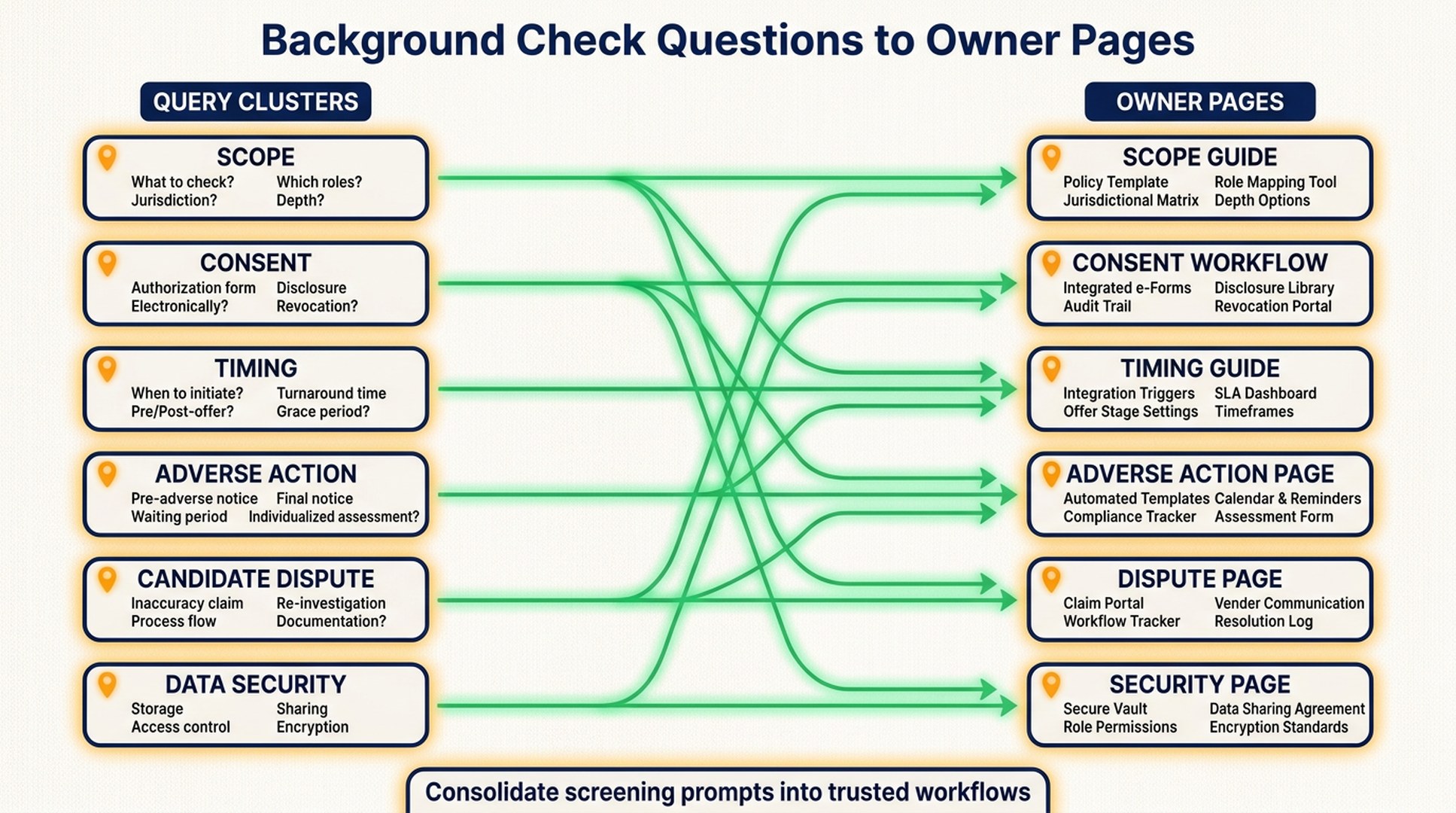
Background check prompts should consolidate into trusted workflows rather than thin pages that repeat compliance claims.
The First 20 Questions To Prioritize
Priority | Question | Best page |
|---|---|---|
1 | Do employers need candidate permission for a background check? | Consent Workflow |
2 | What is a background check disclosure form? | Disclosure Page |
3 | How long does an employee background check take? | Turnaround Time Guide |
4 | Why is my background check taking so long? | Candidate Status Page |
5 | What shows up on a criminal background check for employment? | Criminal Check Guide |
6 | How should employers review criminal records fairly? | Criminal Record Review Guide |
7 | What is adverse action in a background check? | Adverse Action Workflow |
8 | What should be included in an adverse action workflow? | Adverse Action Checklist |
9 | How can a candidate dispute a background check result? | Candidate Dispute Page |
10 | Can a candidate see their background check report? | Candidate Rights Page |
11 | How should background check providers protect candidate data? | Data Security Page |
12 | Who can access background check results inside a company? | Access Control Page |
13 | How do I choose an employee background check provider? | Provider Evaluation Matrix |
14 | What should HR ask before buying background check software? | Buyer Checklist |
15 | What background checks are common for healthcare workers? | Healthcare Screening Guide |
16 | What background checks are common for delivery drivers? | Driver Screening Guide |
17 | How much does an employee background check cost? | Pricing Guide |
18 | What affects background check pricing? | Cost Driver Page |
19 | How should companies match screening depth to job risk? | Role Fit Guide |
20 | What background check package gives the best balance of speed, cost, and risk? | Package Comparison Page |
30-Day Execution Plan
Days 1-5: Build The Screening Question Inventory
- Pull questions from sales calls, candidate support tickets, recruiter emails, implementation notes, and compliance reviews.
- Tag prompts by consent, timing, criminal record review, adverse action, dispute, security, provider comparison, and pricing.
- Separate employer questions from candidate questions.
- Identify places where AI systems currently cite generic HR blogs, legal sites, or competitor pages.
Days 6-10: Publish The Compliance Workflow Backbone
- Build the scope guide, consent workflow, turnaround time guide, and adverse action workflow.
- Add tables that show roles, required decisions, candidate touchpoints, and evidence.
- Include clear caveats that content is educational and not legal advice.
- Link workflows to product features only where the software genuinely supports the step.
Days 11-15: Build Candidate Trust Assets
- Publish the candidate dispute and experience page.
- Explain what candidates see, how status updates work, how disputes are handled, and how data is protected.
- Add candidate-facing language that recruiters can reuse.
- Build a privacy and data security page for HRIS, ATS, and procurement reviewers.
Days 16-22: Build Comparison And Industry Pages
- Publish a provider evaluation matrix.
- Build industry screening guides for healthcare, finance, logistics, education, staffing, and senior care.
- Create a pricing and package guide that explains cost drivers without pretending one package fits every role.
- Add integration content for major ATS and HRIS workflows if relevant.
Days 23-30: Test AI Visibility And Improve
- Run the first 20 questions across ChatGPT, Perplexity, Gemini, Google AI Overviews, and Bing Copilot.
- Record whether the brand appears, which sources are cited, and whether answers include appropriate caveats.
- Improve weak pages with clearer first answers, workflow tables, FAQs, and candidate-facing language.
- Review pages with HR, compliance, and customer support before pushing them heavily.
Common Mistakes
Mistake | Why it weakens GEO | Better move |
|---|---|---|
Saying "compliant" without explaining the workflow | AI answers need concrete steps and boundaries | Show consent, disclosure, adverse action, dispute, and privacy processes |
Writing only for HR buyers | Candidates also search and influence trust | Build candidate-facing status and dispute pages |
Promising instant checks | Timing depends on data sources, jurisdictions, employers, schools, and holidays | Explain delay factors clearly |
Treating every role the same | Screening scope should match role risk and local requirements | Build role and industry guides |
Ignoring adverse action | This is a high-risk buyer question | Create a careful workflow page with caveats |
Hiding data security details | HR and security teams need procurement confidence | Publish data handling, access, retention, and integration content |
Creating thin industry pages | Repetition weakens trust | Use real role-specific checks, workflows, and caveats |
FAQ
Is background check GEO different from general HR software SEO?
Yes. General HR SEO often focuses on recruiting software, onboarding, payroll, or ATS features. Background check GEO needs to answer compliance-sensitive questions about consent, reports, disputes, adverse action, timing, privacy, and job relevance.
Should background check providers publish compliance content?
They can publish educational workflows and buyer questions, but they should avoid presenting general content as legal advice. Employment screening rules can vary by federal, state, local, role, and industry context, so pages should include caveats and encourage review with qualified counsel.
Which background check pages should be built first?
Start with screening scope, consent and disclosure, turnaround time, adverse action, candidate dispute, data privacy, provider comparison, and pricing. These pages cover the questions most likely to affect buyer trust and candidate experience.
Can candidate-facing content help GEO?
Yes. Candidates search for background check delays, report access, disputes, and privacy. If your provider explains those topics clearly, AI systems may have a better source to summarize and recruiters may receive fewer confused support requests.
How should HR tech teams measure AI Search visibility?
Create a fixed prompt set, test it across AI answer platforms, record brand mentions and citations, and review whether answers include accurate workflow caveats. The first 20 questions in this article are a practical starting set.
Auspia Takeaway
Employee background check GEO works when content protects both sides of the hiring process. Employers need speed, role fit, compliance workflows, and vendor confidence. Candidates need transparency, fairness, status, and dispute paths. The brands that explain those workflows clearly give AI systems better material to cite and give HR buyers a better reason to trust them.
Author: Tessa Clarke, Content Governance Lead for 120+ Editorial Systems at Auspia. Tessa writes about editorial governance, review workflows, publishing standards, and compliance-aware content systems.