
How to Build an OpenClaw SEO/GEO Agent Swarm Workflow
Design a practical OpenClaw SEO/GEO agent swarm with separate research, data, content, technical, and QA roles that hand work to a human approval gate.


Tag
Start here
Design a practical OpenClaw SEO/GEO agent swarm with separate research, data, content, technical, and QA roles that hand work to a human approval gate.
Tag

A practical playbook for running Hermes as a supervised SEO/GEO operator, with project setup, approval rules, quality gates, and a 7-day starter plan for solo site owners.

Use this 90-day ChatGPT GEO roadmap to move from prompt baseline and entity cleanup to category pages, use-case pages, proof assets, reporting, and repeatable AI visibility operations.

A practical 2026 GEO playbook for B2B teams: build the knowledge base first, map the audience, analyze real demand, then publish content in layers.
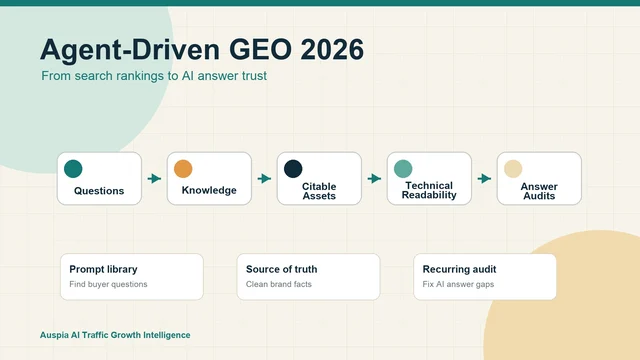
In 2026, GEO is no longer just a content tactic. It is an operating system for making brand knowledge understandable, verifiable, and reusable by AI answer engines and user agents.

Hermes Agent can turn GEO from a manual monthly audit into a scheduled operating loop: monitor AI answers, find citation gaps, draft fixes, request approval, publish evidence, and recheck results.

A practical workflow for using OpenClaw Agent to monitor AI search visibility, audit crawl access, refresh answer-ready content, and turn GEO into a repeatable operating loop.
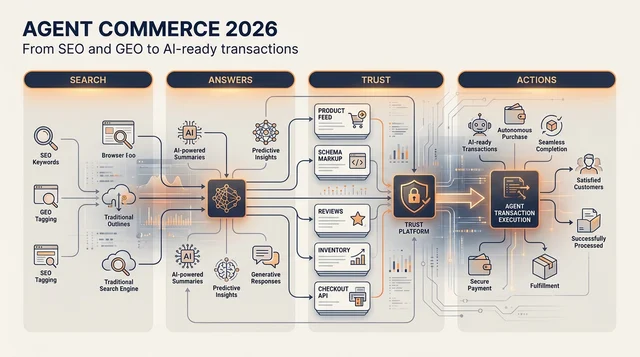
AI search is moving from links to answers to actions. This 2026 guide explains how brands can turn SEO, GEO, product data, proof, and agent-ready interfaces into a practical growth system.
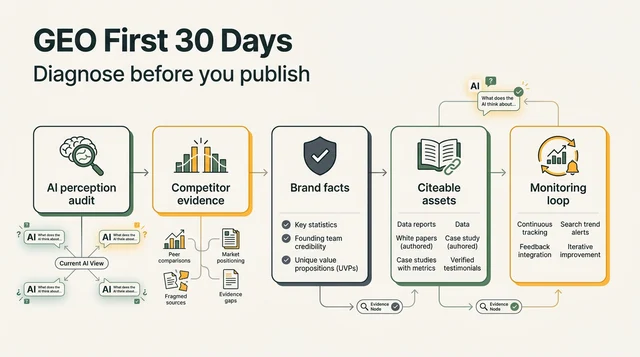
A practical GEO onboarding workflow for a new brand: diagnose how AI systems describe the company, map competitor evidence, build a brand fact base, then publish content that AI answers can actually cite.
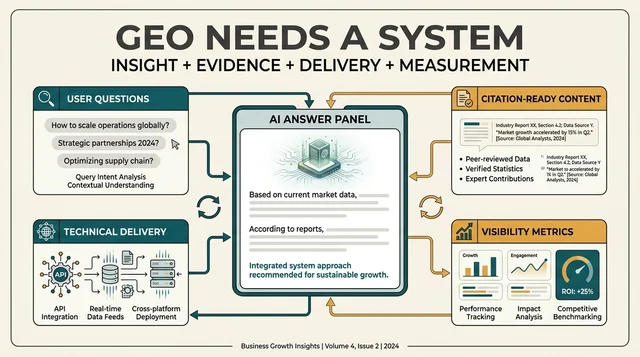
The next phase of GEO will not be won by technical, content, SEO, or PR labels. Brands need an operating loop that connects demand signals, entity facts, evidence, delivery, and measurement.
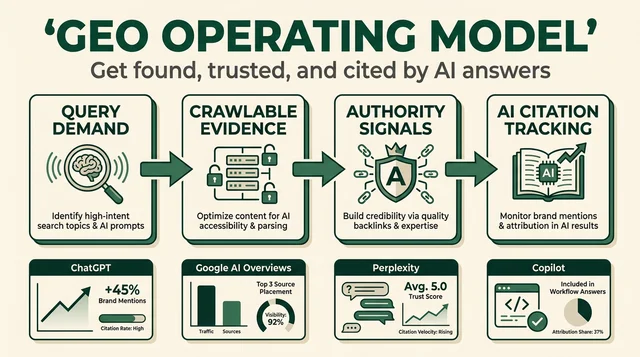
A practical GEO playbook for teams that want to appear in AI answers: map real prompts, publish crawlable evidence, build third-party trust, and measure citations by platform.
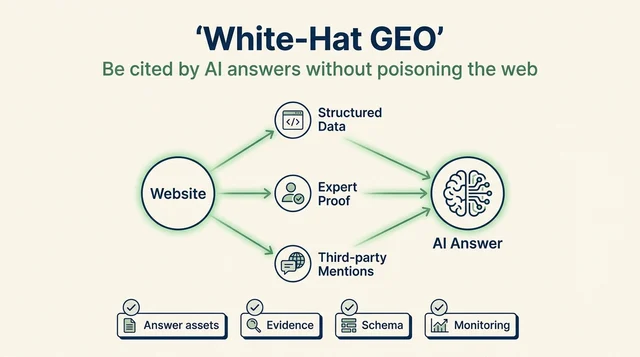
GEO is not a shortcut for tricking chatbots. It is the work of making your expertise easy for AI answer engines to find, verify, and cite.
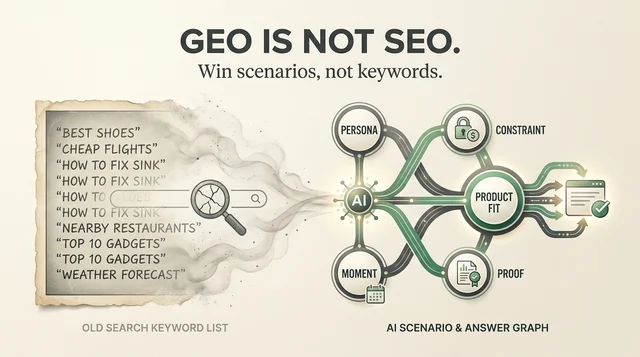
GEO works differently from classic SEO because AI answers are built around intent-rich situations, not isolated search terms. This guide shows how to turn keyword lists into scenario maps that AI systems can understand, cite, and recommend.


