

Quick answer
AI Overview optimization is not a secret tag. It is the discipline of making a page useful as source material: clear answer, clear entity, clear evidence, and low ambiguity.
For growth teams, the practical question is not whether the keyword is trending. The question is whether the query can teach you how people ask, how AI systems summarize, and what kind of source earns trust. Auspia treats these topics as search-behavior signals, then turns the useful ones into durable SEO, GEO, or AEO assets.
Signal | What to check | Why it matters |
|---|---|---|
Intent | What does the user need now? | Prevents traffic chasing |
Source standard | Who would AI trust? | Shapes citation strategy |
Freshness | How fast does the answer change? | Defines update cadence |
Business fit | Can this support a buyer journey? | Keeps content useful |
What source selection usually favors
AI answer systems tend to prefer pages that match the query tightly, state facts clearly, and provide enough context to avoid misinterpretation. A long article can still be weak if the answer is buried. A short page can be strong if it explains the entity, conditions, and evidence plainly.
The four-part checklist
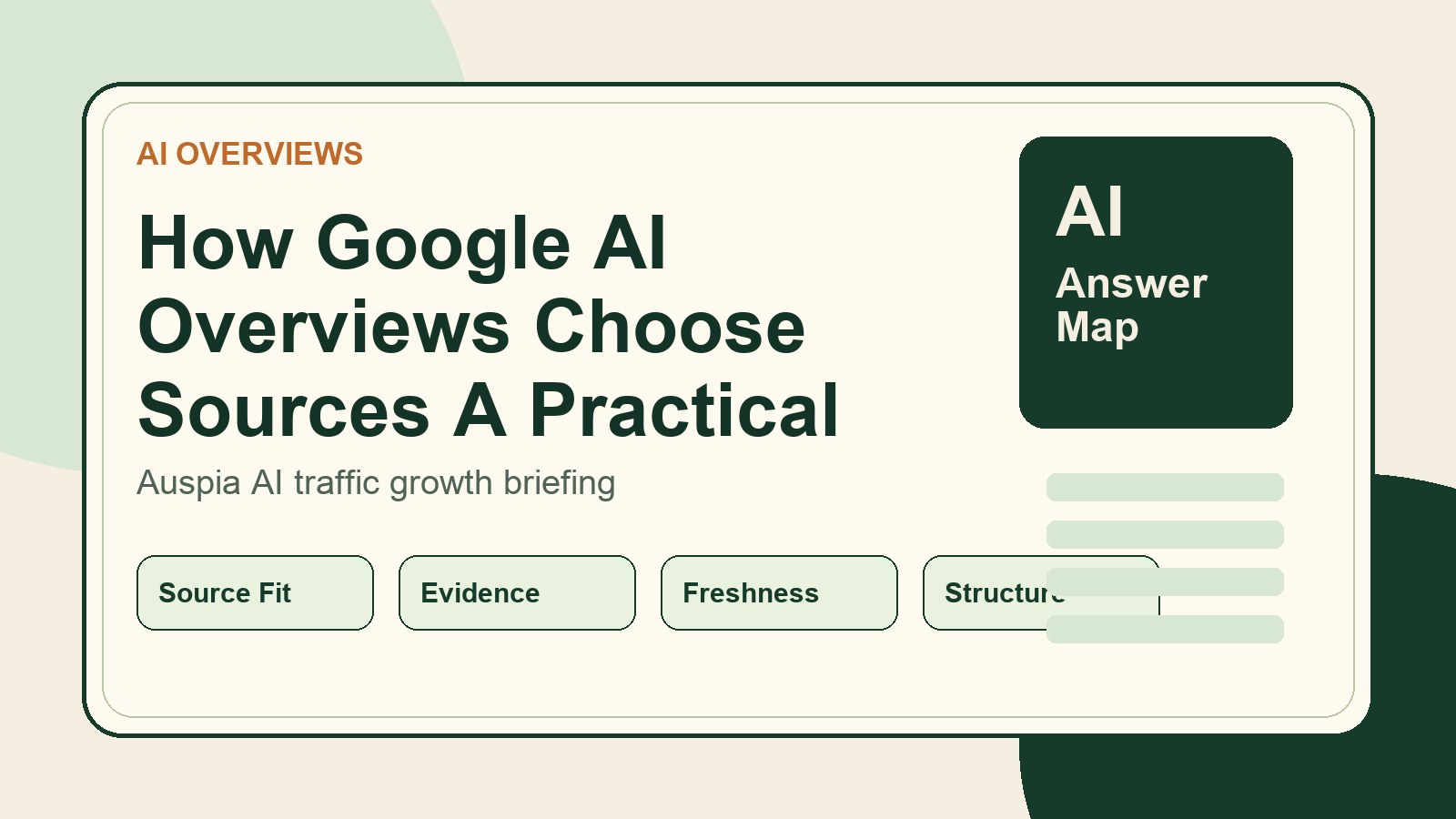
First, match intent. Second, make the answer extractable. Third, show why the answer is credible. Fourth, maintain freshness where the topic changes. These are basic editorial habits, but they become more important when AI compresses multiple pages into one response.
Content decision | Recommended action |
|---|---|
If the query changes daily | Use a dated brief or live page |
If the query is evergreen | Build a durable guide or glossary page |
If trust is the issue | Add sources, evidence, and entity facts |
If AI misdescribes the brand | Rewrite the core entity page first |
Page elements that help
Use descriptive headings, short definitions, comparison tables, FAQ blocks based on real questions, author or organization facts, visible dates for changing topics, and internal links to supporting pages. Avoid hiding key information in images or marketing videos.
Where teams go wrong
Many teams add FAQ schema without improving the answer. Others rewrite pages for keywords but leave the buyer question unanswered. The worst pattern is inflated authority language with no proof. AI can repeat weak claims, but weak claims rarely become strong citations.
Auspia checklist
Test every priority page against three prompts: a definition prompt, a recommendation prompt, and a comparison prompt. If the answer system cannot classify your page or cite a specific section, rewrite the opening, table, and proof area first.
What Auspia would do next
Auspia would not start by publishing ten disconnected posts. We would build a prompt set, map it to pages, check current AI answers, then decide which page type has the best chance to improve visibility. For many teams, the first useful action is a small visibility audit with the AI Search Visibility Checker, followed by a page rewrite and a repeat check two to four weeks later.
FAQ
Is this topic mainly SEO or GEO?
It is both. SEO helps the page become crawlable, indexable, and competitive in search. GEO adds the answer-readiness layer: clear entities, extractable claims, trustworthy evidence, and measurement across AI answer surfaces.
How should a small team start?
Start with one high-intent query group, rewrite the page that should answer it, add a concise table or checklist, and test the page against five AI prompts before expanding the project.
What should we measure?
Track rankings, impressions, AI mentions, citation URLs, description accuracy, branded search lift, assisted conversions, and sales notes. One metric will not explain the full impact.
Author: Isabel Grant, Researcher of 2,000+ AI Citation Patterns at Auspia. Isabel writes about citation earning, source quality, and the way AI answer systems select evidence.