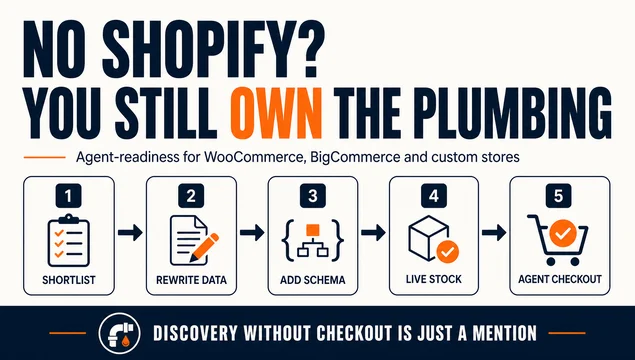
How to Get Your Products Recommended by Meta Muse Without Shopify
Not on Shopify? You still own the plumbing that makes an AI agent able to find, trust, and buy from you. Here is the WooCommerce, BigCommerce, and custom-storefront workflow.


Category
Start here
Not on Shopify? You still own the plumbing that makes an AI agent able to find, trust, and buy from you. Here is the WooCommerce, BigCommerce, and custom-storefront workflow.
Category
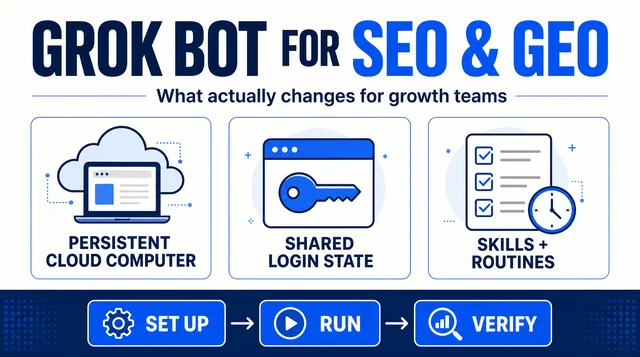
Grok Bot gives SEO and GEO teams something they have not had before: a persistent cloud computer with live login state. Here is what that genuinely changes, what it does not, and where the workflow still breaks.
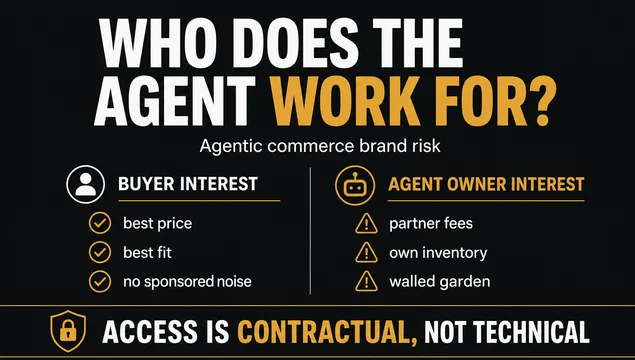
Meta Muse now decides which brands a buyer sees. When the agent's owner also earns from the transaction, brand discovery stops being neutral. Here is how to tell the difference and what to govern.
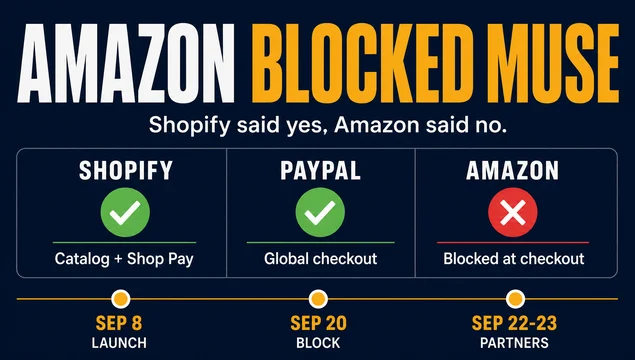
Amazon blocked Meta's Muse agent on September 20, while Shopify, PayPal, Expedia, and Instacart opened checkout to it. Here is what the split actually decides, and what brands should do about it this week.
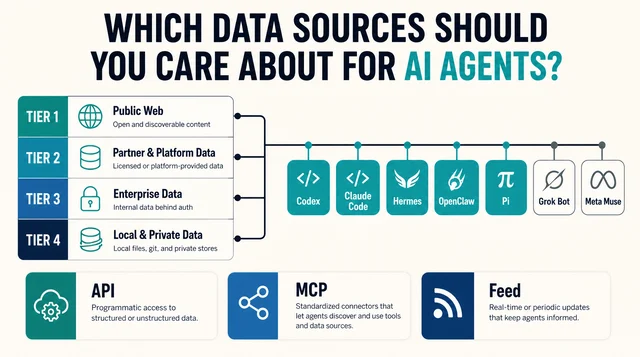
A tiered map of the data sources AI answers actually pull from, plus the API or MCP path that lets Codex, Claude Code, Hermes Agent, OpenClaw, Pi Agent, Grok Bot, and Meta Muse read each one directly.
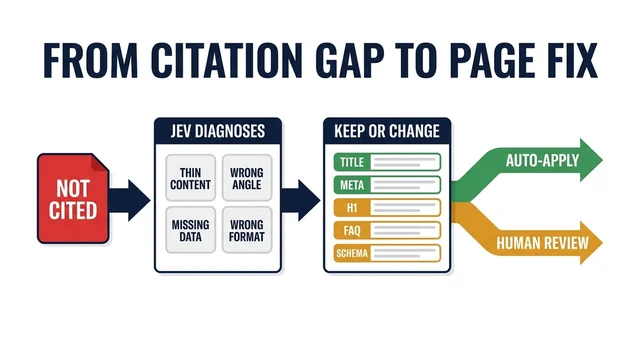
Scoring tells you which pages are not being cited. This workflow tells you what to change. A keep-or-change decision layer across title, meta, H1, FAQ, and schema, with a rewrite checklist and a confidence gate that keeps the risky edits human.
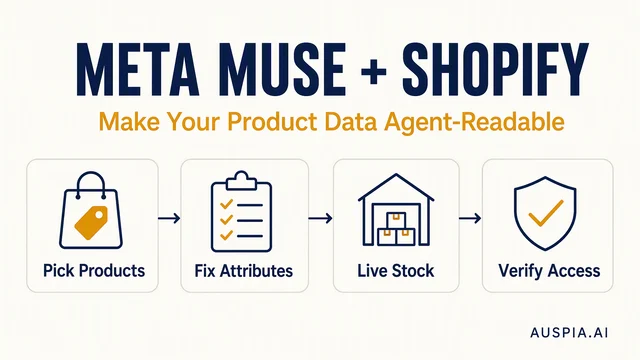
Meta's Muse can now search Shopify Catalog and check out with Shop Pay, and Amazon has blocked it for exactly that kind of access. Here is the product-data workflow that gives Muse something accurate to recommend.
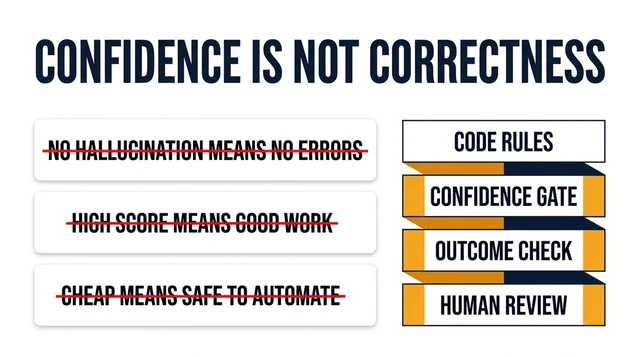
Three myths that will get your site into trouble: that no hallucination means no errors, that a high confidence score means good work, and that cheap per call means cheap per decision. Here is the guardrail design that actually holds.
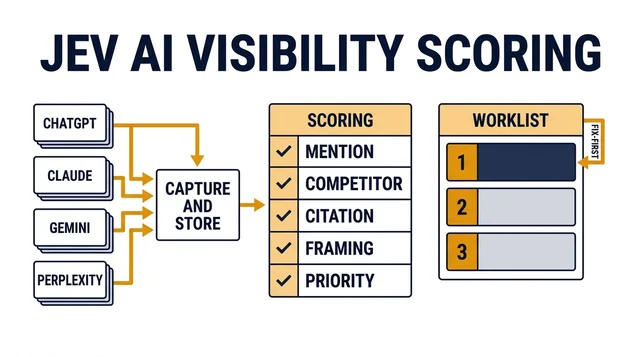
A scored prompt log that turns raw AI answers into a fix-first worklist. Capture answers first, let Jev judge mention, competitor, citation, and framing, then map every low score to a page-level action.
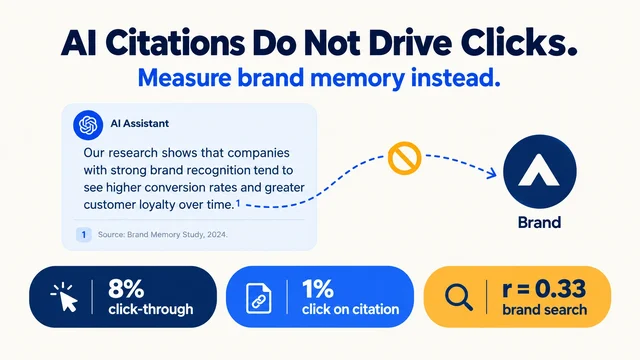
AI citations are a brand-memory signal, not a traffic channel. Here are the three signals to track instead of referral clicks — plus a GEO scorecard you can run this week.
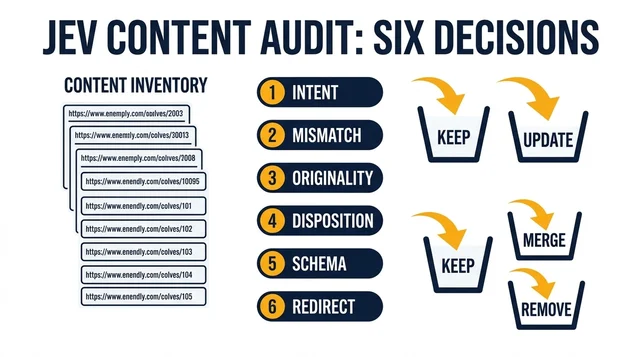
Six repeatable Jev jobs that turn a flat URL inventory into a routed content plan: intent tagging, mismatch detection, originality scoring, keep/update/merge/remove disposition, schema checks, and redirect matching.
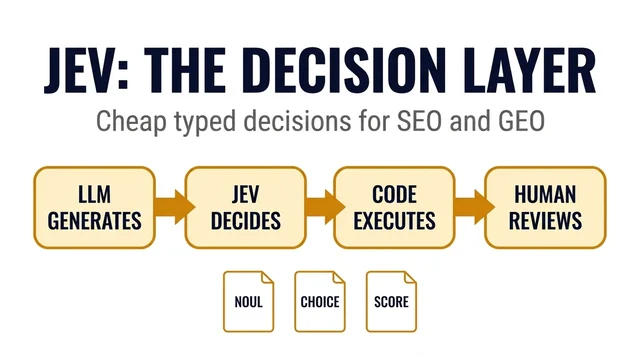
Jev is not a better writer. It is a cheap, fast judge that turns repeated SEO and GEO decisions into typed answers with confidence scores. Here is what it does, how to wire it into Codex, Claude Code, Hermes, OpenClaw, and Pi, and where it will quietly mislead you.
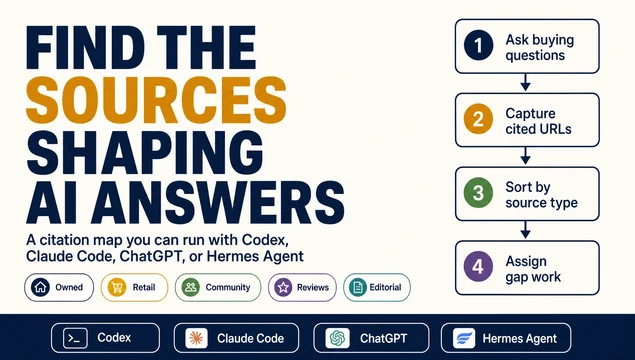
A citation map tells you which pages an AI engine actually pulled from, rather than just whether your brand got mentioned. Here is the full method, plus a runnable setup for Codex, Claude Code, ChatGPT, and Hermes Agent.