The short version
On the night of September 20, 2026, Meta Muse users who asked the agent to buy something on Amazon stopped getting a cart. They got a popup instead: "Continued access by an unauthorized AI agent violates Amazon's Conditions of Use, to which our customers have agreed."
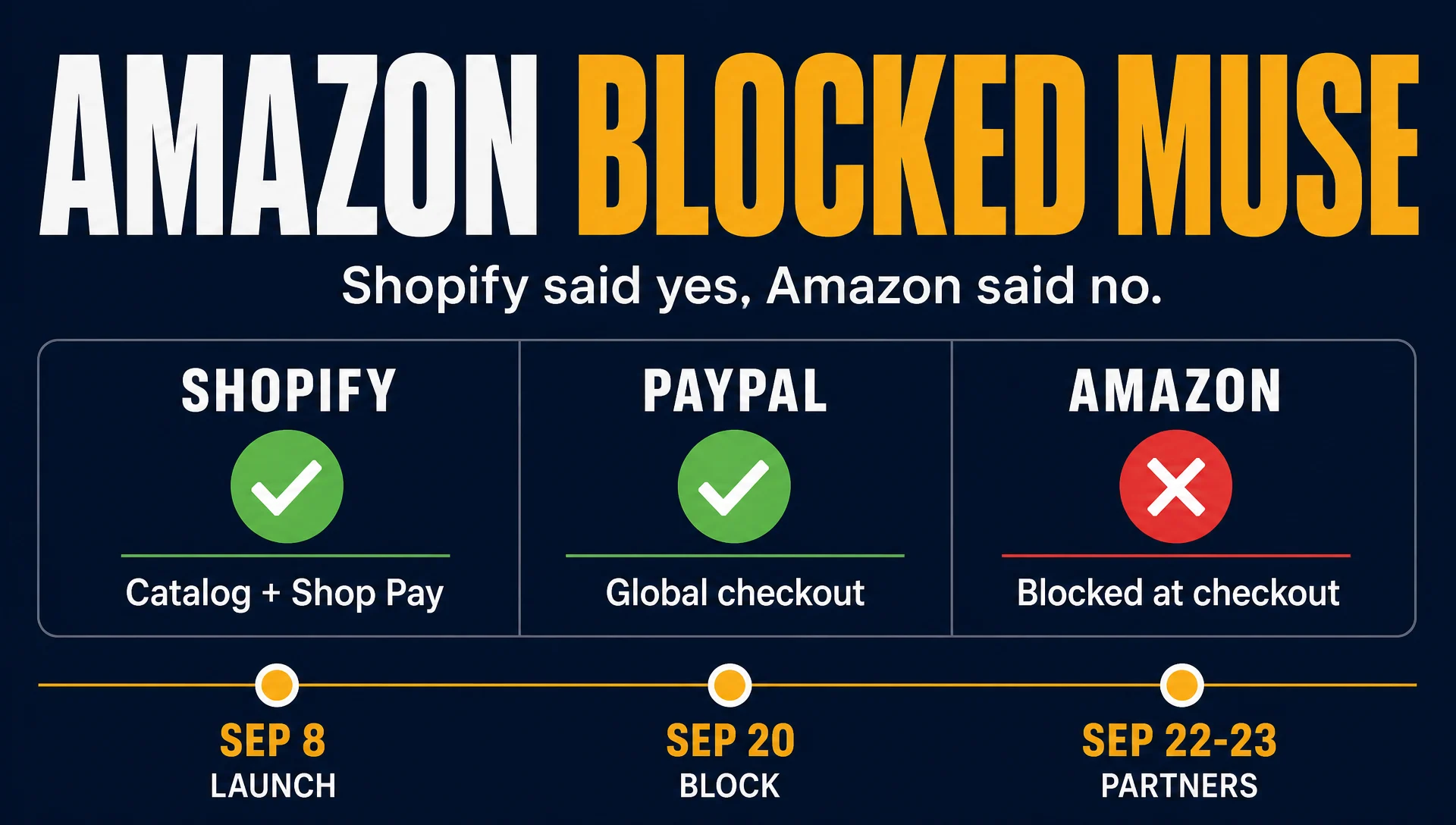
Within 72 hours, four other companies did the opposite. Shopify connected Muse to Shop Pay and its catalog. PayPal opened checkout across its merchant network. Expedia took travel bookings. Instacart took grocery orders.
Two companies looked at the same agent and reached opposite conclusions. That difference is now the most useful signal in agentic commerce, because it tells you what actually decides whether an AI agent can reach your products. It is not the quality of your SEO. It is whether the platform you sell on has agreed to let the agent in.
What happened, with dates
Date | Event | Source |
|---|---|---|
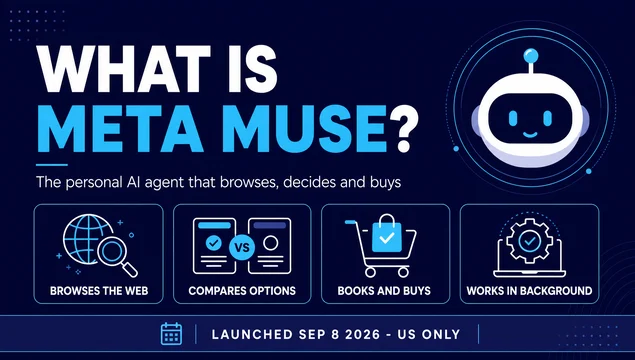
Sep 8, 2026 | Meta launches Muse, a personal AI agent, US-only, 18+ | Meta announcement |
Sep 20, 2026 | Amazon begins blocking Muse at checkout with a ToS popup | GeekWire, via Forbes |
Sep 21, 2026 | Shopify confirms Muse can search Shopify Catalog and check out with Shop Pay | Shopify, Meta |
Sep 22, 2026 | PayPal announces Muse checkout across PayPal merchants worldwide | PayPal, Meta |
Sep 22, 2026 | Expedia partnership confirmed for travel booking through Muse | Meta |
Sep 23, 2026 | Instacart connects, turning a phrase like "Taco Tuesday" into a completed grocery order | Meta |
Amazon's stated reasons were specific. It said Meta never disclosed that Muse would shop Amazon, that the agent did not identify itself as automated while browsing, and that it appeared to capture and store customer credentials. Amazon asked Meta to remove Amazon from the Muse shopping experience. Meta declined. Amazon blocked it unilaterally.
Meta's launch post states the opposite about credentials: Muse has no visibility into passwords or payment methods, and logins go into secure storage the agent can use without seeing the values. Both companies are describing the same architecture and drawing different conclusions about whether it is acceptable.
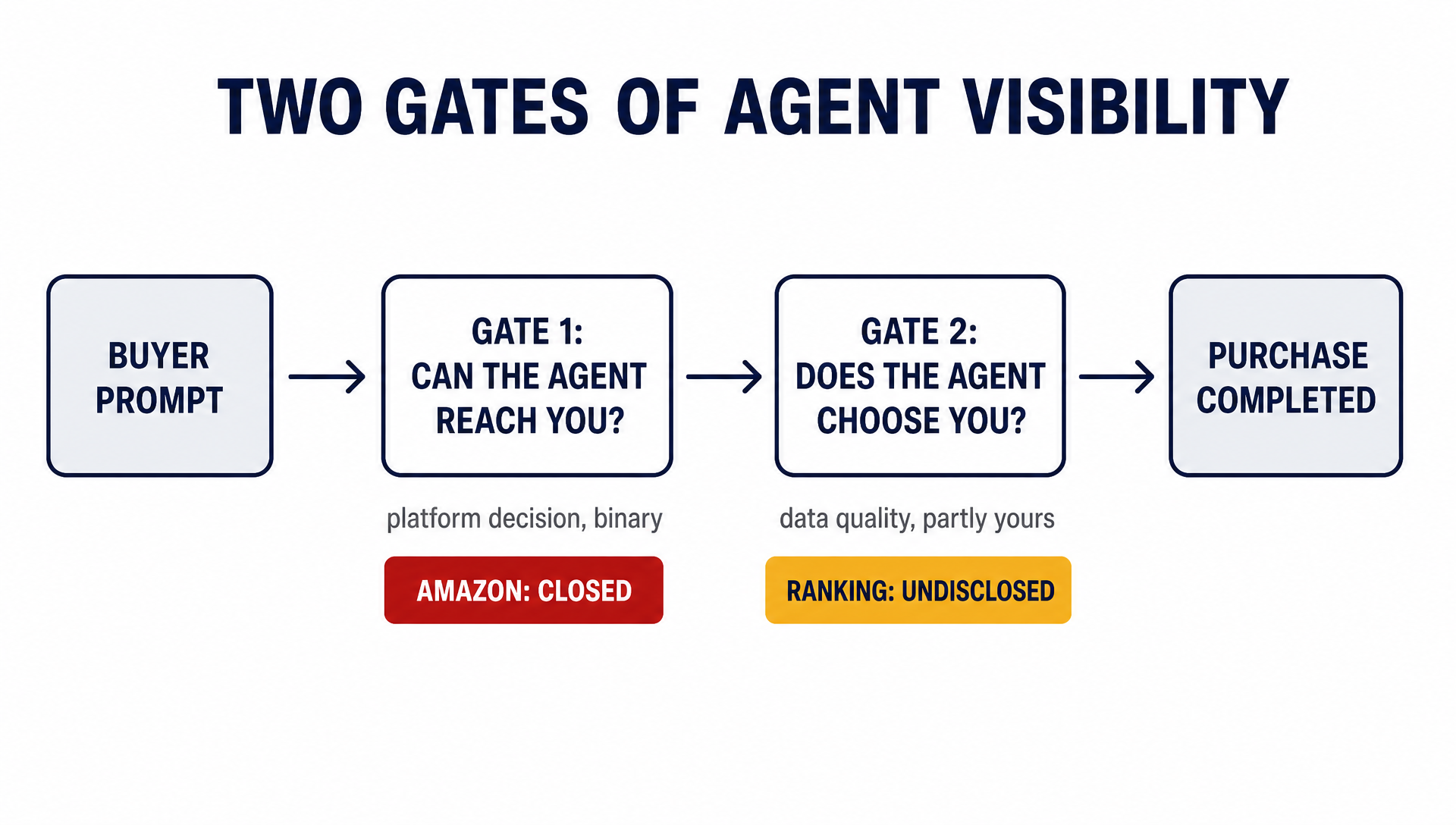
Agent visibility now has two gates. The first is a platform decision brands cannot influence; the second is the data-quality work they can.
Why Amazon used a popup instead of a lawsuit
This is the part most coverage skipped, and it is the part that matters for anyone planning around agent access.
Amazon has fought this exact fight in court before. In November 2025 it sued Perplexity over Comet, a browser whose built-in agent shopped Amazon for users. In March 2026 a federal judge sided with Amazon and barred the agent from password-protected parts of the site. Then on August 4, 2026, a federal appeals court threw that order out. The court's reasoning was narrow and important: when an agent follows a shopper's instruction, the shopper is the one using Amazon, and the software is only doing what it was told.
That ruling removed Amazon's ability to argue the agent broke in. So Amazon changed the argument. The popup does not claim Muse hacked anything. It points at the terms every customer already accepted when they opened an account. Instead of fighting the agent, Amazon put the decision back on the shopper's own contract.
For brands, the lesson is structural. The company holding the customer account still decides which agents come in, and it can do so through terms of service rather than technical blocks. A robots.txt rule and a ToS clause are now two different doors, and either one can close.
The split is not about agents. It is about who owns the shopper.
Amazon's own position makes this clear. Amazon runs Alexa for Shopping, which replaced Rufus in May 2026, and a feature called Buy for Me that purchases from other retailers on a customer's behalf. On the July 2026 earnings call, Andy Jassy said more than 350 million shoppers used it over the past 12 months, and that US customers who use it spend 40% more per order on average.
Amazon is not against agents shopping. It is against an agent it does not control standing between its customer and its checkout. Amazon's statement to GeekWire set the rule it wants: "Third-party applications that offer to make purchases on behalf of customers from other businesses should operate openly and respect service provider decisions."
Meta has made the same move from the other side. In October 2025 it changed WhatsApp's business terms to bar general-purpose AI chatbots, including ChatGPT and Perplexity, from the business messaging service. That rule took effect January 15, 2026. Inside its own apps, Meta decides which agents get in.
One practitioner reading of the Shopify and Expedia deals is worth taking seriously. In a September 22 thread, investor and operator commentary on X argued that when a partnership determines where the agent looks first, the agent may not be optimizing for the buyer's best price but for the model-maker's best revenue source. The thread's blunt conclusion: "partnerships can determine who gets the traffic before a search ever happens for the most high value searches."
That is a claim, not a proven fact. Meta has not published how Muse orders its recommendations, and no partner has disclosed commission terms or ranking influence. But the concern is testable, and it should be on your watch list rather than dismissed.
What this changes for brand visibility
The practical shift is that "being findable" now has two gates instead of one.
Gate one: can the agent reach you at all? This is a platform decision. If you sell on Amazon, Muse cannot complete a purchase for you today, regardless of how good your product data is. If you sell on Shopify, Muse can, because Shopify built the permissioned path.
Gate two: does the agent choose you? This is still partly yours. Shopify Catalog makes your product available and standardizes its attributes. It does not decide whether Muse recommends you. Shopify says ranking factors vary by platform and may include data quality, relevance, availability, pricing, and engagement signals. Meta has published nothing.
Most brands are spending all their attention on gate two and have not checked gate one. That is backwards. Gate one is binary, it is decided by someone else, and it can change without notice.
What teams should do this week
1. Map your own exposure. For each revenue channel, write down which agents can currently complete a purchase there. Amazon: blocked for Muse today. Shopify: open via Shop Pay. PayPal merchants: open. Stripe Link merchants: open. Direct storefront: depends on whether you accept an agent-capable payment rail. This takes an hour and it will change how you prioritize everything else.
2. Check your robots.txt against agent user-agents. Do not assume your default configuration is neutral. Pull your live robots.txt and read what you are telling automated agents. If you are blocking broadly to stop scrapers, you may also be blocking the agents that would otherwise send you buyers.

Amazon's robots.txt is the technical half of its access policy. The terms-of-service clause is the other half, and it is the one that blocked Muse.
3. Do not build a strategy on a partner's ranking formula. It does not exist publicly. Anyone selling you a "Muse ranking hack" is guessing. What you can control is whether your product data is accurate, complete, and current enough for any agent to act on.
4. Watch the terms, not just the technology. Amazon's block came through a customer agreement, not a firewall. If you sell on a marketplace, read the terms that govern automated access, and expect them to change. Set a quarterly reminder to re-read them.
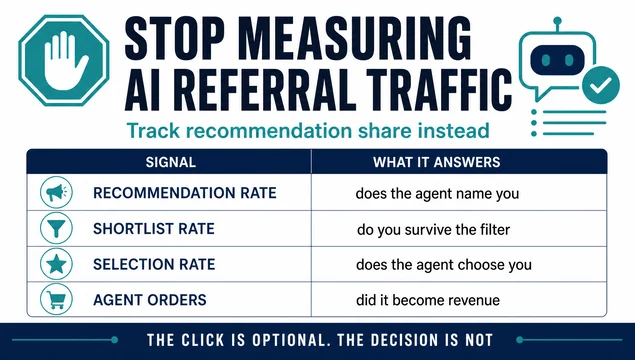
5. Log agent-originated orders now, even if the number is zero. Shopify tags Muse orders to Meta in the merchant admin. Start the log before you have data. In a year, the brands that can show a trend will be the ones who know which changes actually correlated with agent recommendations.
What is still uncertain
Be careful with confident claims in this space. As of September 23, 2026:
- Meta has not published how Muse ranks or selects products.
- No partner has disclosed the commercial terms behind its Muse integration.
- Amazon has not said whether the block is permanent or negotiable.
- There is no published data on how many Muse purchases have actually completed.
- Muse is US-only, so none of this applies to non-US catalogs yet.
Treat any figure about "Muse traffic" or "Muse conversion" as unverified until Meta or a partner publishes it.
Metrics to watch
Signal | Where to find it | Why it matters |
|---|---|---|
Agent-originated order count | Shopify admin, tagged to Meta | The only hard evidence of agent revenue |
Checkout failure rate by channel | Payment provider reports | Reveals whether an agent can complete, not just browse |
Product data completeness | Your own catalog audit | The variable you actually control |
Partner announcements | Meta, Shopify, PayPal, Amazon newsrooms | Gate one can open or close without warning |
Terms of service changes | Marketplace legal updates | The mechanism Amazon actually used |
Auspia's view
The interesting question is no longer whether AI agents will shop. Four major commerce platforms opened checkout to Muse in three days, and Amazon's block is a defensive move by a company that already runs its own agent. The interesting question is who holds the gate.
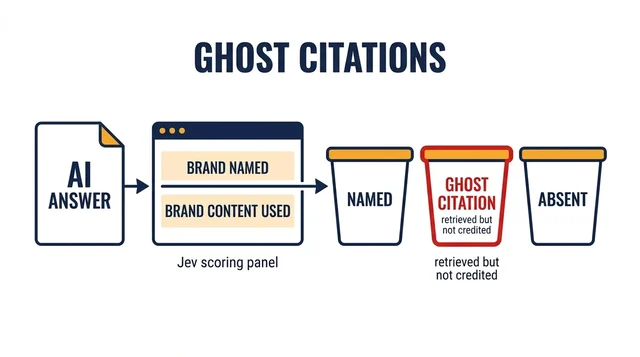
For brands, that reframes GEO work. Generative engine optimization has mostly been about earning a mention in an AI answer. Agentic commerce adds a harder requirement: the agent has to be able to act. A perfect citation is worth less than a checkout the agent cannot complete.
The brands that come out ahead will be the ones that treat agent access as an infrastructure question, not a content question. Check the gates first. Then optimize the data behind them.
FAQ
Did Amazon block all AI agents, or just Muse? Just Muse, for now. Amazon has separately restricted Google and OpenAI shopping agents, and it sued Perplexity over Comet. Amazon runs its own agent, Alexa for Shopping, which it allows. The pattern is selective access, not a blanket ban.
Can I get Muse to shop my Amazon listings anyway? No. The block stops the purchase at Amazon's checkout. You cannot work around a platform-level block with better product data.
Does this hurt my regular SEO? No. The Amazon block affects agent checkout, not search rankings. Your organic visibility on Amazon is unchanged.
Why did Shopify say yes and Amazon say no? Shopify's channel runs through Shopify Catalog and Shop Pay, a permissioned path where Shopify is in the loop and orders land tagged in the merchant's admin. Amazon's objection was that Meta never asked and the agent did not identify itself. The difference is consent and structure, not the concept of an agent buying.
Should I move my store off Amazon? Not on the basis of this alone. But if agent-driven discovery becomes a meaningful share of your category's demand, a channel where agents can complete a purchase is worth having. That is a portfolio decision, not a reaction to one block.
How do I know if Muse is sending me orders? On Shopify, Muse orders are tagged to Meta in your admin. On other platforms, check whether your payment provider reports agent-initiated transactions. If neither applies, you currently have no way to measure it.
Author: Sophie Renard, AI Search Briefing Analyst Tracking 30+ Platforms at Auspia. Sophie writes about platform changes, agent commerce, and what search shifts mean for growth teams.