Quick Answer
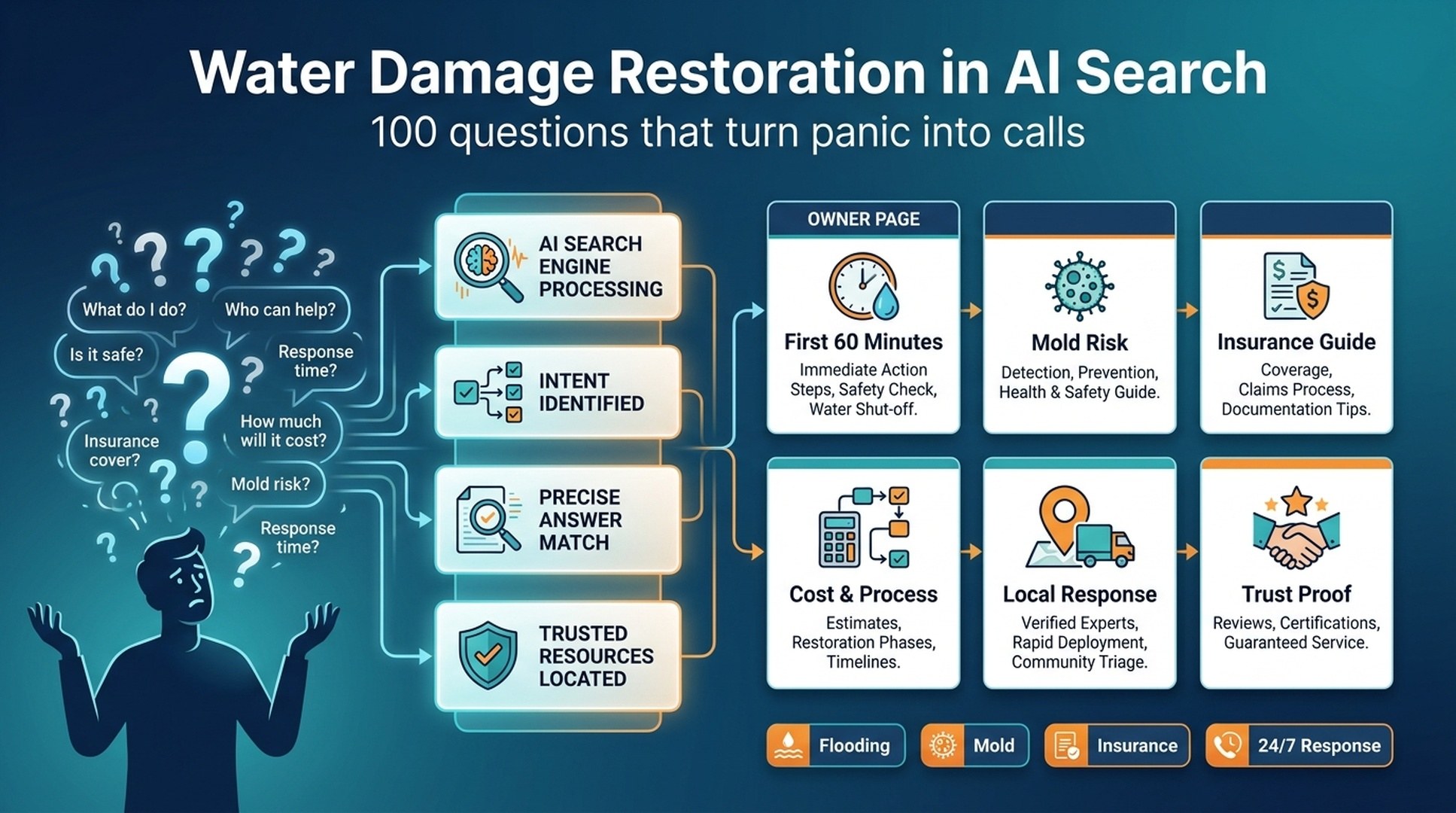
Water damage restoration GEO is built around a very specific moment: the property owner knows something is wrong, but they are not sure how fast to act, who to call first, whether insurance will cover it, and whether mold risk has already started. That makes the search journey more urgent and more complex than a normal local service query.
For restoration companies, franchise operators, and local SEO teams, the best AI Search content usually maps panic questions to six owner assets:
Panic question | Best owner asset | Proof AI systems can extract |
|---|---|---|
What should I do right now? | First 60 Minutes guide | Safety steps, water shutoff, photo checklist, what not to touch |
Is this an emergency? | Damage severity triage page | Category of water, affected materials, contamination risk |
Who should I call first? | Plumber vs restoration guide | Role boundaries, mitigation timing, insurance documentation |
Will insurance cover it? | Insurance documentation guide | Claim steps, photos, invoices, adjuster coordination caveats |
When does mold become a risk? | Mold-risk timeline page | Moisture, time, materials, inspection triggers |
Can this company handle it? | Trust and response-time page | Certifications, equipment, reviews, service area, 24/7 process |
The goal is not to publish 100 thin keyword pages. The goal is to build a small, authoritative emergency library that AI systems can understand, summarize, and recommend when users need help quickly.
The Mitigation Decision Map
Water damage restoration content should follow the decision path a real caller faces. The first concern is not a brand comparison. It is stopping damage and preventing bad choices.
Stage | What the property owner needs | Content job |
|---|---|---|
Safety | Know what not to touch | Explain electrical, sewage, ceiling, and contamination cautions |
Source control | Stop additional water | Clarify when to shut off water, call a plumber, or avoid DIY |
Documentation | Preserve claim evidence | Show photo, video, receipt, and timeline checklist |
Mitigation | Dry and stabilize materials | Explain extraction, drying, dehumidification, and monitoring |
Insurance | Understand the claim path | Explain documentation, adjusters, deductibles, and coverage limits |
Mold risk | Know when delay becomes expensive | Explain moisture, porous materials, and inspection triggers |
Trust | Choose a credible team | Show certifications, equipment, response process, and service area |
Recovery | Move from emergency to repair | Explain rebuild, contents, follow-up checks, and prevention |
Auspia's recommendation: restoration pages should be practical, calm, and caveated. Avoid promising coverage, guaranteed drying times, or fixed mold outcomes. Clear boundaries make the content more credible and safer for AI answers.
Why Water Damage GEO Starts Before The Estimate
Many restoration sites focus too quickly on "call now" language. That matters, but the user often needs one or two answers before they feel safe enough to call.
They may ask:
- "Is water under hardwood floors an emergency?"
- "Should I call insurance or a restoration company first?"
- "How long before mold grows after a leak?"
- "Can I clean up toilet overflow myself?"
- "What photos should I take for a water damage claim?"
These prompts contain safety, insurance, urgency, trust, and cost concerns. A generic service page cannot answer them well. A well-structured restoration library can.
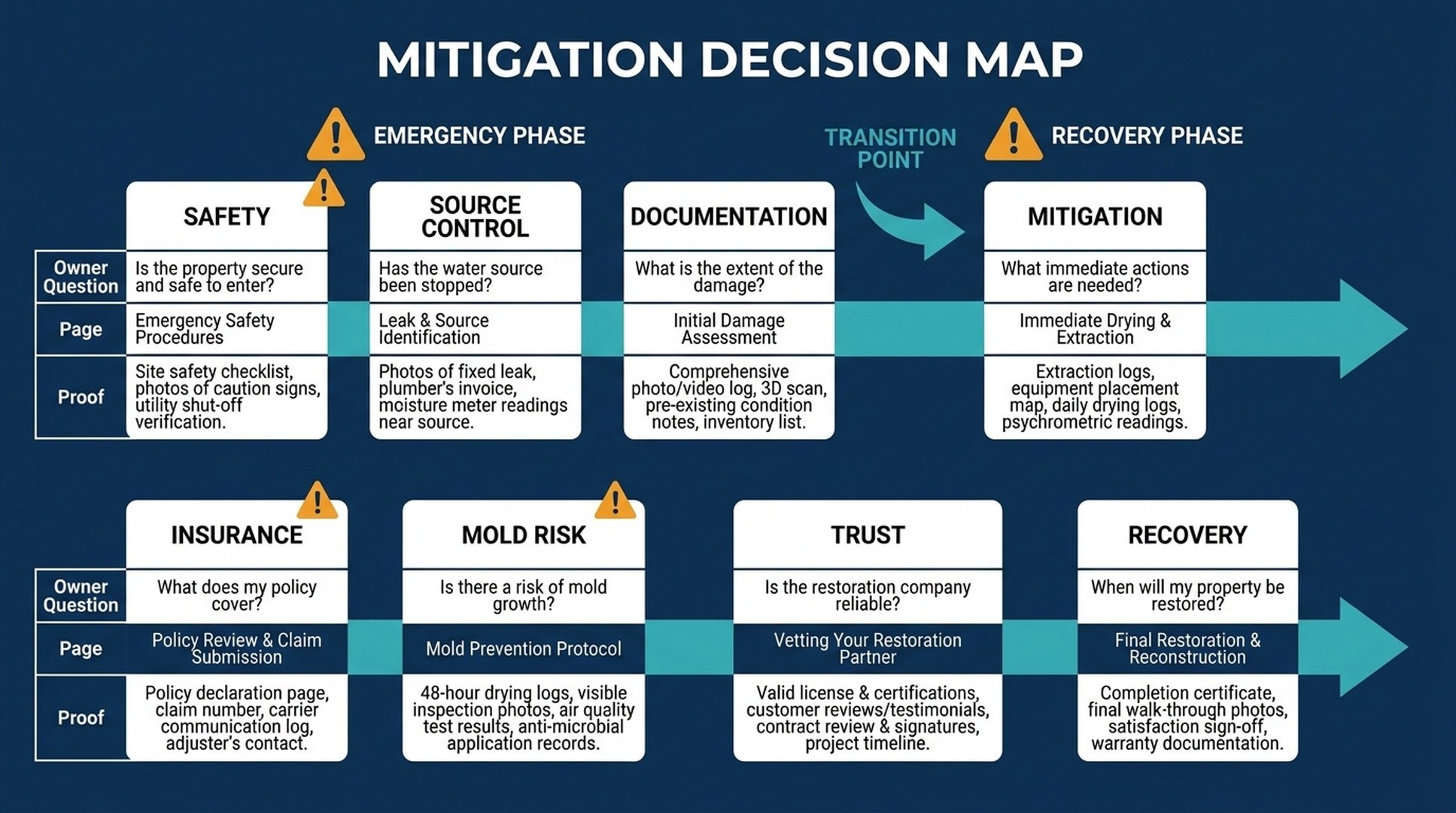
The Mitigation Decision Map keeps restoration content focused on safety, documentation, insurance clarity, mold risk, and recovery proof.
The 10 Query Types Restoration Teams Should Map
Query type | Typical user | Content that earns trust |
|---|---|---|
Immediate mitigation | Homeowner, tenant, property manager | First 60 Minutes guide, safety checklist |
Source and severity | Homeowner, landlord | Leak source, water category, affected material guides |
Mold risk | Owner worried about delay | Mold timeline, moisture monitoring, inspection triggers |
Insurance and claims | Homeowner, property manager | Claim documentation guide and adjuster workflow |
Cost and scope | Price-sensitive caller | Cost factors, inspection process, drying timeline |
Plumber vs restoration | Confused caller | Role boundary and coordination page |
Local response | High-intent emergency caller | Service-area and 24/7 response page |
Property type | Landlord, HOA, business owner | Apartment, commercial, rental, multi-unit pages |
Trust validation | Cautious caller | Certifications, equipment, reviews, technician standards |
Recovery and prevention | Post-mitigation customer | Rebuild, contents, prevention, humidity monitoring pages |
How To Prioritize Water Damage Restoration AI Search Questions
Score every query by urgency, risk, and conversion fit.
Factor | High-value signal | Page implication |
|---|---|---|
Active water | Mentions flooding, wet ceiling, soaked carpet, standing water | First 60 Minutes guide and call CTA |
Contamination risk | Mentions sewage, toilet overflow, stormwater, smell | Safety and water category page |
Mold anxiety | Mentions mold, smell, days wet, humidity | Mold-risk timeline and inspection page |
Insurance concern | Mentions claim, adjuster, photos, covered, deductible | Insurance documentation guide |
Local urgency | Mentions near me, open now, 24/7, response time | Service-area and dispatch page |
Trust concern | Mentions certified, reviews, scam, equipment, warranty | Trust and process page |
Queries with active water and insurance concern should be prioritized first because they combine emergency need with commercial intent.
100 Water Damage Restoration AI Search Questions
Use this list as a prompt library, not a page list.
Immediate Mitigation Questions
- What should I do first after water damage in my house?
- What should I do in the first hour after a pipe leak floods a room?
- Should I turn off the electricity after water damage?
- Should I move furniture after a water leak?
- What should I not touch after water damage?
- Can I use towels and fans before restoration arrives?
- Should I remove wet carpet after a flood?
- How do I stop water damage from spreading?
- What photos should I take before cleanup starts?
- When should I leave the house after water damage?
Source And Severity Questions
- How do I know if water damage is serious?
- Is water coming through the ceiling an emergency?
- What does water under flooring mean?
- Is a small leak behind a wall dangerous?
- How do restoration companies find hidden moisture?
- What is the difference between clean water, gray water, and black water?
- Is toilet overflow considered contaminated water?
- Can stormwater inside a house be cleaned safely?
- How do I know if drywall needs to be removed?
- What materials can be saved after water damage?
Mold-Risk Questions
- How long does it take for mold to grow after water damage?
- Can mold start after 24 hours of moisture?
- Does wet carpet always become moldy?
- How do I know if water damage has caused mold?
- Should I test for mold after a leak?
- Can I dry walls myself to prevent mold?
- What humidity level creates mold risk after water damage?
- Does musty smell mean mold after a water leak?
- When should water damage become mold remediation?
- How do restoration companies prevent mold after a flood?
Insurance And Claim Questions
- Does homeowners insurance cover water damage restoration?
- Should I call insurance before a restoration company?
- What photos do I need for a water damage claim?
- Does insurance cover mold after water damage?
- Does insurance cover a burst pipe cleanup?
- Does insurance cover slow leaks behind walls?
- What documents should I keep after water damage?
- Can a restoration company work with my insurance adjuster?
- What does an adjuster need after a water damage event?
- What should be included in a water damage restoration invoice?
Cost And Scope Questions
- How much does water damage restoration cost?
- What affects the cost of water extraction?
- How much does it cost to dry out a wet room?
- Why is water damage restoration so expensive?
- Can restoration companies estimate cost over the phone?
- How long does water damage restoration take?
- What equipment is used for drying water damage?
- Do I need professional drying if the floor feels dry?
- What is moisture monitoring in restoration?
- What happens during a water damage inspection?
Plumber Vs Restoration Questions
- Should I call a plumber or water damage restoration company first?
- Who fixes the leak and who dries the property?
- Can a plumber handle water damage cleanup?
- When do I need both a plumber and restoration company?
- Should I stop the leak before calling restoration?
- Can restoration start before plumbing repair is complete?
- Who removes wet drywall after a pipe burst?
- Who handles water damage from a water heater leak?
- Should I call restoration after sewer backup cleanup?
- How do plumbers and restoration companies coordinate?
Local Response Questions
- How do I find water damage restoration near me right now?
- Are water damage companies available 24/7?
- How fast should a restoration company arrive?
- Do restoration companies come on weekends?
- What should I tell dispatch after water damage?
- Can a restoration company help at night?
- How do I know if a restoration company serves my area?
- Is emergency water extraction available same day?
- What is the response time for a flooded basement?
- Can restoration companies handle storm damage after hours?
Property Type Questions
- What should apartment tenants do after water damage?
- What should landlords document after a tenant reports water damage?
- How should property managers respond to water damage after hours?
- What should restaurants do after a kitchen flood?
- Can water damage restoration keep a business open?
- What should offices do after a ceiling leak?
- How should HOAs prepare for water damage emergencies?
- What is different about multi-unit water damage?
- Can restoration companies handle commercial drying?
- What should schools or clinics do after water damage?
Trust Validation Questions
- How do I know if a water damage restoration company is certified?
- What certifications matter for restoration companies?
- Should a restoration company be licensed and insured?
- What reviews matter when choosing water damage restoration?
- How do I avoid restoration scams after a flood?
- What questions should I ask before hiring a restoration company?
- What equipment should a professional restoration company use?
- Should restoration companies provide moisture readings?
- What should a restoration company explain before starting work?
- How do I compare water damage restoration companies?
Recovery And Prevention Questions
- What happens after the property is dry?
- Does restoration include rebuilding damaged walls and floors?
- How do I know if water damage repair is complete?
- Should I schedule a follow-up inspection after water damage?
- How can I prevent future basement flooding?
- How do I prevent mold after restoration is complete?
- What maintenance prevents water damage from appliances?
- How should property managers create a water damage response plan?
- What should be in a post-restoration checklist?
- When should old plumbing or appliances be replaced after water damage?
How To Turn Restoration Questions Into Citation-Ready Pages
Most restoration companies should consolidate the 100 prompts into 8 to 12 strong owner pages.
Owner page | Query clusters it should cover | Conversion path |
|---|---|---|
First 60 Minutes After Water Damage | 1-10 | Emergency call CTA, photo checklist, safety warning |
Water Damage Severity And Category Guide | 11-20 | Inspection request and triage hub |
Mold-Risk Timeline | 21-30 | Moisture inspection and mitigation call |
Insurance Documentation Guide | 31-40 | Claim checklist and invoice explanation |
Water Damage Cost And Process Page | 41-50 | Estimate request and inspection booking |
Plumber Vs Restoration Guide | 51-60 | Coordinated service explanation |
Emergency Service-Area Page | 61-70 | 24/7 dispatch CTA |
Property Manager Restoration Page | 71-80, 98 | Commercial or account inquiry |
Certified Restoration Trust Page | 81-90 | Proof of credentials, reviews, equipment, process |
Recovery And Prevention Checklist | 91-100 | Follow-up inspection and prevention offer |
Each page should provide a direct answer first, then safety notes, relevant caveats, service-area clarity, and a visible call path.
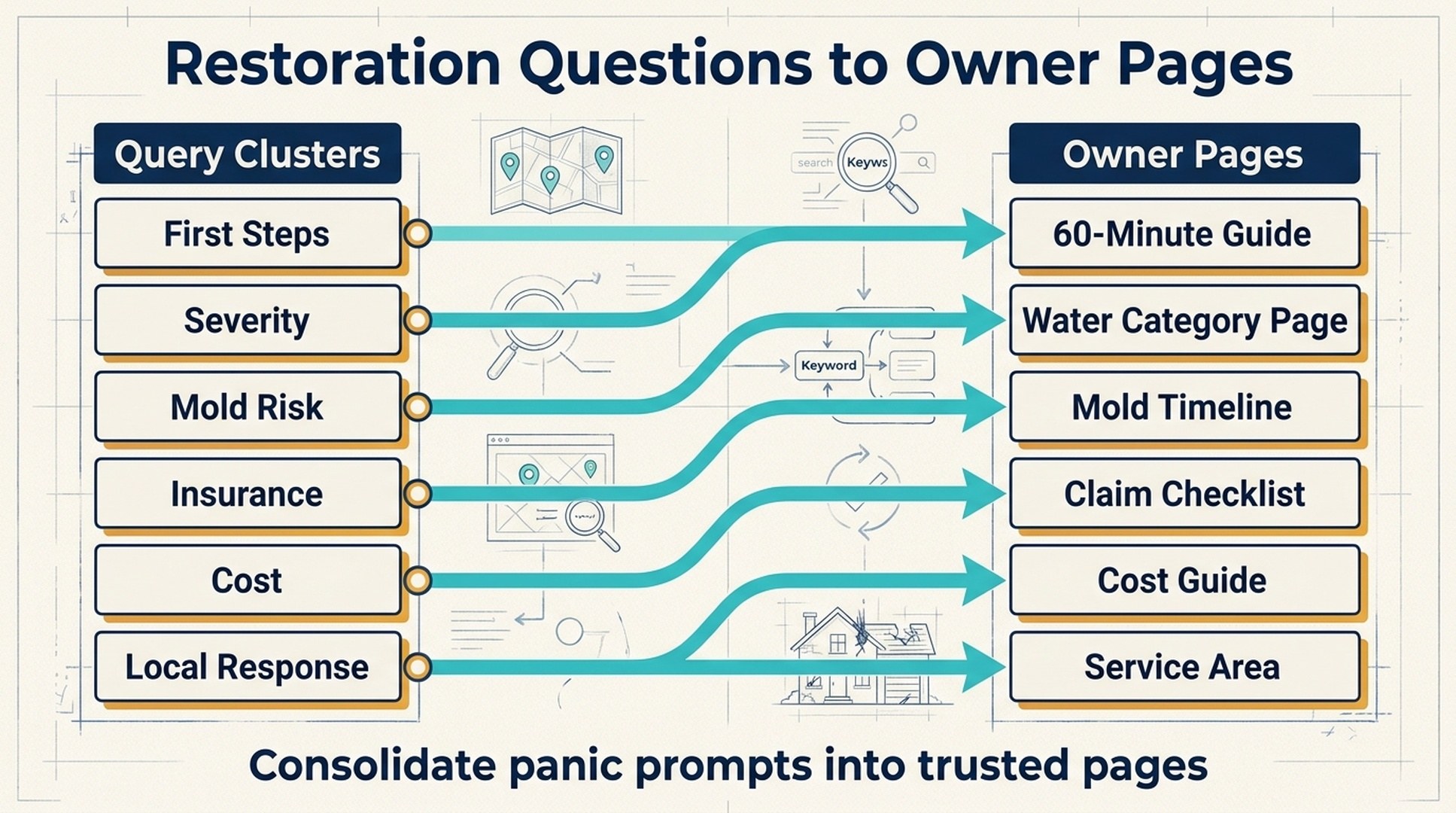
Water damage prompts should consolidate into trusted owner pages that answer panic questions without creating repetitive thin content.
The First 20 Questions To Prioritize
Priority | Question | Best page |
|---|---|---|
1 | What should I do first after water damage in my house? | First 60 Minutes Guide |
2 | Should I turn off the electricity after water damage? | Safety Checklist |
3 | Is water coming through the ceiling an emergency? | Ceiling Leak Page |
4 | What is the difference between clean water, gray water, and black water? | Water Category Guide |
5 | How long does it take for mold to grow after water damage? | Mold-Risk Timeline |
6 | Does musty smell mean mold after a water leak? | Mold Risk Page |
7 | Does homeowners insurance cover water damage restoration? | Insurance Guide |
8 | What photos do I need for a water damage claim? | Documentation Checklist |
9 | How much does water damage restoration cost? | Cost Guide |
10 | How long does water damage restoration take? | Process Page |
11 | Should I call a plumber or water damage restoration company first? | Plumber Vs Restoration Guide |
12 | Who fixes the leak and who dries the property? | Coordination Page |
13 | How do I find water damage restoration near me right now? | Service-Area Page |
14 | How fast should a restoration company arrive? | Dispatch Page |
15 | What should apartment tenants do after water damage? | Tenant Guide |
16 | How should property managers respond to water damage after hours? | Property Manager Page |
17 | How do I know if a water damage restoration company is certified? | Trust Page |
18 | How do I avoid restoration scams after a flood? | Trust Page |
19 | What happens after the property is dry? | Recovery Guide |
20 | What should be in a post-restoration checklist? | Follow-Up Checklist |
30-Day Execution Plan
Days 1-5: Capture Emergency Language
- Review phone calls, live chat, form submissions, job notes, and insurance-related questions.
- Tag questions by safety, source, mold, insurance, cost, local dispatch, and trust.
- Identify which prompts currently point to directories, generic insurance blogs, or competitor pages.
- Keep the customer's language. Do not translate everything into technical jargon.
Days 6-10: Publish The Emergency Backbone
- Build the First 60 Minutes guide.
- Build the water category and severity page.
- Build the mold-risk timeline.
- Add visible call CTAs, but keep the first answer useful before the pitch.
Days 11-15: Build Insurance And Process Assets
- Publish the insurance documentation guide.
- Add the cost and process explainer.
- Create a plumber vs restoration coordination page.
- Add caveats that coverage depends on policy, cause of loss, timing, and adjuster review.
Days 16-22: Build Local And Trust Pages
- Create service-area pages with real dispatch and response details.
- Publish the certified restoration trust page.
- Add equipment, moisture monitoring, review proof, and technician process details.
- Create property manager and commercial emergency pages.
Days 23-30: Test AI Visibility And Improve
- Test the first 20 questions in ChatGPT, Perplexity, Gemini, Google AI Overviews, and Bing Copilot.
- Record whether the brand appears, which pages are cited, and whether advice is accurate.
- Improve weak pages with clearer first answers, better tables, local details, and FAQ blocks.
- Compare emergency call quality and booked inspections before and after content updates.
Common Mistakes
Mistake | Why it weakens GEO | Better move |
|---|---|---|
Writing only "call now" copy | Users need safety and documentation steps before they trust you | Give first-step guidance and visible call paths |
Promising insurance coverage | Coverage depends on policy and cause of loss | Explain documentation and caveats |
Treating mold as a scare tactic | Fear-based copy reduces trust | Explain moisture, time, material, and inspection triggers |
Creating thin city pages | Repetition weakens quality and conversion | Add real service-area and dispatch proof |
Ignoring plumber coordination | Many users do not know who to call first | Explain leak repair vs mitigation roles |
Hiding cost factors | Users ask about cost before calling | Explain variables and inspection limits |
Forgetting commercial scenarios | Property managers and businesses have different needs | Build dedicated property and commercial pages |
FAQ
Is water damage restoration GEO different from local SEO?
Yes. Local SEO focuses on maps, reviews, proximity, and service pages. Water damage GEO also asks whether AI systems can extract safe, urgent, and locally relevant answers from your site when a user is dealing with active damage.
Should restoration companies give DIY cleanup advice?
They can give safe first-step guidance, such as documenting damage, avoiding electrical hazards, moving dry valuables, and calling for help. They should be careful with contaminated water, sewage, structural risk, and hidden moisture because those situations require professional judgment.
How many restoration pages should a company build first?
Start with six: First 60 Minutes, water category and severity, mold-risk timeline, insurance documentation, cost and process, and certified local response. Add property manager and recovery pages next.
Can GEO increase water damage restoration calls?
It can support more qualified calls by making the company easier to understand and trust in AI-assisted search journeys. It is not a ranking or call guarantee. The content still needs local proof, strong response operations, and clear conversion paths.
What should restoration teams measure?
Track AI prompt visibility, brand mentions, cited pages, emergency landing-page calls, inspection bookings, call quality, and whether callers arrive with better documentation after reading the content.
Auspia Takeaway
Water damage restoration GEO succeeds when content matches the emergency sequence: safety, source control, documentation, mitigation, insurance, mold risk, trust, and recovery. The companies that explain those steps clearly give AI systems better material to use and give property owners a better reason to call before the damage gets worse.
Author: Miles Donovan, Local AI Search Analyst Across 500+ Service Queries at Auspia. Miles writes about local visibility, service-area pages, and AI-assisted recommendations for high-intent local searches.