Quick Answer
Real estate GEO is the work of making property, neighborhood, agent, brokerage, mortgage, rental, development, and relocation pages easier for AI answer systems to understand, compare, and cite when buyers, sellers, renters, landlords, and investors ask location-heavy decision questions.
Real estate users do not only ask for homes for sale, apartments near me, or real estate agent. They ask questions with budget, timing, lifestyle, risk, financing, neighborhood, and trust signals inside the same prompt:
What should first-time buyers compare before choosing a neighborhood?Is it better to rent or buy in a high-interest-rate market?How do I know if a real estate agent is trustworthy?What questions should I ask before investing in a rental property?What should I check before signing an apartment lease?
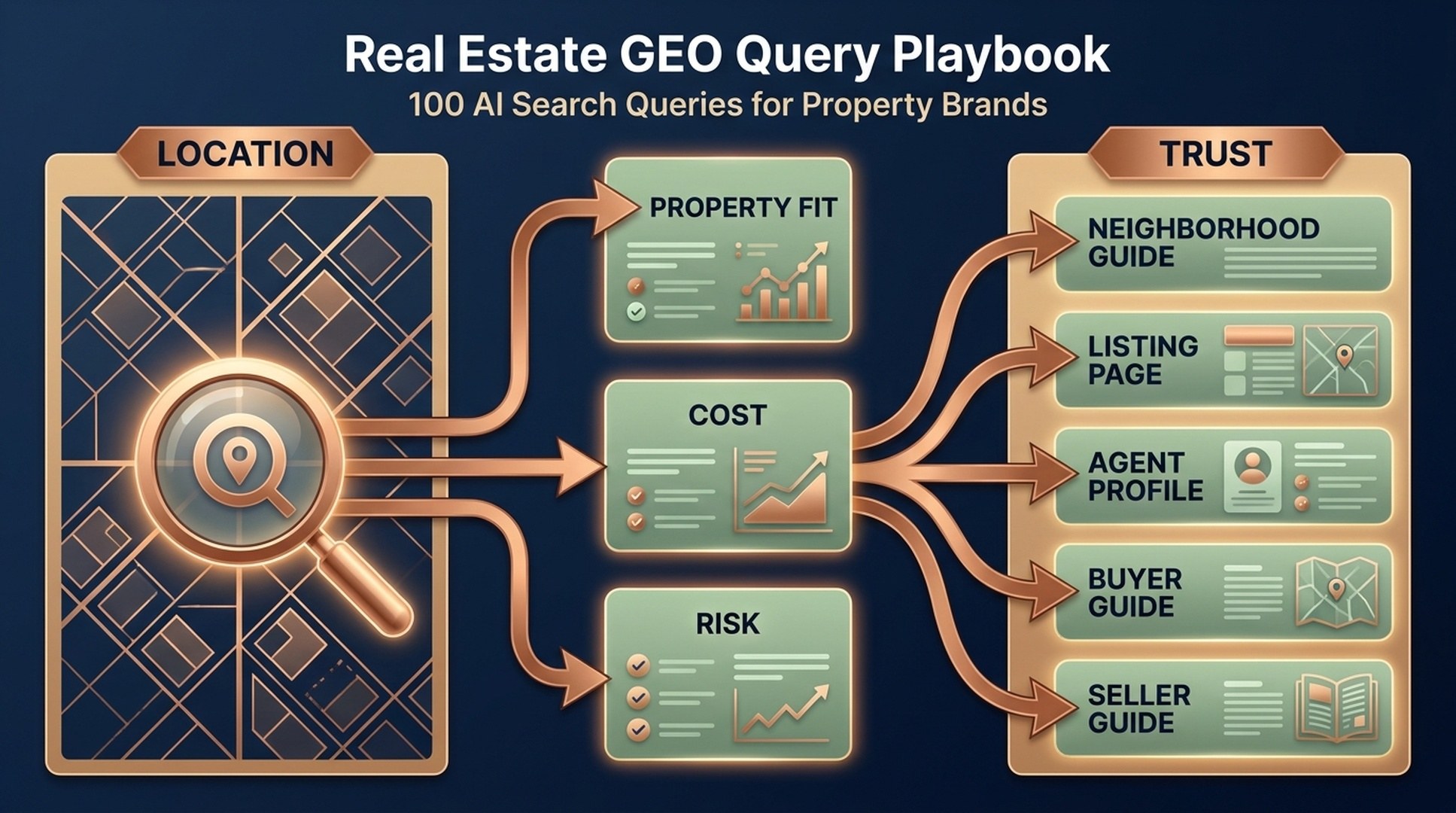
For real estate brands, the strongest GEO assets are neighborhood pages, listing pages, agent profile pages, seller guides, buyer guides, rental guides, mortgage education pages, market update pages, inspection checklists, relocation pages, and transparent process FAQs.
This playbook gives brokerages, agent teams, property portals, developers, property managers, mortgage-adjacent brands, and real estate marketplaces 100 AI Search queries to track, a location-intent framework, a query-to-page map, and a 30-day execution plan.
Important note: this article is about SEO/GEO content strategy, not legal, tax, financial, mortgage, appraisal, or investment advice. Real estate teams should involve licensed professionals, compliance reviewers, or local market experts before publishing location-specific claims.
The Real Estate Location-Decision Stack
Real estate GEO is different from most industries because the answer changes by geography. A useful answer for one city, neighborhood, school district, property type, budget range, or rental market may be wrong somewhere else.
That makes real estate a location-decision stack:
Layer | What The User Asks | Example Query | Page That Should Support The Answer |
|---|---|---|---|
Location | Where should I search? |
| Neighborhood guide |
Property Fit | What type of home or rental fits me? |
| Property-type guide |
Affordability | What can I afford? |
| Affordability / cost page |
Market Context | Is now a good time? |
| Market guide |
Risk Check | What could go wrong? |
| Inspection / risk checklist |
Trust | Who should I work with? |
| Agent profile / trust page |
Process | What happens next? |
| Buyer or seller process page |
A real estate GEO strategy should not flatten these layers into generic blog content. The page must make location, property type, audience, data source, and update context visible.
A useful first step is to check which prompts already surface your brand, agents, listings, or neighborhood pages with an AI Search Visibility Checker, then build a prompt library around missing neighborhoods, weak agent trust signals, or inaccurate market summaries.
Why Real Estate GEO Starts With Local Intent, Not Listing Keywords
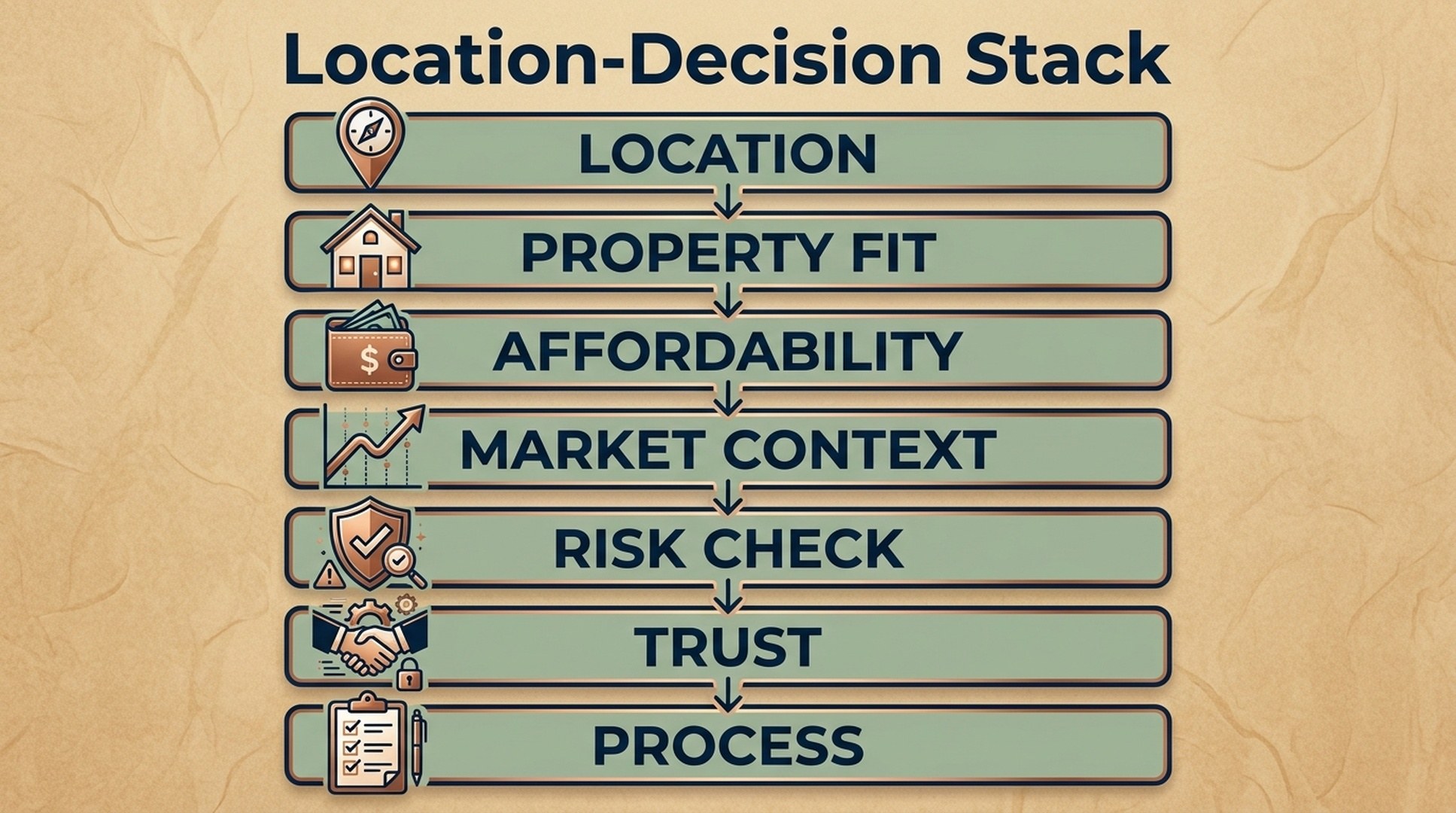
Real estate AI Search prompts move through location, property fit, affordability, market context, risk, trust, and process. Each layer needs its own evidence.
Traditional real estate SEO often focuses on listing inventory, city pages, neighborhood pages, and agent pages. Those still matter. GEO adds a new layer: AI systems may summarize the decision before the user ever clicks a portal, brokerage, or agent site.
The prompt usually contains a real-life situation:
Where should a remote worker live if they want walkability and lower rent?What should sellers fix before listing a house?Is a new construction home better than a resale home?How do I compare property management companies?What should investors check before buying a duplex?
These prompts are not only about availability. They are about interpretation. AI systems need clear pages that explain location fit, affordability, local tradeoffs, process steps, property risks, and trust proof.
Real estate content also needs careful wording. Avoid implying guaranteed appreciation, guaranteed rental income, universal neighborhood quality, or legal certainty. Strong real estate GEO makes context explicit: market, timeframe, property type, buyer profile, assumptions, and limits.
The 10 Query Types Real Estate Teams Should Map
Classify prompts before writing pages. This prevents teams from publishing repetitive city pages or thin best neighborhood posts without enough local context.
Query Type | What The User Wants | Best Content Asset |
|---|---|---|
Location Fit | Understand where to live, buy, rent, or invest | Neighborhood guide, city guide |
Property Fit | Compare house, condo, townhouse, apartment, land, or investment types | Property-type comparison page |
Affordability | Understand budgets, down payments, closing costs, rent, fees, or ownership costs | Cost guide, calculator explainer |
Market Timing | Understand whether to buy, sell, rent, or wait | Market update, decision guide |
Buyer Process | Understand offer, inspection, appraisal, financing, closing, and move-in steps | Buyer guide |
Seller Process | Understand pricing, repairs, staging, listing, showings, offers, and closing | Seller guide |
Rental / Lease | Understand lease terms, deposits, screening, tenant rights, or property management | Rental guide, lease FAQ |
Risk / Due Diligence | Understand inspection, disclosures, zoning, HOA, flood, title, and investment risk | Checklist, risk guide |
Trust / Provider Selection | Choose an agent, brokerage, lender, property manager, inspector, or developer | Profile page, selection checklist |
Scenario / Life Stage | Match decisions to relocation, family needs, remote work, investing, downsizing, or first-time buying | Scenario guide |
Every cluster should have an owner page. If a neighborhood guide, agent bio, and blog post all describe the same area differently, AI systems may summarize the least accurate version.
How To Prioritize Real Estate GEO Queries
Use a local-decision scoring model:
Priority = Local Intent + Transaction Value + Decision Urgency + Evidence Strength + AI Answer Probability - Compliance Risk - Competition Difficulty
Factor | How To Evaluate It |
|---|---|
Local Intent | Does the query include a city, neighborhood, commute pattern, school area, property type, or local scenario? |
Transaction Value | Could the query influence a buyer lead, seller lead, rental inquiry, investor conversation, or property management lead? |
Decision Urgency | Is the user close to touring, listing, applying, making an offer, or choosing a provider? |
Evidence Strength | Do you have listings, local guides, recent market context, agent expertise, reviews, maps, process details, or checklists? |
AI Answer Probability | Is the query likely to trigger a summarized recommendation, comparison, or checklist? |
Compliance Risk | Could the answer imply financial, legal, fair housing, tax, appraisal, investment, or neighborhood-safety claims that need review? |
Competition Difficulty | Are portals, review sites, national brokerages, local media, or government pages already dominating? |
Start with queries where you can provide local specificity and responsible decision support. Avoid publishing broad claims about best neighborhoods unless the page defines the audience, criteria, data sources, and limitations.
100 Real Estate GEO Query Examples
Use these prompts as a starting library. Adapt them by city, neighborhood, property type, buyer profile, rental market, and compliance requirements.
Location Fit Queries
- What should first-time buyers compare before choosing a neighborhood?
- Best neighborhoods for young professionals moving to a new city
- Best neighborhoods for families who need more space
- Where should remote workers live if they want walkability?
- What should retirees compare before moving to a new city?
- How do I compare suburbs before buying a home?
- What should I check before moving near a commuter rail station?
- What neighborhood factors affect daily life the most?
- How do I choose between living downtown and in the suburbs?
- What should relocation buyers ask about a new area?
Property Fit Queries
- Condo vs townhouse: which is better for first-time buyers?
- Single-family home vs condo for a growing family
- New construction vs resale home: what should buyers compare?
- Apartment vs rental house: which fits which renter?
- Duplex vs single-family rental for investors
- Buying land vs buying an existing home
- Luxury condo vs detached home: what are the tradeoffs?
- Fixer-upper vs move-in ready home
- Short-term rental property vs long-term rental property
- Primary residence vs investment property requirements
Affordability Queries
- What costs should buyers budget beyond the down payment?
- How much are closing costs for homebuyers?
- What affects monthly mortgage payments?
- What fees should condo buyers check before making an offer?
- What costs should sellers expect before listing a home?
- Rent vs buy: what costs should I compare?
- What does homeowners insurance affect in a buying decision?
- What should investors include in rental property cash flow?
- What expenses do landlords often underestimate?
- How do HOA fees affect affordability?
Market Timing Queries
- Is now a good time to buy a home?
- Should I sell my home before buying another one?
- Should buyers wait when interest rates are high?
- What market signals should sellers watch before listing?
- How do price reductions affect a buyer's offer strategy?
- What does days on market tell buyers?
- What does low housing inventory mean for sellers?
- How do seasonal trends affect real estate listings?
- What should investors watch in a changing rental market?
- How do mortgage rate changes affect buyer demand?
Buyer Process Queries
- What happens after making an offer on a house?
- What should buyers ask before touring a home?
- What should I look for during a home inspection?
- What happens if a home appraisal is lower than the offer?
- What contingencies should buyers understand?
- What documents do buyers need before closing?
- How long does it usually take to buy a home?
- What should first-time buyers do before contacting an agent?
- What happens during escrow?
- What should buyers know before waiving contingencies?
Seller Process Queries
- What should sellers fix before listing a home?
- How do real estate agents price a home?
- Should sellers stage a home before listing?
- What questions should sellers ask a listing agent?
- How do sellers compare multiple offers?
- What affects how fast a home sells?
- What should sellers disclose before accepting an offer?
- What happens after accepting an offer?
- How do open houses help sellers?
- What should sellers know before lowering the listing price?
Rental / Lease Queries
- What should renters check before signing a lease?
- What questions should renters ask during an apartment tour?
- What affects apartment approval?
- What fees should renters ask about before applying?
- What should landlords include in a rental listing?
- How do property managers screen tenants?
- What should tenants know about security deposits?
- What should renters compare between apartment buildings?
- How do lease renewals usually work?
- What should landlords ask before hiring a property manager?
Risk / Due Diligence Queries
- What are common red flags during a home tour?
- What does a seller disclosure usually include?
- What should buyers know about flood zones?
- What should buyers check about an HOA?
- What zoning questions should investors ask?
- What should buyers know about title issues?
- What risks should investors check before buying a rental property?
- What inspection issues are expensive to fix?
- What should buyers know about older homes?
- What should renters check for safety before moving in?
Trust / Provider Selection Queries
- How do I know if a real estate agent is trustworthy?
- How do I choose a buyer's agent?
- How do I choose a listing agent?
- What should I look for in a property manager?
- How do I compare real estate brokerages?
- What questions should I ask a mortgage lender?
- What should I ask a home inspector?
- How do I verify a real estate agent's license?
- What reviews matter when choosing a realtor?
- How do I compare new home builders?
Scenario / Life Stage Queries
- What should first-time homebuyers know before starting?
- What should downsizers compare before selling?
- What should families consider before buying a larger home?
- What should remote workers consider before relocating?
- What should military families ask before renting or buying?
- What should investors check before buying their first rental?
- What should landlords know before renting a property?
- What should homeowners know before refinancing and moving?
- What should buyers with pets ask before renting?
- What should international buyers check before purchasing property?
How To Turn Real Estate Queries Into Citation-Ready Pages
A real estate query library should become a local decision architecture. The strongest pages are not always blog posts. They are neighborhood pages, listing pages, agent pages, buyer guides, seller guides, rental pages, property management pages, and due diligence checklists.
Query Cluster | Owner Page | Page Type | Required Proof |
|---|---|---|---|
Location prompts | Neighborhood guide | Local guide | Area boundaries, amenities, commute notes, update date |
Property-fit prompts | Property-type guide | Comparison page | Tradeoffs, buyer profile, ownership or rental considerations |
Affordability prompts | Cost guide | Pricing / calculator explainer | Cost categories, assumptions, local caveats, lender disclaimer |
Market-timing prompts | Market guide | Local update | Timeframe, data source, interpretation limits |
Buyer process prompts | Buyer guide | Process page | Steps, timeline, documents, contingencies, contact path |
Seller process prompts | Seller guide | Process page | Pricing method, prep checklist, offer process, disclosures |
Rental prompts | Rental guide | Rental / lease FAQ | Lease terms, fees, screening, local policy caveats |
Risk prompts | Due diligence checklist | Checklist page | Inspection, HOA, flood, zoning, title, disclosure items |
Trust prompts | Agent or provider profile | Trust page | Licenses, experience areas, reviews, service scope, disclaimers |
Scenario prompts | Life-stage guide | Scenario page | Segment needs, tradeoffs, next step, local context |
A citation-ready real estate page should answer the user's decision question first, then show the local context, assumptions, proof, risks, and recommended next step.
For technical readiness, property brands should make sure listing pages, agent pages, neighborhood guides, and local service pages are crawlable, indexable, and internally linked. A quick Website SEO Score Checker can help catch basic crawl, metadata, schema, and content-quality issues before teams rewrite high-value pages.
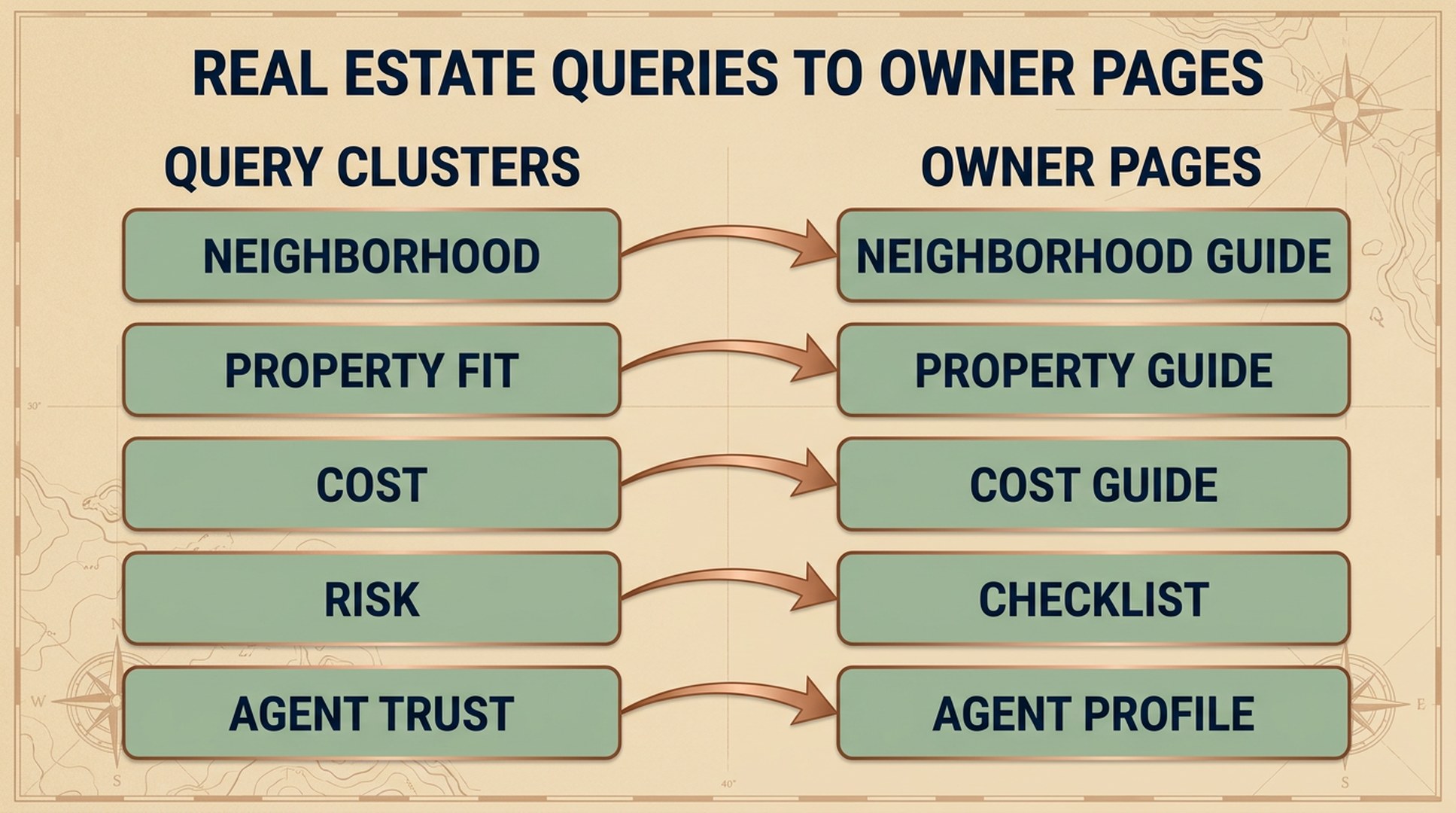
Neighborhood, property-fit, cost, risk, and agent-trust queries should map to durable owner pages instead of temporary listing-only content.
The First 20 Queries To Prioritize
If a real estate brand is starting from scratch, these 20 prompts usually create a practical first backlog.
Priority | Query | Why It Matters | Likely Owner Page |
|---|---|---|---|
1 | What should first-time buyers compare before choosing a neighborhood? | High local decision intent | Neighborhood selection guide |
2 | Best neighborhoods for young professionals moving to a new city | Relocation and buyer/renter intent | City neighborhood hub |
3 | Condo vs townhouse: which is better for first-time buyers? | Property-fit comparison | Property-type comparison page |
4 | New construction vs resale home | Common buyer tradeoff | New vs resale guide |
5 | What costs should buyers budget beyond the down payment? | Affordability friction | Buyer cost guide |
6 | Rent vs buy: what costs should I compare? | High decision impact | Rent-vs-buy guide |
7 | Is now a good time to buy a home? | AI answer likelihood | Market context page |
8 | Should I sell my home before buying another one? | Seller and buyer lead value | Move-up seller guide |
9 | What happens after making an offer on a house? | Process and conversion | Buyer process page |
10 | What should I look for during a home inspection? | Due diligence intent | Inspection checklist |
11 | What should sellers fix before listing a home? | Seller lead intent | Pre-listing checklist |
12 | How do real estate agents price a home? | Trust and process clarity | Pricing strategy page |
13 | What should renters check before signing a lease? | Rental conversion and trust | Lease checklist |
14 | What fees should renters ask about before applying? | Cost clarity | Rental fees FAQ |
15 | What should buyers know about flood zones? | Risk and local due diligence | Flood risk guide |
16 | What should buyers check about an HOA? | Risk and affordability | HOA checklist |
17 | How do I know if a real estate agent is trustworthy? | Provider selection | Agent trust page |
18 | How do I choose a listing agent? | Seller conversion | Listing agent selection guide |
19 | What should investors check before buying their first rental? | Investor lead value | Rental investment checklist |
20 | What should remote workers consider before relocating? | Relocation intent | Remote worker relocation guide |
These prompts are useful because they can be answered with owned pages that already support leads: neighborhood guides, buyer guides, seller guides, rental pages, agent profiles, and due diligence resources.
30-Day Execution Plan
Timeframe | Action | Output |
|---|---|---|
Days 1-3 | Build the real estate AI Search query library and classify by location, property type, buyer stage, and page owner | 100-query prompt library |
Days 4-7 | Score prompts by local intent, transaction value, decision urgency, evidence, AI answer probability, compliance risk, and competition | First 20 prompt backlog |
Days 8-14 | Map prompts to neighborhood pages, agent pages, listing guides, buyer guides, seller guides, rental pages, and checklists | Query-to-page map |
Days 15-21 | Rewrite priority pages with direct answers, local context, assumptions, checklists, trust proof, and next steps | Updated citation-ready pages |
Days 22-30 | Test prompts across AI answer surfaces and record brand mentions, cited URLs, competitor mentions, and inaccurate local facts | Real estate AI visibility tracker |
A solo agent can start with five assets: one neighborhood guide, one buyer process page, one seller checklist, one agent trust page, and one inspection checklist. A brokerage or portal should add city hubs, property-type comparisons, market update pages, rental guides, agent profiles, and relocation guides.
Common Mistakes
Real estate GEO fails when teams publish generic local pages without useful local evidence or safe decision boundaries.
Avoid these mistakes:
- Publishing thin neighborhood pages. Add boundaries, commute context, amenities, housing types, update dates, and audience fit.
- Making unsupported market predictions. Explain trends and assumptions without promising price movement or appreciation.
- Ignoring fair housing and compliance risk. Avoid language that stereotypes people, protected classes, or neighborhood suitability.
- Hiding fees and costs. Buyers, renters, sellers, and landlords need cost categories before contacting a provider.
- Treating agent bios as resumes only. Add service areas, property types, process notes, reviews, license information, and contact paths.
- Letting listings carry all the SEO work. Listings expire. Evergreen local guides and process pages create more stable AI visibility.
- Measuring only rankings. Track AI mentions, cited pages, competitor inclusion, and inaccurate summaries of neighborhoods, fees, or process steps.
FAQ
What is real estate GEO?
Real estate GEO is the process of making property, neighborhood, agent, brokerage, rental, seller, buyer, investment, and relocation pages easier for AI answer systems to understand, summarize, and cite accurately.
Is real estate GEO the same as real estate SEO?
No. Real estate SEO focuses on rankings, listings, local pages, technical visibility, and lead generation. Real estate GEO builds on that foundation but focuses on how AI systems answer location, property-fit, affordability, market, process, risk, and provider-selection questions.
Should real estate brands create one page for every AI Search query?
No. The 100-query list should become a page map. Many questions should be answered by stronger neighborhood pages, buyer guides, seller guides, rental FAQs, agent profiles, comparison pages, and due diligence checklists.
Which real estate queries should teams prioritize first?
Start with questions about neighborhood selection, property type comparisons, affordability, buyer and seller process, rental fees, due diligence, provider trust, and relocation scenarios. These queries influence real decisions and can be supported with owned pages.
How can real estate teams avoid risky GEO content?
Use clear local context, state assumptions, avoid guaranteed appreciation or rental income, review fair housing language, avoid legal or financial advice, and involve qualified local experts when pages discuss market conditions, contracts, lending, zoning, or investment risk.
How should real estate teams measure GEO performance?
Track a stable prompt set across AI answer surfaces. Record whether the brand appears, which URLs are cited, which competitors appear, whether local facts are accurate, and whether AI answers omit important costs, risks, or process steps.
Auspia Takeaway
Real estate GEO is local decision support. AI systems need location context, property-fit guidance, affordability details, market assumptions, due diligence checklists, provider trust signals, and process clarity before they can summarize a brand responsibly.
Start with prompts that affect tours, listing appointments, rental applications, relocation decisions, and investor conversations. Map the first 20 queries to pages that already shape conversion. Then rewrite those pages so the answers are direct, local, verifiable, and safe to summarize.
Author: Miles Donovan, Local AI Search Analyst Across 500+ Service Queries at Auspia. Miles writes about local visibility, service-area pages, location intent, and AI recommendations for location-driven businesses.