Quick answer
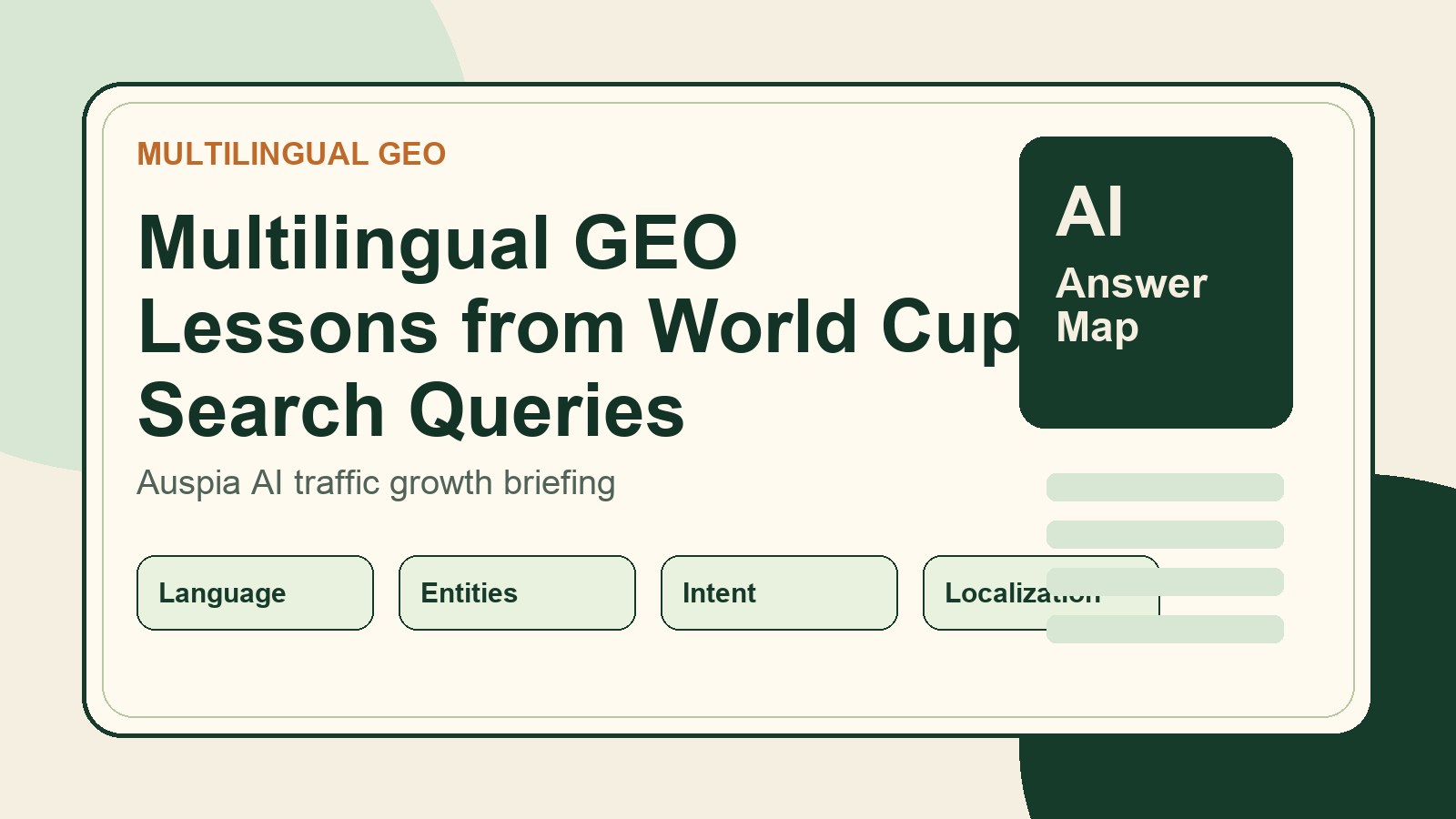
A query like France vs Iraq, França x Iraque, and posiciones de selección de fútbol de Francia contra Irak may point to the same match, but the search intent and SERP format can differ by language.
For growth teams, the practical question is not whether the keyword is trending. The question is whether the query can teach you how people ask, how AI systems summarize, and what kind of source earns trust. Auspia treats these topics as search-behavior signals, then turns the useful ones into durable SEO, GEO, or AEO assets.
Signal | What to check | Why it matters |
|---|---|---|
Intent | What does the user need now? | Prevents traffic chasing |
Source standard | Who would AI trust? | Shapes citation strategy |
Freshness | How fast does the answer change? | Defines update cadence |
Business fit | Can this support a buyer journey? | Keeps content useful |
Why World Cup queries are a good model
International sports queries mix team names, local language, abbreviations, standings, fixtures, and player entities. AI systems must normalize all of that before answering. Global brands face a similar challenge when users search in multiple languages.
Translation is not enough
Direct translation can miss local phrasing. Spanish users may search posiciones, French users may search norvège sénégal, Portuguese users may use x between teams, and English users may ask for standings or highlights. A multilingual GEO plan starts with local query patterns.
Content decision | Recommended action |
|---|---|
If the query changes daily | Use a dated brief or live page |
If the query is evergreen | Build a durable guide or glossary page |
If trust is the issue | Add sources, evidence, and entity facts |
If AI misdescribes the brand | Rewrite the core entity page first |
Entity consistency
Keep canonical entity names consistent across languages while allowing local labels. Link translated pages to the same underlying entity. Use hreflang, localized headings, and clear metadata.
Content formats
For global topics, create hub pages for the entity, localized pages for market-specific intent, and short answer blocks that match local phrasing. Tables work well for standings, schedules, and comparisons.
Brand lesson
If your product serves multiple countries, map how each market asks questions before translating your English content. GEO visibility depends on the question shape, not only the language.
What Auspia would do next
Auspia would not start by publishing ten disconnected posts. We would build a prompt set, map it to pages, check current AI answers, then decide which page type has the best chance to improve visibility. For many teams, the first useful action is a small visibility audit with the AI Search Visibility Checker, followed by a page rewrite and a repeat check two to four weeks later.
FAQ
Is this topic mainly SEO or GEO?
It is both. SEO helps the page become crawlable, indexable, and competitive in search. GEO adds the answer-readiness layer: clear entities, extractable claims, trustworthy evidence, and measurement across AI answer surfaces.
How should a small team start?
Start with one high-intent query group, rewrite the page that should answer it, add a concise table or checklist, and test the page against five AI prompts before expanding the project.
What should we measure?
Track rankings, impressions, AI mentions, citation URLs, description accuracy, branded search lift, assisted conversions, and sales notes. One metric will not explain the full impact.
Author: Dominic Hale, International SEO Specialist Across 18 Markets at Auspia. Dominic writes about multilingual SEO, localization, and regional search behavior.