Google Search Console Generative AI Performance Report Goes Live for All Properties
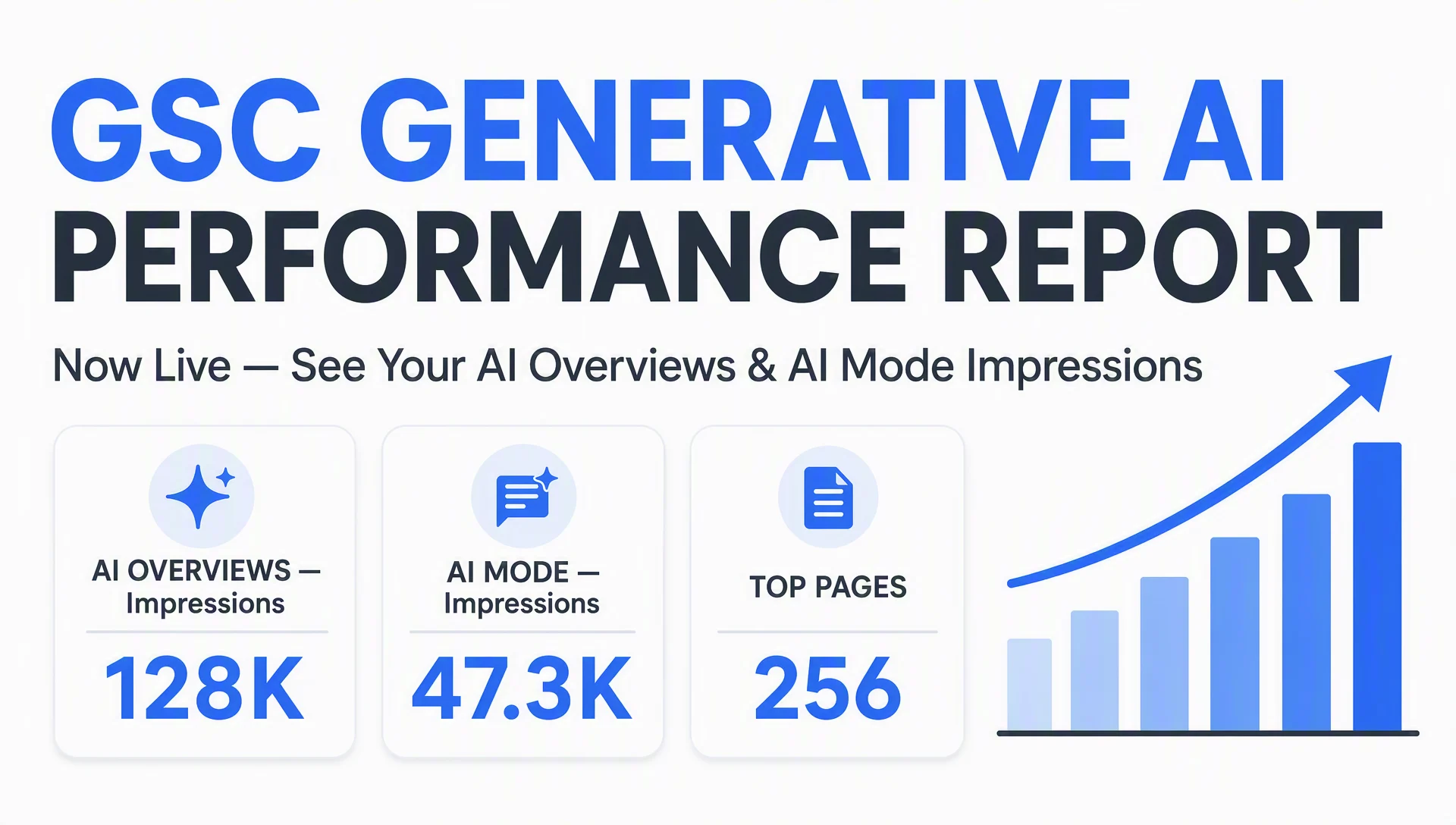
Google Search Console's generative AI performance report, which tracks how websites appear in AI Overviews and AI Mode, appears to have rolled out to all properties as of August 11, 2026. Google has not yet issued an official announcement confirming the full rollout, but the report is now visible across properties that previously lacked access.
The details
The generative AI performance report was first introduced on June 3, 2026, in a blog post by Hillel Maoz, Search Ecosystem Engineering Manager, and Moshe Samet, Product Manager Lead for Search Console. At launch, Google said the reports would be rolled out to "a subset of websites" for testing before broader availability. The initial announcement framed the reports as a way to help site owners understand their visibility in generative AI features on Search, separate from the overall performance data that was already available. Google expanded access to the report several weeks ago, and it now appears to be live across all Search Console properties, according to checks conducted across approximately 25 separate profiles.
Google has not updated its help documentation to reflect the broader rollout. The documentation still carries a note stating that the company is "rolling out this report to a subset of website owners, allowing for thorough testing before rolling it further." Despite this language, the report is now visible in profiles that did not previously have access.
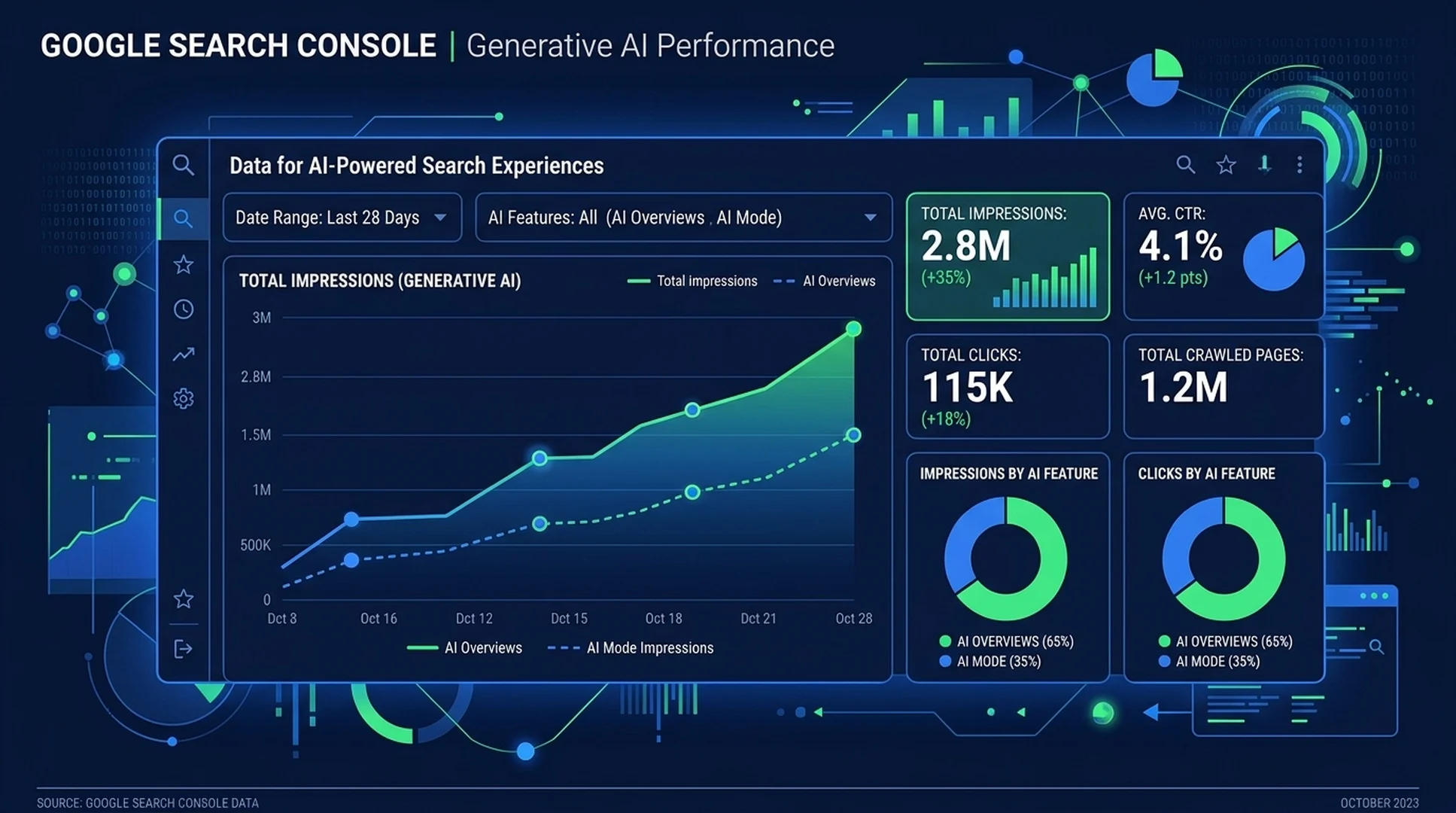
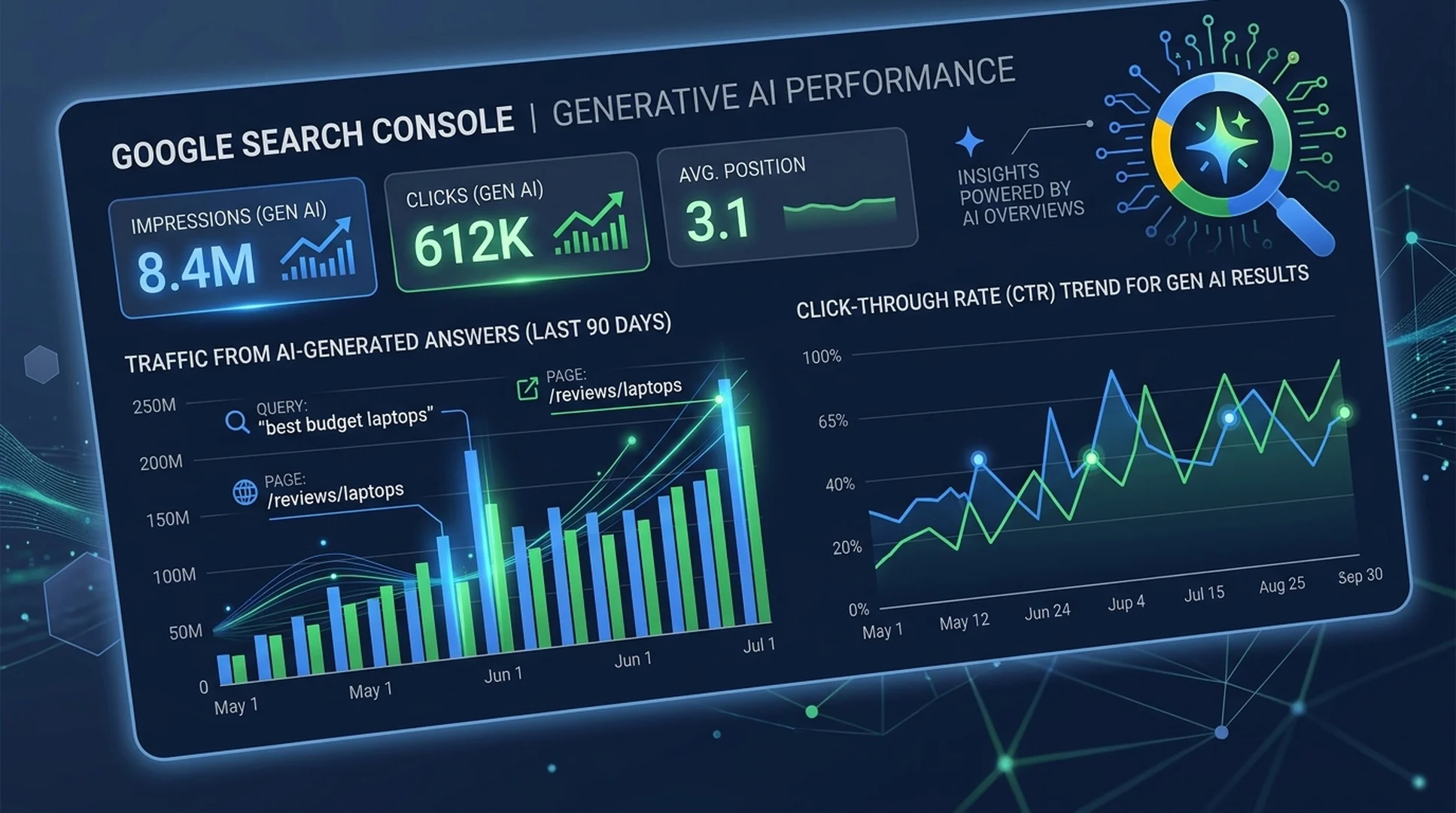
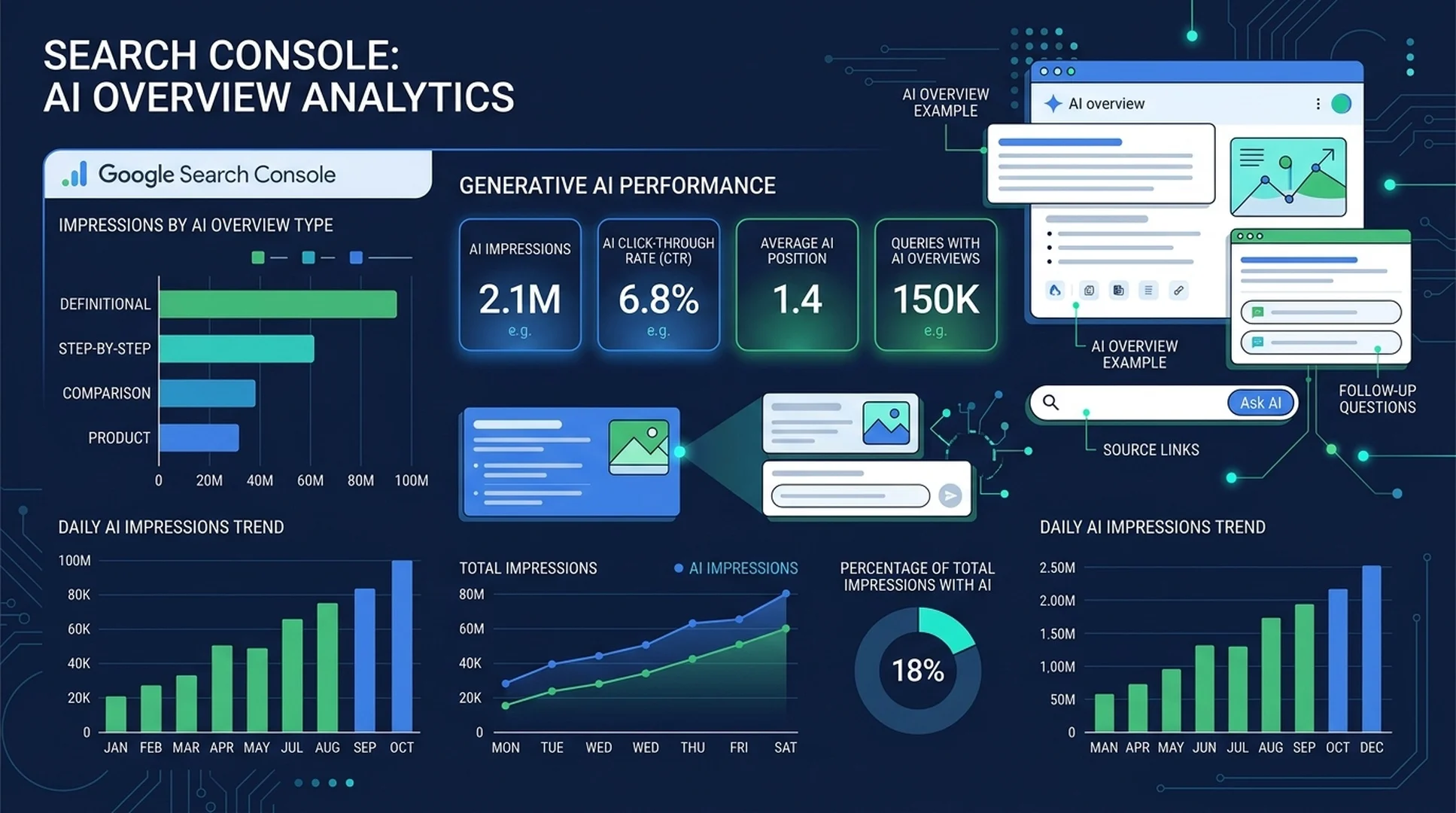
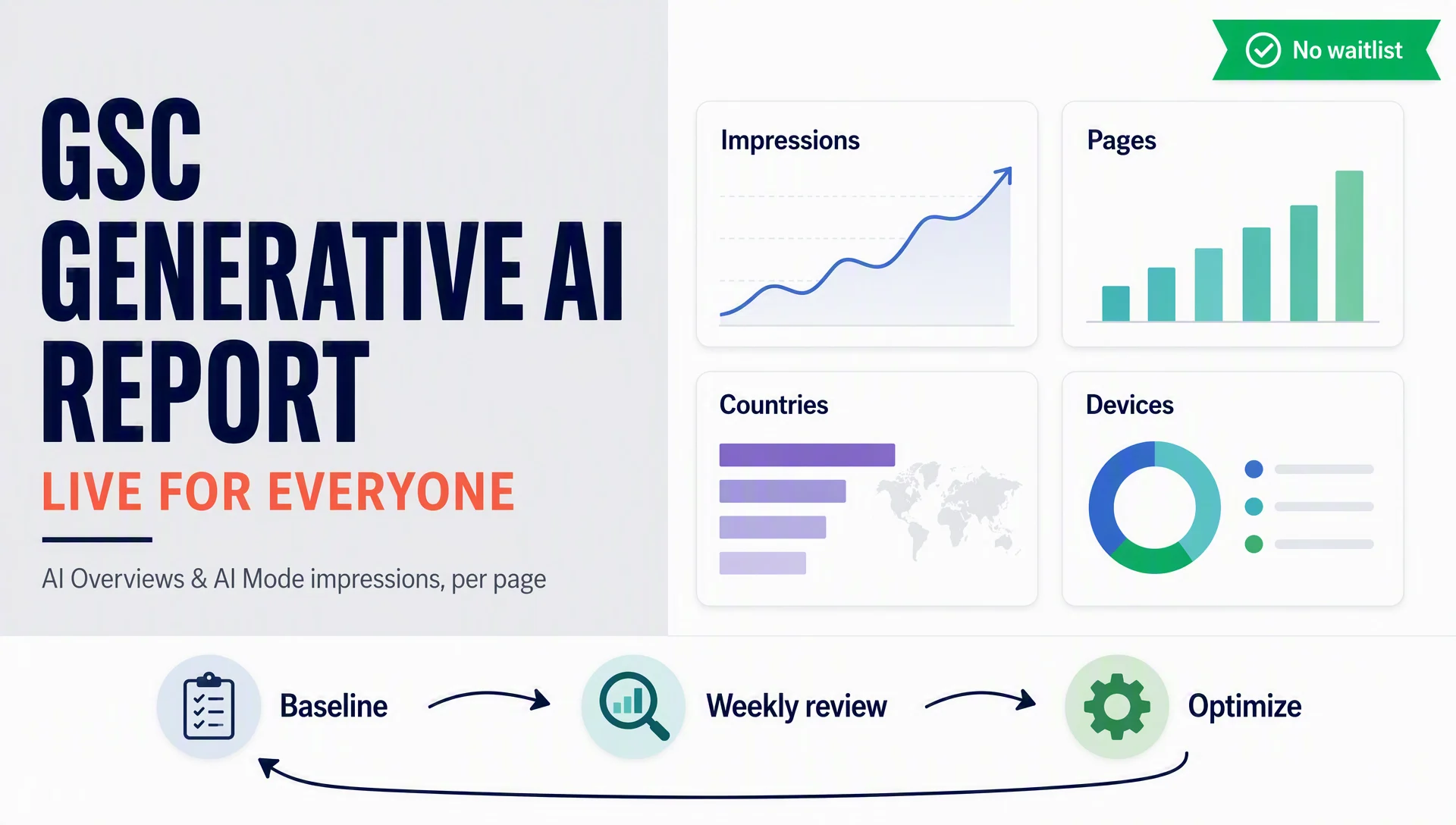
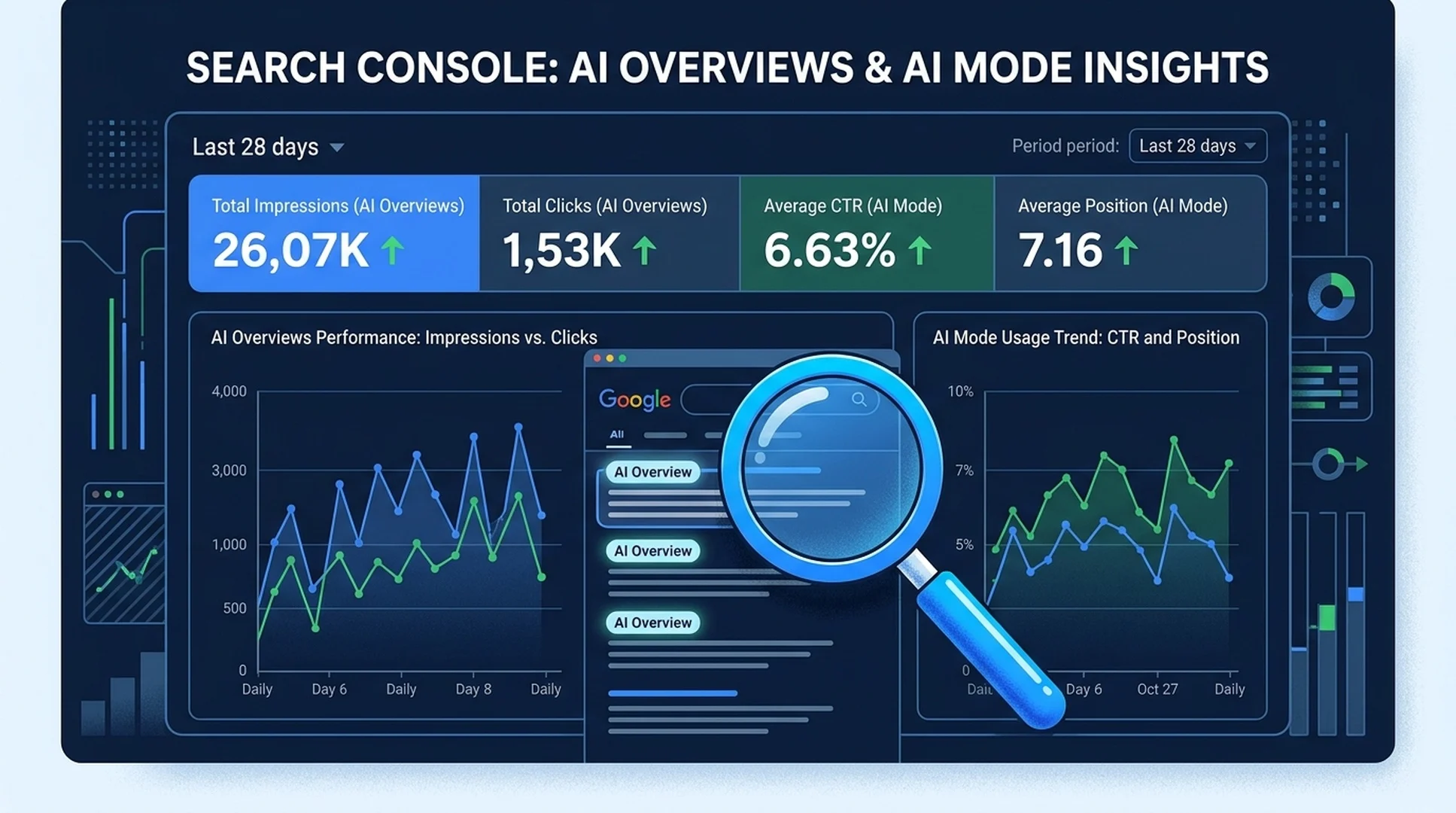
The report appears as an expandable tab under the main Performance report in Search Console. It tracks impressions from two generative AI capabilities in Google Search: AI Overviews and AI Mode. A separate report covers generative AI features in Google Discover. Google's documentation says it expects to add more capabilities to the report as Search evolves.
Available data dimensions include:
- Impressions: How often URLs from a site appeared in generative AI features
- Pages: Which specific URLs appeared within AI features
- Countries: Geographic breakdown of generative AI visibility
- Devices: Desktop, tablet, or mobile breakdown (Search results only)
- Dates: Performance tracked with hourly, daily, weekly, and monthly granularity
Notably absent from the report are click data and query data. Site owners can see which pages received impressions in AI features and from which countries and devices, but they cannot see which search queries triggered the AI appearance or whether users clicked through to their site. Google's documentation states that the company expects to "update this list over time as we develop Google Search," suggesting additional metrics may be added.
Some properties may still not see the report. Google's documentation notes that the report will not appear if a site "hasn't received enough impressions in generative AI features on Google Search." Sites that have opted out of Search generative AI features will also not have data, since they are ineligible to appear in those features.
Data from Search Labs experiments is excluded from the report. Google says these experiments are still in active development and their data is not included in Search Console reporting.
Why this matters for SEO and AI visibility
The report gives SEO and GEO teams their first dedicated, native tool for measuring visibility inside Google's AI-generated search results. Before this report, teams had no direct way to confirm whether their content appeared in AI Overviews or AI Mode, let alone track that visibility over time. Impression data alone, without clicks or queries, still allows teams to identify which pages Google's AI systems surface and establish baselines for optimization. It also makes it possible to compare AI visibility across countries and devices, which was previously impossible.
The absence of click and query data limits the report's usefulness for conversion-focused analysis. Teams cannot currently calculate click-through rates from AI features or identify which queries trigger their content to appear in AI Overviews. Google said it is "continuing to work with website owners to understand what insights and data would be most helpful," but provided no timeline for additional metrics.
The report's broad rollout also signals that Google treats AI Overviews and AI Mode as permanent fixtures of the search experience rather than experimental features. Properties that see no data in this report may need to evaluate whether their content is being surfaced in AI features at all, which could prompt a review of content structure and schema markup.
What to watch next
Google has not officially announced the full rollout, so a formal confirmation blog post or help documentation update may follow. SEO teams should watch for whether Google adds click data, query data, or additional metrics to the report in coming months. The documentation notes that the list of covered generative AI capabilities "is expected to update over time," meaning new AI search features may be added to the report as Google develops them. Sites not currently seeing AI Overview impressions may want to review whether they have opted out of Search generative AI features and assess their content's alignment with Google's published guidance on optimizing for generative AI in Search.
Sources
- Google Search Central Blog, "Introducing Search Generative AI performance reports in Search Console," June 3, 2026: https://developers.google.com/search/blog/2026/06/gen-ai-performance-reports
- Google Search Console Help, "Generative AI performance report (Search)": https://support.google.com/webmasters/answer/16984139