Google Search Console Generative AI Performance Report Appears Live for All Properties
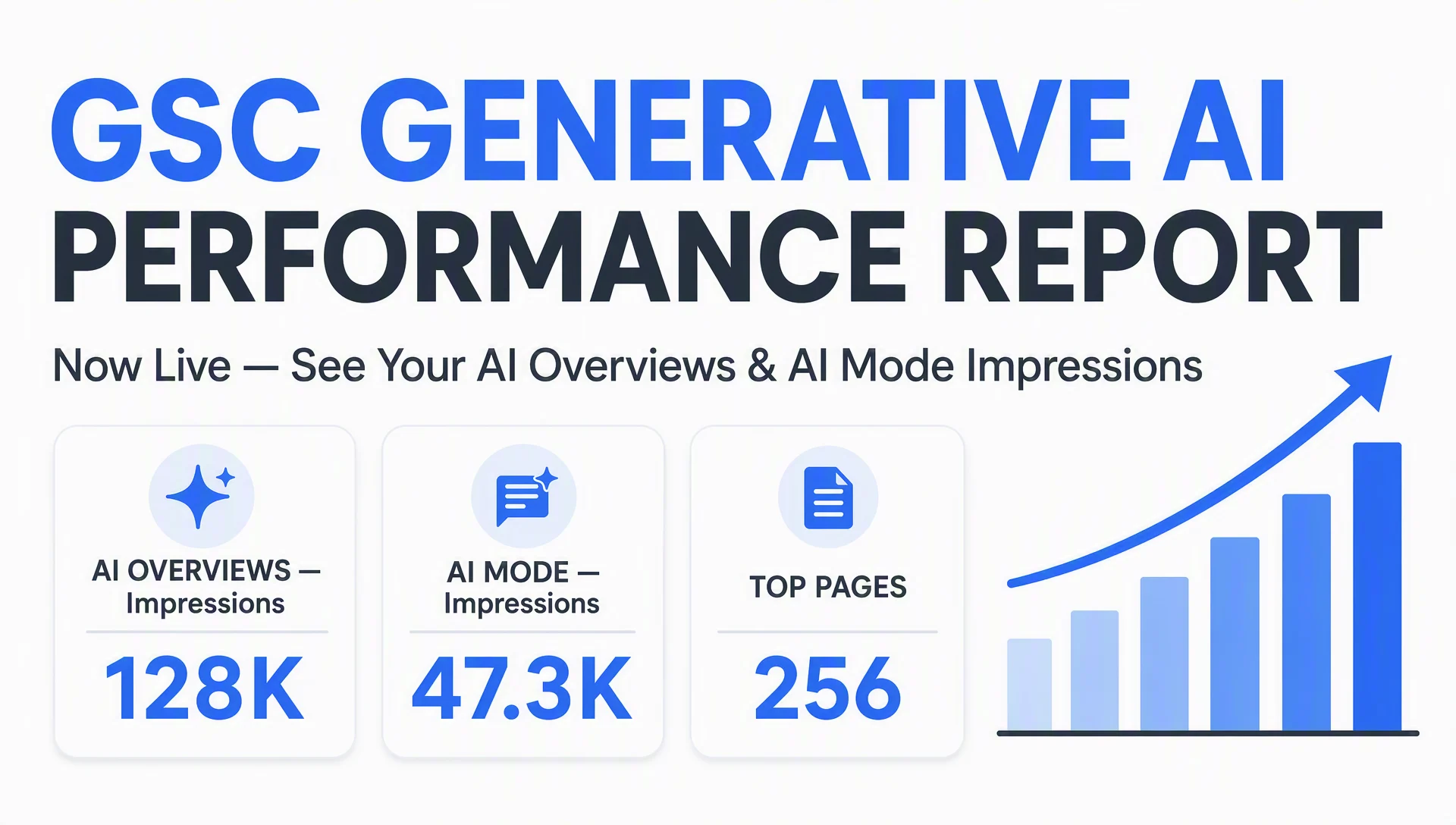
Google Search Console's generative AI performance report is now visible across all properties, according to multiple website owners who confirmed access as of August 11, 2026. The report, which tracks how sites appear in Google's AI Overviews and AI Mode, had been rolling out gradually since earlier this year but now appears to have reached full availability.
The details
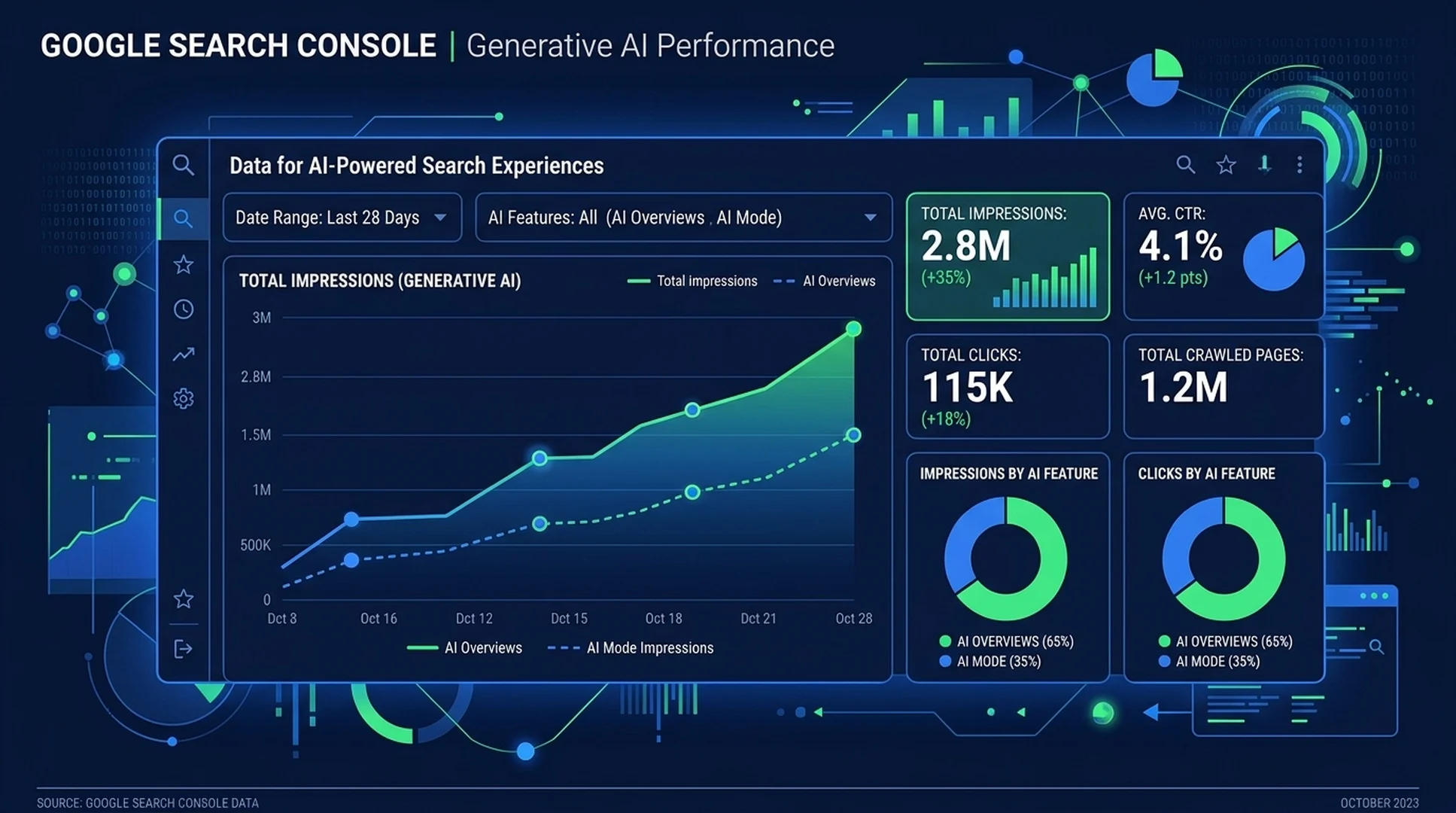
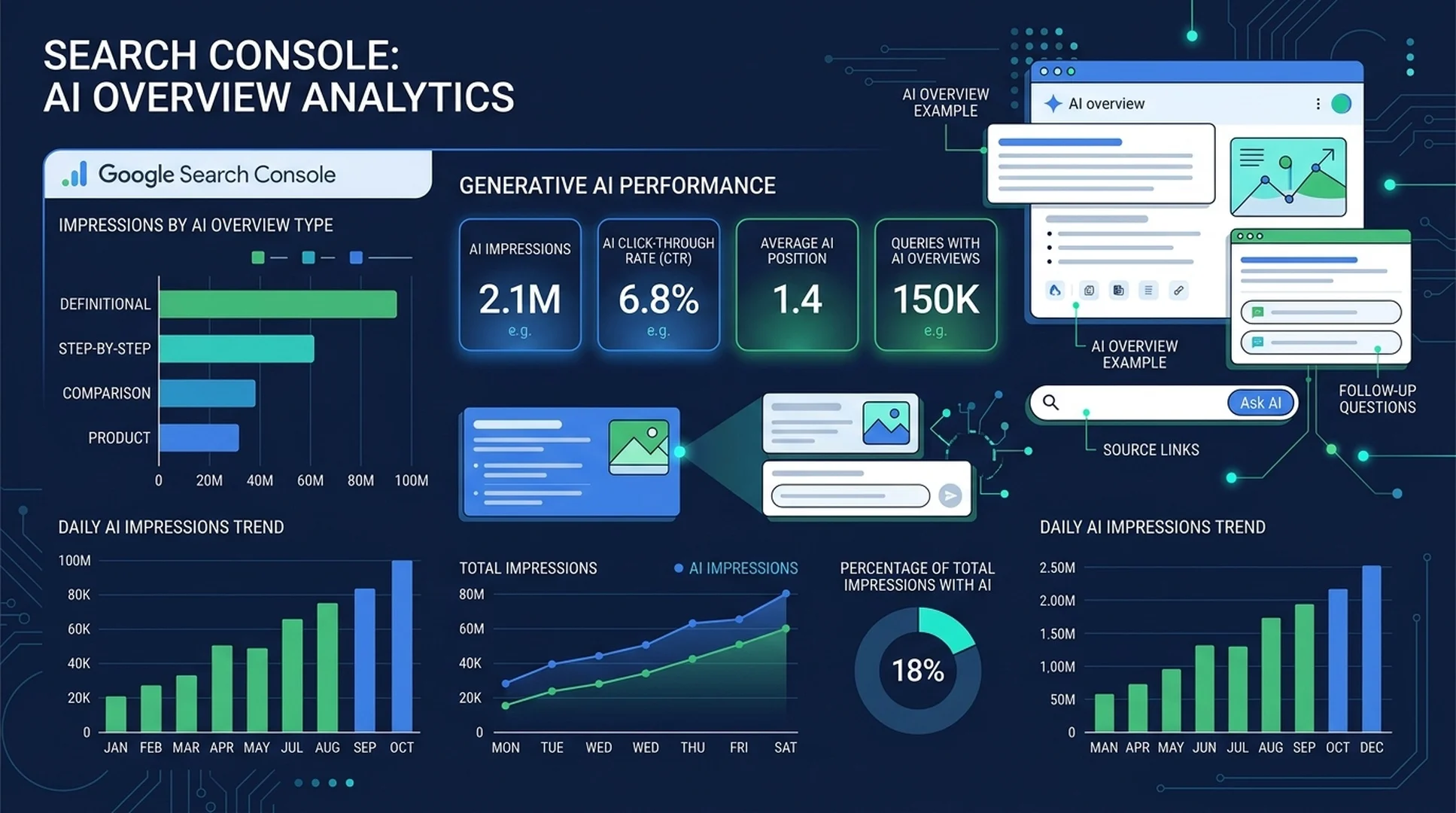
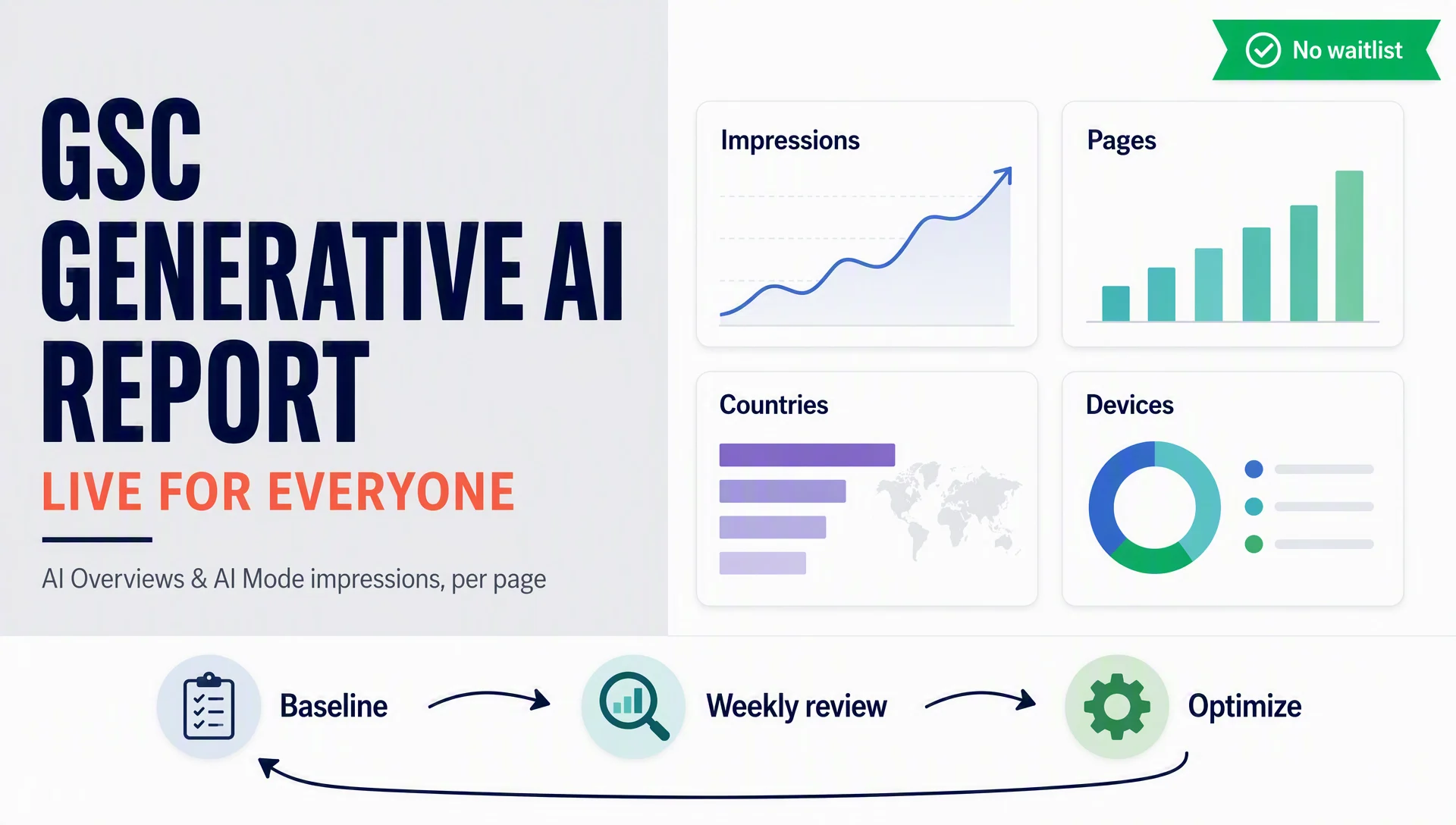
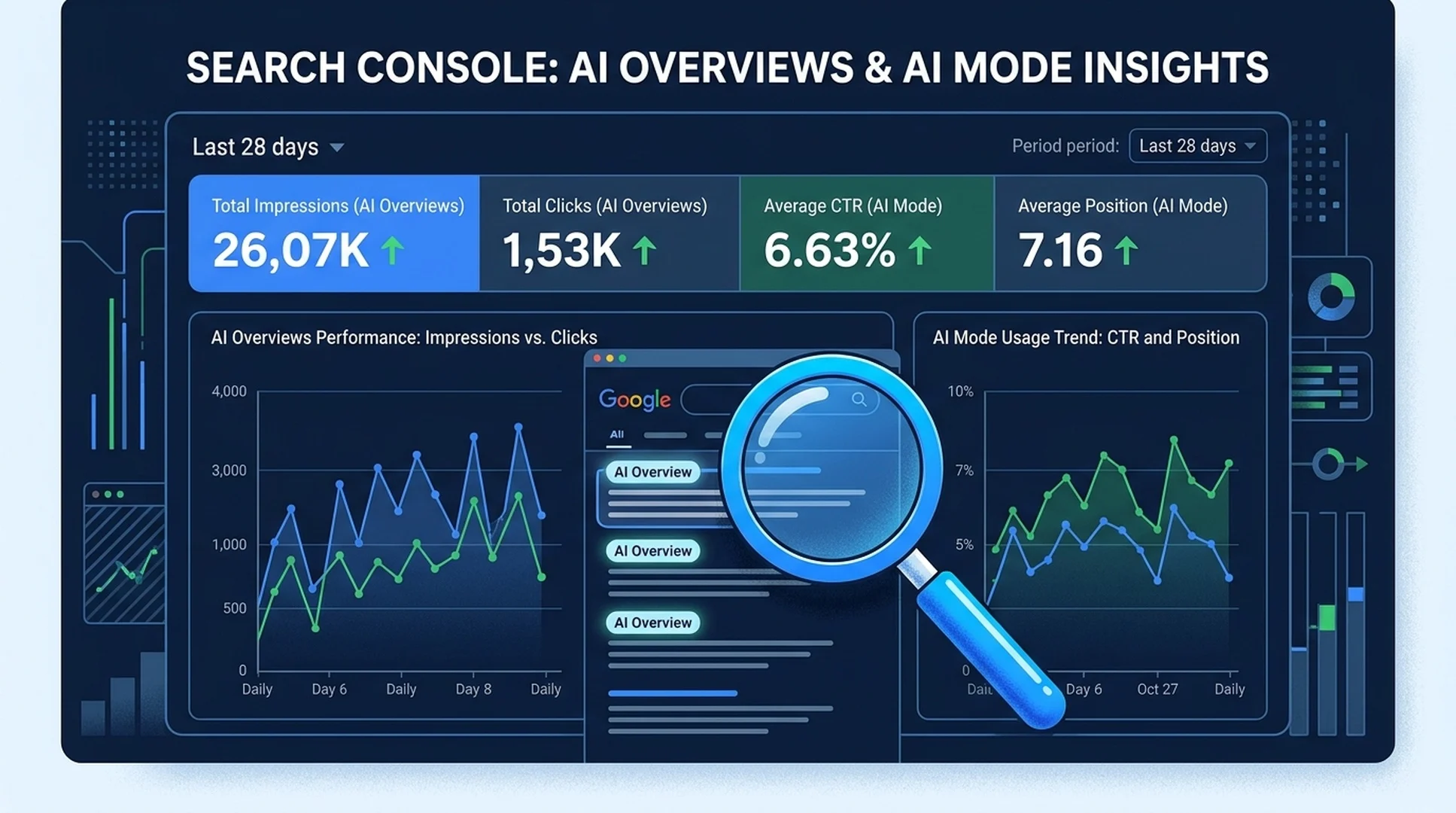
The generative AI performance report sits as an expandable tab under the main Performance report in Search Console. It shows impression data for two of Google's AI-powered search features: AI Overviews and AI Mode. According to Google's Search Console Help documentation, the report lets site owners see how organic impressions from generative AI features change over time, which pages receive the most or fewest impressions in AI features, and where those impressions originate by device or country.
The report provides five data dimensions: impressions, pages, countries, devices, and dates. Date granularity extends to hourly, daily, weekly, and monthly intervals, with all timestamps in Pacific Time. Site owners can filter by page, country, device type (desktop, tablet, mobile), and time range. Data can also be exported for offline analysis.
Notably, the report does not include click data or query-level data. Impressions count how many times links to a site were shown to users within a generative AI feature on Google Search. Google's documentation defines an impression as a single instance of a link being displayed, and when multiple results from the same site appear in one AI feature, they aggregate as a single impression in the chart total.
Google's documentation notes that Search Console does not include data from Search Labs experiments, as those remain in active development. A separate generative AI performance report exists for Google Discover. The company stated it expects to update the list of included features over time as Google Search evolves.
The rollout was flagged on August 11 by Vijay Chauhan, who posted on X about the report's availability. After checking approximately 25 Search Console profiles, confirmation came that the report was visible across all of them. Google had expanded access to the report several weeks prior, but the latest expansion appears to have removed remaining access restrictions.
Some site owners reported not seeing the report. Google's documentation offers two explanations: not all properties may have access during a gradual rollout, or the site has not received enough impressions in generative AI features on Google Search. Sites that have excluded themselves from Search generative AI features will not generate impression data. Google provides controls for site owners to opt in or out of appearing in these features.
The official documentation still carries a note stating the report is rolling out to "a subset of website owners, allowing for thorough testing before rolling it further." Google has not yet issued a formal announcement confirming full availability.
Why this matters for SEO and AI visibility
The generative AI performance report gives SEO and GEO teams their first native measurement tool for tracking visibility within Google's AI-powered search results. Before this report, teams relied on third-party tools and manual SERP checks to estimate AI Overview and AI Mode presence. Native Search Console data, even limited to impressions, provides a verifiable baseline for understanding which pages Google selects for AI-generated answers.
The absence of click and query data remains a significant gap. Without click data, site owners cannot measure whether AI Overview appearances translate to traffic. Without query data, they cannot identify which searches trigger their content in AI features. The impression-only metric tells teams that their content is visible in AI results but not whether users act on it. SEO professionals will likely continue pushing Google to add these dimensions.
The country and device breakdowns do offer actionable insight. Teams can now see whether their AI visibility varies by region or device type, which may inform content localization and technical optimization decisions. Page-level data helps identify which content formats or topics Google favors for AI-generated answers.
What to watch next
Google has not formally announced the full rollout, so an official blog post or help documentation update may follow. The documentation note about rolling out to a "subset" of website owners suggests Google may still be refining its messaging around availability.
The most anticipated addition is click and query data. Google's traditional Search performance report includes both, and the generative AI report's lack of these metrics has been a consistent point of discussion among SEO professionals since the report first appeared. Whether Google can measure clicks from AI Overviews and AI Mode in a way that satisfies privacy and technical constraints remains an open question.
Google also stated it expects to expand the list of covered features beyond AI Overviews and AI Mode. As Google continues to integrate generative AI into more search surfaces, the report's scope may grow. The exclusion of Search Labs data means features still in experimental phases will not appear until they graduate to general availability.
Site owners who have not yet seen the report should verify they have not excluded their site from Search generative AI features and check whether their properties have accumulated sufficient impressions. The report appears under the Performance section in Search Console as an expandable tab labeled for generative AI features.
Sources
- Google Search Console Help, "Generative AI performance report (Search)": https://support.google.com/webmasters/answer/16984139
- Vijay Chauhan, post on X (August 11, 2026)
Author: Owen Hartwell, Google AI Overview Tracker Across 40+ Verticals at Auspia. Owen tracks Google AI Overviews, search AI features, and SERP shifts to help teams understand and improve their AI search visibility.