Quick answer
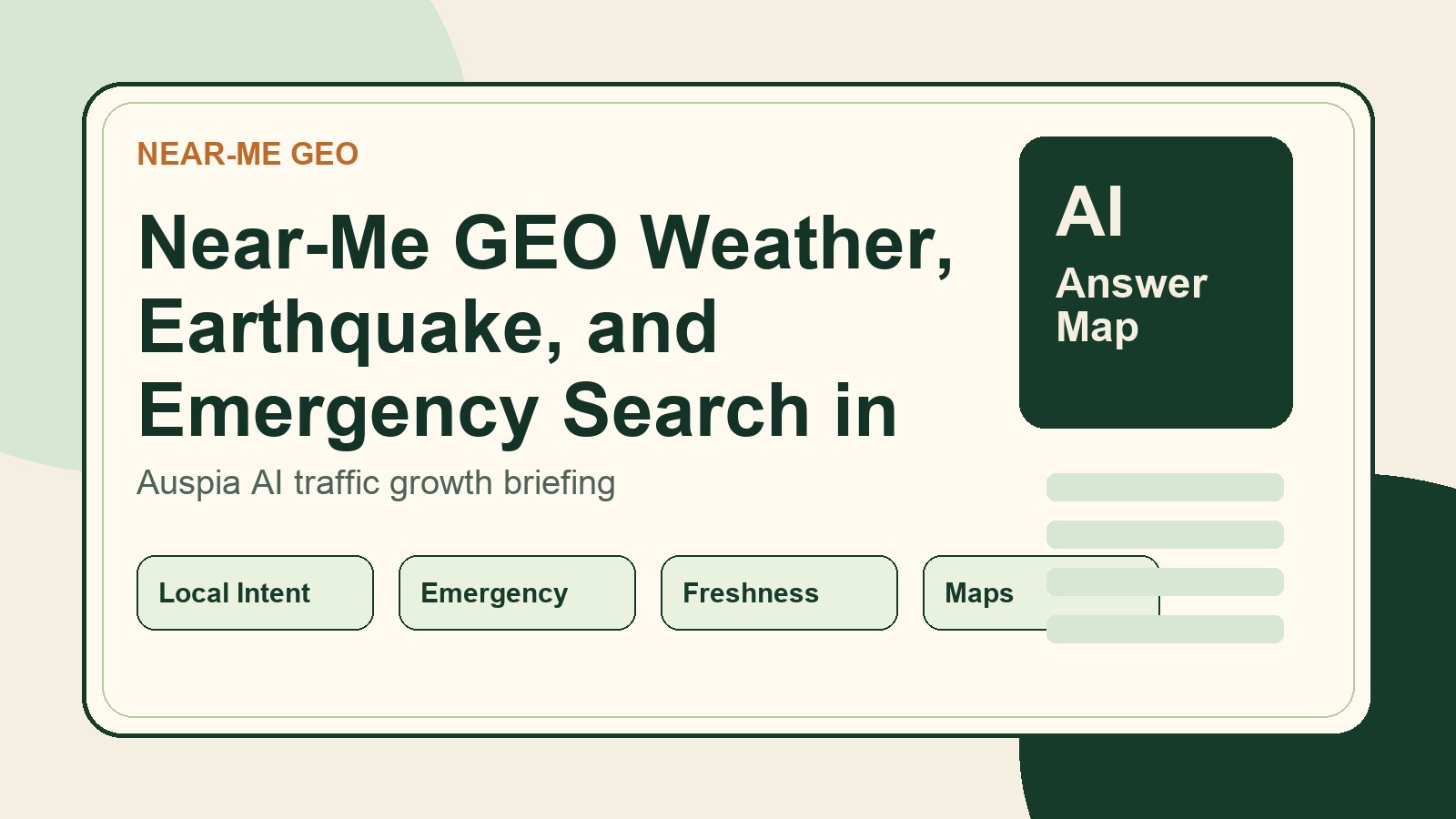
Near-me searches are not just local keywords. They are context queries where location, time, trust, and action all matter.
For growth teams, the practical question is not whether the keyword is trending. The question is whether the query can teach you how people ask, how AI systems summarize, and what kind of source earns trust. Auspia treats these topics as search-behavior signals, then turns the useful ones into durable SEO, GEO, or AEO assets.
Signal | What to check | Why it matters |
|---|---|---|
Intent | What does the user need now? | Prevents traffic chasing |
Source standard | Who would AI trust? | Shapes citation strategy |
Freshness | How fast does the answer change? | Defines update cadence |
Business fit | Can this support a buyer journey? | Keeps content useful |
What makes emergency search hard
Queries like weather today near me, latest earthquake near me, flash flood warning, and excessive heat change by minute and location. AI answers must rely on official data, trusted providers, and clear timestamps. A static blog post cannot compete with live data, but local organizations can still support preparedness and service queries.
Where brands can participate
Utilities, insurers, local services, healthcare providers, schools, and municipalities can publish preparedness pages, service interruption pages, shelter information, claim guides, and emergency FAQs. These pages should not pretend to be live warnings unless they have live data.
Local entity clarity
Make addresses, service areas, phone numbers, hours, and emergency limitations explicit. Add LocalBusiness or Organization schema where accurate. Link to official emergency agencies and keep outdated pages labeled.
A GEO content model
Build three layers: evergreen preparedness pages, event response pages, and post-event recovery pages. Each layer answers different prompts and should link to official sources. The goal is to be useful without replacing public safety authorities.
Measurement
Track local prompt visibility by city or service area. Compare how AI systems describe your organization before, during, and after events. Watch for dangerous overstatements and correct pages that imply availability you cannot provide.
What Auspia would do next
Auspia would not start by publishing ten disconnected posts. We would build a prompt set, map it to pages, check current AI answers, then decide which page type has the best chance to improve visibility. For many teams, the first useful action is a small visibility audit with the AI Search Visibility Checker, followed by a page rewrite and a repeat check two to four weeks later.
FAQ
Is this topic mainly SEO or GEO?
It is both. SEO helps the page become crawlable, indexable, and competitive in search. GEO adds the answer-readiness layer: clear entities, extractable claims, trustworthy evidence, and measurement across AI answer surfaces.
How should a small team start?
Start with one high-intent query group, rewrite the page that should answer it, add a concise table or checklist, and test the page against five AI prompts before expanding the project.
What should we measure?
Track rankings, impressions, AI mentions, citation URLs, description accuracy, branded search lift, assisted conversions, and sales notes. One metric will not explain the full impact.
Author: Miles Donovan, Local AI Search Analyst Across 500+ Service Queries at Auspia. Miles writes about local visibility, service-area pages, and how AI answers handle location-sensitive searches.