Google Search Console Generative AI Performance Report Expands to Most Profiles
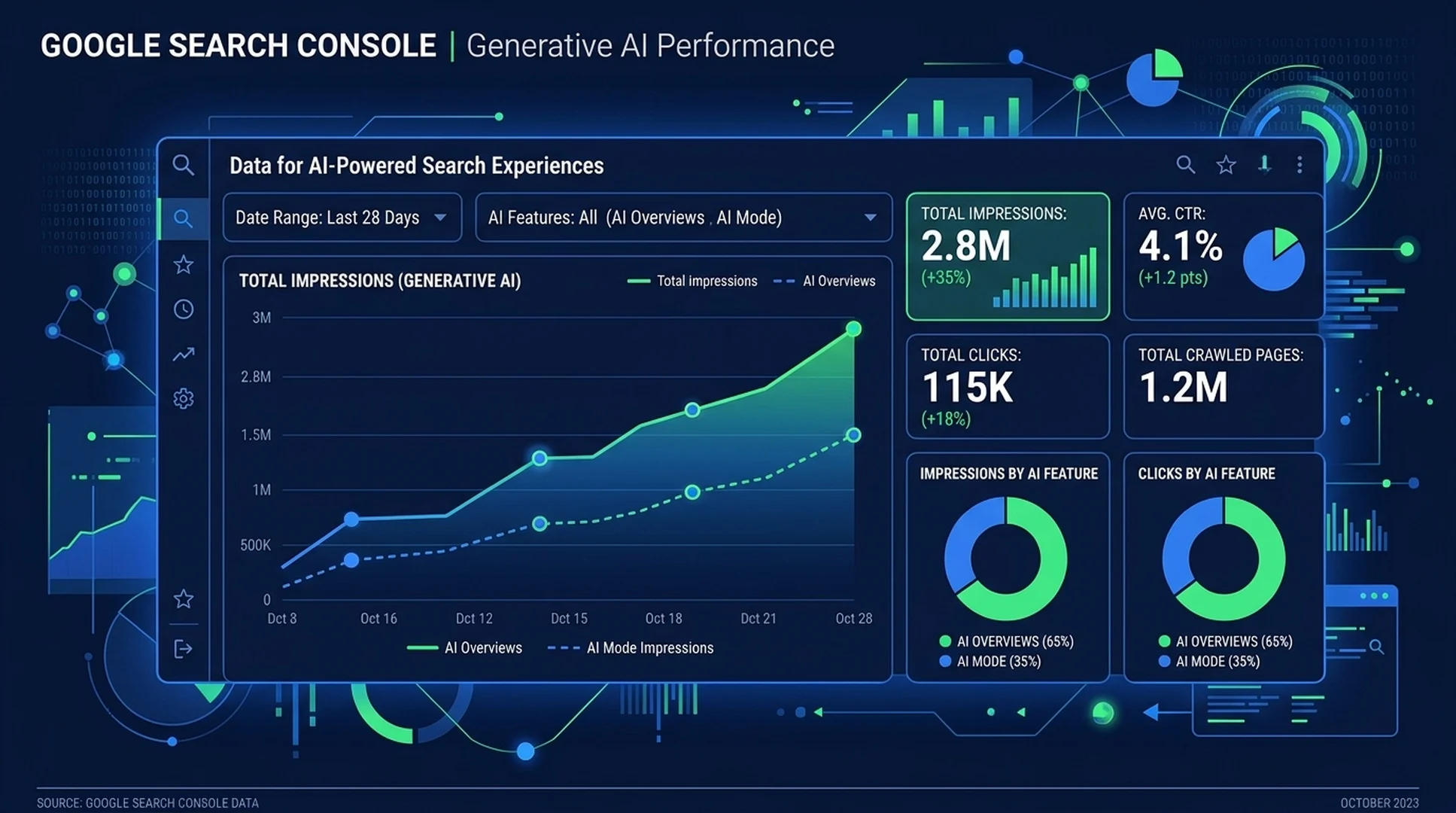
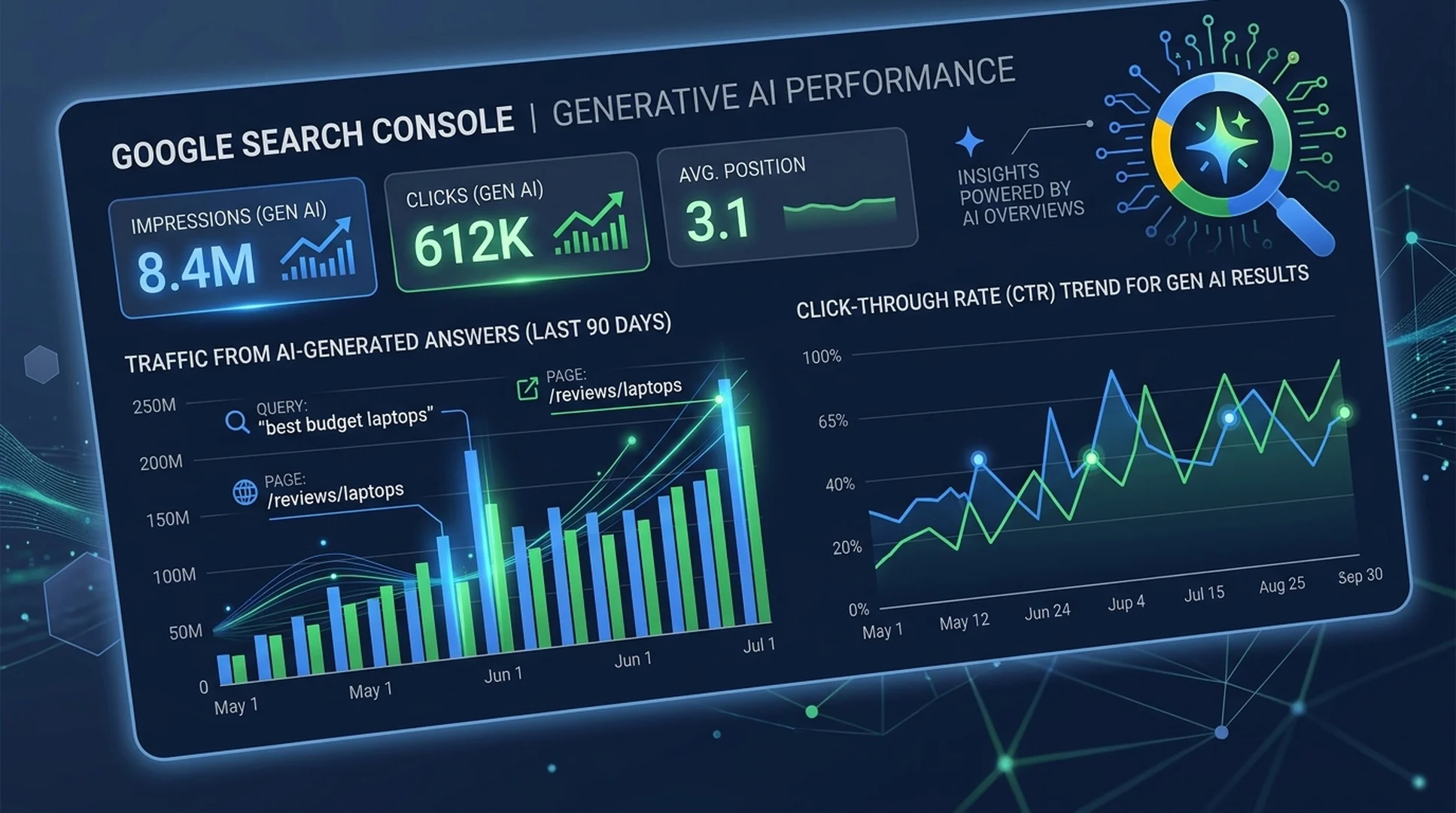
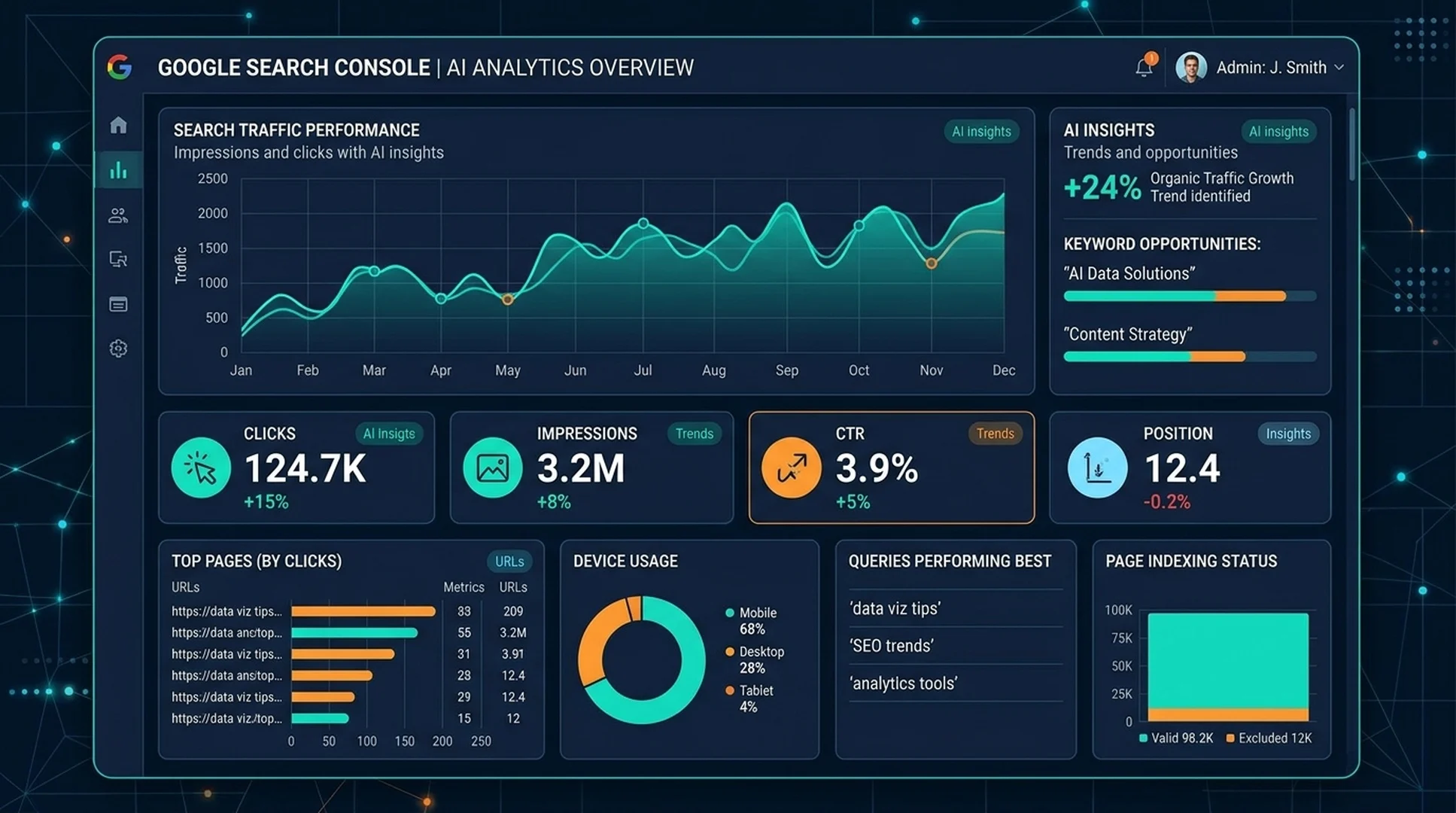
Google has rolled out its generative AI performance report to most Search Console profiles, giving SEO and GEO professionals their first look at how websites perform in AI-powered search features. The report tracks impressions from AI Overviews and other generative AI surfaces. It appears to be live for the majority of Search Console users as of mid-August 2026, though Google has not yet made a formal announcement.
The rollout marks a shift in how Google shares data about AI search features with website owners. Until now, teams had to rely on third-party tools and indirect signals to estimate their visibility in AI-generated results. The new report provides official data directly from Google's systems.
The details
The report sits as an expandable tab under the main Performance section in Google Search Console. It shows how websites appear in generative AI features across Google Search and Discover, with breakdowns by pages, countries, devices, and time periods at hourly, daily, weekly, and monthly intervals.
The data covers impressions (how often URLs appeared in AI features), which specific pages were shown, geographic visibility, device types, and date-based trends. The report mirrors the structure of the existing Performance report but focuses exclusively on generative AI surfaces rather than traditional organic search results.
What it doesn't include matters as much as what it does. There is no click-through data and no query-level information. SEO teams can see which pages are surfacing in AI Overviews, but they cannot determine which search queries triggered those appearances or whether users clicked through to the site.
John Mueller, Google's Search Advocate, confirmed on Reddit that the rollout is not yet complete for every domain. "Correct, it's not yet every domain," Mueller wrote. "Also, like the discover and news reports, these are only shown if there's sufficient data to display."
Google's documentation states the report will not appear for sites that "haven't received enough impressions in generative AI features on Google Search." That threshold likely excludes smaller sites or those with minimal AI search visibility. The exact threshold remains unclear, but sites with regular AI Overview appearances should see the report.
Google expanded initial access to the report a few weeks before this broader rollout. The mid-August expansion appears to cover most active Search Console profiles. One SEO professional reported finding the report present across all 25 Search Console properties they manage, suggesting the rollout has reached the majority of the user base.
The report covers both AI Overviews (the AI-generated summaries that appear at the top of search results) and AI Mode (Google's conversational AI search interface). It also includes Discover, Google's personalized content feed, when generative AI features are used there.
Why this matters for SEO and AI visibility
This is Google's first official measurement tool for AI search visibility. As AI Overviews and AI Mode take over more query types, SEO and GEO teams have had no reliable way to track their performance in these surfaces. Third-party estimates varied widely, and without official data, it was difficult to know whether AI search was helping or hurting a site's overall visibility.
The report lets teams see which pages are appearing in AI-generated answers and track visibility trends over time. For local businesses and content publishers, the data offers early signals about which content types Google's generative systems are prioritizing. A news site might discover that its explainers appear frequently in AI Overviews while its opinion pieces do not. An e-commerce site might find that product pages surface in AI responses for comparison queries.
The missing click and query data limits what teams can do with the information. A page might appear in an AI Overview, but without knowing which query triggered it or whether anyone clicked through, it's hard to draw strategic conclusions. Google has kept that data back, perhaps to prevent manipulation of AI search results. The company has been cautious about sharing data that could lead to gaming of AI-generated answers.
For teams managing multiple properties, the report provides a way to benchmark AI visibility against competitors. If one site sees declining AI impressions while competitors remain stable, it may signal that Google's generative systems are favoring different content types or sources.
What to watch next
Google may add click-through data or query-level details in future updates, though no timeline exists. The company has a history of adding metrics to Search Console reports gradually, starting with impressions before expanding to more detailed indicators. The core Performance report took years to add the filters and dimensions it offers today.
Teams should start tracking generative AI impression trends monthly to build baselines. As AI search features grow, this data will matter more for understanding where visibility is coming from. Sites that see strong AI impression growth may be well-positioned for the next phase of search, while those with declining numbers may need to adjust their content strategy.
When Google officially announces the full rollout, expect additional documentation on how to interpret the data and optimize content for generative AI features. The company typically releases best practices and case studies alongside major Search Console updates.
The report also raises questions about how Google measures success for AI search features. If impressions are the only metric available, it suggests Google is still determining how to evaluate the effectiveness of AI-generated answers for users and publishers alike.
Sources
- Google Search Console Help documentation on generative AI performance reports
- John Mueller, Google Search Advocate, Reddit discussion (August 2026)
- Vijay Chauhan, X post (August 12, 2026)