How to Turn Trending Keywords into SEO and GEO Content Without Chasing Noise
Trending keywords can create traffic, but most are noise for a B2B growth team. This playbook shows how to turn trend lists into durable SEO and GEO assets.


Category
Start here
Trending keywords can create traffic, but most are noise for a B2B growth team. This playbook shows how to turn trend lists into durable SEO and GEO assets.
Category

Legal and government searches reward official, well-maintained, and clearly cited sources. GEO teams can learn how authority signals shape AI answers in sensitive topics.

Financial search is fast, sensitive, and citation-heavy. Publishers and brands need clear timestamps, risk boundaries, and source quality to appear responsibly in AI answers.
World Cup searches appear in many languages and formats. They show why multilingual GEO requires localization, entity consistency, and intent mapping rather than direct translation.

A practical 2026 guide to rebuilding a company website for GEO: entity facts, answer blocks, schema, llms.txt, evidence paths, and AI-search measurement.
Emergency and near-me searches show the limits of generic SEO. Local GEO requires fresh data, location clarity, official signals, and pages that answer immediate questions.

Recall queries are high-risk searches where users need accurate, current, official information. Brands should prepare recall pages before a crisis, not during one.
Outage searches show how quickly users move from brand queries to AI answers. SaaS teams need status pages, incident language, and official updates that search systems can trust.

Google AI Overviews reward pages that are easy to understand, corroborate, and extract. Use this checklist to make your pages more likely to support AI-generated answers.

A concise answer and practical checklist for making this GEO topic easier for AI answer systems to understand, cite, and turn into qualified traffic.
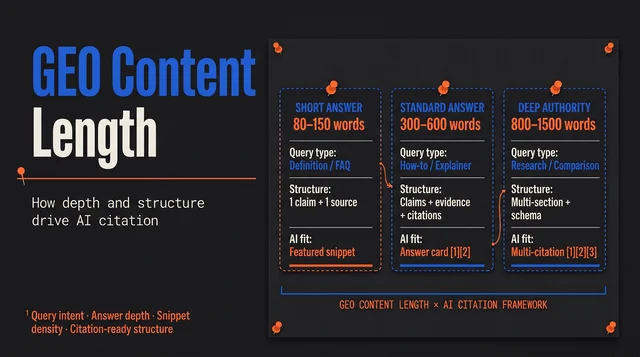
A concise answer and practical checklist for making this GEO topic easier for AI answer systems to understand, cite, and turn into qualified traffic.

A concise answer and practical checklist for making this GEO topic easier for AI answer systems to understand, cite, and turn into qualified traffic.

A concise answer and practical checklist for making this GEO topic easier for AI answer systems to understand, cite, and turn into qualified traffic.