Google Refiles Lawsuit Against SerpApi, Shifts Strategy to Protect Licensed Content
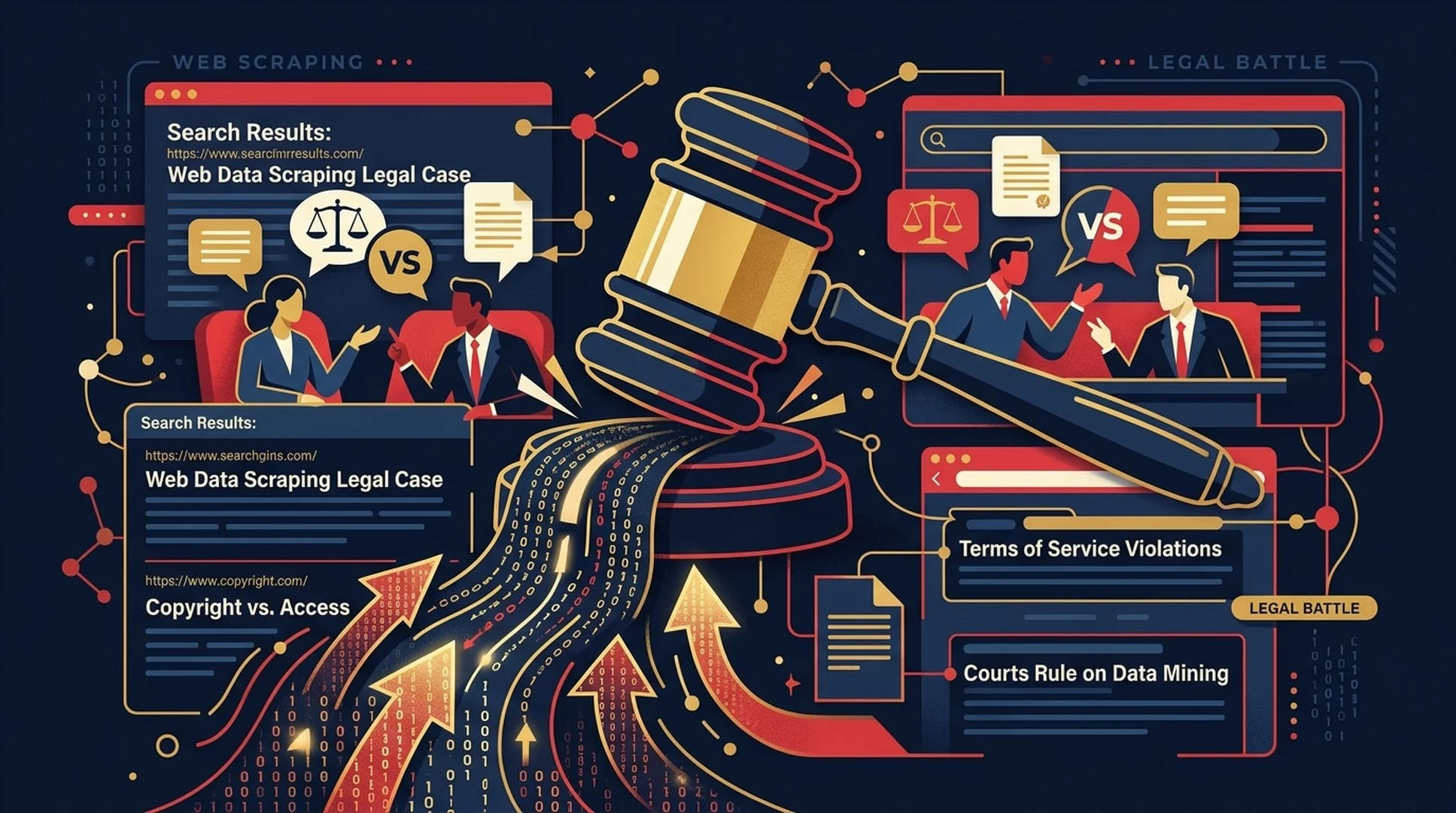
Google has filed an amended complaint against SerpApi, the search results scraping service, pivoting its legal strategy to focus on content it licenses from third-party publishers. The filing, submitted August 10, 2026 in the U.S. District Court for the Northern District of California, comes three weeks after a federal judge dismissed the company's original claims.
The pivot reframes a fight over who controls access to search results data, with consequences for the SEO tools ecosystem and the AI applications that depend on SERP data.
The Details
The dispute began in December 2025, when Google sued SerpApi under the Digital Millennium Copyright Act's anti-circumvention provisions. Google alleged that the Austin, Texas-based company built tools specifically designed to bypass its "SearchGuard" anti-scraping system, then sold access to structured search results data to other businesses. Google estimated in its complaint that SerpApi sends "hundreds of millions of artificial search requests each day" to its systems.
On July 20, 2026, U.S. District Judge Yvonne Gonzalez Rogers dismissed much of Google's complaint. The court ruled that Google could not assert copyright claims over the factual content that appears on its search results pages, material originating from third-party websites. Rogers allowed Google to proceed with claims over content it licenses from publishers, but only if Google could show that content owners authorized its use of technological measures to prevent scraping.
Google was given 21 days to amend that portion of its complaint.
The amended complaint filed on August 10 does exactly that. According to MediaPost's coverage of the filing, Google now alleges that Reddit, which licenses user-generated content to Google for display in search results, specifically directed Google "not to enable third parties to extract and independently commercialize the licensed content."
Google further states in the amended complaint that its "licensing partners" have "expressly requested that Google prevent unauthorized access to licensed content." The legal theory: Google is not asserting ownership over search results themselves, but rather acting as a steward of contractual obligations it owes to content providers who pay Google to display their material under specific restrictions.
SerpApi's legal team dismissed the revised strategy. "We remain confident in the strength of SerpApi's position and look forward to responding," SerpApi counsel stated following the filing.
A Broader Legal Web
The Google-SerpApi case is part of a larger tangle. Reddit filed a separate lawsuit against both SerpApi and AI search engine Perplexity, alleging that the companies wrongly obtained copyrighted Reddit posts through Google's search results. In late July, U.S. District Court Judge Paul Engelmayer in New York ruled that Reddit could proceed with those claims.
The parallel cases create an unusual dynamic: Google is suing to protect content that Reddit owns, while Reddit is simultaneously suing the same defendant (SerpApi) for accessing that same content through Google. The licensing agreements between Google and Reddit sit at the center of both disputes.
The case also draws attention to the broader economics of SERP data. Companies like SerpApi provide the raw search results data that powers rank tracking tools, SEO platforms, competitive analysis products, and increasingly, AI applications that need to understand what Google's search results contain. If Google succeeds in restricting this access through legal means, the effects would extend across the entire SEO technology stack.
Why This Matters for SEO and AI Visibility
The outcome of this case could reshape the economics of search data access. SERP scraping tools provide the foundation for rank tracking, competitive analysis, and the data pipelines that feed AI applications needing to understand search results.
If courts uphold Google's licensed-content theory, it would establish that search engines can restrict third-party access to results pages by invoking the contractual restrictions of their content partners. That precedent could extend well beyond SerpApi to affect any tool or service that programmatically reads Google's search results.
For SEO teams, the practical question is whether the tools they rely on for rank monitoring and competitive intelligence will continue to function as they do today, or whether a legal precedent forces a shift toward official APIs with more restrictive (and potentially more expensive) access terms.
What to Watch Next
The court has not yet set a schedule for SerpApi's response to the amended complaint. Key things to watch:
- Whether the court accepts Google's licensed-content theory as a viable legal claim at the motion-to-dismiss stage
- How the Reddit licensing agreements are interpreted, specifically whether Reddit's restrictions on third-party extraction create enforceable rights for Google against scrapers
- Whether the parallel Reddit v. SerpApi case in New York produces rulings that affect the California proceedings
- Any amicus briefs from SEO tool providers or AI companies that depend on SERP data
Sources
- MediaPost, "Google Renews Battle With SerpApi Over Scraping," Wendy Davis, August 11, 2026
- MediaPost, "Judge Dismisses Google Complaint Against SerpApi Over Scraping," July 21, 2026
- Search Engine Journal, "Google Files DMCA Suit Targeting SerpApi's SERP Scraping," December 20, 2025
- Search Engine Journal, "SerpApi Challenges Google's Right To Sue Over SERP Scraping," February 23, 2026
- Search Engine Land, "Google loses key DMCA claims against SerpApi in scraping lawsuit," July 21, 2026
- U.S. District Court, Northern District of California, Google v. SerpApi (case filings)
- U.S. District Court, Southern District of New York, Reddit v. SerpApi et al.