Concise summary
Shopify SEO works best when the store is treated as a connected search system: technical setup helps search engines crawl the store, product and collection pages capture purchase intent, images and structured data clarify what is being sold, blog content answers earlier-stage questions, and speed protects both rankings and conversion. This article is one part of a broader Auspia series built around the question: how should a Shopify store do SEO in a systematic way?
Shopify SEO Series: Complete guide | Basic settings | Product pages | Collections | Images | Blog plan | Structured data | Multilingual | Speed | Technical checklist
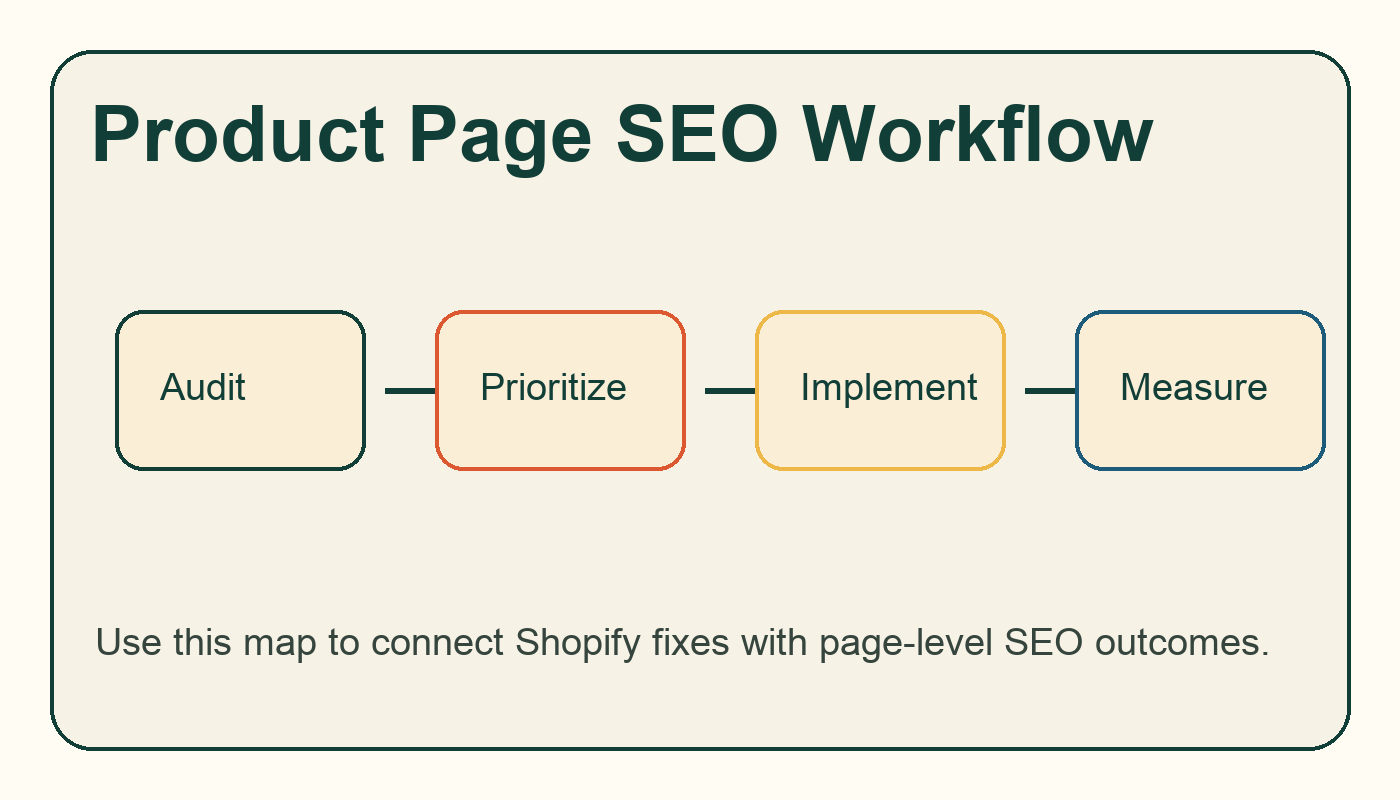
Workflow diagram for shopify product page seo: how to write pdps that rank and convert.
What a product page must do for SEO
A product page is not just a conversion page. It is also an answer page for specific buyer intent: model names, materials, compatibility, size, ingredients, use cases, shipping constraints, and trust signals. The goal is to make the page clear enough for shoppers, search engines, and AI answer systems to understand the product without guessing.
Area | What to check | Why it matters |
|---|---|---|
Title tag | Product type + differentiator + brand when useful | Matches query language without stuffing |
Description | Benefits, specs, objections, use cases | Adds unique indexable content |
Media | Compressed images with descriptive alt text | Supports speed and product understanding |
FAQs | Sizing, materials, care, compatibility, shipping | Captures long-tail buyer questions |
Internal links | Related collections, guides, comparison posts | Connects product intent to the topic cluster |
Writing product descriptions that rank
Start with the buyer's decision criteria, not adjectives. A strong PDP explains who the product is for, what problem it solves, what makes it different, and what the shopper should compare before buying. Link naturally to the relevant collection SEO page and supporting blog guides when they help answer a real question.
Product page checklist
Use one clear H1, avoid manufacturer copy, include specs in crawlable text, add review content where available, check product structured data, and make sure images are optimized. If the page depends on variants, verify that the selected variant experience does not hide key details from the default page state.
Where to go next
If you are auditing an existing Shopify store, start with the Website SEO Score Checker and compare the findings with this Shopify SEO series. If you also care about AI answer visibility, review Auspia's AI Search Visibility Checker after the core SEO fixes are in place.
FAQ
Is Shopify good for SEO?
Yes, Shopify can perform well in organic search, but the platform does not remove the need for page-level content, internal links, structured data checks, image optimization, and speed discipline. Most SEO issues come from store setup, theme choices, app bloat, thin pages, or weak content planning rather than Shopify itself.
How long does Shopify SEO take?
Technical fixes can be validated in days, but ranking improvements usually need several crawl cycles and enough demand-focused content to build topical depth. Treat Shopify SEO as a 90-day operating system, not a one-time settings task.
Should every Shopify store have a blog?
Not every store needs a large blog, but most stores benefit from a focused content plan around buying questions, comparisons, sizing, materials, care, use cases, and category education. The blog should support products and collections, not exist as a separate publication.