Direct answer
Short answer: can you object when ai cites your content matters because AI answer systems pull compact facts, compare sources, and synthesize recommendations. A GEO-ready page makes the answer easy to find, verify, and cite.
For growth teams, the practical goal is simple: publish a page that answers the question plainly, states who the advice is for, supports claims with visible evidence, and gives the reader a useful next step after the AI summary.
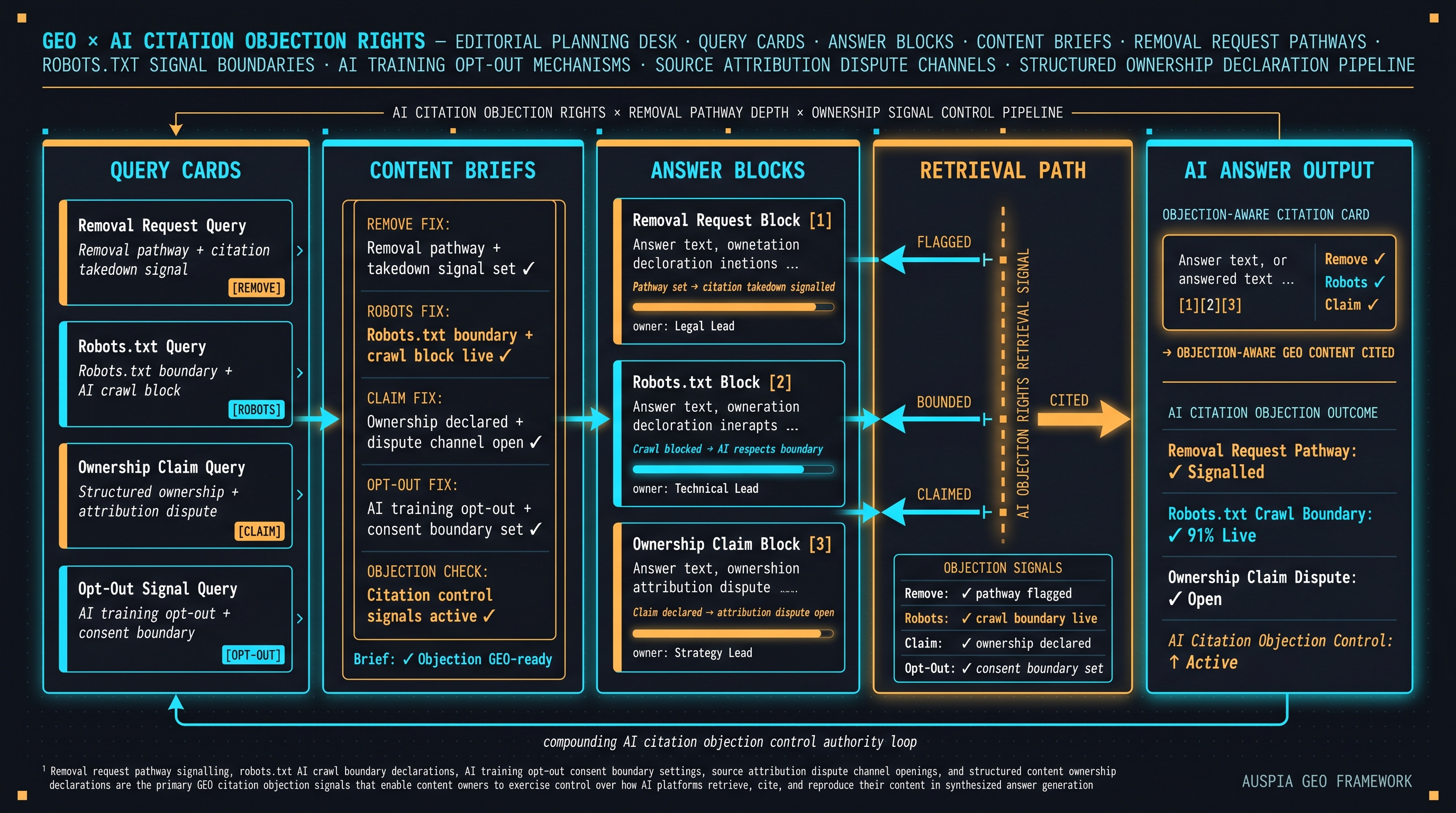
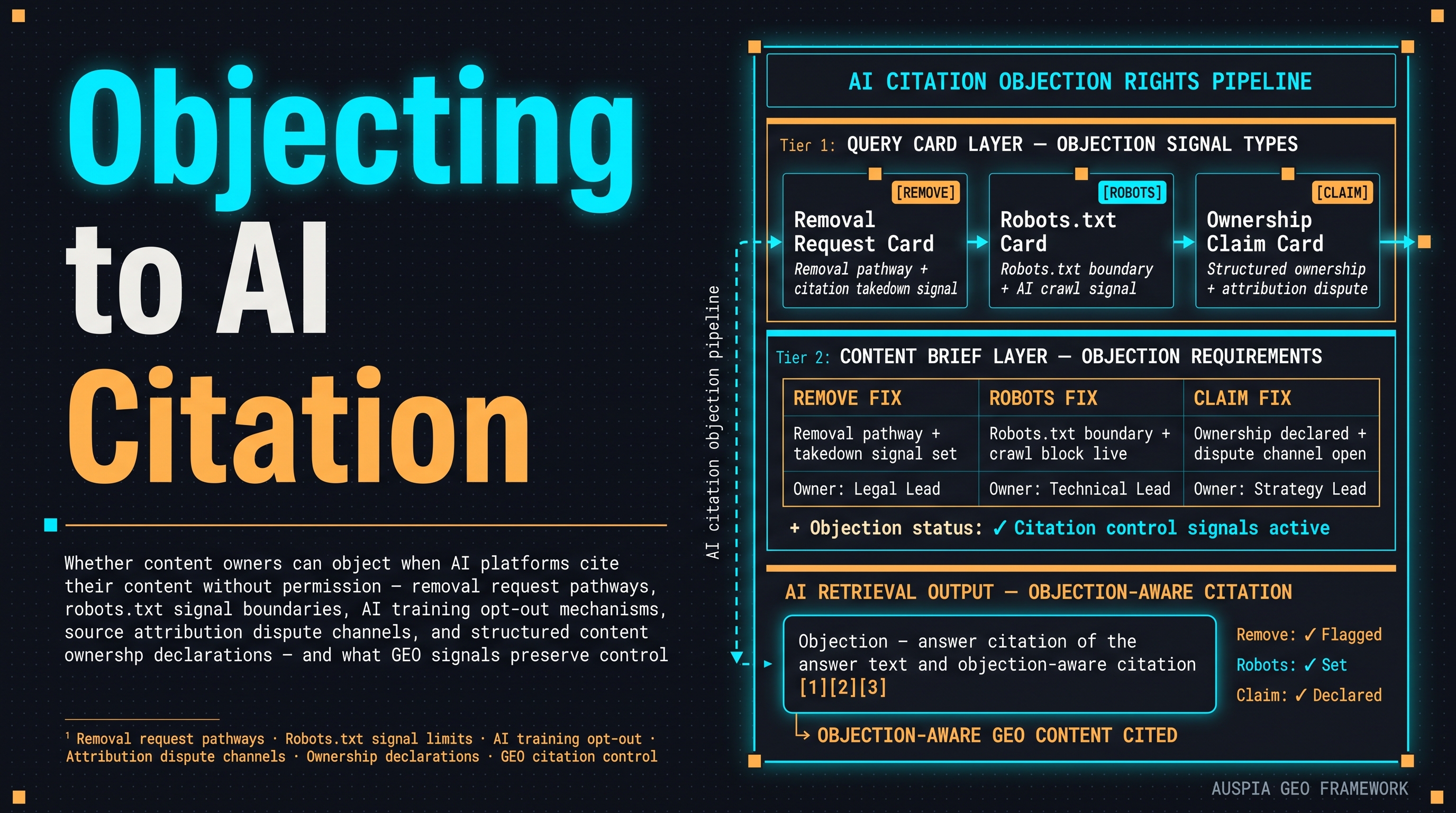
A compact map of the answer, proof, and action layers behind this GEO topic.
Why it matters
AI search changes the first touchpoint. A buyer may see a synthesized answer before they see a ranked list of links. If your content is vague, buried under marketing copy, or missing basic entity facts, the model has little reason to use it. If the answer is clean and specific, the page can support both AI visibility and traditional SEO.
This also affects conversion. The click that arrives from an AI answer is often more informed. The page has to continue the answer, not restart the pitch.
What to do
Start with the query itself as the page promise. Put the answer in the first section. Add a small table, checklist, or example so the content is easier to extract. Use natural language, but include exact product names, category names, dates, author details, and source links where they matter.
Layer | What to add | Why it helps |
|---|---|---|
Answer | A two-sentence definition or recommendation | Gives AI systems a clean extract |
Evidence | Examples, references, data, screenshots, or named sources | Makes the claim safer to cite |
Structure | H2 questions, FAQ, schema, and internal links | Helps crawlers understand the page |
Conversion | A relevant tool, audit, template, or demo path | Turns visibility into action |
Auspia take
Do not treat GEO as a trick for forcing citations. Treat it as an editorial quality system for AI-readable pages. A good GEO page is usually also a better SEO page: clearer intent, better structure, stronger evidence, and fewer empty claims.
Quick checklist
- Does the page answer the exact question in the first 100 words?
- Are brand, product, author, and category facts explicit?
- Is there at least one concrete example or proof point?
- Can a model extract the main answer without reading five paragraphs?
- Is the next step useful for a reader who already got the summary?
Related questions
- Which department should lead GEO inside a company?
- How can AI tools help with GEO content creation?
- Will GEO replace traditional SEO?
- How does GEO improve brand visibility in AI-generated answers?
- How can GEO optimize a product knowledge base?
- Where can GEO conflict with copyright?
Author: Maya Ellison, 12-Year GEO Strategy Researcher at Auspia. Maya writes about AI search visibility, brand entity clarity, and practical GEO operating systems for growth teams.