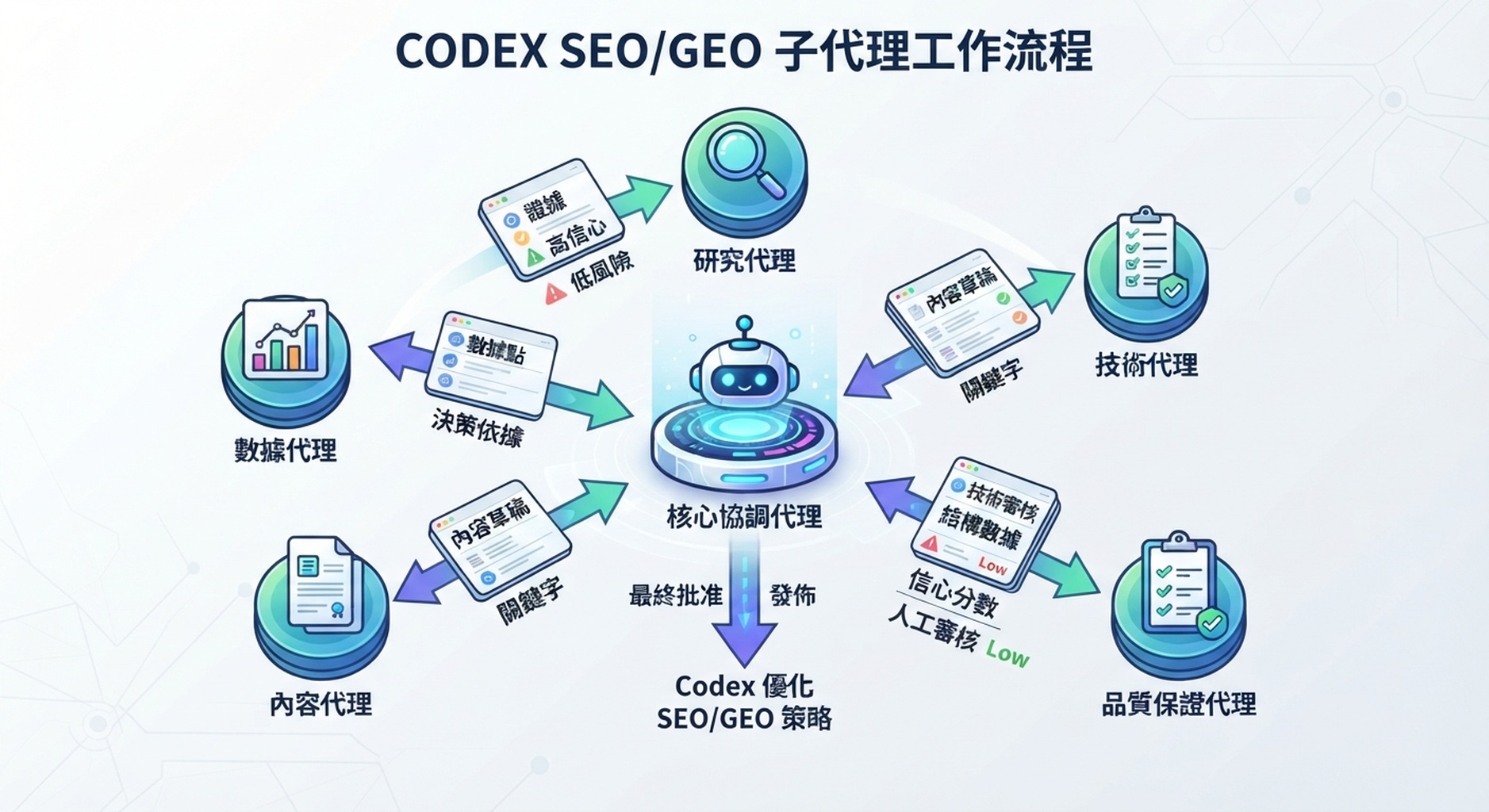
Codex SEO/GEO subagents:專門角色、證據包、衝突檢查與人工批准。
真的需要拆工時,再使用 subagents
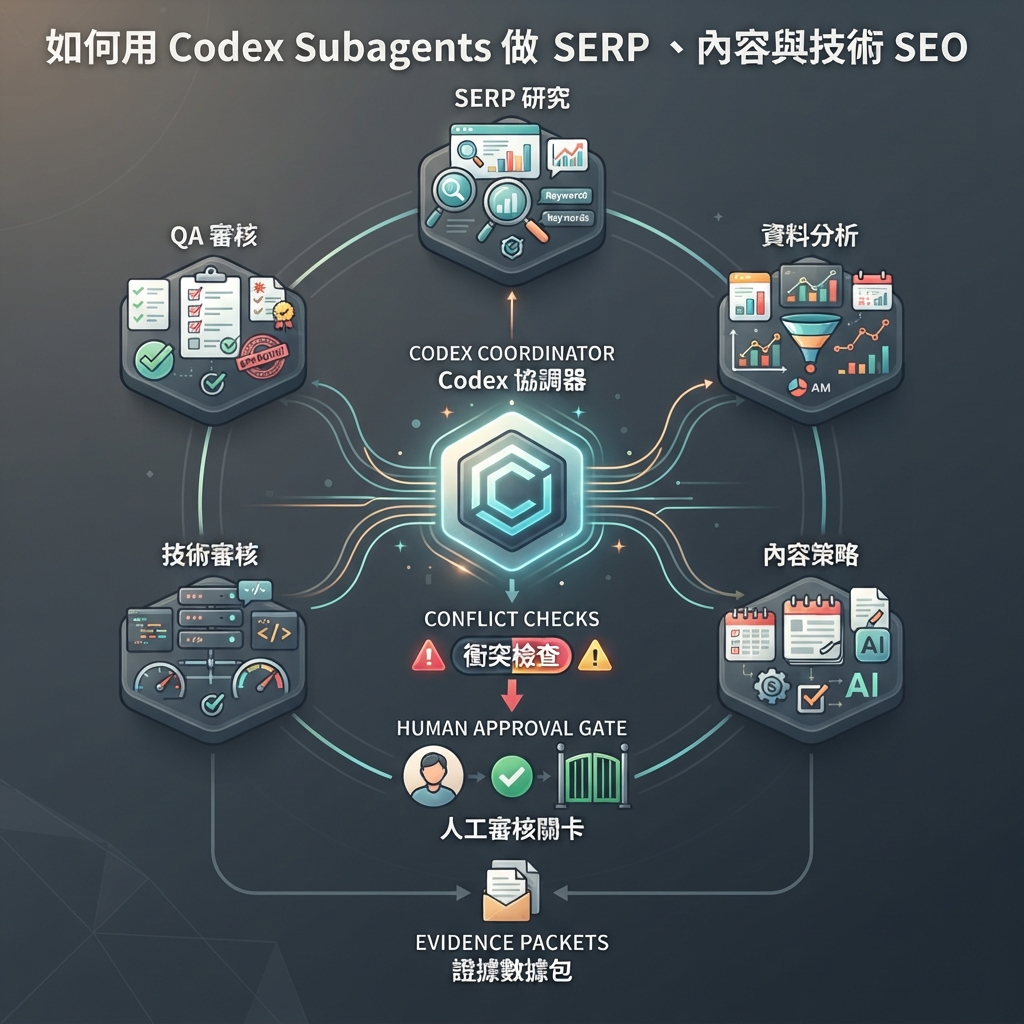
不要建立五個都只會「做 SEO」的 subagents。Codex subagents 真正有用的場景,是同一個任務的不同部分需要不同 context、不同 tools,或需要分開推理。對 SEO/GEO 來說,最實用的拆法通常是 research、data、content、technical 與 QA。
如果任務很簡單,就留在同一個 Codex session 裡完成。如果任務同時牽涉 competing evidence、technical risk 與 content decisions,就值得拆開。
當 SEO/GEO 工作需要不同角色與證據流時,Codex subagents 才真正有價值。
五角色模型
Subagent | 工作 | 輸出 | 不應該做什麼 |
|---|---|---|---|
SERP researcher | 檢查 SERP 與 competitor patterns | evidence packet | 寫 final copy |
Data analyst | 讀 GSC、Bing、GA4、keyword exports | priority table | 決定 brand positioning |
Content strategist | 把 evidence 轉成 briefs | page brief | publish |
Technical reviewer | 檢查 crawl、render、schema、redirects | risk queue | deploy fixes |
QA reviewer | 測試 usefulness、claims 與 safety | approval memo | override humans |
這個表格的重點不是把流程變複雜,而是讓每個角色都有清楚邊界。研究角色不要偷寫文案,技術角色不要直接部署,QA 角色不要取代人類批准。
Coordinator prompt
Coordinate Codex SEO/GEO subagents for this page set.
Assign separate research, data, content, technical, and QA tasks.
Each subagent must return:
- evidence
- decision
- confidence
- blocked questions
- recommended next owner
Do not merge outputs until evidence is present.
Resolve conflicts by asking for human review, not guessing.
這個 prompt 的核心是:先收證據,再合併結論。不要讓 coordinator 在 evidence 不足時「猜一個看起來合理的答案」。
Handoff format
## Subagent handoff

Role:
Task:
Sources used:
Evidence:
Decision:
Confidence:
Risks:
Blocked questions:
Recommended next step:
Approval needed:
這個 handoff format 很重要,因為 SEO/GEO 工作常常失敗在團隊交界處。內容建議可能對讀者有幫助,但技術上不安全。技術修復可能解決 crawlability,卻沒有回答 buyer question。Subagents 會把這些衝突顯性化。
衝突範例
衝突 | Codex 應該怎麼做 |
|---|---|
Data 說應該 refresh,但 technical reviewer 發現 noindex | 先修技術問題,再改寫內容 |
SERP researcher 說競品使用大膽 claims,但 QA 找不到 proof | 不要照抄 claim;補上可驗證 evidence |
Content strategist 想開新頁,但 internal-link map 顯示重疊 | 先 consolidate 或 reposition,再決定是否新增 |
GEO prompts 顯示 citation loss,但 API log 顯示 provider failed | 標記 data quality issue,不要直接 rewrite |
這些例子說明一件事:subagents 不是為了讓 Codex 聽起來更聰明,而是為了把錯誤的下一步擋下來。
初學者版本
一開始只用兩個 subagents 就夠了:
- Data analyst:讀 exports,提出 priority。
- QA reviewer:檢查 recommendations 是否有 evidence,以及下一步是否安全。
只有當 workflow 複雜到值得承擔 coordination cost 時,再加入 research 與 technical subagents。否則,你只會得到更多摘要,而不是更安全的決策。
FAQ
Codex SEO 工作一定需要 subagents 嗎?
不需要。Subagents 是給複雜工作用的。當不同證據流需要獨立 review 時,再使用它們。
Subagent 可以發布內容嗎?
不應該。Subagents 應該產出 artifacts 與 recommendations。發布需要明確的人工批准。
最大的 failure mode 是什麼?
Coordination overhead。如果每個 subagent 都產出很長但很泛的 summary,workflow 會變慢,卻沒有更安全。
Codex SEO/GEO learning path
這篇文章是 Codex SEO/GEO operator series 的一部分。如果你要從零建立 workflow,建議照這個順序讀:
- 如何在 2026 年用 Codex 做自動化 GEO
- 如何用 Codex 做自動化 SEO
- 如何用 AGENTS.md 建立 Codex SEO Workspace
- 如何用 MCP 把 Codex 接上 SEO Data
- 2026 年最佳 Codex GEO Skill
- 如何建立 Codex Keyword Clustering Skill
- 如何用 Codex Subagents 做 SERP、內容與技術 SEO
- 如何用 Codex 修 Technical SEO 且不破壞 Production
- 如何用 Codex Automations 跑每日 SEO/GEO Monitoring
- Codex SEO/GEO Quality Gates:Diff、Evidence、Tests 與 Human Approval
下一步
- 上一篇:如何建立 Codex Keyword Clustering Skill
- 下一篇:如何用 Codex 修 Technical SEO 且不破壞 Production
- 相關:Codex SEO/GEO Quality Gates:Diff、Evidence、Tests 與 Human Approval
Sources and notes
請以 OpenAI 官方 Codex documentation 作為 current syntax 與 product behavior 的準確來源:
- Codex CLI: https://developers.openai.com/codex/cli
- AGENTS.md: https://developers.openai.com/codex/guides/agents-md
- Codex Skills: https://developers.openai.com/codex/skills
- Codex MCP: https://developers.openai.com/codex/mcp
- Codex subagents: https://developers.openai.com/codex/subagents
- Codex configuration: https://developers.openai.com/codex/config-reference
Author: Camille Rhodes, Auspia 300+ AI Content Workflows 架構師。Camille 撰寫 AI-assisted content systems、automation 與 growth teams 的 editorial quality control。