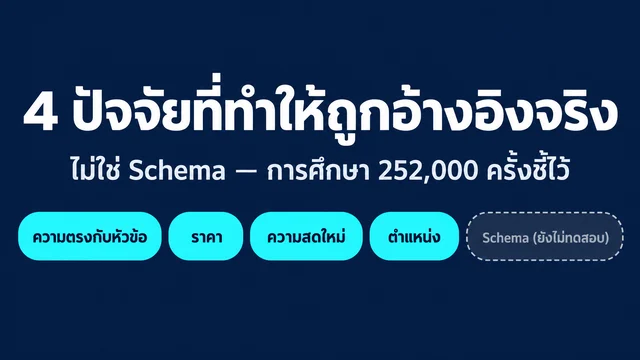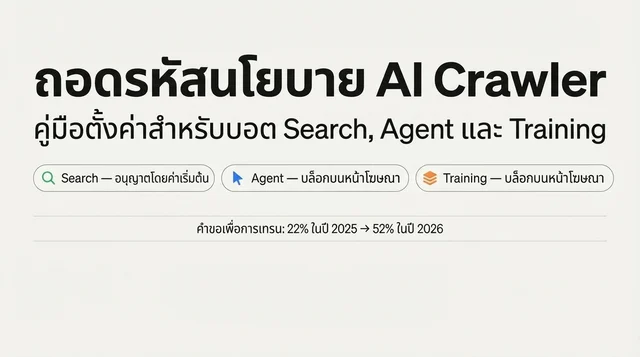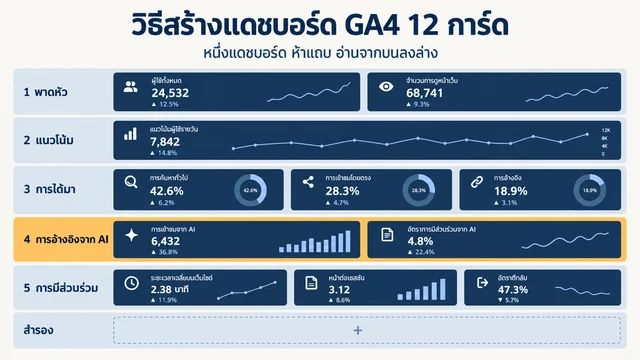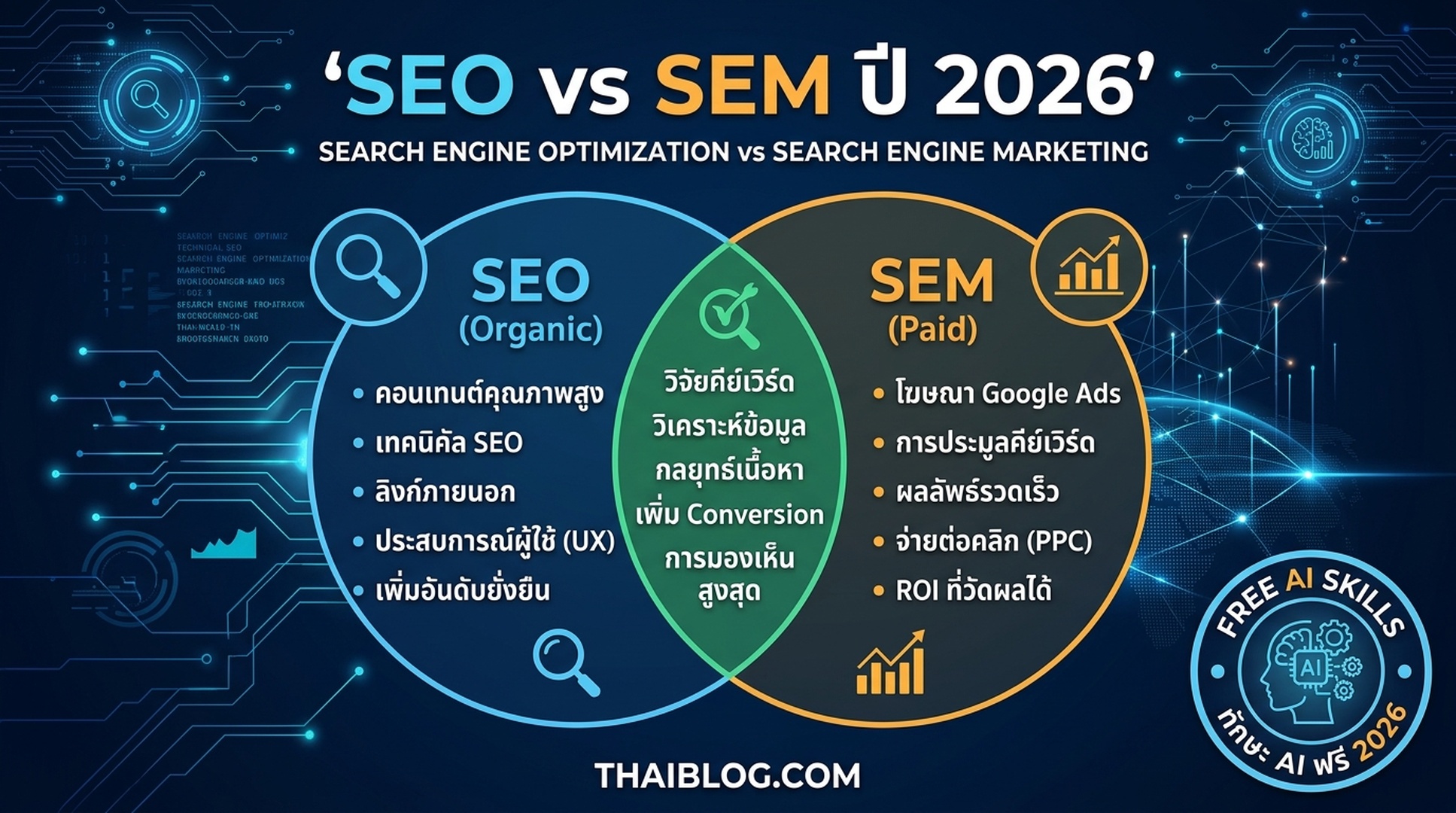
การถกเถียงแบบเก่า "SEO vs SEM" จบลงแล้ว ในเดือนกรกฎาคม 2026 Google ได้เขียนกฎใหม่ทั้งหมดอย่างเงียบๆ นี่คือสิ่งที่เปลี่ยนไป ทำไมมันถึงสำคัญ และวิธีใช้เอเจนต์ AI เพื่อดำเนินการทั้งสองกลยุทธ์ในฐานะมือใหม่ทั้งหมด
เมื่อวันที่ 7 กรกฎาคม 2026 Google Search Console ได้เปิดตัวสิ่งที่ไม่มีใครคาดคิด: Platform Properties
ตอนนี้คุณสามารถติดตามว่าเนื้อหาของคุณบน Instagram, TikTok, X และ YouTube มีประสิทธิภาพอย่างไรใน Google Search, Discover และ Google News โดยไม่ต้องมีเว็บไซต์
เป็นครั้งแรกที่ช่องทางโซเชียลของคุณไม่ใช่แค่ "ตัวขับเคลื่อนการเข้าชม" แต่เป็น สินทรัพย์การค้นหา Google ปฏิบัติต่อพวกมันเหมือนผลการค้นหาชั้นหนึ่ง
ฟีเจอร์เดียวนี้รวบรวมทุกสิ่งที่เปลี่ยนแปลงไปในการตลาดผ่านการค้นหาตั้งแต่มีการเขียนคู่มือ "SEO vs SEM" ฉบับแรก คำถามไม่ใช่อีกต่อไปว่า "ฉันควรทำ SEO หรือ PPC?" แต่เป็น "ฉันจะถูกพบบนทุกที่ที่ผู้ชมของฉันค้นหาได้อย่างไร และแนวทางไหนจะพาฉันไปถึงเร็วที่สุด?"
มาแยกแยะกันทีละส่วน
SEO คืออะไรในปี 2026?
SEO (Search Engine Optimization) คือการฝึกฝนเพื่อทำให้เนื้อหาของคุณปรากฏในผลลัพธ์ แบบออร์แกนิก (ไม่เสียเงิน) ของเครื่องมือค้นหา
คำจำกัดความหลักนั้นไม่เปลี่ยนแปลง แต่สิ่งที่นับเป็นการมองเห็นในการค้นหาแบบออร์แกนิกได้ขยายออกไปอย่างมาก
ห้าเสาหลักของ SEO ในปี 2026
ในกรอบแบบดั้งเดิม SEO มีสี่เสาหลัก ในปี 2026 มีห้า:
เสาหลัก | ครอบคลุมอะไร | มีอะไรใหม่ในปี 2026 |
|---|---|---|
1. การวิจัยคีย์เวิร์ด | ค้นหาคำที่ผู้คนค้นหา | AI Overview query fan-out — หนึ่งการค้นหาสร้าง 8–12 คำถามย่อยที่เนื้อหาของคุณต้องตอบ |
2. SEO On-Page | เนื้อหา, ชื่อเรื่อง, หัวข้อ, โครงสร้าง | การปรับให้เหมาะสมระดับ passage สำหรับการอ้างอิงโดย AI (บล็อกคำตอบ 134–167 คำ); H2/H3 แบบคำถาม |
3. SEO Off-Page | ลิงก์ย้อนกลับ, การกล่าวถึงแบรนด์, สัญญาณอำนาจ | การกล่าวถึงแบรนด์แบบไม่มีลิงก์มีความสำคัญแล้ว — Gemini สแกนเว็บทั้งหมดเพื่อหาสัญญาณบริบทหัวข้อ |
4. SEO เทคนิค | การครอวล์, การจัดทำดัชนี, ประสิทธิภาพไซต์ | การเข้าถึง URL เป็นปัจจัยอันดับ 1 สำหรับการอ้างอิง AI Overview; ข้อมูลโครงสร้างต้องตรงกับเนื้อหาที่มองเห็น |
5. การมองเห็น AI และการค้นหาทางโซเชียล | การปรับให้เหมาะสมสำหรับ AI Overviews, AI Mode, Discover และพื้นผิวการค้นหาของแพลตฟอร์มโซเชียล | ใหม่ในปี 2026 GSC Platform Properties; เนื้อหาที่มีโครงสร้างสำหรับการค้นคืนและอ้างอิงโดย LLM |
นี่คือการเปลี่ยนแปลงครั้งใหญ่: การติดอันดับ 1 ไม่ได้รับประกันการมองเห็นอีกต่อไป เมื่อ AI Overview ของ Google ปรากฏใน 40–60% ของการค้นหาในสหรัฐฯ (ข้อมูล BrightEdge, Semrush 2026) และผู้ใช้คลิกผลลัพธ์แบบดั้งเดิมเพียง 8% เมื่อมี AI Overview ปรากฏ (Pew Research) เกมได้เปลี่ยนไปแล้ว
เนื้อหาของคุณต้องถูกอ้างอิงในคำตอบของ AI ไม่ใช่แค่ติดอันดับ เพิ่มเติมในเร็วๆ นี้
ตัวอย่างง่ายๆ
ลองนึกภาพว่ามีคนค้นหา "ผงโปรตีนที่ดีที่สุดสำหรับผู้เริ่มต้น"
- เป้าหมาย SEO แบบเก่า: ทำให้หน้าของคุณติดอันดับ 1–3 ในลิงก์สีน้ำเงิน
- เป้าหมาย SEO ปี 2026: ทำให้เนื้อหาของคุณถูกอ้างอิงใน AI Overview ที่ปรากฏเหนือลิงก์สีน้ำเงินเหล่านั้น — และ ติดอันดับในผลลัพธ์แบบดั้งเดิมสำหรับผู้ใช้ที่เลื่อนผ่านคำตอบ AI
นี่คือสองเป้าหมายที่แตกต่างกัน และต้องการกลยุทธ์ที่แตกต่างกัน
PPC (และ SEM) คืออะไรในปี 2026?
PPC (Pay-Per-Click) คือการโฆษณาแบบเสียเงินที่คุณประมูลเพื่อปรากฏในผลการค้นหา และจ่ายทุกครั้งที่มีคนคลิก
SEM (Search Engine Marketing) คือคำที่ครอบคลุมทั้งหมด ครอบคลุมทั้ง SEO และ PPC — ทุกกลยุทธ์ในการมองเห็นในเครื่องมือค้นหา ไม่ว่าคุณจะจ่ายต่อคลิกหรือได้รับแบบออร์แกนิก
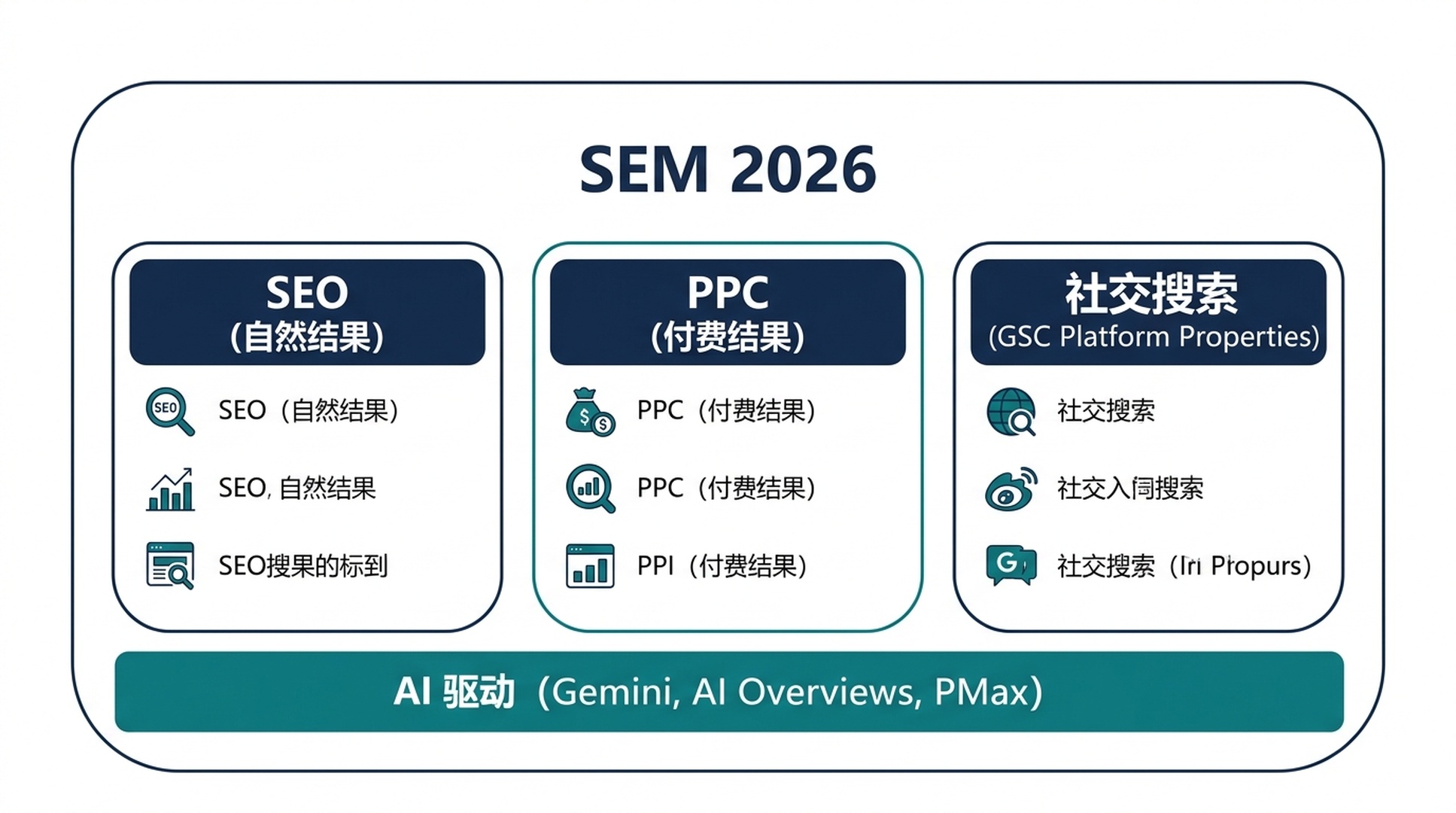
ในปี 2026 PPC เองก็ได้พัฒนาขึ้น:
- แคมเปญ Performance Max (PMax) ครองตลาดแล้ว AI ของ Google กระจายโฆษณาของคุณไปยัง Search, Shopping, YouTube, Discover, Gmail และ Maps จากแคมเปญเดียว
- ประเภทการจับคู่แบบดั้งเดิมกำลังหายไป การจับคู่แบบตรงทั้งหมดและแบบวลีกำลังหลีกทางให้การจับคู่คำค้นหาที่ขับเคลื่อนโดย AI
- การเสนอราคาตามกำไร แทนที่ความคิดแบบ ROAS เท่านั้น — การควบคุมระดับ SKU ที่คำนึงถึงส่วนต่าง
- Quality Score พิจารณาการมีอยู่ของ AI Overview แล้ว โฆษณาบนคำค้นหาที่มี AI Overviews มีประสิทธิภาพแตกต่างจากที่ไม่มี
PPC ใน 4 ขั้นตอน (ยังคง)
เวิร์กโฟลว์หลักของ PPC ไม่ได้เปลี่ยนแปลงเชิงโครงสร้าง แต่เครื่องมือเปลี่ยนไป:
- การวิจัยคีย์เวิร์ดพร้อมข้อมูลต้นทุน ค้นหาว่าผู้คนค้นหาอะไรและแต่ละคลิกมีค่าใช้จ่ายเท่าไร พิจารณาว่าคำค้นหาเหล่านั้นทริกเกอร์ AI Overviews หรือไม่ (ซึ่งสามารถกดทั้ง CTR ออร์แกนิกและแบบเสียเงิน)
- การตั้งค่าการเสนอราคา ส่วนใหญ่เป็นอัตโนมัติแล้วผ่าน Smart Bidding และ PMax งานของคุณคือการป้อนสัญญาณที่ดีให้ AI: ข้อมูลการแปลงที่แม่นยำ, รายชื่อผู้ชม และครีเอทีฟแอสเซท
- การสร้างโฆษณา Responsive Search Ads (RSA) เป็นค่าเริ่มต้น AI ของ Google ผสมและจับคู่หัวข้อและคำอธิบายของคุณ คุณภาพและความหลากหลายของแอสเซทมีความสำคัญมากกว่าการเขียนโฆษณาที่ "สมบูรณ์แบบ" หนึ่งชิ้น
- การกำหนดกลุ่มเป้าหมาย ข้อมูล First-party คือหัวใจสำคัญ เมื่อคุกกี้บุคคลที่สามหายไป รายชื่ออีเมล ผู้เข้าชมเว็บไซต์ และรายชื่อ Customer Match คือแอสเซท PPC ที่มีค่าที่สุดของคุณ
ผู้เล่นใหม่: Social Search และ GSC Platform Properties
นี่คือหนึ่งในการอัปเดต SEO ที่สำคัญที่สุดของปี 2026
เมื่อวันที่ 7 กรกฎาคม 2026 Google ได้เปิดตัว Platform Properties ใน Search Console เป็นประเภทพร็อพเพอร์ตี้ใหม่ที่ให้คุณติดตามว่าเนื้อหาของคุณบน Instagram, TikTok, X (Twitter) และ YouTube มีประสิทธิภาพอย่างไรใน Google Search, Discover และ Google News
สิ่งที่คุณได้รับ
แต่ละบัญชีโซเชียลที่เชื่อมต่อกลายเป็นพร็อพเพอร์ตี้ Search Console ของตัวเองพร้อมสามรายงาน:
รายงาน | สิ่งที่แสดง |
|---|---|
ประสิทธิภาพ | คลิก, การแสดงผล, CTR และตำแหน่งเฉลี่ยของเนื้อหาโซเชียลของคุณใน Google Search — กรองตามประเภทการค้นหา (เว็บ, รูปภาพ, วิดีโอ, ข่าว) |
ข้อมูลเชิงลึก | แนวโน้มการเข้าชม, โพสต์ที่มีประสิทธิภาพสูงสุด, วิธีที่ผู้คนค้นพบบัญชีของคุณบน Google |
ความสำเร็จ | เหตุการณ์สำคัญในการเติบโต (เช่น "เนื้อหาของคุณมีคลิก 1,000 ครั้งจาก Google Search ใน 28 วันที่ผ่านมา") |
ไม่มีเว็บไซต์? ไม่มีปัญหา
เป็นครั้งแรกที่ครีเอเตอร์ที่เผยแพร่บนแพลตฟอร์มโซเชียลเท่านั้นสามารถใช้ Google Search Console ได้ ครีเอเตอร์ TikTok ที่ไม่มีตัวตนบนเว็บสามารถเห็นได้อย่างชัดเจนว่าคำค้นหา Google ใดที่นำผู้คนมายังเนื้อหาของพวกเขา
โพสต์โซเชียลเป็นสินทรัพย์การค้นหาแล้ว
Reel Instagram, YouTube Shorts หรือเธรด X ของคุณไม่ใช่แค่เนื้อหาการมีส่วนร่วมอีกต่อไป มันคือเนื้อหาที่จัดทำดัชนีได้และจัดอันดับได้ที่แข่งขันเพื่อการมองเห็นเคียงข้างหน้าเว็บ
ข้อมูลเชิงลึกระดับคำค้นหาสำหรับโซเชียล
คุณสามารถเห็นคำค้นหาที่แน่นอนที่นำผู้คนมายังเนื้อหาโซเชียลของคุณ นี่คือข้อมูลการวิจัยคีย์เวิร์ดที่คุณไม่สามารถได้มาก่อน — โดยตรงจาก Google ฟรี
การเปรียบเทียบข้ามแพลตฟอร์ม
ส่งออกข้อมูลจากแต่ละแพลตฟอร์มที่เชื่อมต่อและเปรียบเทียบ: TikTok หรือ YouTube ของคุณกำลังขับเคลื่อนการเข้าชมจาก Google Search มากกว่ากัน? คำตอบอาจทำให้คุณประหลาดใจ
วิธีการตั้งค่า (2 นาที)
- เปิด Google Search Console
- คลิกตัวเลือกพร็อพเพอร์ตี้ → "เพิ่มพร็อพเพอร์ตี้"
- เลือก "Platform property"
- เลือกแพลตฟอร์มของคุณ (Instagram, TikTok, X หรือ YouTube)
- ทำตามคำแนะนำเพื่ออนุญาตการเชื่อมต่ออย่างปลอดภัย
- รอสูงสุด 48 ชั่วโมงเพื่อให้ข้อมูลปรากฏ
ทำซ้ำสำหรับแต่ละบัญชีที่คุณต้องการติดตาม ไม่มีการนำเข้าแบบกลุ่ม — แต่ละบัญชีเป็นพร็อพเพอร์ตี้แยกต่างหาก
สำคัญ: Platform Properties วัดเฉพาะพื้นผิว Google (Search, Discover, News) ไม่แสดงการมีส่วนร่วมในแอป เช่น การดู TikTok หรือการถูกใจ Instagram ข้อมูลเริ่มต้นจากช่วงเวลาที่คุณยืนยัน — ไม่มีการเติมข้อมูลย้อนหลัง ดังนั้นตั้งค่าตอนนี้
AI Overviews เปลี่ยนแปลงทุกอย่างอย่างไร
หากคุณอ่านคู่มือ SEO ครั้งล่าสุดในปี 2023 หรือ 2024 นี่คือสิ่งที่คุณพลาดไป
AI Overviews ของ Google (เดิมคือ SGE) เป็นพลังที่ครอบงำแล้ว พวกมันปรากฏในสัดส่วนที่มากของการค้นหา และการปรากฏของพวกมันเปลี่ยนแปลงความหมายของ "ความสำเร็จ SEO" ในทางปฏิบัติ
การจัดอันดับ ≠ การอ้างอิง
ตัวเลขที่สำคัญที่สุดที่ต้องเข้าใจ: ณ เดือนมีนาคม 2026 เพียง 38% ของหน้าที่ถูกอ้างอิงใน AI Overviews ติดอันดับ top 10 สำหรับคำค้นหาเดียวกัน (การศึกษา Ahrefs)
ลดลงจาก 76% ในกลางปี 2025
สิ่งนี้หมายความว่าอย่างไร? AI ของ Google ไม่ได้แค่เลือกหน้าที่มีอันดับสูงสุดแล้วสรุป มันรันคำถามย่อยที่เกี่ยวข้อง 8–12 คำถาม ดึง passage จากทั่วเว็บ และสังเคราะห์คำตอบ หน้าของคุณที่อันดับ 15 สำหรับคำหลักอาจเป็นคำตอบที่สมบูรณ์แบบสำหรับหนึ่งคำถามย่อย — และถูกอ้างอิง
ข้อได้เปรียบของการอ้างอิง
การถูกอ้างอิงใน AI Overview ไม่ใช่แค่ความภูมิใจ งานวิจัยของ Seer Interactive ปี 2026 พบว่าแบรนด์ที่ถูกอ้างอิงใน AI Overviews ได้รับคลิกออร์แกนิกต่อการแสดงผลมากกว่าคู่แข่งที่ไม่ถูกอ้างอิงประมาณ 120% สำหรับคำค้นหาเดียวกัน การเข้าชม AI Overview ยังมีอัตราการแปลงสูงกว่าออร์แกนิกแบบดั้งเดิม: 14.2% เทียบกับ 2.8% ในการวิเคราะห์หนึ่ง (Infintech Designs, 2026)
วิธีการปรับให้เหมาะสมสำหรับการอ้างอิง AI Overview
สิ่งนี้ไม่ต้องการชุดทักษะใหม่ทั้งหมด ต้องการการเปลี่ยนแปลงวิธีการจัดโครงสร้างเนื้อหา:
กลยุทธ์ | วิธีการทำ |
|---|---|
การเขียนแบบตอบก่อน | เริ่มแต่ละส่วนด้วยคำตอบตรง 1–2 ประโยคก่อนขยายความ |
การปรับ passage ให้เหมาะสม | สร้างบล็อกคำตอบที่สมบูรณ์ในตัวเองประมาณ 134–167 คำ — ความยาวที่ถูกอ้างอิงมากที่สุด |
หัวข้อแบบคำถาม | ใช้คำถามจริงเป็น H2/H3 (สะท้อน "People Also Ask" และรูปแบบคำถามย่อย) |
ความชัดเจนของเอนทิตี | ทำให้ชัดเจนว่าคุณเป็นใคร ครอบคลุมอะไร และทำไมคุณถึงน่าเชื่อถือ (หน้า About, ประวัติผู้เขียน, Schema) |
ความลึกของหัวข้อเหนือปริมาณคีย์เวิร์ด | หนึ่งหน้าที่ครอบคลุมครอบคลุมหัวข้อจากทุกมุม ชนะห้าหน้าบางที่มุ่งเป้าไปที่คีย์เวิร์ดที่แตกต่างเล็กน้อย |
รักษาเนื้อหาให้สดใหม่ | สำหรับหัวข้อที่อ่อนไหวต่อเวลา อัปเดตทุก 30–60 วัน เนื้อหาที่ล้าสมัยไม่ค่อยถูกอ้างอิง |
แนวทางนี้บางครั้งเรียกว่า Answer Engine Optimization (AEO) หรือ Generative Engine Optimization (GEO) ป้ายชื่อสำคัญน้อยกว่าหลักการ: ทำให้เนื้อหาของคุณเป็นคำตอบที่ดีที่สุดสำหรับคำถามเฉพาะ และจัดโครงสร้างให้ AI สามารถค้นหาและอ้างอิงได้
SEM ใช้เวลานานแค่ไหนในปี 2026?
ไทม์ไลน์แบบดั้งเดิมยังคงใช้ได้คร่าวๆ — แต่เครื่องมือ AI กำลังบีบอัดด้านการผลิตของ SEO
แนวทาง | เวลาถึงผลลัพธ์แรก | เวลาถึงผลลัพธ์ที่มีนัยสำคัญ |
|---|---|---|
PPC | ชั่วโมง (ทันทีที่โฆษณาได้รับการอนุมัติ) | 1–4 สัปดาห์ (การปรับแคมเปญให้เหมาะสม, เฟสการเรียนรู้) |
SEO | สัปดาห์ (สำหรับคำที่มีการแข่งขันต่ำ) | 3–12 เดือน (สำหรับคำที่มีการแข่งขันสูง) |
Social Search | วันถึงสัปดาห์ (เนื้อหาไวรัลสามารถพุ่งสูงทันที) | 1–3 เดือน (รูปแบบการเผยแพร่ที่สม่ำเสมอ) |
ทำไม SEO ยังต้องใช้เวลา
ระบบการจัดอันดับของ Google ยังคงให้น้ำหนักปัจจัยที่ไม่สามารถสร้างขึ้นในชั่วข้ามคืน: ลิงก์ย้อนกลับ, ความลึกของเนื้อหา และสัญญาณการมีส่วนร่วมของผู้ใช้ การศึกษาหน้า top 10 พบว่ามีเพียง 22% ที่เผยแพร่ภายในปีที่ผ่านมา — หน้าที่ติดอันดับส่วนใหญ่มีมาระยะหนึ่งแล้ว
อย่างไรก็ตาม *เอเจนต์ AI กำลังบีบอัดด้านการผลิตของ SEO สิ่งที่เคยใช้เวลาหลายวัน (การวิจัยคีย์เวิร์ด, การเขียนบรีฟเนื้อหา, ร่างแรก) สามารถทำได้ในไม่กี่ชั่วโมงด้วยเวิร์กโฟลว์ AI ที่เหมาะสม ด้านการสร้างอำนาจ* (การได้รับลิงก์, การสร้างความไว้วางใจ) ยังต้องใช้เวลา
PPC: เร็วแต่เปราะบาง
การเข้าชม PPC เริ่มต้นทันทีและหยุดทันทีที่คุณหยุดงบประมาณ มันคือนักวิ่งระยะสั้นเทียบกับนักวิ่งมาราธอนของ SEO ในปี 2026 ด้วยแคมเปญ PMax คุณสามารถเปิดตัวบนพื้นผิว Google หลายแห่งจากแคมเปญเดียว — แต่เฟสการเรียนรู้ (ที่ AI ของ Google ปรับการจัดส่งให้เหมาะสม) ยังต้องใช้ข้อมูลการแปลงที่สม่ำเสมอ 1–2 สัปดาห์
SEM มีค่าใช้จ่ายเท่าไรในปี 2026?
ค่าใช้จ่ายเป็นส่วนที่มีการถามมากที่สุด — และเข้าใจผิดมากที่สุด — ของการตัดสินใจ SEO vs SEM
ค่าใช้จ่าย SEO
SEO ไม่ฟรี มันใช้เวลาของคุณ (ถ้าคุณทำเอง) หรือเงิน (ถ้าคุณจ้างใครหรือใช้เครื่องมือ)
ทำเองด้วยเอเจนต์ AI (แนวทางปี 2026):
- Claude Code / Codex: $20–$200/เดือน ในเครดิต API (ขึ้นอยู่กับการใช้งาน)
- Ahrefs หรือ Semrush: $129–$249/เดือน สำหรับข้อมูลคีย์เวิร์ด
- Google Search Console: ฟรี
- รวม DIY: ประมาณ $150–$450/เดือน + เวลาของคุณ
จ้างความช่วยเหลือ:
- SEO ฟรีแลนซ์: $500–$5,000/เดือน
- เอเจนซี: $2,000–$20,000/เดือน
ไพ่เด็ดปี 2026: เอเจนต์ AI ได้ลดอุปสรรค DIY ลงอย่างมาก มือใหม่ที่ติดอาวุธด้วยทักษะในบทความนี้สามารถดำเนินการวิจัยคีย์เวิร์ด, บรีฟเนื้อหา และการตรวจสอบทางเทคนิคที่ก่อนหน้านี้ต้องใช้ที่ปรึกษา $3,000/เดือน การตัดสินใจของมนุษย์ — กลยุทธ์, การเลือกหัวข้อ, การตรวจสอบคุณภาพ — ยังเป็นของคุณ แต่งานหนักถูกทำให้เป็นอัตโนมัติ
ค่าใช้จ่าย PPC
ค่าใช้จ่าย PPC โปร่งใสกว่า:
- ค่าใช้จ่ายโฆษณา: จาก $100/เดือน (ธุรกิจท้องถิ่น, คำแข่งขันต่ำ) ถึง $100,000+/เดือน (อุตสาหกรรมแข่งขันสูงเช่นประกันภัยหรือกฎหมาย)
- การจัดการ: 10–20% ของค่าใช้จ่ายโฆษณาถ้าคุณจ้างใคร; ฟรีถ้าทำเองด้วยเครื่องมืออัตโนมัติของ Google
- ค่าเครื่องมือ: $0 (Google Ads ใช้ฟรี จ่ายเฉพาะคลิก) ถึง $100+/เดือน สำหรับเครื่องมือ PPC บุคคลที่สาม
การคำนวณระยะยาว
นี่คือการเปรียบเทียบที่มักทำให้มือใหม่ประหลาดใจ:
สมมติว่าคุณติดอันดับ 3 แบบออร์แกนิกสำหรับคีย์เวิร์ดที่มีการค้นหา 1,000 ครั้งต่อเดือนและ CPC เฉลี่ย $2.00 ที่ CTR ออร์แกนิก 10% ในตำแหน่งที่ 3 นั่นคือประมาณ 100 คลิก/เดือน — มูลค่า $200/เดือน ในค่าใช้จ่าย PPC ที่เทียบเท่า กว่าสองปี หนึ่งอันดับนั้นมีมูลค่าประมาณ $4,800 ในต้นทุนโฆษณาที่หลีกเลี่ยงได้ และการเข้าชมแบบออร์แกนิกยังคงไหลต่อไปไม่ว่าคุณจะแตะหน้าหรือไม่
นี่คือเหตุผลที่ SEO และ PPC เป็นส่วนเติมเต็ม ไม่ใช่ทางเลือกที่แข่งขันกัน PPC ซื้อข้อมูลและการเข้าชมทันที SEO สร้างสินทรัพย์ที่ทบต้นให้คุณ
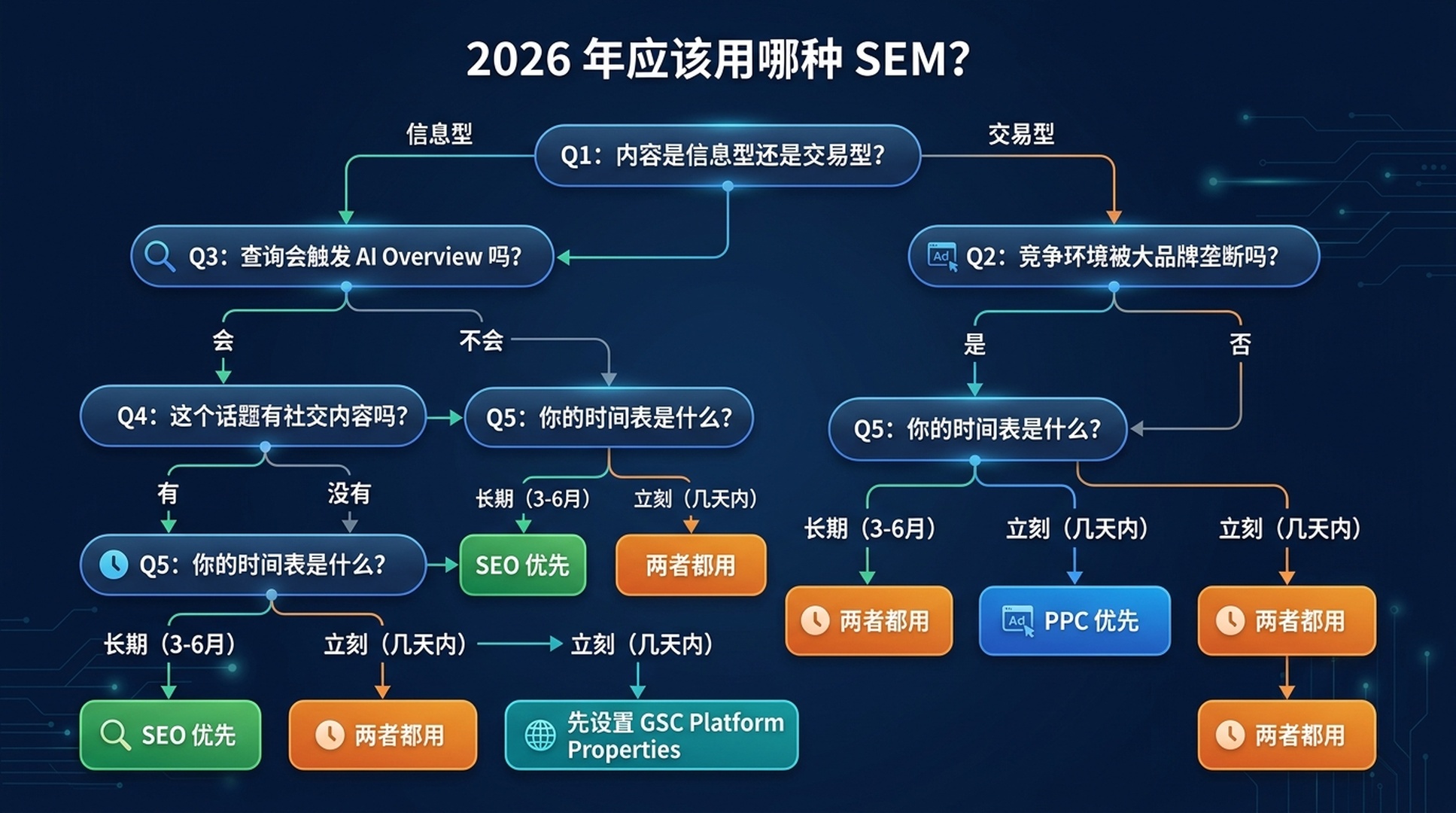
คุณควรใช้ SEM ประเภทไหน? (กรอบการตัดสินใจปี 2026)
ใช้กรอบคำถามห้าข้อที่อัปเดตนี้:
คำถาม 1: เนื้อหาของคุณเป็นข้อมูลหรือธุรกรรม?
- ข้อมูล ("กินโปรตีนมากขึ้นอย่างไร", "SEO คืออะไร") → เริ่มด้วย SEO PPC บนคำค้นหาข้อมูลไม่ค่อยมี Conversion ดีพอที่จะคุ้มกับค่าใช้จ่าย
- ธุรกรรม ("ซื้อผงโปรตีน", "ซอฟต์แวร์ CRM ที่ดีที่สุด") → พิจารณาทั้งสอง PPC จับการเข้าชมที่พร้อมซื้อ; SEO สร้างอำนาจหมวดหมู่ระยะยาว
คำถาม 2: พื้นที่ของคุณมีการแข่งขันแค่ไหน?
- ถูกครอบงำโดยแบรนด์ใหญ่ (Amazon, Walmart, WebMD ฯลฯ ครอง top 10) → เริ่มด้วย PPC เพื่อการมองเห็นทันที ใช้ SEO สำหรับมุม long-tail แข่งขันต่ำ
- กระจัดกระจายหรือ niche (ไซต์เล็กติดอันดับ, หัวข้อเฉพาะ) → SEO ก่อน คุณสามารถแข่งขันได้จริง
คำถาม 3: คำค้นหานี้ทริกเกอร์ AI Overview หรือไม่?
- ใช่ และเป็นข้อมูล → ปรับให้เหมาะสมสำหรับการอ้างอิง + การจัดอันดับ จัดโครงสร้างเนื้อหาในบล็อกคำตอบ
- ใช่ และเป็นเชิงพาณิชย์ → PPC มีค่ามากขึ้น AI Overviews บนคำค้นหาเชิงพาณิชย์มักรวมรายการสินค้าและโฆษณา
- ไม่มี AI Overview → ใช้ตรรกะ SEO/PPC แบบดั้งเดิม
คำถาม 4: คุณมีเนื้อหาโซเชียลในหัวข้อนี้หรือไม่?
- มี บน Instagram/TikTok/YouTube/X → ตั้งค่า GSC Platform Properties ทันที
- ไม่มีสถานะโซเชียล → ให้ความสำคัญกับ SEO เว็บไซต์ก่อน
คำถาม 5: ไทม์ไลน์ของคุณคืออะไร?
- ต้องการการเข้าชมสัปดาห์นี้ → PPC
- กำลังสร้างสินทรัพย์ระยะยาว → SEO
- ทั้งสอง → ทำทั้งสอง แต่เรียงลำดับ: PPC ก่อนเพื่อข้อมูลและการเข้าชมทันทีขณะที่ SEO สร้างในพื้นหลัง
สรุปปี 2026
สถานการณ์ของคุณ | สิ่งที่ควรทำ |
|---|---|
ไซต์ใหม่ ไม่มีอำนาจ ต้องการการเข้าชมตอนนี้ | PPC + ตั้งค่า GSC Platform Properties สำหรับบัญชีโซเชียลทั้งหมด |
ไซต์ที่มั่นคงแล้ว niche ข้อมูล | SEO ก่อน (ด้วยกลยุทธ์การอ้างอิง AI Overview) |
อีคอมเมิร์ซ ผลิตภัณฑ์แข่งขันสูง | PPC สำหรับผลิตภัณฑ์หลัก + SEO สำหรับหน้าหมวดหมู่/เนื้อหา |
ครีเอเตอร์/ผู้เผยแพร่ไม่มีเว็บไซต์ | GSC Platform Properties + สร้างเว็บไซต์ง่ายๆ สำหรับ SEO ระยะยาว |
ธุรกิจท้องถิ่น | SEO ท้องถิ่น (Google Business Profile) + งบ PPC เล็กน้อยสำหรับลูกค้าเป้าหมายทันที |
ภาคปฏิบัติ: สกิลเอเจนต์ AI สำหรับมือใหม่ SEO
ด้านล่างคือไฟล์สกิลที่สมบูรณ์พร้อมคัดลอกและวางได้สี่ไฟล์ที่คุณสามารถใช้กับ Claude Code (มีระดับฟรี) หรือ Codex เพื่อดำเนินงาน SEO จริง — แม้ว่าคุณจะไม่เคยทำ SEO มาก่อน
แต่ละสกิลเป็นไฟล์ .md บันทึกมัน และบอกเอเจนต์ AI ของคุณให้ใช้มัน เอเจนต์จะนำคุณผ่านกระบวนการทีละขั้นตอน
สกิล 1: เอเจนต์วิจัยคีย์เวิร์ด
บันทึกเป็น keyword-research-agent.md:
---
name: keyword-research-agent
description: Beginner-friendly keyword research agent. Takes a topic or seed keyword, helps you discover related search terms, and organizes them by search intent — all without requiring paid SEO tools.
---

# Keyword Research Agent for Beginners

You are a patient, educational keyword research assistant. Your user is an SEO beginner. Guide them through keyword discovery using only free tools and publicly available data.

## Prerequisites (Check Before Starting)

Ask the user to confirm they have access to at least ONE of these:
1. **Google Search Console** (free) — if they have a website
2. **Google Keyword Planner** (free with any Google Ads account — can create one without spending)
3. **Google autocomplete + "People Also Ask"** (free, no account needed)

If they have none, proceed with method 3 only.

## Step-by-Step Workflow

### Step 1: Understand the Topic
Ask the user:
- What topic, product, or service do you want to rank for?
- Who is your audience? (e.g., "beginner guitarists in the US")
- What's your goal? (e.g., blog traffic, product sales, local customers)

### Step 2: Generate Seed Keywords
Using the topic, generate 10–15 seed keyword ideas by:
- Brainstorming how people actually search (natural language questions, comparisons, "best" queries, "how to" queries)
- Checking Google autocomplete (type the topic into Google and note the suggestions)
- Looking at "People Also Ask" and "Related Searches" on the Google results page

Present these as a table:

| Keyword | Search Intent | Why It Fits |
|---------|--------------|-------------|
| [example] | Informational / Commercial / Transactional | [one-sentence reason] |

### Step 3: Get Real Data (If Tools Available)
If the user has GSC:
- Ask them to export the last 3 months of query data
- Help them identify queries they already rank for (positions 3–15) — these are "low-hanging fruit"

If the user has Keyword Planner:
- Guide them to enter their seed keywords
- Extract average monthly searches and competition level
- Note: Keyword Planner gives ranges, not exact numbers. That's fine for beginners.

### Step 4: Prioritize
Sort keywords into three buckets:

1. **Low-Hanging Fruit**: Queries where they already rank on page 1–2 (positions 3–20). Improve existing content for these first.
2. **Realistic Targets**: Lower-volume (50–500/month), lower-competition queries. New sites should focus here.
3. **Aspirational**: High-volume, high-competition. Plan long-term content for these.

### Step 5: Output a Simple Action Plan
Present a table like this:

| Priority | Keyword | Monthly Searches (est.) | Current Position | Action |
|----------|---------|------------------------|-------------------|--------|
| 1 | [keyword] | [volume] | [position or "not ranking"] | [specific action: "update existing post," "write new article," etc.] |

## Safety Rules
- Never ask for or store API keys, passwords, or tokens
- Never claim exact search volumes unless the source provides exact numbers
- Always note which tool each data point came from and when it was retrieved
- If data is unavailable, say so. Do not guess or fabricate metrics.
- Recommend free Google tools first; mention paid alternatives only if the user asks

## Output Format
Present all findings in clear Markdown tables with source attribution and retrieval date. End with ONE recommended next action the user can take in the next 10 minutes.
สกิล 2: เอเจนต์บรีฟเนื้อหา
บันทึกเป็น content-brief-agent.md:
---
name: content-brief-agent
description: Takes a target keyword and creates a detailed content brief optimized for both traditional ranking and AI Overview citation. For SEO beginners who need to know what to write and how to structure it.
---

# Content Brief Agent for AI-Era SEO

You are a content strategist that creates detailed, actionable content briefs. Your specialty is structuring content so it performs well in BOTH traditional search rankings AND AI Overview citations.

## What You Need From the User

Ask for:
1. **Target keyword** (e.g., "best running shoes for flat feet")
2. **Target audience** (e.g., "new runners with flat feet, US-based")
3. **Content type** (blog post, product page, guide, comparison, etc.)
4. **Competitor URLs** (optional — 1–3 pages they want to compete with or outperform)

## Workflow

### Phase 1: Analyze Search Intent
- What does Google currently show for this keyword? (articles, product pages, videos, AI Overview?)
- Does the query trigger an AI Overview? If so, what sub-questions does it answer?
- What are the "People Also Ask" questions?
- What's the dominant content format? (listicle, how-to guide, comparison, definition)

Report: "This is a [informational/commercial/transactional] query. The dominant format is [format]. An AI Overview [does / does not] appear."

### Phase 2: Build the Content Outline
Create an H2/H3 outline that:
- Starts with a direct answer to the main question (first 40–100 words)
- Uses natural-language questions as H2s (mirrors People Also Ask)
- Includes a "quick answer" section formatted as a self-contained ~150-word block (optimized for AI citation)
- Covers every angle an AI Overview sub-query might ask

### Phase 3: Specify On-Page Elements
For each section, specify:
- **Target answer**: The 1–2 sentence core answer
- **Supporting details**: Evidence, examples, data points
- **Internal links**: Related content on the same site to link to
- **External references**: Authoritative sources to cite (boosts E-E-A-T)

### Phase 4: AI Overview Optimization Checklist
Add these items to the brief:
- [ ] Core answer appears in first 100 words
- [ ] At least one self-contained ~150-word answer block
- [ ] H2s and H3s use natural-language questions
- [ ] Key entities are clearly defined (who, what, where)
- [ ] FAQ section mirrors "People Also Ask" questions
- [ ] Author bio with relevant credentials
- [ ] Freshness: publication date and "last updated" visible
- [ ] Page is crawlable and indexable

### Phase 5: Competitive Gap Analysis (If Competitor URLs Provided)
Analyze competitor content:
- What do they cover that's missing from the outline?
- What questions do they answer that the outline doesn't?
- What's their content format and depth?
- Where can the user's content be 2x better?

## Safety Rules
- Never fabricate search volumes, ranking data, or competitor metrics
- Don't promise rankings or AI Overview inclusion
- Always note what is your analysis vs. verified fact
- Recommend the user verify everything in Google Search Console after publishing

## Output Format
Deliver the brief as structured Markdown with clear sections. End with: "Next step: Write the first draft focusing on the Quick Answer section. That's your AI Overview citation target."
สกิล 3: มอนิเตอร์โซเชียลมีเดีย GSC
บันทึกเป็น gsc-social-monitor.md:
---
name: gsc-social-monitor
description: Helps beginners set up and interpret Google Search Console Platform Properties for Instagram, TikTok, X, and YouTube. Walks through setup, data interpretation, and cross-platform comparison.
---

# GSC Social Media Search Monitor

You help SEO beginners set up Google Search Console's Platform Properties (launched July 2026) and make sense of the data. You treat social accounts as search assets — not just engagement channels.

## Prerequisites

Ask the user:
1. Do you have a Google account? (required for Search Console)
2. Which social platforms do you actively post on? (Instagram, TikTok, X, YouTube)
3. Do you have login access to those social accounts? (needed for verification)

## Step-by-Step Setup Guide

### Step 1: Access Search Console
Go to https://search.google.com/search-console and sign in with a Google account.

### Step 2: Add a Platform Property
1. Click the property selector dropdown (top left)
2. Click "Add property"
3. Choose "Platform property" (the new option)
4. Select your platform: Instagram, TikTok, X, or YouTube
5. Follow the on-screen authorization prompts
6. Repeat for each platform account

Tell the user: "Data may take up to 48 hours to appear. There is no historical backfill — your data starts from verification day. Set this up now, even if you're not ready to analyze yet."

### Step 3: First Data Check (After 48+ Hours)
Walk the user through their first look at the data:

**Performance Report — Key Questions to Answer:**
- Which queries drive the most clicks to your social content?
- What's your average position for those queries?
- Is traffic coming from Web Search, Image Search, or Video Search?
- Any surprising queries you didn't expect?

**Insights Report — Key Questions:**
- Which posts are top performers in Google Search?
- How are people discovering your account? (Search vs. Discover vs. News)
- Any seasonal patterns or spikes?

### Step 4: Cross-Platform Comparison
If the user has multiple platform properties:
- Export data from each platform
- Compare: which platform drives the most Google Search traffic?
- Compare: are query patterns different per platform? (e.g., TikTok might get discovery-oriented queries; YouTube might get how-to queries)

### Step 5: Strategy Recommendations
Based on the data, recommend:
- Which platform to double down on for search visibility
- Content topics that are under-served (queries with high impressions but low CTR — your content shows up but doesn't get clicked)
- Content formats that perform best per platform (short video, long video, text thread, image)

## Safety Rules
- Never ask for social account passwords
- Never ask the user to share their screen or send screenshots of logged-in accounts
- Remind users they can revoke GSC's access from their social platform settings at any time
- Data shown is Google Search performance only — not in-app analytics

## Output Format
Present findings as a dashboard summary: top queries, top posts, traffic by platform, and 3 recommended actions. Update recommendations every 28 days (one full GSC reporting cycle).
สกิล 4: ที่ปรึกษา SEO vs SEM
บันทึกเป็น seo-vs-sem-advisor.md:
---
name: seo-vs-sem-advisor
description: Asks five diagnostic questions and recommends whether a beginner should start with SEO, PPC, or both — with specific first steps for each path. Updated for 2026 with AI Overviews and GSC Platform Properties.
---

# SEO vs. SEM Advisor (2026 Edition)

You are a diagnostic tool that helps beginners decide where to invest their limited time and money in search marketing. You follow the 2026 decision framework from the article "SEO vs. SEM: What's the Difference in 2026?"

## The Five Diagnostic Questions

Ask these in order. Do not skip any. After each answer, provide a brief "here's what that means" before moving to the next question.

### Q1: "What are you trying to achieve?"
- **Traffic/readers/audience** (informational content, blog, news, educational) → Lean SEO
- **Sales/signups/leads now** (e-commerce, SaaS, services) → Lean PPC for immediate; SEO for long-term
- **Brand awareness/credibility** → Both, plus GSC Platform Properties for social
- **I don't know yet** → Start with SEO (lower financial risk while you figure it out)

### Q2: "Do you have a website?"
- **Yes, and it's been around 6+ months** → You have an SEO foundation. Check GSC for existing traction.
- **Yes, but it's brand new** → SEO will take time. Consider PPC for immediate traffic while SEO builds.
- **No website** → Set up GSC Platform Properties for any social accounts. Consider building a simple website (even a one-pager) for long-term SEO.

### Q3: "What's your monthly budget for search marketing?"
- **Under $100/month** → SEO only (tools + your time). PPC at this budget won't generate meaningful data.
- **$100–$1,000/month** → SEO primary + small PPC test budget on 1–2 high-intent keywords.
- **$1,000+/month** → Both. PPC for immediate traffic and keyword data; SEO for long-term assets.

### Q4: "What topic/industry are you in?"
Ask the user to name their niche. Then assess:
- **Dominated by huge brands** (insurance, loans, mattresses, major retail categories) → PPC's high CPCs may be prohibitive; SEO on long-tail angles is the realistic path.
- **Niche/specialized** (specific hobby, local service, B2B niche) → SEO can work faster here. Start with content.
- **Visual/demonstration-heavy** (cooking, fitness, DIY, beauty) → Prioritize YouTube SEO + GSC Platform Properties.

### Q5: "Do you create content on Instagram, TikTok, YouTube, or X?"
- **Yes, actively** → Set up GSC Platform Properties THIS WEEK. Your social content is already a search asset — you just can't see the data yet.
- **Occasionally** → Set up GSC Platform Properties. Use the data to decide which platform deserves more effort.
- **Not at all** → Skip Platform Properties for now. Focus on website SEO. Revisit when you start creating social content.

## Your Recommendation

After all five questions, produce this output:

### Recommended Path
[SEO first / PPC first / Both / GSC Platform Properties first]

### Your First 3 Actions (Do These This Week)
1. [Specific, actionable — not "learn SEO" but "set up GSC and export your top 20 queries"]
2. [Specific, actionable]
3. [Specific, actionable]

### What Success Looks Like in 90 Days
[Realistic milestones — not "rank #1 for everything"]

### Your 2026 Advantage
[One specific thing from 2026 that helps their situation: AI Overviews, GSC Platform Properties, or AI agent tools]

## Safety Rules
- Never promise specific rankings, traffic numbers, or revenue outcomes
- Never recommend spending money without clearly stating it's a recommendation, not a guarantee
- If you don't know something about their industry, say so — don't pretend
- Always remind users that search marketing is a long game; no ethical tactic produces overnight results
วิธีใช้สกิลเหล่านี้
- บันทึกแต่ละสกิลเป็นไฟล์
.mdบนคอมพิวเตอร์ของคุณ - เปิด Claude Code (แอปเดสก์ท็อปหรือ CLI) หรือ Codex
- พิมพ์ `/skill` และเลือกสกิลที่คุณต้องการใช้
- ทำตามคำแนะนำ — เอเจนต์จะสัมภาษณ์คุณและสร้างผลลัพธ์ที่นำไปปฏิบัติได้
แต่ละสกิลถูกออกแบบให้ใช้อย่างอิสระ เริ่มต้นด้วย สกิล 4 (ที่ปรึกษา SEO vs SEM) หากคุณไม่แน่ใจว่าจะเริ่มตรงไหน
การบรรจบกัน: ทำไมไซโลถึงตายแล้ว
สิ่งที่เปลี่ยนไปใต้ฝากระโปรง: การค้นหาแบบเสียเงิน ออร์แกนิก และโซเชียลทำงานบนเครื่องยนต์เดียวกันแล้ว
AI ของ Google (Gemini) ขับเคลื่อนทั้งหมด:
- กำหนดสิ่งที่ติดอันดับแบบออร์แกนิก
- สร้าง AI Overviews ที่อ้างอิง (หรือไม่อ้างอิง) เนื้อหาของคุณ
- รันแคมเปญ Performance Max ที่กระจายโฆษณาของคุณบนทุกพื้นผิว Google
- จัดทำดัชนีเนื้อหา TikTok และ YouTube ของคุณและแสดงในผลการค้นหา
ฝึก AI ครั้งเดียว ชนะทุกช่องทาง เมื่อคุณสร้างเนื้อหาที่ลึกซึ้งและมีอำนาจในหัวข้อหนึ่ง คุณกำลัง:
- ปรับปรุงศักยภาพการจัดอันดับออร์แกนิก
- เพิ่มความน่าจะเป็นในการอ้างอิง AI Overview
- สร้างความเข้าใจเอนทิตีที่ช่วยให้ Google จับคู่แบรนด์ของคุณกับคำค้นหาที่เกี่ยวข้อง
- สร้างอำนาจหัวข้อที่ทำให้เนื้อหาโซเชียลของคุณมีแนวโน้มปรากฏในการค้นหามากขึ้น
แบรนด์ที่ชนะในปี 2026 ไม่ใช่แบรนด์ที่มีงบโฆษณามากที่สุดหรือลิงก์ย้อนกลับมากที่สุด แต่คือแบรนด์ที่ AI เข้าใจดีที่สุด
สำหรับมือใหม่ สิ่งนี้ทำให้ง่ายขึ้น คุณไม่ต้องการเพลย์บุ๊กสามเล่มแยกกัน คุณต้องการหนึ่งเล่ม: เป็นคำตอบที่ชัดเจนที่สุดสำหรับสิ่งที่ผู้ชมของคุณกำลังถามจริงๆ ทำอย่างนั้นให้ถูกต้อง แล้ว AI จะจัดการการกระจายให้
สิ่งที่ต้องทำตอนนี้
ถ้าคุณนำเพียงสามสิ่งจากบทความนี้ไป ทำสามสิ่งนี้ในสัปดาห์นี้:
- ตั้งค่า GSC Platform Properties เชื่อมต่อบัญชี Instagram, TikTok, X หรือ YouTube ของคุณ ใช้เวลาสองนาทีต่อแพลตฟอร์มและไม่มีค่าใช้จ่าย ข้อมูลเริ่มสะสมทันที
- รันสกิลที่ปรึกษา SEO vs SEM ให้มันวินิจฉัยสถานการณ์ของคุณและให้ขั้นตอนแรกที่เป็นรูปธรรม ไม่ต้องเดาอีกต่อไป
- ตรวจสอบว่าคีย์เวิร์ดเป้าหมายของคุณทริกเกอร์ AI Overviews หรือไม่ ค้นหาในหน้าต่างไม่ระบุตัวตน หาก AI Overview ปรากฏ กลยุทธ์เนื้อหาของคุณต้องรวมการปรับให้เหมาะสมสำหรับการอ้างอิง — ไม่ใช่แค่การจัดอันดับ
การค้นหาเปลี่ยนไปแล้ว เครื่องมือเปลี่ยนไปแล้ว งานหลักไม่เปลี่ยน: เป็นคำตอบเมื่อมีคนถาม
ความแตกต่างในปี 2026 คือ "คำตอบ" สามารถเป็นหน้าเว็บ, TikTok, YouTube Shorts, บทสรุปที่สร้างโดย AI ที่อ้างอิงเนื้อหาของคุณ หรือโฆษณาแบบเสียเงิน การปรากฏในรูปแบบเหล่านั้นมากขึ้นทำให้คุณมีโอกาสถูกพบมากขึ้น สกิลในบทความนี้ทำให้สิ่งนั้นปฏิบัติได้จริง — ไม่ใช่แค่ทฤษฎี
เรียนรู้เพิ่มเติม
- ความช่วยเหลือ Google Search Console: เกี่ยวกับ Platform Properties — คู่มือการตั้งค่าอย่างเป็นทางการ
- Search Engine Land: Platform Properties พร้อมใช้งานทั่วโลกแล้ว — การรายงานข่าวฉบับเต็ม (กรกฎาคม 2026)
- Search Engine Journal: Google เปิดรายงานโซเชียลของ Search Console ให้ทุกคน — การวิเคราะห์โดยละเอียดของทั้งสามรายงาน
- ดาวน์โหลดสกิลเอเจนต์ AI ฟรีสี่รายการจากบทความนี้และรันงาน SEO ที่มี AI ช่วยเหลือครั้งแรกของคุณวันนี้
ผู้เขียน: Adrian Cole นักวิเคราะห์ผลการค้นหา AI กว่า 1,000 รายการที่ Auspia