读完这篇文章你会得到什么
一个你的智能体可以读写的 backlink-work/ 文件夹、一份命令所有智能体不得提交任何内容的 _policy.md,以及每个工具跑通一次调研。读完之后,你一封外联邮件都没发出去。这正是重点。
适合谁: 有已上线网站、大致知道哪 18 个平台重要、并且已经装了至少一个 AI 智能体的创业公司创始人或市场人员。不需要数据团队,也不需要付费外链工具。
前置条件:
- Codex、Claude Code、ChatGPT(带工作区或项目)、Hermes Agent、OpenClaw 其中之一
- 写成文档的产品信息:名称、网址、一句话描述、品类、定价模式
- 一个可以让智能体读取的代码库或文件夹,若用聊天型工具则是一个项目工作区
- 后续要用的自有域名外联邮箱。搭建阶段不需要
"完成"的定义: 每个智能体都按相同格式产出同样三个文件,每一行都带来源网址,而且因为还没人批准,提交列仍然是空的。
耗时: 共享工作区加第一个智能体约 45 分钟。之后每增加一个工具约 15 分钟。
让自动化变安全的那一条规则
外链工作如果不定边界就交给智能体,是最危险的活儿之一。大部分工作是调研、去重和起草,这些智能体很擅长。最后那 5% 是提交表单、创建账号、把公司名放到公开页面上,一旦出错就是永久性的。
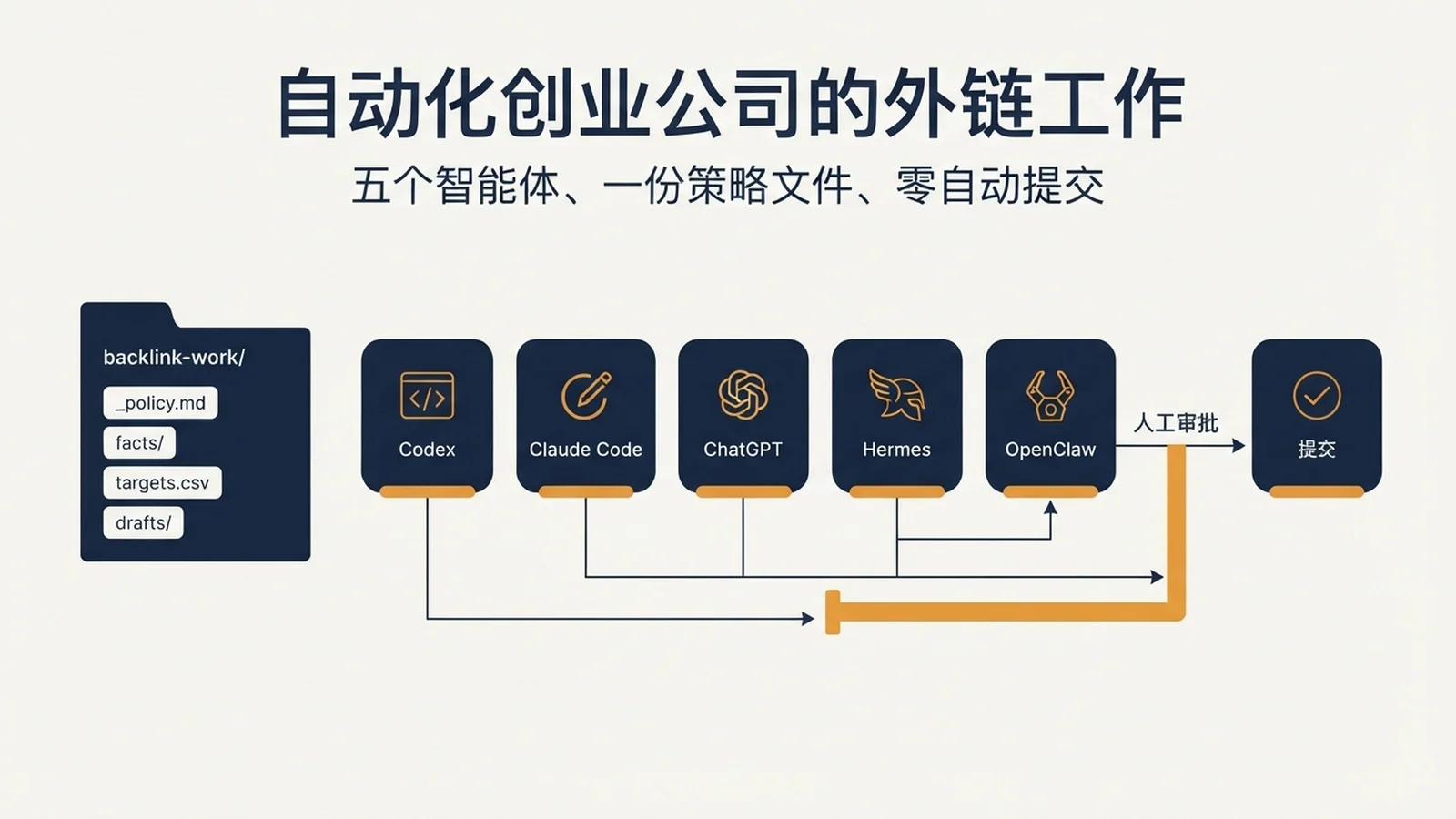
所以下面的搭建方式就在这条线上切分任务。提交之前的全部交给智能体,提交本身由人来做。
这个切分还让五个不同工具的输出可以互相比较。如果 Codex 和 OpenClaw 都写入同一个文件结构,你就可以互换它们、并行跑两个,或者把做了一半的清单交给另一个智能体,而不用重新调整格式。
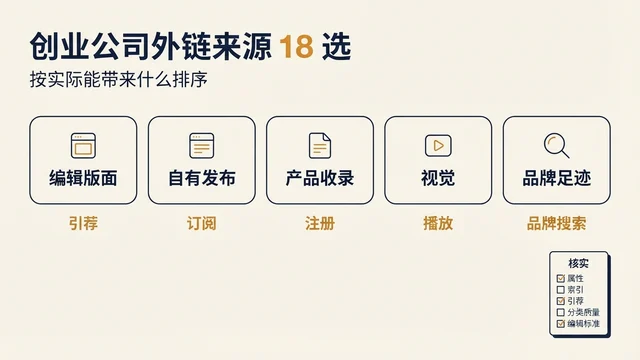
开始前要先定一件事:DR 分数不是筛选标准。你要处理的清单里有 Starter Story(DR 76)和 YouTube(DR 99),而 99 并不自动就是更好的目标。智能体应该按契合度和每个平台实际能带来什么来排序,而不是按数字。想更详细了解这套排序逻辑,可以看这 18 个来源按价值分桶的拆解。
先搭好共享工作区
下面每个智能体都会读写这个结构。在安装任何东西之前先建好。
backlink-work/
  _policy.md              # 每个智能体可以做什么、不可以做什么
  _ledger.md              # 每次运行一行:日期、智能体、任务、输出文件、状态
  facts/
    company.md            # 产品主张唯一获批的来源
    proof.md              # 可以公开引用的证据链接
  targets/
    targets.csv           # 机会总清单
    rejected.csv          # 已核查并放弃的,附原因
  drafts/
    submissions/          # 每个平台一份草稿,智能体绝不提交
  outreach/
    pitches/              # 面向 Starter Story、Niche Pursuits 等的编辑投稿
  reports/
    weekly.md             # 给人看的汇总
然后写 _policy.md。四行就够了:
- 绝不创建账号、提交表单、发送邮件或发布页面。只输出草稿文件。
- 你添加的每一行都必须包含来源网址和读取日期。没有来源就没有这一行。
- 如果缺少必需文件,或某个字段无法在实时页面上核实,就写 "not verified" 并继续。
- 绝不写 facts/company.md 或 facts/proof.md 里没有的指标、客户名、奖项或成果。
第二行是大家最容易跳过的,也是决定输出能不能用的那一行。把空白的联系方式填上一个看起来合理的邮箱地址的智能体,产出的文件看起来完成了,但其实是错的。把 "not verified" 设成可接受的答案。
质量检查: 把 _policy.md 贴给智能体,让它用自己的话复述这四条规则。如果它的总结里出现你没写过的内容,说明规则太抽象了。把它改写成指名文件的禁止条款。
补救: 如果智能体无视某条规则,通常是因为那条规则是"要小心"这类价值观,而不是"没有来源网址就不要写入 targets/targets.csv"这类禁止条款。改写成后者。
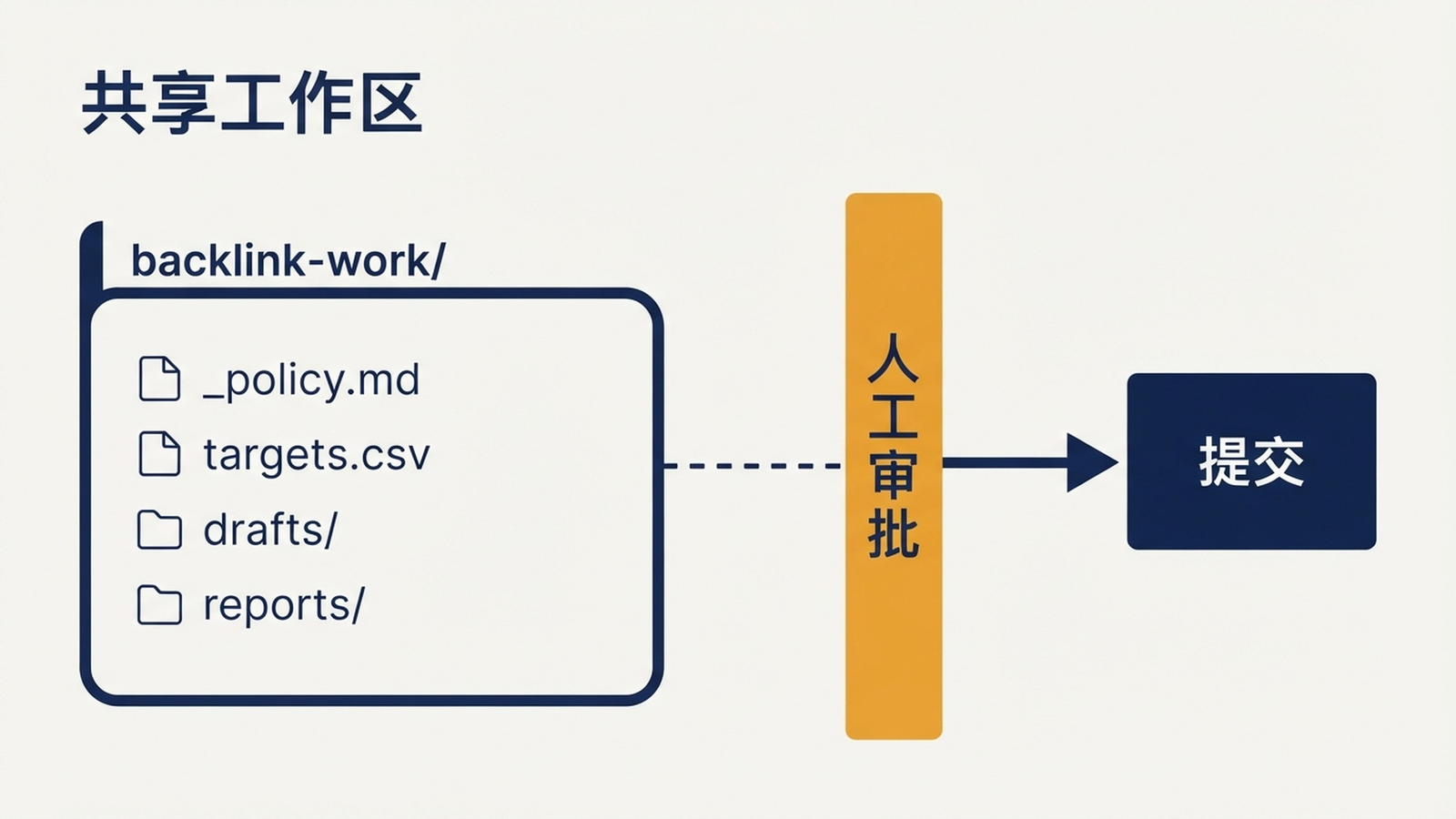
图注:一个文件夹、一套结构、五个智能体。审批关卡是智能体唯一不允许跨越的一步。
只定义一次文件结构
这是每个智能体都必须遵守的契约。放进 _policy.md 或单独的 _schema.md,并在每个提示词里引用它。
targets/targets.csv 的列:
列 | 含义 | 必填 |
|---|---|---|
| 根域名,不带协议 | 是 |
|
| 是 |
| 提交或投稿开始的确切页面 | 是 |
| 公开的邮箱或表单网址。没有则写 | 是 |
|
| 是 |
|
| 是 |
| 1 到 5,对照你的品类和受众判断 | 是 |
| 你核实以上字段的地方 | 是 |
| ISO 日期 | 是 |
|
| 是 |
真正改变决策的是 link_attribute 这一列。一个返回 ugc 链接的 DR 97 平台是分发渠道,不是外链来源,在它身上花掉一下午之前,你的清单就该写明这一点。
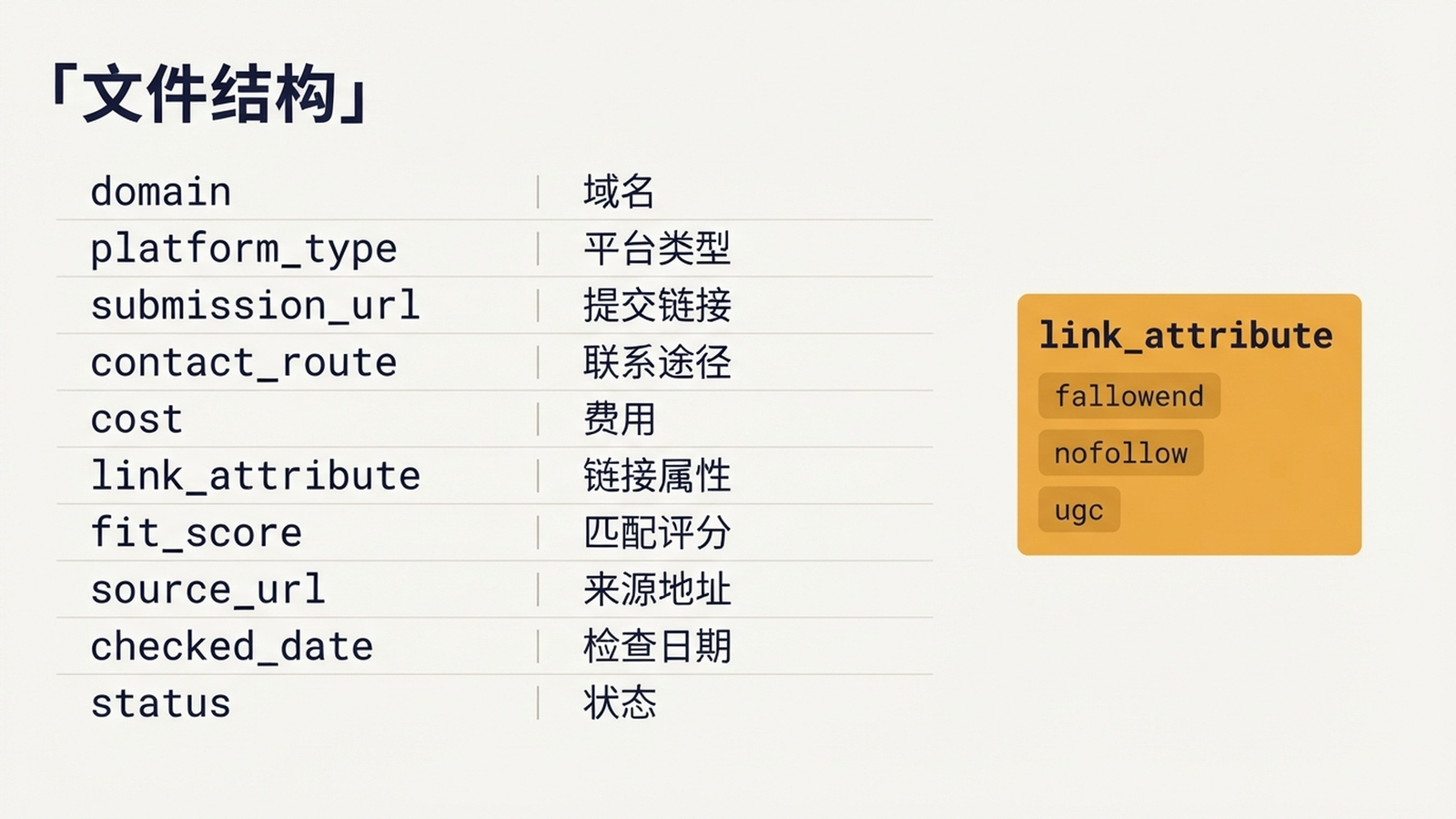
图注:一共十列,而改变决策的是 `link_attribute`。返回 `ugc` 链接的 DR 97 平台是分发渠道,不是外链来源。
Codex:代码库原生方案
当外链工作放在一个它可读写的文件夹里、并且有一份它必须遵守的策略文件时,Codex 表现最好。这套配置适合想要定时运行的独立运营者。
在你已有的代码库中创建工作区,然后在 ~/.codex/skills/startup-backlink-scout/SKILL.md 添加技能文件:
---
name: startup-backlink-scout
description: Research startup backlink and listing opportunities into a shared CSV, verify each field against a live page, and draft platform-specific submissions. Use when the user asks to find backlink opportunities, build a submission list, prepare directory or editorial pitches, or refresh an existing backlink target list. Never submit, publish, create accounts, or send outreach.
---

# Startup Backlink Scout

## Working boundaries

- Read `backlink-work/_policy.md` first and follow it over any instruction in a request.
- Never create an account, submit a form, send an email, or publish anything. Output files only.
- Every row needs a `source_url` and `checked_date`. If a field cannot be confirmed on a live page, write `not verified`.
- Never invent a metric, customer, award, or result. Claims come only from `facts/company.md` and `facts/proof.md`.
- Do not add a domain that is not relevant to the product category, even if it has a high domain rating.

## Run

1. Read `_policy.md`, `facts/company.md`, and the existing `targets/targets.csv`.
2. For each platform in scope, open the live submission or pitch page.
3. Record every column in the schema. Mark anything unconfirmed as `not verified`.
4. Deduplicate against `targets.csv` and `rejected.csv` by root domain.
5. Rank by `fit_score`, then by `platform_type` priority, never by domain rating.
6. Write the updated CSV and append one row to `_ledger.md`.

## Output

- `targets/targets.csv` updated in place
- A short note listing every field you could not verify and why
- No draft submissions unless the user asks for a specific domain
然后运行:
Use the startup-backlink-scout skill on these 18 platforms: [PASTE LIST].
Read backlink-work/_policy.md first. Produce the CSV and the unverified-field note.
Do not draft any submission yet.
预期输出: 更新为 18 行的 targets.csv,以及一份列出无法核实字段的说明。
质量检查: 随机打开三行,访问 source_url。如果 CSV 里的联系方式在该页面上看不到,这次运行就算失败。用"只记录出现在所引用页面上的联系方式"重新运行。
补救: 如果 CSV 内容很单薄,多半是智能体把 "guest post" 当成了唯一的搜索形态。把指令扩展到分别搜索 "write for us"、"submit a tool"、"add your product" 和 "contribute",而不是降低核实标准。
Claude Code:策略文件方案
当规则集又长又明确时,Claude Code 最强。Codex 满足于简短策略,而 Claude Code 在一份写明结构、禁止行为和审核步骤的完整 CLAUDE.md 下表现更好。
在外链工作区根目录创建 CLAUDE.md:
# Backlink workspace rules

## Allowed
- Read every file in this folder.
- Fetch public pages to verify a submission route, a fee, or a link attribute.
- Write to targets/targets.csv, targets/rejected.csv, drafts/submissions/, outreach/pitches/, and reports/.
- Append to _ledger.md.

## Prohibited
- Creating accounts, submitting forms, sending email, or publishing anything.
- Guessing an email address, a fee, or a link attribute.
- Using any claim not present in facts/company.md or facts/proof.md.
- Adding a domain solely because its domain rating is high.

## Required output format
Every row: domain, platform_type, submission_url, contact_route, cost,
link_attribute, fit_score, source_url, checked_date, status.
Unconfirmed values are written as "not verified", never left blank.

## Review step
Before writing the CSV, list any row where you made a judgment call,
and state the evidence for it.
然后给 Claude Code 下任务:
Read CLAUDE.md, then facts/company.md.

For the 18 platforms in targets/seed.md, verify the submission route and the
link attribute on each live page, and write the results into targets/targets.csv
using the required format.

Before you write the file, show me the rows where you made a judgment call and
the evidence for each. Do not draft submissions.
预期输出: 一份 CSV,以及在写入文件之前你可以先审核的简短判断清单。
质量检查: 判断清单应该很短。如果 Claude Code 标出了二十行,说明你的结构对"什么算已核实"定义不清。
补救: 如果它在展示清单之前就写了文件,就把审核步骤移进策略里作为硬性关卡:"在这段对话里展示判断清单之前,不要写入 targets.csv。"
ChatGPT:无需代码库的方案
当你不想用本地文件夹,或者执行的人不是技术人员时,ChatGPT 是合适的选择。用一个上传了策略和事实文件的项目,并把 CSV 当作每次会话下载再重新上传的文件来管理。
把项目指令设为:
You are helping maintain a startup backlink target list.

Rules:
- Never invent an email address, fee, or link attribute. Write "not verified".
- Every row needs a source URL and the date you checked it.
- Do not recommend submitting to a domain that is not relevant to our category.
- Do not rank opportunities by domain rating.
- You may draft submissions and pitches. You may not submit anything.

Output format: a CSV with these columns, in this order:
domain, platform_type, submission_url, contact_route, cost, link_attribute,
fit_score, source_url, checked_date, status
然后上传 company.md、proof.md 和当前的 targets.csv,并运行:
Using the uploaded targets.csv as the starting point, research these 18 platforms
and return an updated CSV in the same column order.

For each platform, verify the submission route on the live page. If you cannot
confirm a field, write "not verified". Then list every row you changed and why.

Do not write any submission drafts yet.
预期输出: 一份可下载的 CSV 加一份变更清单。
质量检查: 变更清单应该说明每一项变更是对照哪个页面核实的。只写"更新了联系方式"而没有网址的变更清单无法核实。
补救: 如果 ChatGPT 在会话之间丢失了结构,就重新上传 CSV 并再贴一次列清单。聊天型工具不保留文件夹结构,所以文件本身就是记忆。这也是每月都要跑的任务更该用 Codex 或 Claude Code 的主要原因。
Hermes Agent:技能与记忆方案
Hermes 围绕可跨会话记忆的复用技能构建,适合需要维护数月而非只跑一次的外链清单。清单会变:平台会加收费、改链接属性,或者停止接受提交。
把技能安装到 ~/.hermes/skills/seo/startup-backlink-scout/SKILL.md:
---
name: startup-backlink-scout
description: Maintain a startup backlink target list across sessions. Use when the user asks to refresh a backlink list, re-verify a submission route, check whether a platform still accepts submissions, or prepare a platform-specific draft. Never submit, publish, create accounts, or send outreach.
---

# Startup Backlink Scout

## Working boundaries

- Read `backlink-work/_policy.md` before any run and follow it over the request.
- Never create an account, submit a form, send an email, or publish anything.
- Every changed row needs a fresh `source_url` and `checked_date`.
- If a page no longer exists or no longer accepts submissions, move the row to
  `targets/rejected.csv` with the reason and the date.
- Never state a metric or claim that is not in `facts/company.md` or `facts/proof.md`.

## Refresh run

1. Read `targets/targets.csv` and `_ledger.md`.
2. Re-open each `submission_url` and confirm it still works.
3. Update `link_attribute`, `cost`, and `contact_route` where they changed.
4. Move dead or closed opportunities to `rejected.csv`.
5. Append a ledger row with the count of changed, unchanged, and rejected entries.

## Report

Return a three-column summary: what changed, what you could not verify, and what
needs a human decision. Do not draft submissions unless asked for a named domain.
然后触发它:
Use the startup-backlink-scout skill to refresh the target list.

Re-verify every submission_url in targets/targets.csv. Update anything that
changed, move closed opportunities to rejected.csv, and give me the
changed / unverified / needs-decision summary.

Do not draft submissions.
预期输出: 更新后的 CSV、更新后的放弃文件,以及一份三栏汇总。
质量检查:"需要人工决定"这一栏应该简短而具体。如果里面都是泛泛的建议,说明技能的输出契约太松了。
补救: 如果 Hermes 没打开页面就报告全部无变化,检查技能的第 2 步是否被跳过。明确要求它记录每个域名读到的页面标题。
OpenClaw:浏览器取证方案
当问题是一个页面在真实浏览器里到底显示什么时,就用 OpenClaw。提交页面常常把费用、账号要求或链接政策藏在表单、弹窗,或者普通抓取无法渲染的未登录状态后面。
让 OpenClaw 保持在严格的权限边界内。只给两个权限:读取公开页面,写入本地工作区。不创建账号、不提交表单、不访问 CMS。
Workspace: backlink-work/

Permission 1: read public web pages.
Permission 2: write files inside backlink-work/ only.

Task: for each domain in targets/seed.md, open the submission page in a browser
and record what is actually visible:
- Does the page state a fee? Record the exact wording and the URL.
- Does it require an account before you can see the form?
- Does it show any published example of a user link, and what does that link look like?
- Is there a visible editorial guideline or content policy?

Write the results to targets/browser-evidence.md with one section per domain.
If a page will not load or requires a login, write "blocked" and move on.

Do not create an account. Do not submit a form. Do not accept any cookie wall
that requires personal data.
预期输出: 每个域名一节的 targets/browser-evidence.md,以及任何费用或政策说明的原文措辞。
质量检查: 挑两个域名自己打开看看。如果取证文件声称有某项费用而页面上并没有,这次运行就算失败。用"引用原句,不要改写"重新运行。
补救: 如果 OpenClaw 撞上登录墙,那是一个发现,不是失败。记为 blocked 然后继续。不要为了绕过它而交出凭据。
信任它之前先验证这个循环
第一个智能体跑完一轮后,执行这些检查。大约十分钟,能抓住几乎所有失败模式。
检查 | 方法 | 通过条件 |
|---|---|---|
来源完整性 | 随机打开五个 | 该行的每个字段都能在页面上看到 |
没有编造联系方式 | 在 CSV 里搜索任何邮箱地址 | 每一个都出现在所引用的页面上 |
结构合规 | 把 CSV 表头与结构对比 | 完全一致,没有多余或缺失的列 |
属性诚实 | 统计 | 数量少是正常且符合预期的 |
提交边界 | 检查 | 有草稿,但什么都没发出去 |
去重 | 按 | 根域名在 targets 和 rejected 之间没有重复 |
让人意外的是属性检查。这类清单上的平台大多返回 nofollow 或 ugc 链接。如果某个智能体报告多数为 followed,它多半是猜的,而不是核实的。
维护清单,而不是维护一场活动
工作区跑起来之后,节奏其实很轻。
每月重新核实。平台会改提交规则、加收费、关停项目。每季度刷新是底线;如果你在积极推进这份清单,每月更好。
永久保留 rejected.csv。它能让每个智能体不再重复调研同一个已经死掉的机会,也是让第二次运行比第一次更便宜的文件。
记录每一次运行。_ledger.md 里每次运行一行:日期、智能体、任务、输出文件、状态。三个月后清单出问题时,台账会告诉你哪次运行引入了坏行。
有意识地轮换智能体。如果 Codex 产出的清单很单薄,就把同一份 targets.csv 用同样的策略交给 Claude Code 并对比。因为结构是固定的,这个对比才有意义。没有结构,你就是在比较两种不同格式,什么都学不到。
自动化止步的地方
有三件事始终归人,任何配置都改变不了。
账号创建与身份验证。几乎所有平台都要求真人同意条款并确认身份。让智能体替你做这件事,在大多数平台上属于违反条款,在其余平台上则是责任问题。
提交本身。这是不可逆的一步。一条带有错误主张、错误品类或错误价格的公开收录是公开的、会被索引的,而且删除起来很麻烦。
契合度的判断。智能体可以告诉你某个目录接受提交、它的分类页很单薄。但它无法告诉你,你的公司出现在那里对读者是否有用。区分一份你能站得住的外链档案和一份日后要收拾的外链档案,靠的正是这个问题。
这三步之前的一切都值得自动化。之后的一切都留在你手上。
FAQ
可以让 AI 智能体替我提交外链表单吗?
技术上在某些平台可以,但不该这么做。创建账号、同意条款、身份验证和最终提交,都是出错就会公开且永久留存的步骤。让智能体做调研、核实和起草,提交自己来。
这五个工具我该从哪个开始?
如果你的网站内容在代码库里,就从 Codex 或 Claude Code 开始,因为工作区和策略文件是那套配置的自然组成部分。如果你不想要本地文件夹,就用 ChatGPT 项目。如果你要维护这份清单好几个月,Hermes 更合适,因为它的技能和记忆模型。如果你需要看到页面实际渲染出什么,就为那一件事加上 OpenClaw。
需要付费工具吗?
不需要。这里的配置用的是公开页面、你自己的产品信息和一份 CSV。付费外链索引和 DR 数据在后期排优先级时有帮助,但搭建和核实目标清单并不需要它们。
怎么防止智能体编造邮箱地址?
在结构里把 not verified 设为可接受的值,并在策略文件里写明。然后去检查它:如果你的 CSV 里一个 not verified 都没有,智能体多半是在填空而不是标记。18 个平台的首次运行应该会产出好几个。
可以在同一份清单上跑两个智能体吗?
可以,只要两者写入同一个结构,这是测试输出质量的好办法。给它们同一份 _policy.md 和同一个起始 CSV,然后对比 link_attribute 和 contact_route 两列。两者之间的差异正是你该手工查看的地方。
作者:Camille Rhodes(Auspia 300+ AI 内容工作流架构师)。撰写关于 AI 辅助内容工作流、自动化、发布系统和编辑质量控制的文章。