Short answer
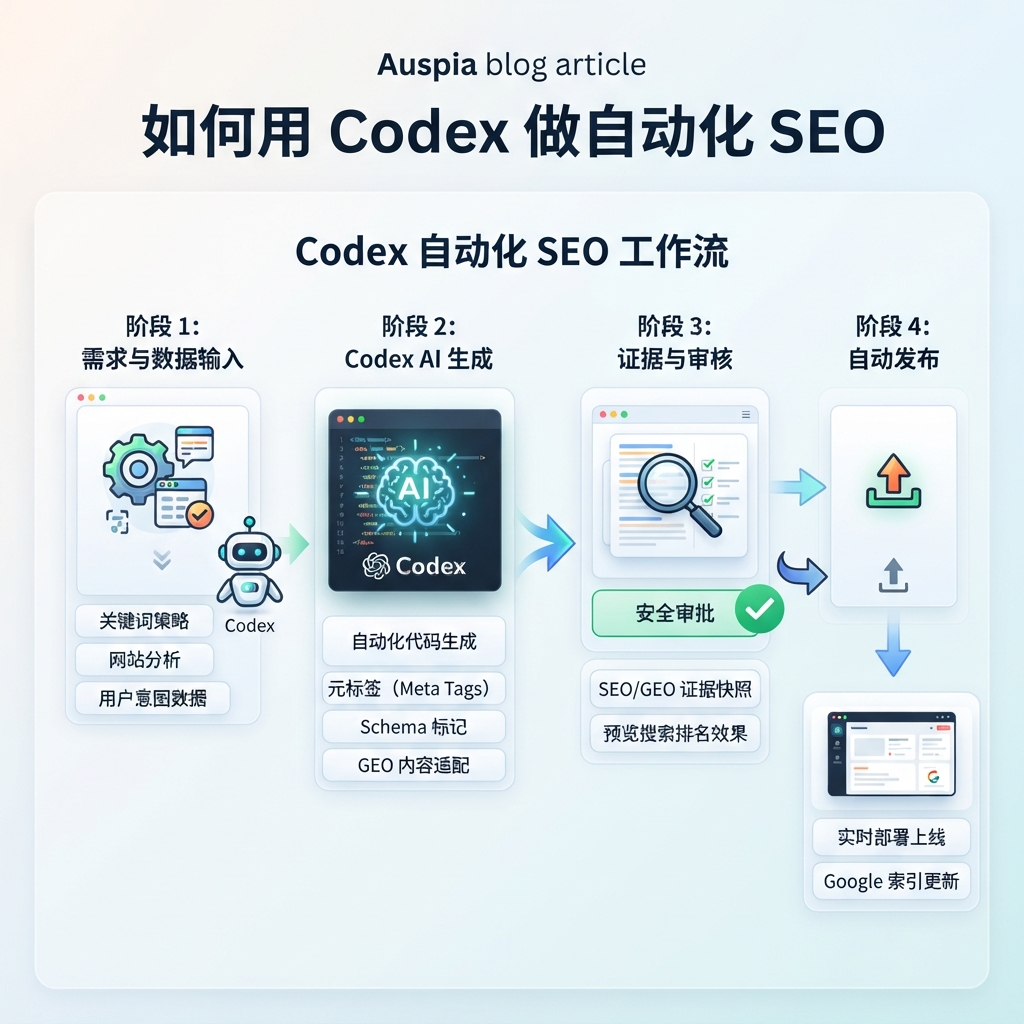
Codex 可以自动化很多 SEO 工作,但最安全的 use case 不是「让 AI 发布所有东西」。更好的 use case 是:给 Codex 一个 repository、你的 SEO rules、analytics exports 与明确 definition of done,然后让它 inspect、patch、test 并 summarize work。
这会把 SEO 变成 engineering loop:
- 侦测 templates、content、metadata、schema、sitemaps、redirects 与 performance 的 issues。
- 要求 Codex propose scoped fix。
- 让 Codex edit code 或 content files。
- Run validation commands。
- Publishing 前 review diff。
- 透过 skill、script 或 CI job 重复同样 workflow。
这很重要,因为 SEO 不再是每季一次 audit。Sites 每天都在变。Templates drift、content ages、product pages 可能没有 metadata、JavaScript 可能藏住重要 copy、migrations 会破坏 canonicals、navigation changes 会让 internal links 消失。Codex 有用,是因为它能在这些问题发生的 codebase 里工作。
Codex 在 SEO 里擅长什么
Codex 是 coding agent,所以当 SEO task 牵涉 files、code、templates、tests 或 structured data 时最强。它可以读 site repository、inspect routing、update content models、edit Markdown、modify React or Astro templates、add validation scripts,并 run local checks。
适合的 tasks 包括:
SEO task | Codex 可以做什么 | 需要 human review 吗? |
|---|---|---|
Metadata cleanup | 找 missing titles、duplicate descriptions 或 weak social metadata | 需要,确认 brand 与 intent fit |
Structured data | 新增或修复 Article、Product、FAQ、Breadcrumb、Organization 或 SoftwareApplication JSON-LD | 需要,确认 factual accuracy |
Sitemap and robots checks | 检查 generated sitemap URLs、blocked paths 与 accidental noindex rules | 需要,deploy 前确认 |
Internal links | 建议 related pages 间的 links,并加到 content files | 需要,避免 spammy linking |
Content refreshes | 用 provided source material 更新 stale sections、FAQs、examples 与 snippets | 需要,永远要 review |
JavaScript SEO fixes | 把 critical copy 移到 crawlable HTML、修 lazy-loaded content 或改善 SSR output | 需要,搭配 technical testing |
CI SEO gates | 加入 scripts,让 missing metadata、broken canonicals 或 invalid schema 造成 build fail | 需要,尤其 thresholds 改变时 |
Codex 不适合无监督 strategy decisions。它不应决定 positioning、invent case-study metrics、publish claims without sources,或在没有 editorial review 下 rewrite hundreds of pages。
为什么这符合 modern SEO
Modern SEO 已经是 content、code、data 与 operations 的混合工作。你需要管理 crawlability、metadata、schema、performance、internal links、content freshness、analytics、AI answers 与 conversion paths。这些东西常散在 repo、CMS、spreadsheets 与 dashboards 里。
Codex 的价值是把「recommendation」变成「reviewable diff」。它可以产出 files changed、commands run、tests passed、remaining risks 与 next actions。这比只得到一份 audit PDF 更接近 shipping improvement。
Codex SEO automation stack
最小可行 stack:
AGENTS.md:SEO rules、approval boundaries、test commands。seo/exports/:GSC、Bing、GA4 或 keyword exports。seo/reports/:audit reports、refresh briefs、diff memos。scripts/seo-checks/:metadata、links、schema、sitemap checks。- Pull request 或 CMS draft:human approval gate。
Start with an SEO AGENTS.md
## SEO rules

- Do not publish or submit URLs without explicit approval.
- Preserve existing slugs unless a redirect plan is approved.
- Every page needs a unique title, useful meta description, canonical, and clear H1.
- Do not invent claims, statistics, reviews, or customer logos.
- Prefer source-backed updates and mark missing proof as TODO.
- Run build and SEO checks before marking work complete.
这个 file 应该放 durable rules。Temporary data 应放在 exports 或 reports,而不是塞进 AGENTS.md。
Workflow 1:automated technical SEO audit
Prompt:
Run a technical SEO audit for this repository.
Do not edit files yet.
Check routing, title rendering, canonical tags, meta robots, sitemap generation, robots.txt, schema, headings, image alt behavior, and broken internal links.
Return findings with file paths, evidence, risk level, and suggested validation.
先 audit,再 patch。不要一开始就「fix everything」。
Workflow 2:metadata and snippet repair at scale
让 Codex 找 missing、duplicate 或 weak titles/descriptions,并先产生 table:URL、current title、issue、suggested title、suggested description、risk。
批准后才让它 patch 低风险 pages。Money pages、pricing pages 或法律敏感页面,必须由人决定 wording。
Workflow 3:structured data generation and validation
Codex 可以加入 FAQPage、Article、Product、BreadcrumbList 或 Organization JSON-LD,但要守三条 rules:
- Schema 只能描述页面真实可见内容。
- Ratings、reviews、prices、availability 不可 invented。
- Patch 后必须 run schema validation 或 build tests。
Workflow 4:sitemap and robots regression checks
Codex 很适合检查 sitemap 是否漏页、robots 是否 block important paths、canonical 是否指到错误 URL。这些 changes 风险高,应该先产生 ticket 与 validation plan,再由 engineering + SEO approve。
Workflow 5:content refresh with source control
内容更新不应让 Codex 自由发挥。请给它来源素材:GSC 汇出、SERP notes、product docs、sales questions 或 customer proof。Prompt 应要求:
- 不改 slug。
- 不 invent proof。
- 加入 short answer。
- 更新 stale examples。
- 补 internal links。
- 产出 diff summary。
Workflow 6:internal link suggestions without spam
好的 internal linking workflow 先建立 inventory:source URL、target URL、context、anchor suggestion、reason、risk。Codex 不应把每个 keyword 都变成 link。Anchor 应自然,且 link 应帮助 reader 完成 task。
Workflow 7:CI-based SEO guardrails with codex exec
当 workflow 稳定后,可以用 scripts 或 CI 检查:missing metadata、invalid schema、broken canonicals、missing alt text、sitemap mismatch。Codex 可以协助建立 scripts,但 thresholds 和 blocking rules 应由人批准。
不要自动化什么
不要完全自动化 | 原因 |
|---|---|
Brand positioning | 需要 strategy judgment |
Legal/medical/financial claims | 高风险且需要专业 review |
Pricing and offer pages | 直接影响 revenue 与 compliance |
Redirect strategy | 错误会破坏 traffic 与 attribution |
Large information architecture changes | 需要 business 与 search impact review |
Case study metrics | 必须可验证 |
Practical 30-day rollout plan
Week 1:建立 AGENTS.md、SEO exports folder、basic audit prompt,先做 read-only audit。
Week 2:加入 metadata、schema、links checks,让 Codex 只 patch low-risk issues。
Week 3:做 content refresh workflow,从 5-10 个 pages 开始,要求 source-backed diff。
Week 4:建立 recurring report 与 CI guardrails,把 high-risk changes 留在 human approval gate 后面。
Auspia take
Codex 的价值不是「AI 帮你做 SEO」。真正价值是让 SEO work 更接近工程化:有 input files、有 repeatable prompts、有 validation、有 diff、有 review、有 follow-up measurement。
好的 automation 会缩短 insight 到 shipped improvement 的距离,但不会移除 judgment。SEO 仍然需要人决定 priority、positioning、risk 与 business fit。
Codex SEO prompt template
Use this repository as the source of truth.
Follow AGENTS.md.
Use the SEO exports in seo/exports/.
Do not publish or submit URLs.
First inspect and report.
Then propose a scoped fix.
Only edit after approval.
For every change, return:
- files changed
- evidence
- risk level
- commands run
- tests passed or failed
- rollback plan
- approval needed
FAQ
Codex 可以完全自动化 SEO 吗?
不应该。它可以自动化 audits、patches、reports 与 checks,但 strategy、risky copy、publishing 与 technical high-risk changes 应该 human-reviewed。
Codex 更适合 technical SEO 还是 content SEO?
两者都可以,但它最强的是 repo-based work:templates、metadata、schema、internal links、Markdown content、tests 与 CI checks。
Codex 可以大规模建立 SEO content 吗?
技术上可以,但不建议无监督生成。更好的用法是用 source data 产出 briefs、refresh existing pages、建立 outlines,并通过 editorial approval。
如何衡量 Codex SEO automation?
追踪 fixes shipped、validation pass rate、time saved、organic clicks、CTR、indexation issues、schema errors、internal link coverage 与 AI search visibility。
最安全的第一个 project 是什么?
Read-only technical audit 或 metadata inventory。不要从 automated publishing 开始。
Source notes
请以 OpenAI Codex docs、AGENTS.md guidance、Codex Skills、MCP、subagents 与 configuration reference 作为 current behavior 的来源。
Codex SEO/GEO learning path
这篇文章是 Codex SEO/GEO operator series 的一部分。如果你要从零建立 workflow,建议照这个顺序读:
- 如何在 2026 年用 Codex 做自动化 GEO
- 如何用 Codex 做自动化 SEO
- 如何用 AGENTS.md 建立 Codex SEO Workspace
- 如何用 MCP 把 Codex 接上 SEO Data
- 2026 年最佳 Codex GEO Skill
- 如何建立 Codex Keyword Clustering Skill
- 如何用 Codex Subagents 做 SERP、内容与技术 SEO
- 如何用 Codex 修 Technical SEO 且不破坏 Production
- 如何用 Codex Automations 跑每日 SEO/GEO Monitoring
- Codex SEO/GEO Quality Gates:Diff、Evidence、Tests 与 Human Approval
- 如何用 Codex 建立并部署 SEO/GEO-Ready Website