快速答案
2026 年最佳 Codex GEO skill,不是一句要求 agent「让这篇文章在 AI search 排名更好」的 prompt。它应该是一个可重复的 workflow skill:让 Codex 收集最新 sources,把 brand claims 转成可引用的 answer blocks,检查 crawl 与 citation readiness,建立 publish-ready assets,并在发布后衡量 AI answer engines 是否提及品牌。
这很重要,因为 GEO 已经从 content advice 变成 operations。团队不需要另一份模糊 checklist,而需要一个 Codex 每次都能用相同方式执行的 skill,并且有足够 guardrails,避免 fake sources、stale claims、missing images、weak metadata 与没有 measurement 的结果。
对 Auspia-style growth team 来说,胜出的 pattern 很简单:先 research,再 structure for extraction,带著 evidence publish,最后 measure AI visibility。Codex skills 很适合,因为 OpenAI documentation 把 skills 描述为 reusable workflow packages,包含 instructions、resources 与 optional scripts,当 task match skill 时由 Codex 载入。换句话说,好的 GEO skill 会变成 AI search work 的小型 operating system。
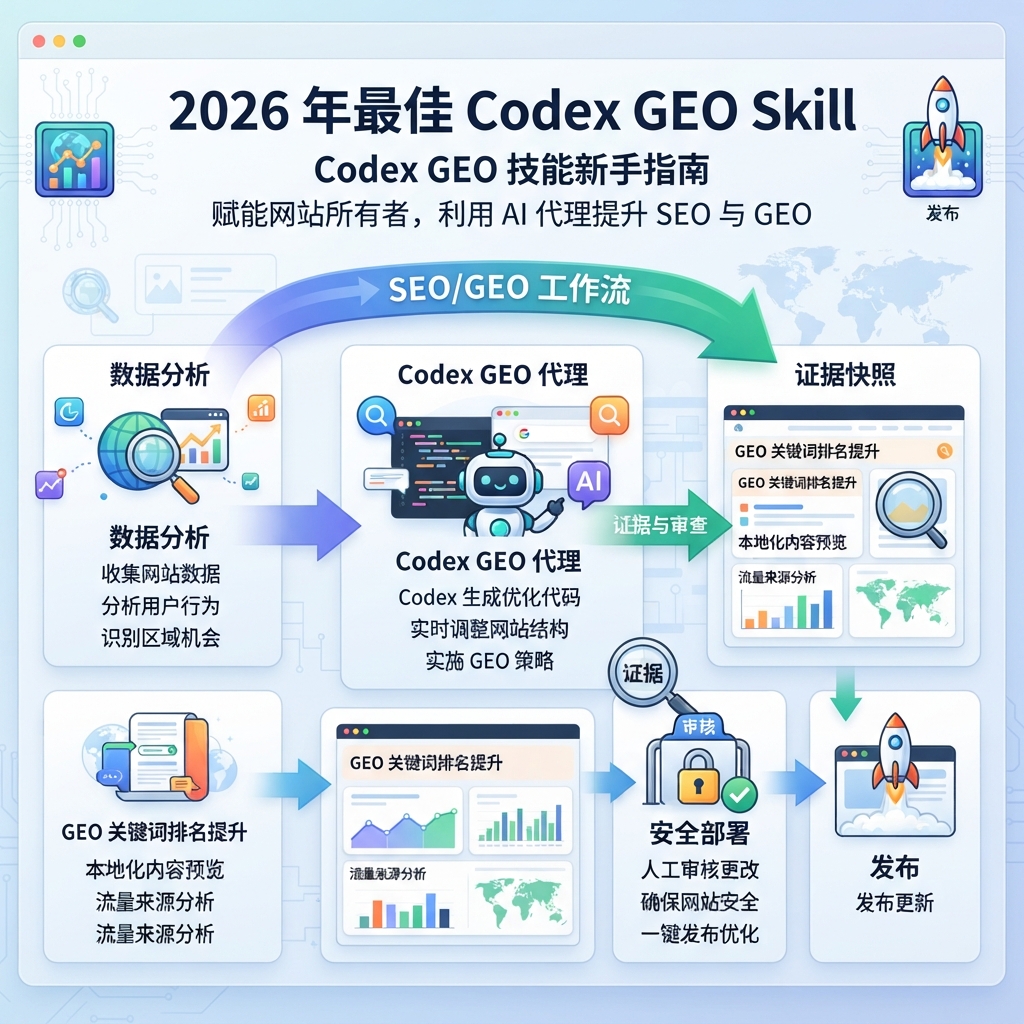
实用 Codex GEO workflow:把 source gathering、answer design、QA、publishing 与 measurement 放进同一个 repeatable loop。
为什么 Codex skills 适合 GEO 工作
OpenAI 的 Codex documentation 将 skills 描述为 task-specific packages,包含 instructions、resources 与 optional scripts。Codex 会先看到 skill name、description 与 path,当它判断 skill 相关时,才读完整 SKILL.md。这对 GEO 很有用,因为 workflow 太细,不能每次都塞进 prompt;但又太重要,不能交给记忆。
一个 GEO workflow 通常需要这些 steps:
- 找 current sources,并准确引用。
- 找出 AI answer engines 可能回答的 buyer questions。
- 把 pages 改写成短、可撷取的 answer blocks。
- 加入 entity facts、tables、FAQs、schema notes 与 internal links。
- 产出帮助 humans 理解 argument 的 images 或 diagrams。
- 带著 metadata、category、tags 与 social image fields 发布。
- 衡量 brand mentions、citation frequency、sentiment 与 prompt coverage。
一般 prompt 可能忘掉其中一步。Codex skill 可以把它们变成 mandatory。
这就是把 Codex 当 fast writer 和当 operator 的差别。Writer 产出 copy。Operator 检查 sources、找 missing evidence、准备 CMS package,并留下 measurement trail。
最好的 Codex GEO skill 应该做五件事
有用的 Codex GEO skill 不应该试图「optimize everything」。更好的设计是窄一点:让 Codex 执行 growth team 每周都会重复的工作。
工作 | Skill 应该要求 Codex 做什么 | 为什么重要 |
|---|---|---|
Research | 先找 official docs、current sources、SERP/AI answer observations | 避免 stale claims 与 invented facts |
Structure | 建立 answer blocks、tables、FAQs、entity facts | 让 AI systems 更容易 summarize 与 cite |
QA | 检查 claims、citations、crawlability、metadata、image requirements | 防止漂亮但不可用的内容上线 |
Publishing package | 准备 CMS fields、tags、category、social image brief | 让 workflow 能真正 publish |
Measurement | 建立 prompt library、baseline report、follow-up date | 避免发布后没有 visibility feedback |
「最佳」skill 就是能闭合这个 loop 的 skill。它可以调用其他 tools,但应该自己负责 workflow。
Skill 里应该放什么
强的 Codex GEO skill 会从 focused SKILL.md 开始。Description 要清楚说明何时 trigger,因为 Codex 会用 description 判断是否载入完整 instructions。不要写「helps with SEO」这种描述。可以接近这样:
---
name: codex-geo-operator
description: Use when creating, refreshing, auditing, or publishing content for GEO, AI search visibility, AI citations, ChatGPT visibility, Perplexity visibility, Google AI Overviews, or answer-engine optimization.
---
接著在 body 定义 workflow。实用 structure 可以像这样:
- Confirm the page goal、audience、brand 与 target AI answer surfaces。
- Research current facts 与 official sources before drafting。
- Build a prompt library of buyer questions and comparison prompts。
- Rewrite content into citable answer blocks、tables 与 FAQ sections。
- Add entity facts、internal links、schema notes 与 image requirements。
- Run a QA checklist for claims、citations、crawlability 与 metadata。
- Publish or prepare a CMS-ready package。
- Create a measurement plan。
Skill 也可以包含 reference files,例如:
references/geo-checklist.md:page-level QA checklist。references/prompt-library.md:reusable AI visibility prompts。references/source-policy.md:citation 与 evidence rules。references/publishing.md:CMS fields、taxonomy 与 image requirements。scripts/:metadata validation 或 link audits 这类 deterministic checks。
这就是 Codex skills 比 copy-pasted prompts 更可靠的地方。主档维持精简;只有 task 需要时,Codex 才读更深的 reference。
AGENTS.md、Skills 与 MCP:使用正确 layer
常见错误是把所有东西都塞进同一个 surface。Codex 有几个 layers,每一层应该承载不同类型的 instruction。
AGENTS.md 适合 repository-level rules。OpenAI Codex manual 说 Codex 会在工作前读 AGENTS.md,并叠加 global 与 project-specific guidance。请用它放每个 task 都应遵守的 conventions,例如 build commands、style rules、file locations 或 publishing safety rules。
Skills 适合 reusable workflows。把 GEO operating procedure 放进 skill,因为它只应该在 Codex 处理 GEO、AEO、AI search visibility、citation analysis 或 content publishing work 时 trigger。
MCP 适合 live tools 与 private data。OpenAI documentation 把 MCP 描述为把 models 连到 third-party documentation、browsers、Figma、Sentry、GitHub 等 tools 的方式。如果 GEO skill 需要 live browser testing、Figma assets、SEO database 或 CMS API,MCP 或 script 可以提供 tool access。
干净 setup 是:
每一层都有窄任务时,stack 会比一个巨大 prompt 更稳。
团队可以改用的 Codex GEO skill template
以下是我会先用的实用版本。
---
name: codex-geo-operator
description: Use for GEO, AEO, AI search visibility, AI citations, ChatGPT SEO, Perplexity SEO, Google AI Overviews, and publish-ready content optimization.
---

# Codex GEO Operator

## Goal
Create or improve pages so AI answer engines can understand, quote, cite, and recommend the brand accurately.

## Required workflow
1. Identify the target audience, page type, market, language, and conversion goal.
2. Research current sources. Prefer official docs, first-party data, and dated observations.
3. Build or update a prompt library for buyer, comparison, problem, and trust questions.
4. Rewrite the page into answer-ready sections: short answer, entity facts, evidence table, FAQ, and next step.
5. Add internal links to supporting pages and proof assets.
6. Check crawlability, metadata, schema notes, image alt text, and source quality.
7. Return a publish-ready package or a diff, plus a measurement plan.
8. Do not invent sources, claims, statistics, pricing, or product features.
这个 template 刻意有立场。它把 Codex 从 generic writing 推向 auditable publishing workflow。
这个 skill 如何改善 AI search visibility
GEO 不是 magic formatting。原始 GEO research paper「GEO: Generative Engine Optimization」指出,optimization methods 可以提升 generative engines 的 visibility。对 2026 年的实务团队来说,重点更直接:AI answer systems 奖励那些容易被 retrieve、understand、compare 与 cite 的 pages。
这通常代表页面需要:
- 开头有可以独立存在的 short answer。
- Brand、product、category 与 audience 使用一致 entity language。
- 用 evidence-backed claims 取代 marketing adjectives。
- 用 tables 比较 alternatives 或 summarize decisions。
- FAQ 回答真实 buyer questions。
- 当 tool、platform 或 search surface behavior 可能改变时,加入 fresh dates。
- Crawlable HTML 与 metadata 不阻挡 bots 或 AI features。
Codex GEO skill 会把这些 requirements 转成 repeatable checks。它也能降低另一个常见失败:团队发布了 polished article,却忘记 measurement。如果 skill 最后会建立 prompt library 与 baseline report,团队下周就能比较 AI answers,而不是只希望文章有效。
Auspia 会如何用在真实 workflow
对 Auspia-style AI traffic growth workflow 来说,Codex GEO skill 应该把 content production 与 visibility checks 接起来。
一个实用 weekly cycle 可以是:
- 用 prompt library 找出品牌缺席或被错误描述的 buyer questions。
- 执行 Codex GEO skill,建立或 refresh 最相关 page。
- 使用 AI Search Visibility Checker 检查 brand 在 target prompts 中如何出现。
- 使用 GEO Score Checker 诊断 page-level readiness。
- 带著 clear metadata、images 与 internal links 发布 updated article。
- Indexing 后重新跑同一组 prompts,记录 citation changes。
重点不是单篇文章,而是循环。AI 能见度会在团队持续改善能回答购买问题、比较问题与信任问题的页面时成长。
多数团队做错什么
第一个错误,是把 GEO 当成写作风格。他们加 FAQ、提到 ChatGPT,就说页面已优化。这是很薄弱的工作。
第二个错误,是使用 Codex 但没有 source policy。Agents 可以很快 draft,但 current platform behavior、product features 与 AI search surfaces 会改变。GEO skill 应该强制先 gather sources,再 drafting,尤其是 tools、APIs、search features、pricing 或 regulations 相关 articles。
第三个错误,是跳过 images 与 structured assets。好的 diagram 或 matrix 帮助 humans 理解文章,也让 page 有更多 useful context。它还能让文章成为更强的 social sharing、internal enablement 与 sales conversations asset。
第四个错误,是 publish without measurement。GEO project 应该有 prompt set、baseline answers、tracked competitors 与 citation quality notes。否则团队就是在黑暗中 optimization。
Selection checklist:这真的是好的 Codex GEO skill 吗?
采用或撰写 skill 前,用这份 checklist:
- Skill 是否有 narrow trigger description,而不是模糊的「SEO helper」?
- 是否要求 current research before claims are written?
- 是否分开 source gathering、drafting、QA、publishing 与 measurement?
- 是否包含 evidence、citations 与 unsupported claims 的 rules?
- 是否产出 answer blocks、tables、FAQs 与 image briefs,而不只是 paragraphs?
- 是否有 publish 前 approval gate?
- 是否建立 prompt library 与 baseline report?
- 是否避免对 pricing、legal、medical、financial claims 做无证据改写?
FAQ
Codex GEO skill 可以保证 AI citations 吗?
不能。它可以改善被 AI 答案系统理解、引用与验证的条件,但不能保证 ChatGPT、Perplexity、Gemini 或 Google AI features 一定引用某页。
Skill 应该直接 publish 吗?
只有在 workflow 有完整 approval、rollback 与 QA gates 时才可以。更安全的做法,是先产出 CMS-ready package 或 pull request。
GEO skill 和一般 SEO skill 有什么差别?
一般 SEO skill 常聚焦 keyword、metadata、internal links 与 technical checks。GEO skill 会额外处理 prompt library、answer extraction、citation readiness、AI answer observations 与 post-publish measurement。
Codex SEO/GEO learning path
这篇文章是 Codex SEO/GEO operator series 的一部分。如果你要从零建立 workflow,建议照这个顺序读:
- 如何在 2026 年用 Codex 做自动化 GEO
- 如何用 Codex 做自动化 SEO
- 如何用 AGENTS.md 建立 Codex SEO Workspace
- 如何用 MCP 把 Codex 接上 SEO Data
- 2026 年最佳 Codex GEO Skill
- 如何建立 Codex Keyword Clustering Skill
- 如何用 Codex Subagents 做 SERP、内容与技术 SEO
- 如何用 Codex 修 Technical SEO 且不破坏 Production
- 如何用 Codex Automations 跑每日 SEO/GEO Monitoring
- Codex SEO/GEO Quality Gates:Diff、Evidence、Tests 与 Human Approval