संक्षिप्त संस्करण
AI शॉपिंग असिस्टेंट सबसे ज़्यादा शोर करने वाले ब्रांड की सिफारिश नहीं करते। वे उस ब्रांड की सिफारिश करते हैं जिसे वे समझ सकें, सत्यापित कर सकें और खरीदार की किसी खास समस्या से जोड़ सकें।
2026 का असहज बदलाव यही है। किसी ब्रांड के पास Amazon पर मजबूत reviews, TikTok पर अच्छा reach, paid search बजट और polished website हो सकती है, फिर भी जब खरीदार ChatGPT, Google AI Mode, Perplexity, Gemini या किसी दूसरे assistant से shortlist मांगता है तो वह गायब हो सकता है। कमी एक और keyword page की नहीं है। कमी उन जगहों पर भरोसेमंद और सुसंगत जानकारी की है जिन्हें AI systems पढ़ सकते हैं।
Ecommerce और B2B teams के लिए GEO “AI शब्दों वाला SEO” नहीं है। GEO वह काम है जिससे आपका brand AI-mediated decisions के भीतर पढ़ने योग्य बनता है। पुराना लक्ष्य click जीतना था। नया लक्ष्य यह है कि जब AI system बाजार को तीन या चार विकल्पों तक सीमित करे, तब आप भरोसेमंद candidate बनें।
2026 में यह ज्यादा महत्वपूर्ण क्यों है
AI shopping novelty से buying infrastructure बन चुकी है। 2025 में OpenAI ने ChatGPT में shopping experiences जोड़े, Google ने AI Mode को shopping-style research flows से बढ़ाया, और Perplexity product discovery तथा checkout-style workflows में और गहराई तक गया। Google AI Mode, ChatGPT shopping updates और Perplexity Shopping के official updates दिशा साफ दिखाते हैं। 2026 तक खरीदार assistant से सहजता से पूछते हैं: “20-person agency के लिए best CRM कौन सा है?”, “European budget airlines के लिए कौन सा carry-on सही है?” या “बिना subscription वाली security camera कौन सी है?”
एक prompt वह लंबी यात्रा संक्षिप्त कर देता है जो पहले कई चरणों में होती थी:
पुराना buying path | AI-assisted buying path |
|---|---|
keyword search करना | स्थिति-विशेष सवाल पूछना |
कई tabs खोलना | एक synthesized answer पढ़ना |
brand sites, reviews, videos और marketplaces की तुलना करना | assistant को sources मिलाने देना |
ads और rankings पर click करना | shortlist से चुनना |
repeated exposure के बाद decide करना | AI framing के बाद decide करना |
व्यावहारिक खतरा सरल है: अगर आपका brand shortlist में नहीं है, तो buyer शायद कभी न जाने कि आप भी option थे।
single-channel trap
यही हिस्सा कई teams miss करती हैं। किसी एक channel में excellent होना problem को देखना और कठिन बना सकता है।
एक DTC kitchen brand Instagram पर dominate कर सकता है। एक SaaS company अपनी category में Google Ads own कर सकती है। Amazon-native brand के पास हजारों marketplace reviews हो सकते हैं। Founder-led service business को ज़्यादातर leads LinkedIn से मिल सकती हैं। ये channels revenue बनाते रह सकते हैं। लेकिन वे automatic AI trust नहीं बनाते।
AI systems corroboration खोजते हैं। वे official pages, product feeds, review sites, media coverage, community discussions, comparison pages, social content और marketplace data की तुलना करते हैं। अगर आपका brand एक जगह बहुत मजबूत दिखता है लेकिन बाकी जगह कमजोर है, तो assistant का confidence कम हो जाता है।
Buyer यह नहीं पूछता, “किस brand ने एक channel पर सबसे ज्यादा खर्च किया?” वह पूछता है, “इस काम के लिए किस product पर भरोसा करूँ?” Assistant फिर उपलब्ध evidence से जवाब बनाने की कोशिश करता है।
GEO अगला SEO नहीं है
SEO और GEO overlap करते हैं, लेकिन वे एक ही काम नहीं हैं।
सवाल | SEO answer | GEO answer |
|---|---|---|
मुख्य लक्ष्य | search ranking और click-through | AI answers में inclusion और सही framing |
अनुकूलन इकाई | पेज, कीवर्ड, स्निपेट | एंटिटी, दावा, स्रोत नेटवर्क, उपयोग-प्रसंग |
मुख्य evidence | relevance, authority, links, technical access | consistent facts, third-party proof, user language, source confidence |
उपयोगकर्ता व्यवहार | खोजना, स्कैन करना, क्लिक करना, तुलना करना | पूछना, संश्लेषित उत्तर पाना, सुधारना, चुनना |
असफलता का रूप | कम ranking | brand अनुपस्थित, गलत वर्णित या अविश्वसनीय |
मापन | rankings, impressions, clicks, conversions | Share of answer, citation quality, recommendation frequency, claim accuracy |
Traditional SEO पूछता है: “क्या हम इस query पर rank कर सकते हैं?” GEO अलग सवाल पूछता है: “जब AI assistant इस buyer problem का answer देता है, तो क्या वह समझता है कि हमें answer में क्यों होना चाहिए?”
यह फर्क महत्वपूर्ण है क्योंकि पुराने SEO shortcuts GEO में अक्सर fail होते हैं। ज्यादा keyword pages unclear positioning नहीं सुधारते। ज्यादा backlinks contradictory product facts नहीं सुधारते। ज्यादा social posts missing third-party evidence की जगह नहीं लेते। ज्यादा ads उस review ecosystem को नहीं सुधारते जो homepage से अलग बात कहता है।
AI किसी brand में confidence कैसे बनाता है
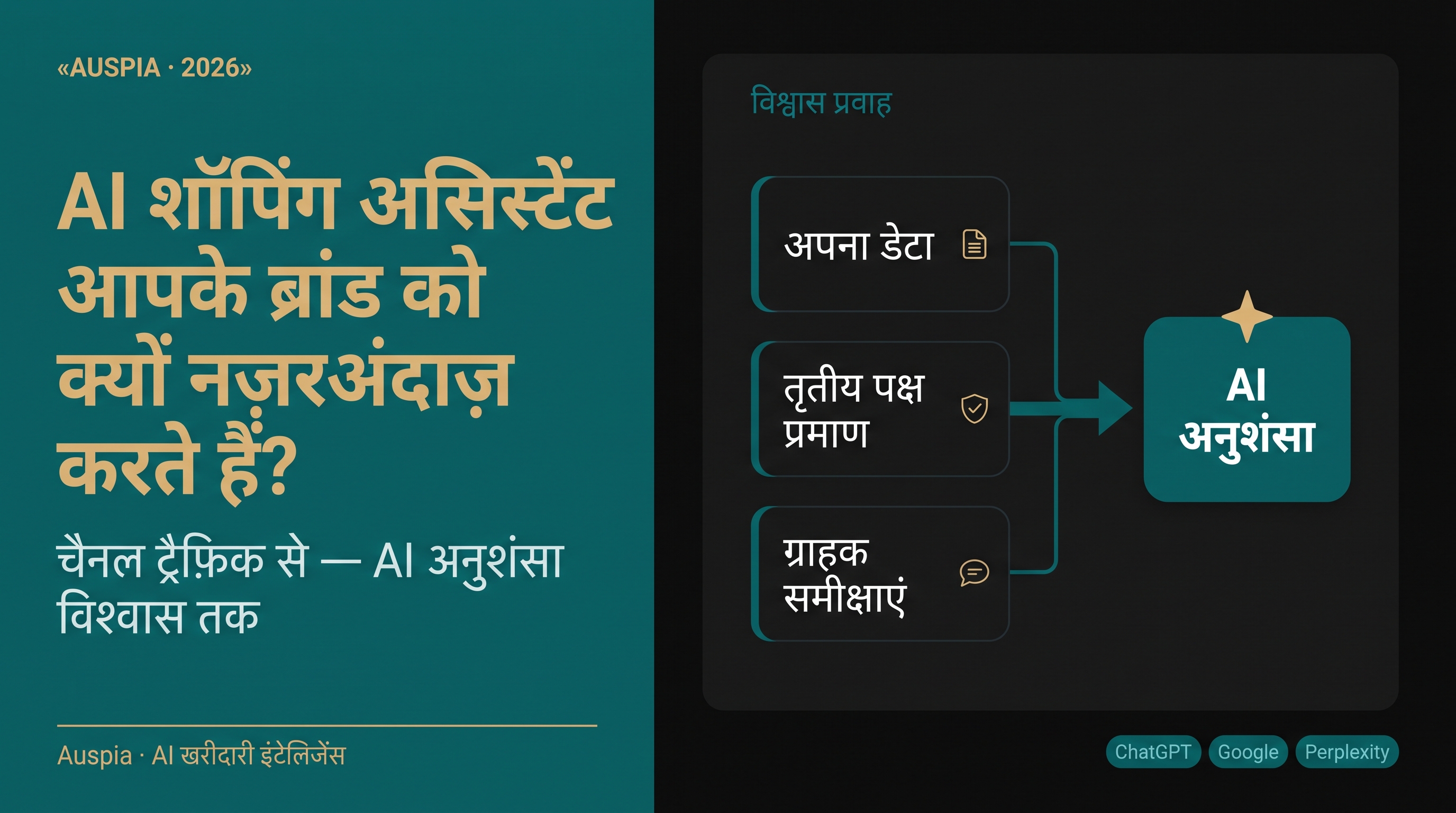
AI recommendation confidence को stack की तरह सोचिए। Assistant को हर layer पर पर्याप्त evidence चाहिए, तभी वह brand को reckless लगे बिना recommend कर सकता है।
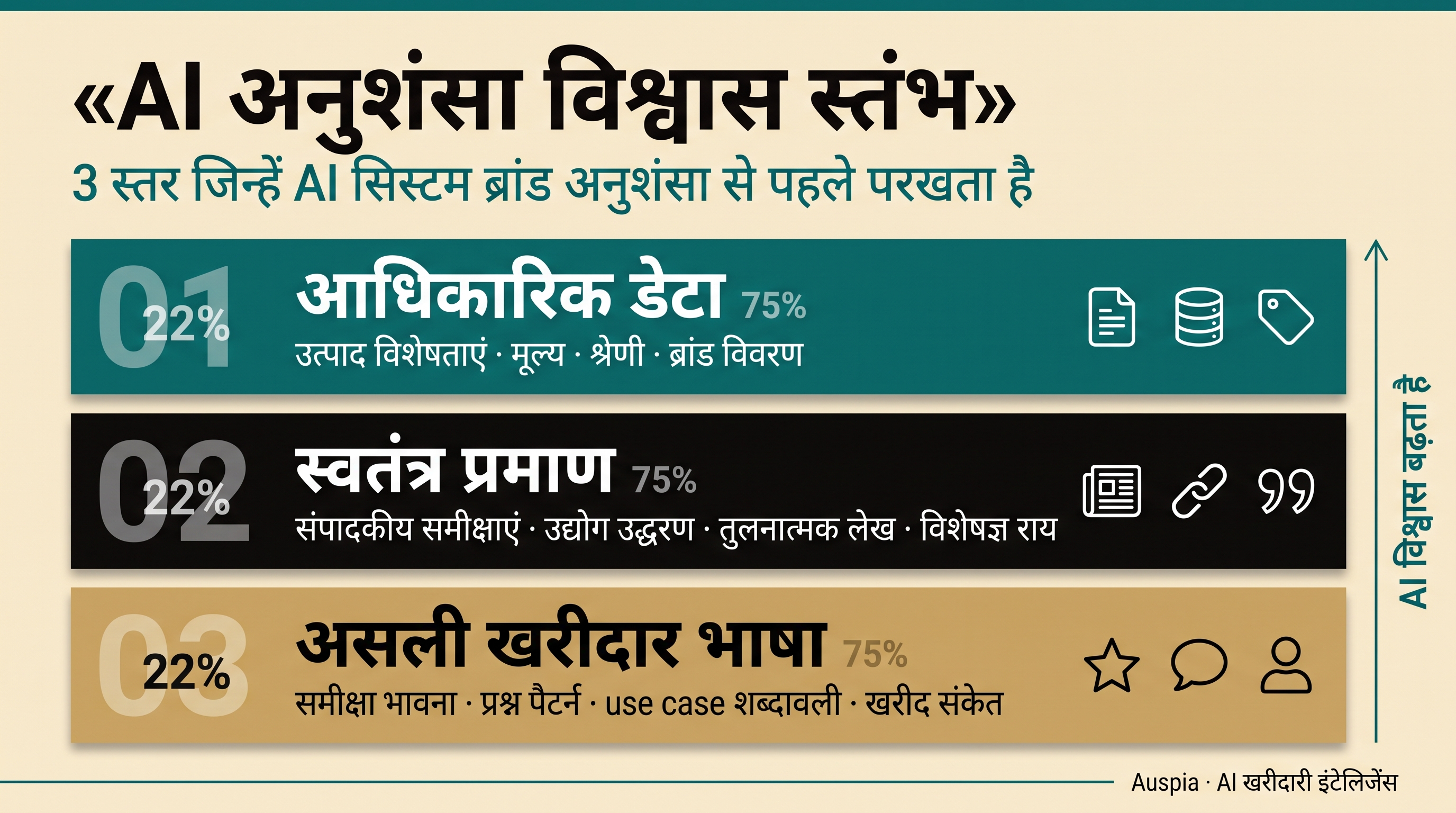
पहली layer first-party facts है: product names, use cases, specs, pricing, locations served, integrations, availability, support policies, comparison pages, documentation, schema और product feeds। ये facts complete और crawlable होने चाहिए।
दूसरी layer independent evidence है: expert reviews, partner pages, analyst mentions, media coverage, directory profiles, industry citations, credible comparisons और आपकी site के बाहर hosted customer case studies। बहुत से single-channel brands यहीं thin होते हैं।
तीसरी layer real buyer language है: reviews, Reddit discussions, forum threads, marketplace Q&A, YouTube comments, community posts और support questions। यह भाषा AI systems को brand को situations, pain points और tradeoffs से जोड़ने में मदद करती है।
आपको हर जगह perfect coverage नहीं चाहिए। आपको इतनी consistency चाहिए कि assistant dots connect कर सके।
चार कारण जिनसे AI shopping assistants brands को skip करते हैं
1. category बहुत blurry है
AI vague brands से संघर्ष करता है। अगर आपकी homepage कहती है कि आप “all-in-one growth platform” हैं, ads कहते हैं “AI automation software”, app store listing कहता है “CRM assistant”, और reviews आपको “email outreach software” कहते हैं, तो assistant को guess करना पड़ता है कि आप कहाँ fit होते हैं।
Focused category recommend करना आसान है। “customer success teams के लिए AI meeting notes” “productivity for modern teams” से ज्यादा usable है। “subscription-free outdoor security cameras” “smart home innovation” से ज्यादा useful है।
2. content real prompts से match नहीं करता
Buyers शायद ही कभी AI से landing page वाली marketing language में पूछते हैं। वे constraints के साथ पूछते हैं:
- “small apartment और 27-inch monitor के लिए कौन सा standing desk सही है?”
- “US और Canada में contractors handle करने वाला payroll software कौन सा है?”
- “grain sensitivity वाले senior Labrador के लिए कौन सा dog food बेहतर है?”
- “non-technical agency team के लिए कौन सा project management tool सबसे आसान है?”
अगर आपकी site सिर्फ “enterprise-grade performance” और “seamless workflows” कहती है, तो assistant के पास उपयोग करने के लिए ज्यादा material नहीं होता। GEO-ready content messy और specific सवालों का plain language में answer देता है।
3. facts sources के बीच बदलते हैं
Inconsistent facts AI recommendations के लिए poison हैं। Product page कहता है free plan में five seats हैं। Pricing page कहता है three। Marketplace listing कहता है ten। पिछले साल का review article कहता है feature unavailable है। Help doc पुराना product name इस्तेमाल करता है।
Humans इस mess को माफ कर सकते हैं। AI systems अक्सर confidence downgrade करते हैं या recommendation देने से बचते हैं।
4. neutral proof नहीं है
Brand की अपनी website जरूरी है, लेकिन काफी नहीं। AI assistants को evidence चाहिए कि किसी और ने brand को evaluate, use, compare, cite या discuss किया है। इसका मतलब low-quality PR chase करना नहीं है। इसका मतलब ऐसे sources बनाना है जिन पर buyer भरोसा करेगा: credible reviews, real case studies, partner references, industry directories, comparison pages और detailed customer feedback।
2026 GEO readiness check
इसे quick diagnostic की तरह इस्तेमाल करें। अगर आप दो या अधिक items fail करते हैं, तो आपकी AI visibility problem शायद structural है, tactical नहीं।
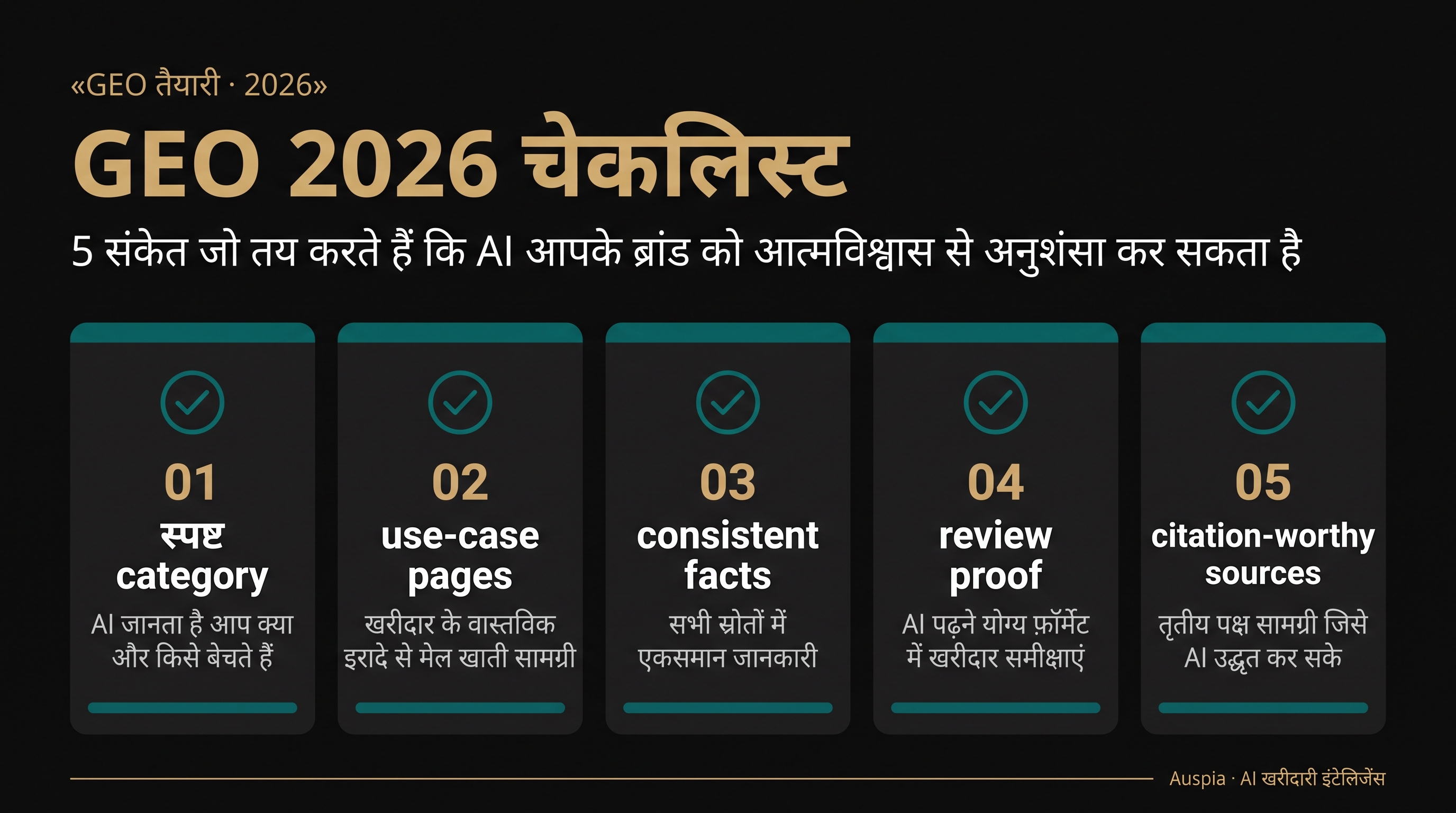
संकेत | पास होने की शर्त | आम विफलता |
|---|---|---|
स्पष्ट category | non-expert एक वाक्य में बता सके कि आप क्या बेचते हैं और किसके लिए | brand बहुत व्यापक platform भाषा इस्तेमाल करता है और buying context नहीं देता |
Use-case pages | site buyer prompts का constraints, examples और tradeoffs के साथ answer देती है | content सिर्फ internal product features के around बना है |
Consistent product facts | specs, pricing, availability और claims major sources में match करते हैं | old pages, marketplaces, directories और docs conflict करते हैं |
Review proof | buyers real use cases, outcomes और limitations discuss करते हैं | reviews thin, generic या एक platform में trapped हैं |
Citation-worthy sources | third-party pages accurate explain करते हैं कि आप क्या करते हैं | mentions shallow, outdated या missing हैं |
brands को आगे क्या करना चाहिए
prompt audit से शुरू करें। 30 से 50 buying prompts की list बनाइए जो आपके customers assistant से पूछ सकते हैं। इसमें use cases, budget constraints, geography, objections, alternatives, integrations और problem language शामिल करें। फिर उन prompts को उन AI systems में test करें जिन्हें buyers इस्तेमाल कर सकते हैं।
हर prompt के लिए चार चीजें record करें:
prompt audit का क्षेत्र | क्या दर्ज करें |
|---|---|
क्या brand का उल्लेख हुआ? | हाँ, नहीं, या परोक्ष रूप से |
उसे कैसे बताया गया? | category, strengths, weaknesses, target user |
कौन से sources आए? | आपकी site, review sites, forums, publications, directories |
क्या missing या wrong था? | facts, positioning, comparisons, proof, pricing, use cases |
Audit के बाद evidence network को इस क्रम में fix करें।
- अपनी category sentence फिर से लिखें। बताएं कि आप क्या बेचते हैं, किसके लिए, और कब यह सही fit है।
- first-party facts साफ करें। product pages, pricing, docs, schema, feeds, marketplace listings और directories update करें।
- buyer prompts के around use-case pages बनाएं। पहले real question का answer दें, फिर समझाएं कि product कहाँ fit होता है और कहाँ नहीं।
- neutral evidence earn करें। credible reviews, partner listings, comparison coverage, case studies और category pages को priority दें जिन्हें AI systems cite कर सकें।
- customer language mine करें। reviews, support tickets, sales calls, community discussions और Q&A से buyers के शब्द खोजें।
- share of answer monthly track करें। GEO work धीरे-धीरे compound होता है, इसलिए mentions, citations, accuracy और recommendation quality को समय के साथ measure करें।
अगर आपको starting point चाहिए, तो अपनी site को AI Search Visibility Checker में run करें और results को अपने prompt audit से compare करें। Tool output पूरी strategy नहीं है, लेकिन वह दिखा देगा कि evidence trail कहाँ कमजोर है।
Auspia का दृष्टिकोण
GEO को panic project की तरह treat न करें। इसे brand evidence project की तरह treat करें।
2026 में AI recommendations जीतने वाले brands वे नहीं होंगे जो blog posts में सबसे ज्यादा AI keywords भरेंगे। जीत उन brands की होगी जिनकी categories clear हैं, use cases specific हैं, data consistent है और इतना independent proof है कि assistant उन्हें safely recommend कर सके।
अच्छी खबर भी है। GEO उन problems को expose करता है जो पहले से conversion को hurt कर रही हैं: unclear positioning, weak reviews, outdated directories, vague content, messy product data और missing proof। इन्हें fix करना AI systems की मदद करता है, लेकिन humans को भी faster decisions लेने में मदद करता है।
FAQ
AI brand visibility क्या है?
AI brand visibility वह degree है जिस तक AI assistants relevant buyer questions के response में brand को find, understand, mention और accurately recommend कर सकते हैं।
क्या GEO सिर्फ ChatGPT और AI search के लिए SEO है?
नहीं। SEO search results में pages rank कराने पर focus करता है। GEO brand, product या answer को AI systems के लिए retrieve, verify, synthesize और recommend करना आसान बनाने पर focus करता है। Good technical SEO मदद करता है, लेकिन वह केवल एक layer है।
popular brand AI recommendations से गायब क्यों हो सकता है?
एक channel पर popularity cross-source trust की guarantee नहीं देती। Brand Amazon, TikTok, LinkedIn या paid search पर strong हो सकता है, लेकिन wider web में consistent official facts, neutral coverage और buyer-language evidence की कमी हो सकती है।
2026 में teams को AI visibility checks कितनी बार चलाने चाहिए?
Active categories के लिए monthly cadence practical है। वही prompt set run करें, record करें कि brand appear करता है या नहीं, देखें कि उसे कैसे describe किया गया है, और note करें कि AI systems किन sources को cite करते हैं या जिन पर rely करते दिखते हैं।
ecommerce brand के लिए पहली GEO task क्या है?
अपनी site, marketplaces, review platforms और major directories में product facts साफ करने से शुरू करें। फिर ऐसा use-case content बनाएं जो उन specific buying questions का answer दे जो customers AI assistants से पूछते हैं।
लेखक: Adrian Cole, Auspia में 1,000+ AI search results के analyst। Adrian लिखते हैं कि brands ChatGPT, Perplexity, Gemini, Google AI Overviews और अन्य answer surfaces में कैसे दिखाई देते हैं।