Insight
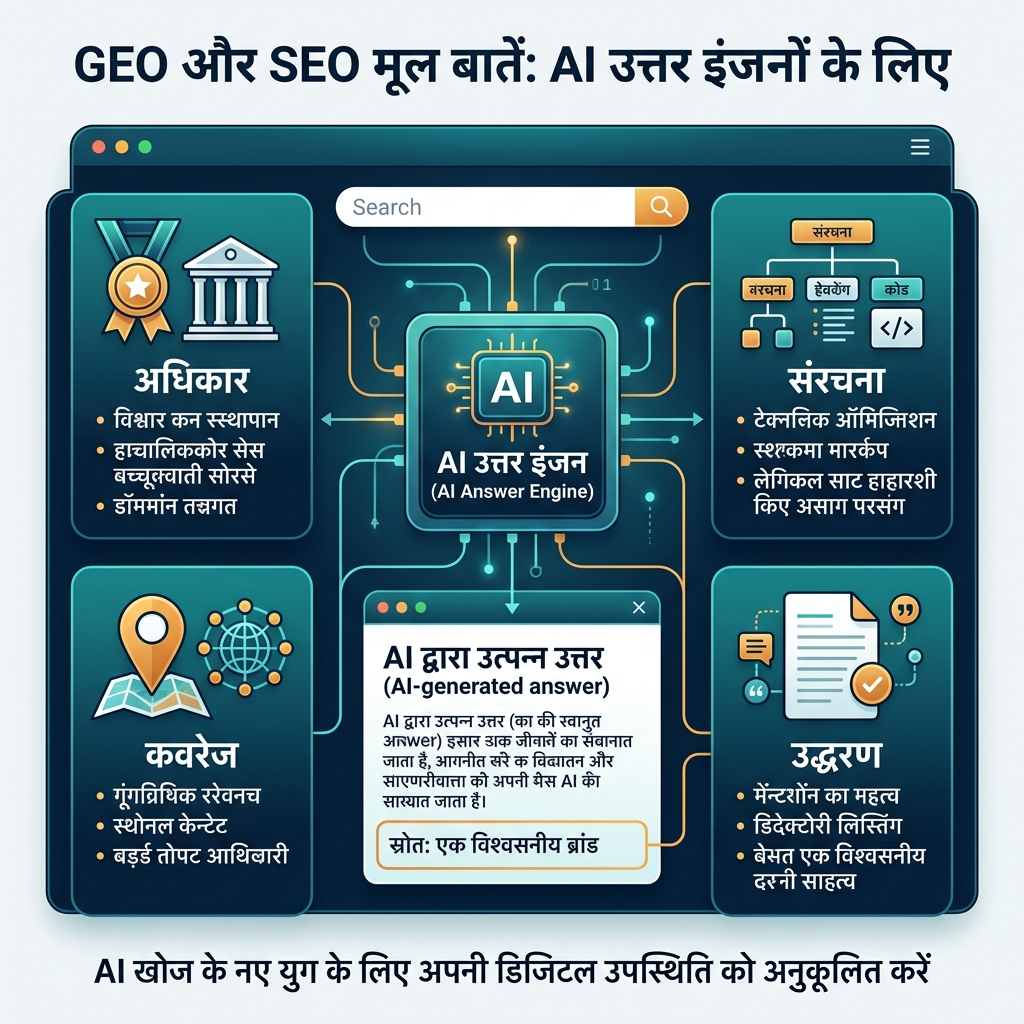
AI models ऐसे content को पसंद करते हैं जिसे वे खोज सकें, parse कर सकें, trust कर सकें और reuse कर सकें। यही GEO, यानी Generative Engine Optimization, का practical starting point है। अगर page crawlers से blocked है, sources के बारे में vague है, marketing copy में दबा है, या केवल एक weak duplicate page पर मौजूद है, तो AI answer system उसे confidence से use नहीं कर पाएगा।
Beginners के लिए pattern simple है:
AI preference | Practice में अर्थ | क्या publish करें |
|---|---|---|
Freshness | जानकारी maintained और current दिखती है | updated guides, dated benchmarks, changelogs, recent examples |
Authority | source credible है, expertise clear है, claims verify हो सकते हैं | original data, expert explanations, cited evidence, transparent methodology |
Repetition | entity facts trusted surfaces पर consistent हैं | consistent brand facts, third-party mentions, profiles, reviews, documentation |
इसका मतलब robots के लिए लिखना नहीं है। इसका मतलब है उपयोगी मानवीय content को retrieval systems के लिए स्पष्ट बनाना। अच्छा GEO content खरीदार के लिए भी साफ पढ़ता है। वह ambiguity हटाता है।
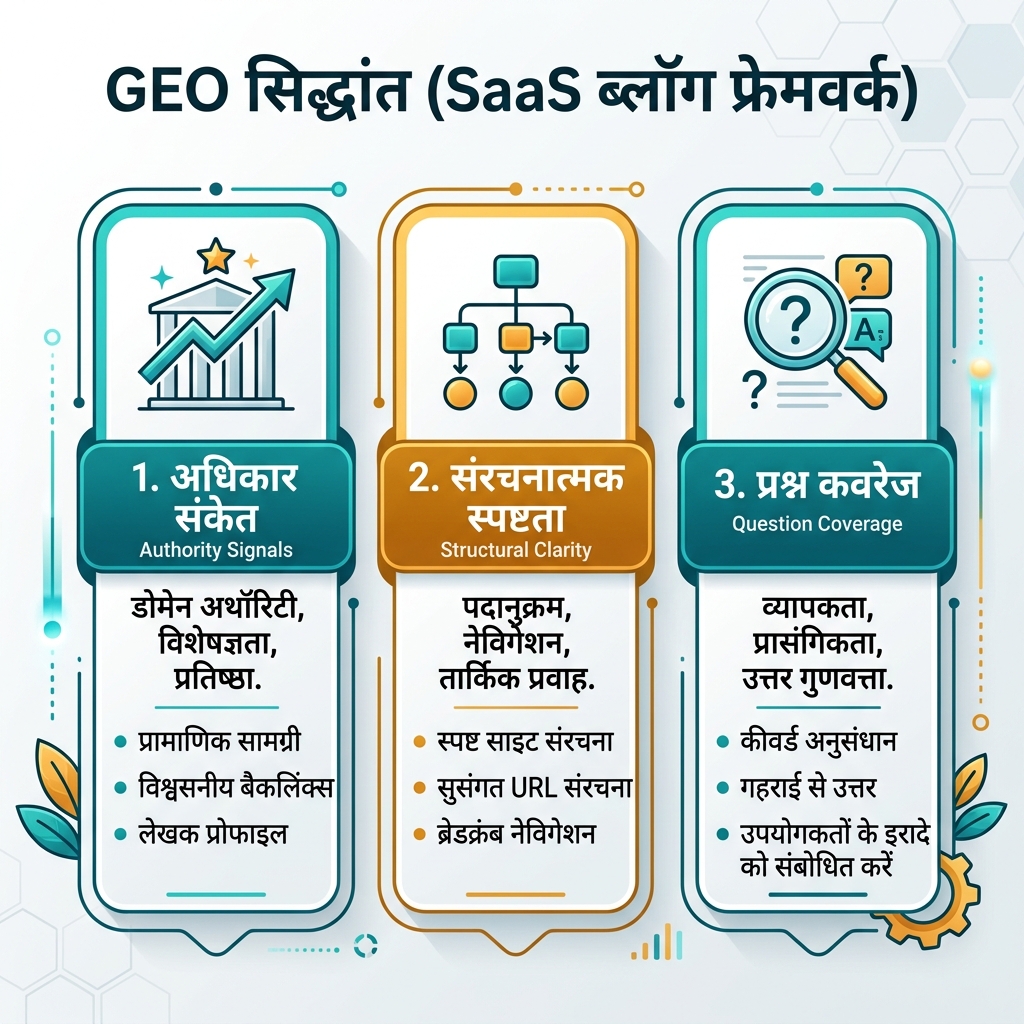
GEO क्या बदलना चाहता है
Traditional SEO पूछता है: क्या हम किसी keyword search पर rank कर सकते हैं? GEO अलग सवाल पूछता है: जब कोई AI system से advice, comparison, shortlist या definition मांगता है, तो क्या system हमें confidently include या cite कर सकता है?
यह फर्क इसलिए महत्वपूर्ण है क्योंकि AI answers research journey को compress कर देते हैं। User ChatGPT, Perplexity, Gemini या Google AI features से recommendation मांग सकता है और दस blue links नहीं खोलेगा। अगर आपका content उन sources में नहीं है जिन्हें systems retrieve, understand और cite कर सकते हैं, तो site visit से पहले visibility खो सकती है।
Pattern 1: AI models fresh और maintained information पसंद करते हैं
Freshness का मतलब केवल date बदलना नहीं है। AI systems को clues चाहिए कि content अभी भी current market, product, policy या workflow को reflect करता है। 2023 का “best AI search tools” page risky है क्योंकि category तेजी से बदलती है। “What is GEO” ज्यादा stable है, पर current examples, current platforms और update notes से बेहतर होता है।
Good freshness signals:
- material update पर visible last updated date.
- active platforms से current examples, पुराने screenshots नहीं.
- product, pricing, policy या benchmark pages के लिए changelog.
- re-tested data, older posts से recycled claims नहीं.
- obsolete advice को clear remove करना.
Beginner example
Weak version: “AI tools search बदल रहे हैं। GEO हर business के लिए important है।”
Better version: “June 2026 में B2B software buyer AI systems से ‘200-person SaaS company के लिए best SOC 2 automation tools’ जैसी shortlist मांग सकता है। GEO-ready page को company size, compliance scope, integrations, pricing model, proof points और limitations directly answer करने चाहिए।”
दूसरी version model को usable context देती है: audience, scenario, category और criteria साफ हैं।
Pattern 2: AI models authoritative और verifiable sources पसंद करते हैं
AI systems बिना समर्थन वाले claim पर सावधान रहते हैं। Page अच्छी तरह लिखा हो सकता है, फिर भी GEO के लिए कमजोर होगा। खासकर जब वह broad claims करे।
Authority signal | क्यों मदद करता है | Example |
|---|---|---|
First-party expertise | direct knowledge दिखाता है | product documentation, engineering notes, implementation guides |
Original data | answer systems को specific citation देता है | survey results, benchmark data, prompt test outcomes |
Named methodology | claim inspectable बनता है | “हमने 5 platforms पर 500 prompts test किए” |
External references | claim को known sources से जोड़ता है | standards, official docs, research papers, industry reports |
Clear authorship | anonymous-content risk घटता है | author role, editorial review, update owner |
यहीं कई beginner GEO programs गलत जाते हैं। वे generic “AI-friendly” articles बनाते हैं, लेकिन evidence collect करना, methods document करना और information source बताना avoid करते हैं। Official platform behavior के लिए primary sources use करें। Google Search Central और OpenAI crawler docs second-hand social posts से बेहतर references हैं।
Pattern 3: AI models repeated और consistent entity facts पसंद करते हैं
एक page मदद करता है, लेकिन अकेला page पूरी picture नहीं बनाता। AI systems web पर patterns से learn और retrieve करते हैं। अगर company description, product category, pricing language, locations, leadership और use cases अलग-अलग profiles पर अलग हैं, तो entity confusion बनता है।
Repeated exposure spam नहीं है। इसका मतलब useful facts उन जगहों पर consistent होना है जहां human भी verify करेगा:
- homepage, about page, product pages, docs और help center.
- review platforms और marketplace profiles.
- partner pages, integrations, case studies, podcasts, webinars और guest articles.
- author pages और expert profiles.
- structured data जहां वह genuinely page content से match करता है.
Beginner के लिए easiest win brand fact sheet है: company description, category, target audience, benefits, proof points, integrations और limitations की canonical version बनाएं, फिर public pages को उससे align करें।
Three-part content test: crawlable, understandable, citable
1. क्या यह crawlable है?
अगर important content blocked है, scripts के पीछे hidden है, interaction के बाद load होता है, या robots rules से excluded है, answer systems उसे use नहीं कर सकते। जांचें:
- search और AI crawlers page access कर सकते हैं?
- main content server-rendered HTML या reliable rendered page में visible है?
- canonical URLs clear हैं?
- snippets और previews जरूरत पर allowed हैं?
- important pages internally linked हैं?
Auspia का Robots.txt AI Crawler Checker इस step में मदद कर सकता है।
2. क्या यह understandable है?
Models explicit structure वाले content के साथ बेहतर काम करते हैं। उन्हें clever intro से पूरा answer infer नहीं करना चाहिए। Use करें:
- top के पास direct definitions.
- short answer blocks.
- comparison tables.
- real questions वाली FAQ sections.
- product specs और limitations.
- schema जब वह page को accurately describe करता है.
3. क्या यह citable है?
Citable content AI answer को reuse करने योग्य precise material देता है। Generic claims cite करना कठिन है; specific facts, tables, steps और measurements आसान हैं।
- “Benchmark ने ChatGPT, Perplexity, Gemini और Google AI Overviews में 1,200 prompts cover किए।”
- “Checklist में robots, rendering, internal links और structured data के 18 crawlability checks हैं।”
- “Product HubSpot, Salesforce, Slack और Google Search Console से integrate करता है।”
AI systems किन content types को reuse कर सकते हैं
Different formats different GEO jobs serve करते हैं। Glossary definitions में मदद करती है। Comparison table recommendations में मदद करती है। Original data citations में मदद करता है।
Content type | श्रेष्ठ उपयोग | सामान्य गलती | बेहतर रूप |
|---|---|---|---|
FAQ | answer extraction | fake questions लिखना | sales, support और search से real सवाल use करें |
Comparison table | shortlist और evaluation prompts | केवल weak alternatives से compare करना | criteria, trade-offs और fit शामिल करें |
Original data | citation earning | methodology बिना numbers publish करना | sample, date, method और limits explain करें |
Product page | recommendation prompts | vague benefits में details छिपाना | audience, integrations, use cases और limits साफ कहें |
Glossary | definitions और entity clarity | thin dictionary entries | examples, related terms और use cases जोड़ें |
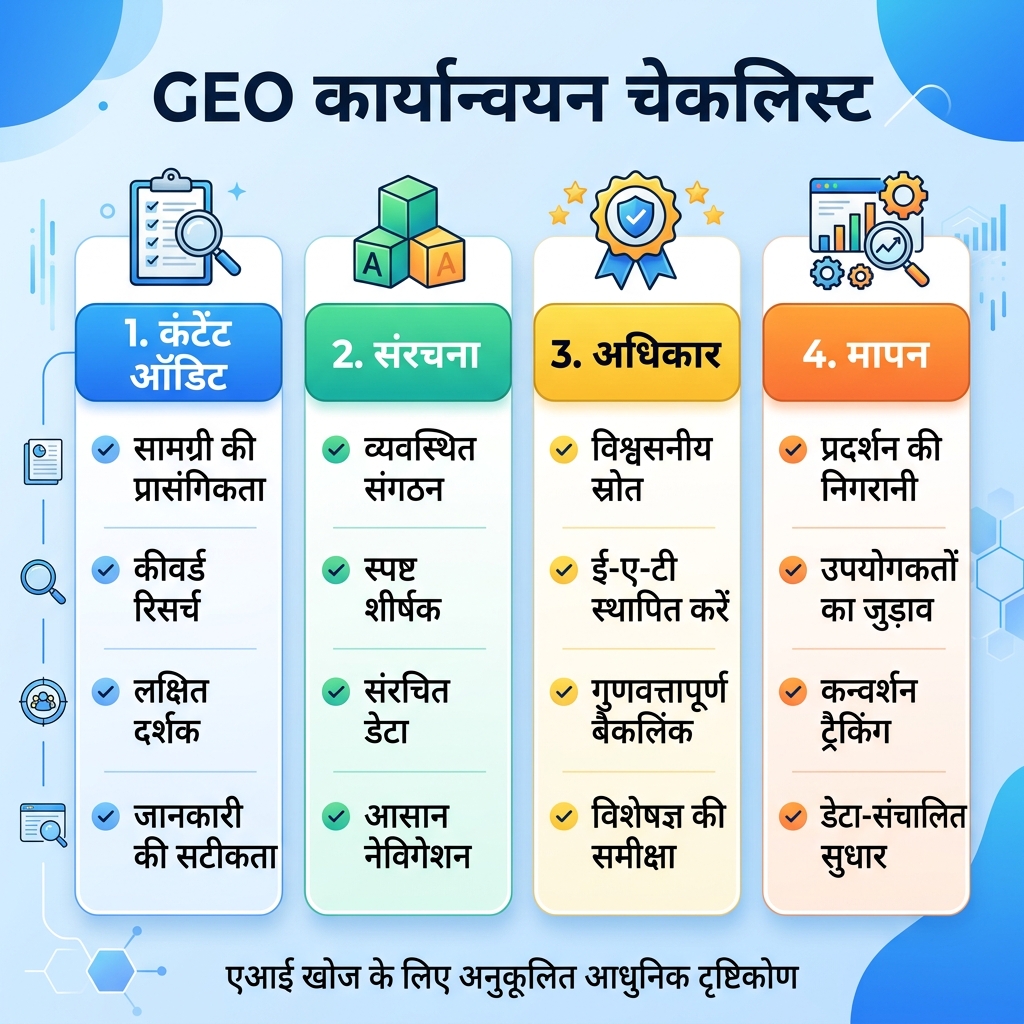
Practical beginner workflow
- एक real prompt cluster चुनें।
- answer criteria map करें: category, audience, pros-cons, evidence, pricing, integrations, limitations.
- पहले 150 words में direct answer दें।
- comparison या checklist जोड़ें।
- proof जोड़ें: examples, screenshots, data या transparent methodology.
- crawlability fix करें: robots, rendering, internal links, canonical.
- entity facts align करें।
- monthly prompts test करें और brand, page या claim appearance record करें।
Ongoing measurement के लिए Auspia AI Search Visibility Checker use करें।
क्या न करें
- volume के लिए thin AI articles mass-publish न करें.
- guaranteed AI recommendations claim न करें.
- unnatural question variants stuff न करें.
- जिन crawlers से retrieval चाहिए उन्हें block न करें.
- fake citations, fake reviews या fake third-party mentions न बनाएं.
- social reposting को source quality का substitute न मानें.
Goal model को trick करना नहीं है। Goal safer, clearer source बनना है।
Quick checklist
- क्या first section main question directly answer करता है?
- क्या page relevant crawlers के लिए accessible है?
- क्या claims examples, data, documentation या reasoning से supported हैं?
- क्या tables, lists और FAQ extractable हैं?
- क्या page बताता है advice किसके लिए है और किसके लिए नहीं?
- क्या product और brand facts web के बाकी हिस्से से consistent हैं?
- क्या market change होने पर update plan है?
- क्या repeatable prompt list से AI answer visibility track हो रही है?
FAQ
Simple terms में GEO क्या है?
GEO content को AI answer systems के लिए discover, understand, trust और cite करना आसान बनाने की practice है। यह SEO से overlap करता है, लेकिन target केवल ranking नहीं; AI-generated answers, summaries, recommendations और citations में inclusion भी है।
क्या GEO SEO को replace करता है?
नहीं। GEO technical SEO, useful content, authority, internal links और स्पष्ट entities पर निर्भर करता है।
पहले कौन सा signal fix करें?
Crawlability और clarity से शुरू करें। अगर system page access या main answer understand नहीं कर सकता, authority और repetition कम काम करते हैं।
क्या बहुत सारी AI-friendly pages publish करनी चाहिए?
केवल तब जब हर page real intent, evidence, structure और specific details दे। Volume without quality thin content बनाता है।
GEO progress कैसे measure करें?
Fixed prompt list रखें। brand और page record करें। sources देखें।