त्वरित उत्तर
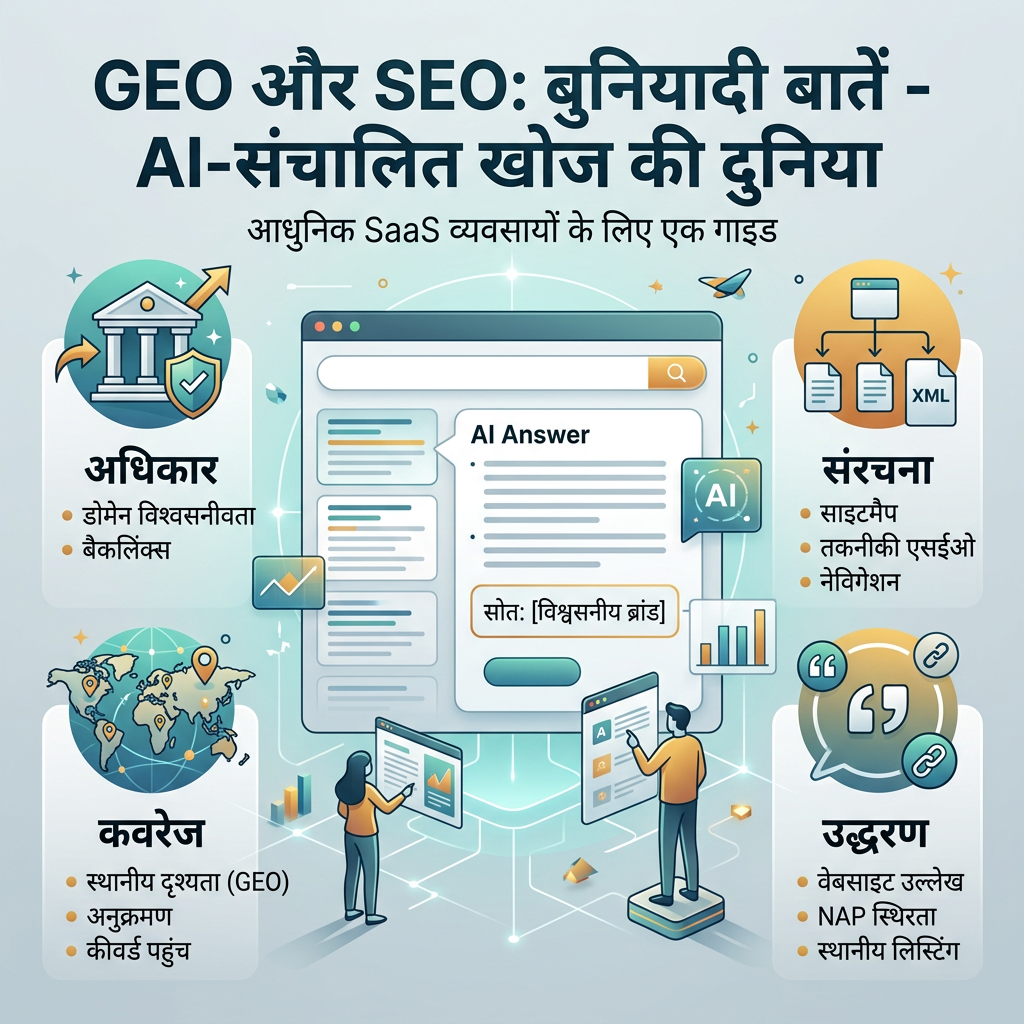
GEO, यानी Generative Engine Optimization, वह काम है जो आपके content को AI answer systems के लिए खोजना, समझना, quote करना और recommend करना आसान बनाता है. SEO अब भी जरूरी है, क्योंकि कई AI systems open web और search indexes से जानकारी लेते हैं. लेकिन GEO एक दूसरी layer जोड़ता है: साफ answer blocks, named sources, structured pages, crawl access, और उन जगहों पर consistent brand evidence जिन्हें AI systems पहले से देखते हैं.
Practical version सरल है. ऐसे pages लिखिए जिन पर इंसान 30 seconds में भरोसा कर सके और retrieval system आपके wording को साफ किए बिना quote कर सके. इसका मतलब है direct conclusions, tables, FAQ, dated evidence, और कम vague claims.
GEO का सरल अर्थ
GEO web content को ChatGPT, Perplexity, Gemini, Claude, Copilot और traditional search engines के अंदर AI search experiences के लिए तैयार करता है. लक्ष्य सिर्फ blue link की ranking नहीं है. लक्ष्य ऐसा source बनना है जिसे answer में खींचा जा सके.
एक आसान analogy: SEO library में shelf position जीतने की कोशिश करता है. GEO librarian को आपका paragraph aloud पढ़ने में comfortable बनाता है.
इससे writing standard बदलता है. “हमारा platform productivity सुधारता है” AI system को reuse करने के लिए बहुत कम देता है. “यह template weekly reporting workflow को आठ manual steps से तीन review steps तक घटाता है” quote, compare और cite करना आसान बनाता है.
SEO और GEO जुड़े हैं, पर समान नहीं
SEO discoverability की foundation है. अगर search engines site crawl नहीं कर सकते, titles कमजोर हैं, या brand credible जगहों पर मुश्किल से mention है, तो GEO के पास बनाने के लिए कम आधार है. लेकिन GEO अलग सवाल पूछता है: क्या AI system इस page से clean answer extract कर सकता है और बता सकता है कि उसने आपको क्यों use किया?
Dimension | Traditional SEO | AI answers के लिए GEO |
|---|---|---|
Primary goal | search results में pages rank करना | generated answers में शामिल होना |
User path | search, links scan, click, read | ask, synthesized answer receive, शायद click |
Content unit | full page और keyword cluster | quotable paragraph, table, FAQ, data point |
Trust signal | links, topical authority, page quality | source clarity, retrievable facts, entity consistency |
आम कमजोरी | कम प्रमाण वाला keyword-heavy content | अच्छा सुनाई देता है पर quote नहीं हो सकता |
GEO को SEO replacement मानना गलती है. यह SEO के ऊपर extraction layer जैसा है. Strong pages को crawlability, internal links, useful headings और search intent coverage चाहिए. उन्हें answer-ready sections भी चाहिए.
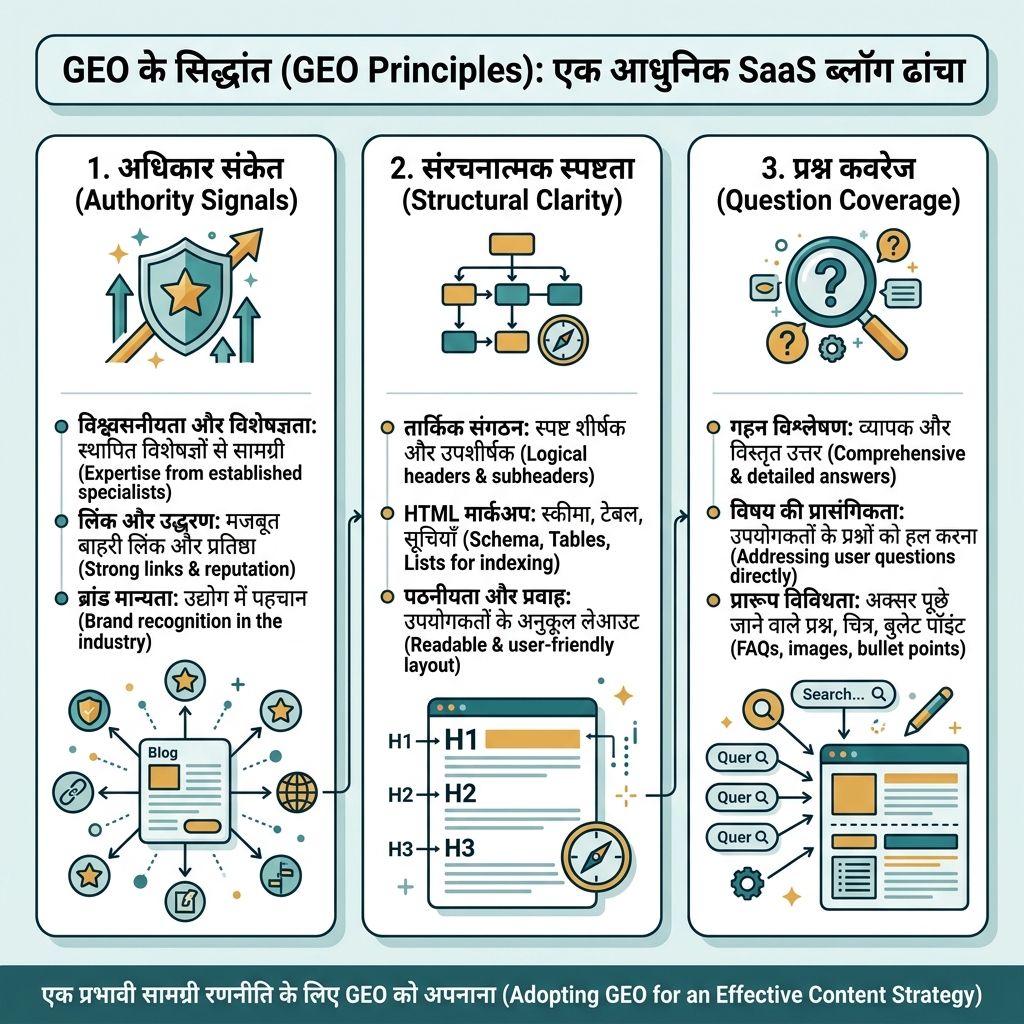
Caption: SEO और GEO की discovery foundation समान है, पर GEO को quotable answer blocks और verifiable evidence signals चाहिए.
AI answer systems कुछ pages क्यों पसंद करते हैं
अधिकांश AI answer workflows retrieval पर depend करते हैं. Architecture product के हिसाब से बदलता है, पर loop familiar है: question interpret करना, likely sources retrieve करना, useful passages select करना, answer assemble करना, और product support करे तो citations attach करना.
यह loop low ambiguity content को reward करता है. B2B SaaS pricing page के लिए useful comparison table में plan limits, support level, security controls, implementation time और ideal customer profile होना चाहिए; packaging बदलते ही table update करें. यह paragraph useful है. “हमारी plans flexible, powerful और modern teams के लिए हैं” marketing fog है.
Trait | कैसा दिखता है | क्यों मदद करता है |
|---|---|---|
Direct answer | पहली sentence question resolve करती है | system clean quote कर सकता है |
Specific entities | products, dates, standards, markets, methods | answer user intent से match होता है |
Source labels | “...के अनुसार”, “हमारे test में”, “जून 2026 में अपडेट” | भरोसा evaluate करना आसान होता है |
Structured layout | tables, steps, checklists, FAQ | passage extraction कम messy होता है |
Consistent wording | वही product names और claims across pages | entity recognition improve होता है |
एक page के लिए practical GEO workflow
एक उच्च-इरादे वाले page से शुरू करें. मूल्य पेज, तुलना पेज, product use-case page या evergreen explainer सामान्य blog post से बेहतर है क्योंकि user intent अधिक स्पष्ट होता है.
Step 1: वह answer चुनें जिसके लिए cite होना चाहते हैं
Working document के top पर target question लिखें. Specific रखें. Weak target: “AI marketing tools.” Better target: “SaaS website AI search answers में visible है या नहीं, यह check करने का best workflow क्या है?”
Step 2: answer block पहले लिखें
Page के top के पास short factual answer रखें. 40 से 80 words aim करें. Category, audience और decision criteria include करें. यह meta description नहीं है. यह reusable answer unit है.
Step 3: claims के पास proof जोड़ें
AI answer systems unsupported claims से सावधान रहते हैं. हर sentence के बाद footnote जरूरी नहीं, लेकिन numbers, benchmarks और recommendations कहाँ से आए यह label करें.
Claim type | Better support |
|---|---|
Market trend | named research report, platform announcement, dated industry data |
Product capability | public documentation, changelog, screenshot, test result |
Performance claim | अपना experiment with method और sample size |
Recommendation | checklist जो बताती है advice कब लागू है और कब नहीं |
Proof नहीं है तो claim soften करें. “यह मदद कर सकता है” “यह AI citations बढ़ाएगा” से अधिक honest है.
Step 4: page को parse करना आसान बनाएं
Headings real questions से match करें. Comparisons matter करें तो tables जोड़ें. Definitions terms के पास रखें. FAQ सिर्फ तब जोड़ें जब questions useful हों, template ने कहा इसलिए नहीं.
एक clean GEO page में direct answer, short definition, comparison table, process या checklist, strong और weak wording examples, technical crawlability note, और plain FAQ हो सकते हैं.
Step 5: technical basics test करें
AI crawlers page access नहीं कर सकते तो writing improvements matter नहीं करेंगे. robots.txt, noindex rules, canonical tags, server rendering, page speed, और key content HTML में दिखता है या नहीं check करें.
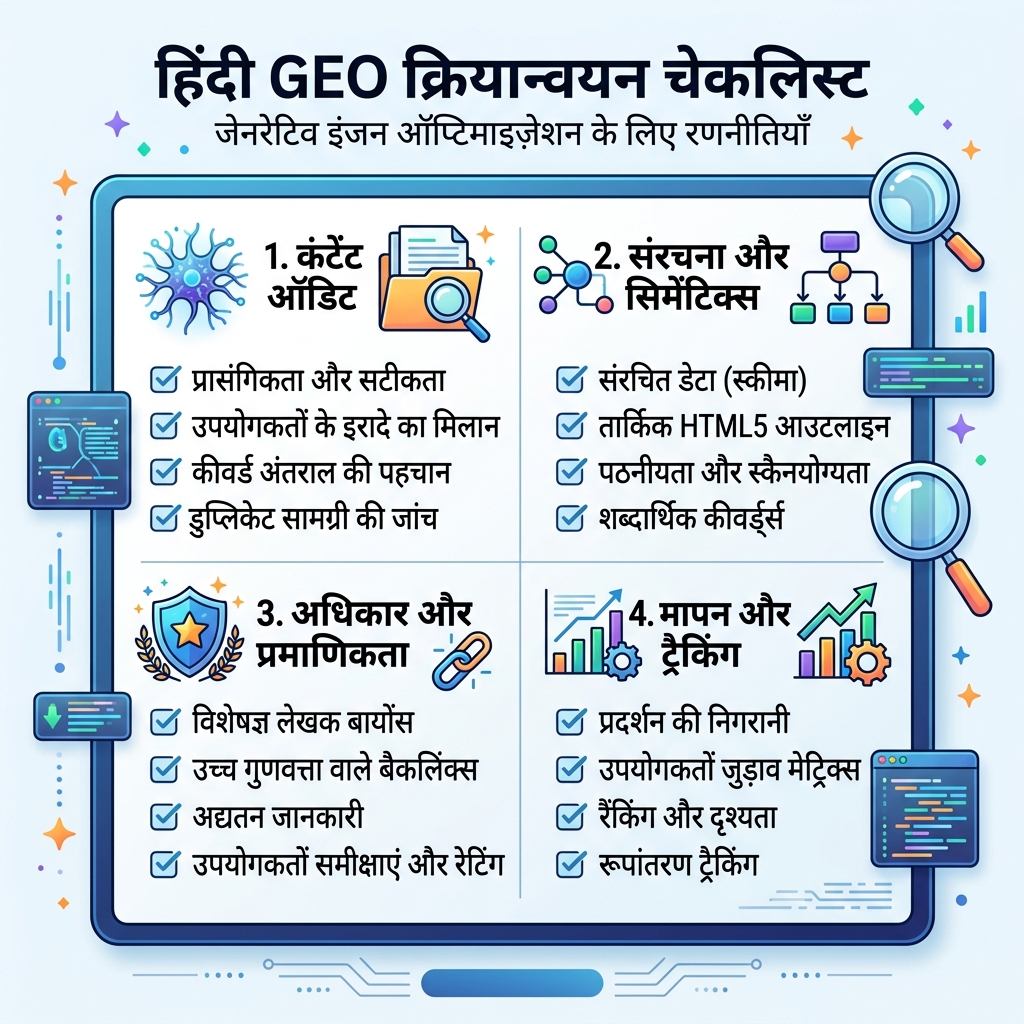
Caption: one-page GEO audit को editorial answer, proof layer और crawler access layer साथ में check करना चाहिए.
Platform strategy: tools नहीं, source ecosystems सोचें
Different AI products अलग source mixes से draw करते हैं. कुछ web search पर भारी depend करते हैं. कुछ licensed content, first-party data, knowledge graphs, user-generated content, documentation, या platform-specific indexes use करते हैं. Recipe बदलती रहती है, इसलिए एक week में एक model के behavior पर GEO plan न बनाएं.
Evidence layer | Examples | GEO job |
|---|---|---|
Owned pages | product pages, docs, blog, glossary, comparisons | clear answer units publish करें और claims current रखें |
Third-party validation | reviews, partner pages, directories, analyst mentions | external proof discover करना आसान बनाएं |
Community discussion | Reddit, Stack Overflow, forums, niche communities | real language सीखें और objections honestly address करें |
Media and research | news, reports, podcasts, webinars | credible references earn करें, केवल backlinks नहीं |
Structured files | sitemap, schema, llms.txt, robots.txt | crawlers को समझाएं कि क्या मौजूद है और क्या allowed है |
Global brands के लिए यह platform-specific hacks copy करने से ज्यादा महत्वपूर्ण है. एक ecosystem के लिए optimized page ecosystem बदलते ही गायब हो सकता है. Consistent owned content और credible third-party evidence वाला brand ignore करना कठिन होता है.
अधिकांश teams क्या गलत करती हैं
सबसे common GEO mistake है real buyer की जगह imaginary AI judge के लिए लिखना. Teams FAQ, schema और “AI-friendly” labels जोड़ती हैं, लेकिन page उन कठिन questions से बचता रहता है जो users decision से पहले पूछते हैं.
Mechanical mistakes भी common हैं: broad explainers बिना quotable answer block; numbers बिना source या date; important content scripts, tabs या images के पीछे; same claim अलग wording में repeat करना; useful crawlers गलती से block करना; और AI mentions को monthly measurement की जगह one-time audit मानना.
कठिन बात यह है कि GEO कमजोर content को उजागर करता है. अगर page में स्पष्ट दृष्टिकोण, प्रमाण और उपयोगी तुलना नहीं है, तो answer engine के पास quote करने के लिए बहुत कम होता है.
सरल GEO checklist
Check | Pass condition |
|---|---|
Search intent | page एक specific user question answer करता है |
Answer block | top section में 40-80 word direct answer है |
Entity clarity | product, category, audience, use case consistently named हैं |
Evidence | important claims के sources, dates, examples या test notes हैं |
Structure | tables, lists और headings extraction आसान बनाते हैं |
Crawl access |
|
Internal links | page 1-2 relevant supporting resources से जुड़ता है |
Refresh plan | owner जानता है facts और examples कब update करने हैं |
Auspia take
GEO magic format नहीं है. यह discipline है जो आपके best knowledge को retrieve करना आसान और quote करना safer बनाता है.
अधिकांश टीमों के लिए सबसे तेज जीत नया सामग्री कैलेंडर नहीं है. पहले से महत्वपूर्ण पेज फिर से लिखें: मुखपृष्ठ, उत्पाद पेज, तुलना पेज, मूल्य पेज और दो या तीन स्थायी व्याख्या पेज. सीधे जवाब ऊपर रखें, धुंधले दावे हटाएं, प्रमाण जोड़ें और जांचें कि AI crawlers सामग्री तक पहुंच सकते हैं या नहीं.
फिर measure करें. हर महीने same prompts run करें. Track करें brand appears या नहीं, कौन से pages या third-party sources cited हैं, और आपकी absence में कौन competitors show होते हैं. GEO repeatable audit बनते ही कम mysterious हो जाता है.
FAQ
क्या GEO SEO को replace कर रहा है?
नहीं. GEO कई SEO basics पर depend करता है: crawlability, page quality, internal links, topical coverage, trustworthy sources. GEO answer extraction, citation readiness और AI visibility measurement जोड़ता है.
GEO-optimized page कितनी लंबी होनी चाहिए?
कोई आदर्श लंबाई नहीं है. पेज इतना लंबा होना चाहिए कि प्रश्न का उत्तर दे सके, प्रमाण दिखा सके और मुख्य आपत्तियों को संभाल सके. स्पष्ट 1,200 शब्दों वाला पेज अक्सर 4,000 शब्दों वाले ऐसे पेज से बेहतर होता है जो जवाब दबा देता है.
क्या GEO के लिए schema markup चाहिए?
Schema search systems को content समझने में मदद कर सकता है, लेकिन vague writing ठीक नहीं करता. इसे support layer मानें. Visible page को अभी भी direct answers, named entities और evidence चाहिए.
क्या हर blog post में FAQ होना चाहिए?
नहीं. FAQ तब जोड़ें जब प्रश्न वास्तविक खोज या खरीदारों के प्रश्नों से मेल खाते हों. सामान्य जवाबों वाले पतले FAQ अव्यवस्था जोड़ते हैं और कमजोर पेज को मजबूत नहीं बनाते.
पहले क्या measure करें?
Branded prompts, category prompts और comparison prompts से शुरू करें. Record करें brand appears या नहीं, site cited है या नहीं, कौन competitor sources cited हैं, और AI answer कौन से claims repeat करता है.