संक्षिप्त संस्करण
स्वतंत्र websites सिर्फ इसलिए traffic नहीं खो रहीं कि उनका SEO खराब हो गया है। बड़ा बदलाव search results page पर हो रहा है: Google AI Overviews, ChatGPT Search, Perplexity, Bing Copilot और दूसरे answer engines अब कई informational searches को सीधे जवाब में बदल रहे हैं।
इसका मतलब यह नहीं कि SEO बेकार हो गया। इसका मतलब है कि SEO आधार है। अगर आपकी साइट धीमी है, कंटेंट पतला है, क्रॉल करना मुश्किल है, या भरोसे के संकेत कमजोर हैं, तो AI सिस्टम के पास उसे उद्धृत करने का कम कारण होगा। GEO, यानी जनरेटिव इंजन ऑप्टिमाइजेशन, अतिरिक्त परत है: कंटेंट को इस तरह व्यवस्थित करना कि AI सिस्टम उत्तर समझ सकें, स्रोत सत्यापित कर सकें, और उपयोगकर्ता के विशेष प्रश्न पर पेज को उद्धृत कर सकें।
Practical शुरुआत simple है: उन पाँच pages को लें जो पहले से सबसे ज्यादा organic traffic ला रहे हैं, उनके key sections को answer-first blocks में rewrite करें, useful FAQ schema जोड़ें, author और evidence signals मजबूत करें, और हर महीने वही queries Google, ChatGPT और Perplexity में test करें।
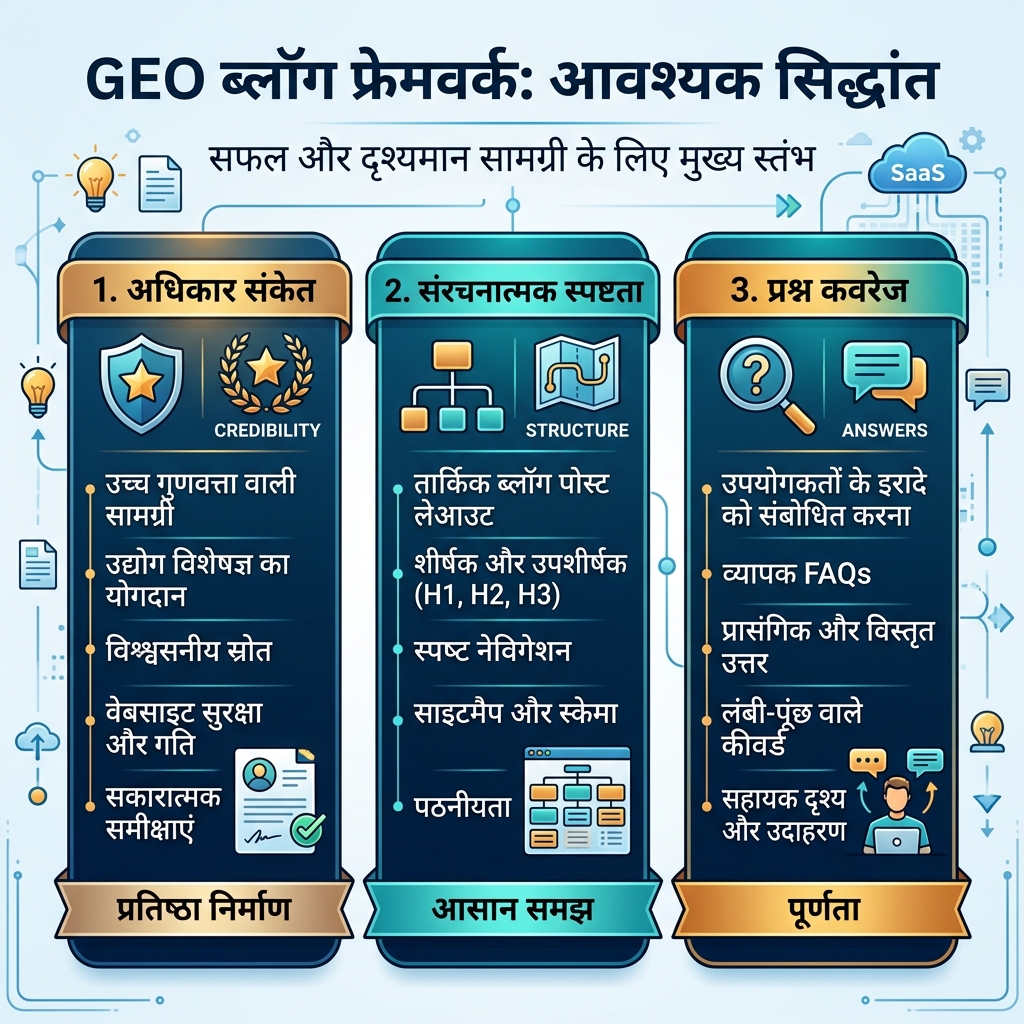
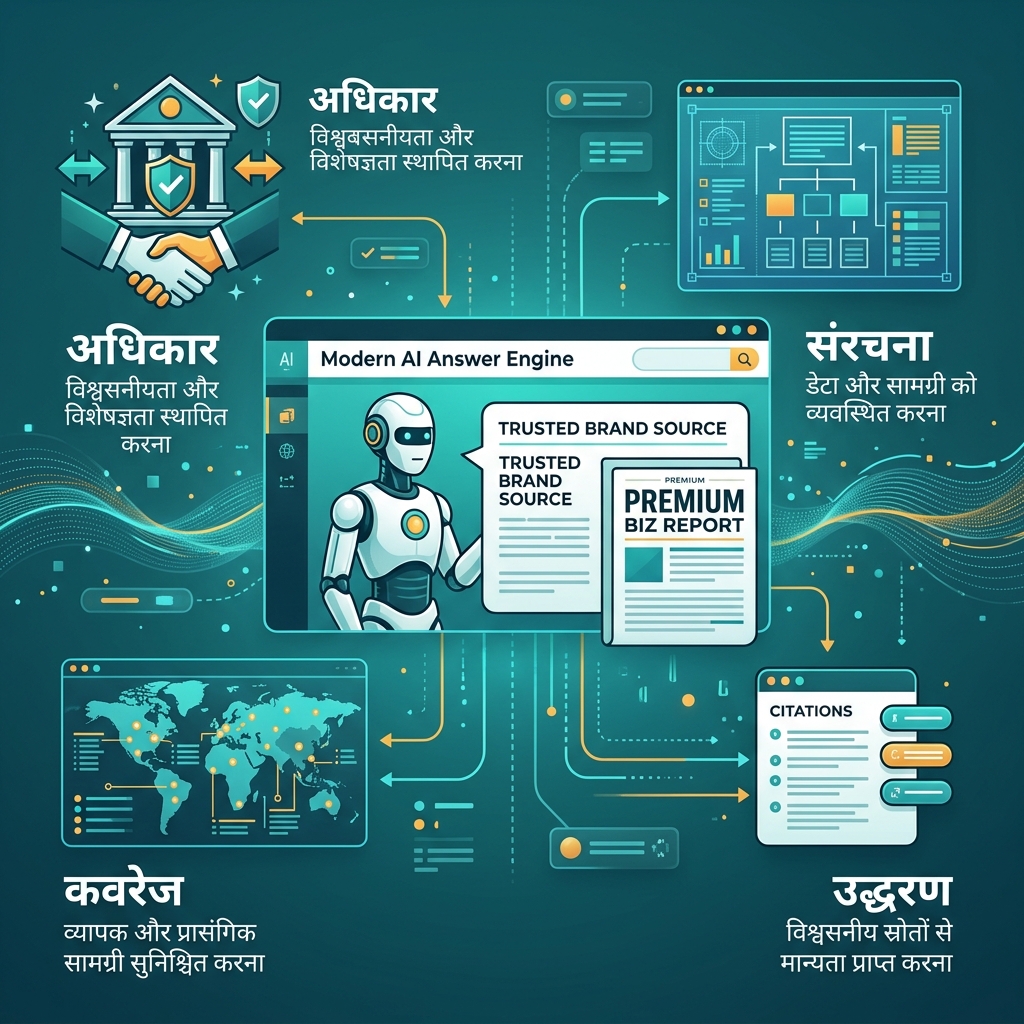
Caption: GEO सबसे अच्छा तब काम करता है जब SEO fundamentals, answer structure, evidence और entity clarity एक-दूसरे को मजबूत करते हैं।
स्वतंत्र sites drop क्यों महसूस कर रही हैं
कई site owners Google Search Console में strange pattern देखते हैं: impressions healthy रहते हैं, rankings collapse नहीं होते, लेकिन clicks गिरते हैं। आम तौर पर इसका मतलब होता है कि user को click करने से पहले ही पर्याप्त जानकारी मिल गई।
Google ने 2024 में Search में AI Overviews roll out करना शुरू किया, और यह feature अब कई users के informational queries experience का हिस्सा बन चुका है। Google ने यह भी कहा है कि AI-powered search experiences में दिखने के लिए sites को special AI-only markup की जरूरत नहीं; crawlability, indexability, structured data और helpful content principles अभी भी matter करते हैं।
तो problem “SEO is dead” नहीं है। Problem यह है कि click अब एकमात्र prize नहीं रहा।
Old model में strong page high rank करके visit कमाने की कोशिश करता था। New model में strong page AI answer के अंदर evidence की तरह भी इस्तेमाल हो सकता है। इससे brand exposure, assisted conversions, branded search और later clicks मिल सकते हैं, भले पहला interaction answer box में हो।
Independent sites, खासकर ecommerce, B2B, niche publishers, SaaS blogs और service businesses के लिए सवाल बदलता है:
“हम इस keyword के लिए rank कैसे करें?”
से:
“क्या answer engine इस page पर इतना trust करेगा कि इसे cite करे?”
SEO अभी भी foundation है
GEO, SEO को replace नहीं करता। यह SEO के ऊपर बैठता है।
Blocked crawlers, poor mobile usability, vague authorship, slow interaction या generic AI-written copy वाला page search rankings और AI citations दोनों के लिए weak candidate है। Google ने March 2024 में First Input Delay की जगह Interaction to Next Paint (INP) को Core Web Vital बनाया। यह useful reminder है: AI-search world में भी technical quality matter करती है।
Clean split यह है:
SEO और GEO अलग questions पूछते हैं:
- क्रॉलयोग्यता: SEO पूछता है कि सर्च इंजन पेज तक पहुँचकर उसे इंडेक्स कर सकते हैं या नहीं। GEO पूछता है कि AI सिस्टम प्रश्न का सटीक उत्तर खंड निकाल सकते हैं या नहीं।
- कंटेंट: SEO पूछता है कि पेज खोज इरादे को पूरा करता है या नहीं। GEO पूछता है कि पेज उत्तर को उद्धृत या सारांशित करने लायक स्पष्ट तरीके से कहता है या नहीं।
- प्राधिकरण: SEO लिंक और गुणवत्ता संकेतों से भरोसा देखता है। GEO प्रमाण, लेखकत्व और एंटिटी स्पष्टता भी देखता है।
- संरचना: SEO स्पष्ट शीर्षक, schema और आंतरिक लिंक को महत्व देता है। GEO को ऐसे प्रश्न, परिभाषाएँ, तुलनाएँ और FAQ चाहिए जिन्हें आसानी से निकाला जा सके।
- मापन: SEO रैंकिंग, क्लिक और रूपांतरण ट्रैक करता है। GEO ब्रांड उल्लेख, उद्धरण और बाद की ब्रांड मांग भी ट्रैक करता है।
Practical lesson: technical SEO fix करना बंद न करें। लेकिन keyword ranking को पूरा game मानना बंद करें।
GEO का सीधा मतलब
GEO का मतलब जनरेटिव इंजन ऑप्टिमाइजेशन है। यह कंटेंट को AI उत्तर सिस्टम के लिए समझना, भरोसा करना, सारांश बनाना और उद्धृत करना आसान बनाने की प्रक्रिया है।
Traditional SEO मुख्य रूप से results list में found होने के बारे में है। GEO generated answer में source चुने जाने के बारे में है।
यह distinction important है क्योंकि AI systems normal searcher की तरह behave नहीं करते। वे concise answers, source credibility, related pages में consistency, structured information, और evidence खोजते हैं कि writer या brand subject को समझता है।
कीवर्ड के आसपास बना पेज रैंक कर सकता है। स्पष्ट उत्तर, विश्वसनीय प्रमाण और अर्थपूर्ण संरचना के आसपास बना पेज उद्धृत होने की ज्यादा संभावना रखता है।
स्वतंत्र sites को अभी क्या करना चाहिए: 5 moves
1. Important pages को answer-first structure में rewrite करें
ज्यादातर blog intros space waste करते हैं। वे warm up करते हैं, market define करते हैं, topic क्यों matter करता है बताते हैं, फिर आखिर में answer देते हैं। AI answer systems human readers से कम patient होते हैं।
हर important H2 या H3 के लिए यह pattern इस्तेमाल करें:
- Heading को question या highly specific statement की तरह लिखें।
- एक या दो plain sentences में answer दें।
- Answer के बाद detail, examples, caveats और product context जोड़ें।
Before:
“Right running shoes चुनना difficult हो सकता है क्योंकि हर runner की needs अलग होती हैं। Purchase से पहले कई factors consider करने होते हैं।”
After:
“Flat feet के लिए कौन से running shoes best हैं? Flat feet वाले runners को आमतौर पर stable shoes चाहिए जिनमें firm midsole support और arch area में पर्याप्त room हो। सही choice अभी भी mileage, body weight, injury history और runner overpronate करता है या नहीं, इस पर depend करती है।”
दूसरा version human skim के लिए आसान है और AI system के लिए extract करना आसान है।
2. जहाँ questions real हैं वहाँ FAQ schema जोड़ें
FAQ schema magic switch नहीं है। Bad FAQs अभी भी bad लगते हैं। लेकिन जब page purchase, comparison, setup, pricing, safety या compatibility questions का answer पहले से देता है, structured data machines को question-answer pairs identify करने में मदद करता है।
FAQ sections के अच्छे places:
- Product pages जहाँ buyers “क्या यह worth it है”, “क्या यह इसके साथ work करता है”, या “यह कितने समय चलता है” पूछते हैं।
- Comparison pages जहाँ users options के बीच direct difference चाहते हैं।
- Service pages जहाँ prospects process, timeline, scope और pricing model पूछते हैं।
- Blog posts जो practical how-to questions answer करते हैं।
Answer short रखें। अगर FAQ answer को long explanation चाहिए, पहले direct answer दें, फिर relevant section link करें।
3. E-E-A-T और entity signals मजबूत करें
AI systems को तय करना होता है कि कौन सा source use करने लायक credible है। इसलिए “यह किसने कहा” layer ज्यादा important हो जाती है।
Independent sites के लिए famous author जरूरी नहीं। Proof जरूरी है।
Add या improve करें:
- Author bios जिनमें real experience, role और contact path हो।
- High-stakes topics के लिए editorial review notes।
- Original photos, product tests, screenshots, benchmarks या customer examples।
- Clear organization information, relevant हो तो address, support channels और policies।
- Same niche के credible third-party sites से mentions या citations।
Authority fake न करें। Real testing notes वाली छोटी site अक्सर polished लेकिन empty copy वाली बड़ी site से ज्यादा trustworthy दिखती है।
4. Isolated articles की जगह topic clusters बनाएं
एक article एक question answer कर सकता है। Topic cluster prove करता है कि site पूरे problem space को समझती है।
उदाहरण के लिए, outdoor gear store को सिर्फ “best tents for beginners” publish नहीं करना चाहिए। वह “beginner camping gear” के आसपास cluster बना सकता है, जिसमें tent sizing, sleeping bag temperature ratings, stove safety, packing checklists, campsite setup और weather mistakes पर pages हों।
Internal links useful लगने चाहिए, mechanical नहीं। अच्छा cluster reader को broad question से specific buying या setup decision तक ले जाता है।
Simple cluster model:
- Pillar page: full topic define करता है और subtopics link करता है। Example: beginner camping gear guide।
- Comparison pages: users को options में choose करने में मदद करते हैं। Example: down vs synthetic sleeping bags।
- Problem pages: specific pain points answer करते हैं। Example: tent में warm कैसे रहें।
- Product pages: demand को action में convert करते हैं। Example: lightweight two-person tents।
- FAQ पेज: लंबी पूँछ वाले प्रश्न पकड़ते हैं। उदाहरण: दो लोगों को किस आकार के टेंट की जरूरत है?
यह structure search engines, answer engines और users को समझने में मदद करता है कि आपकी site किस चीज़ के लिए known है।
5. Click गायब होने से पहले traffic diversify करें
जो site केवल generic Google clicks पर depend करती है, वह fragile है। GEO AI visibility improve कर सकता है, लेकिन zero-click search का अकेला response नहीं होना चाहिए।
ऐसे traffic assets बनाएं जिन्हें आप control या influence कर सकें:
- Returning visitors और product launches के लिए email lists।
- Useful tools, reports और memorable POVs के जरिए brand search।
- जहाँ buyers पहले से time spend करते हैं वहाँ social distribution।
- Community mentions, review platforms, partner pages और industry directories।
- Problem, comparison और recommendation queries के लिए AI-search visibility।
यहीं Auspia का AI Search Visibility Checker जैसे tools मदद कर सकते हैं। Point एक prompt पर obsess करना नहीं है। Point यह देखना है कि real buyers जहाँ questions पूछते हैं, वहाँ आपका brand दिखता है या नहीं।
तीन GEO mistakes जो चुपचाप time waste करती हैं
Mistake 1: ज्यादा proof जोड़े बिना ज्यादा content publish करना
कई teams AI search का जवाब अधिक articles बनाकर देती हैं। यह easiest move है और अक्सर least useful भी।
Thin content की दो problems हैं। यह rare ही strong rankings earn करता है, और AI systems को page cite करने का कम reason देता है। अगर post में original example, data, clear author, comparison और practical answer नहीं है, तो दस और versions publish करना issue fix नहीं करता।
बेहतर नियम: दस औसत पेज जोड़ने से पहले एक महत्वपूर्ण पेज को उद्धरण-योग्य बनने तक अपडेट करें।
Mistake 2: GEO को technical markup project मानना
Schema मदद करता है। Clean HTML मदद करता है। Fast pages मदद करते हैं। लेकिन GEO केवल developer task नहीं है।
Content को कुछ useful कहना चाहिए। उसे ऐसा answer चाहिए जो standalone हो, claim के पीछे evidence हो, और generic लगने से बचाने के लिए enough context हो। अगर page vague है, JSON-LD सिर्फ vague page को parse करना आसान बनाता है।
Mistake 3: यह मान लेना कि niche sites cite होने के लिए बहुत छोटी हैं
Niche sites के पास advantage हो सकता है। Answer engines को narrow questions के लिए specific sources चाहिए होते हैं, और broad publishers हर product, part, use case या local service को depth में cover नहीं करते।
Marine hardware, ergonomic tools, lab equipment, pet supplements या specialist software बेचने वाली छोटी site AI systems के लिए useful हो सकती है क्योंकि information specific है। Opportunity volume नहीं है। यह narrow slice में authority है।
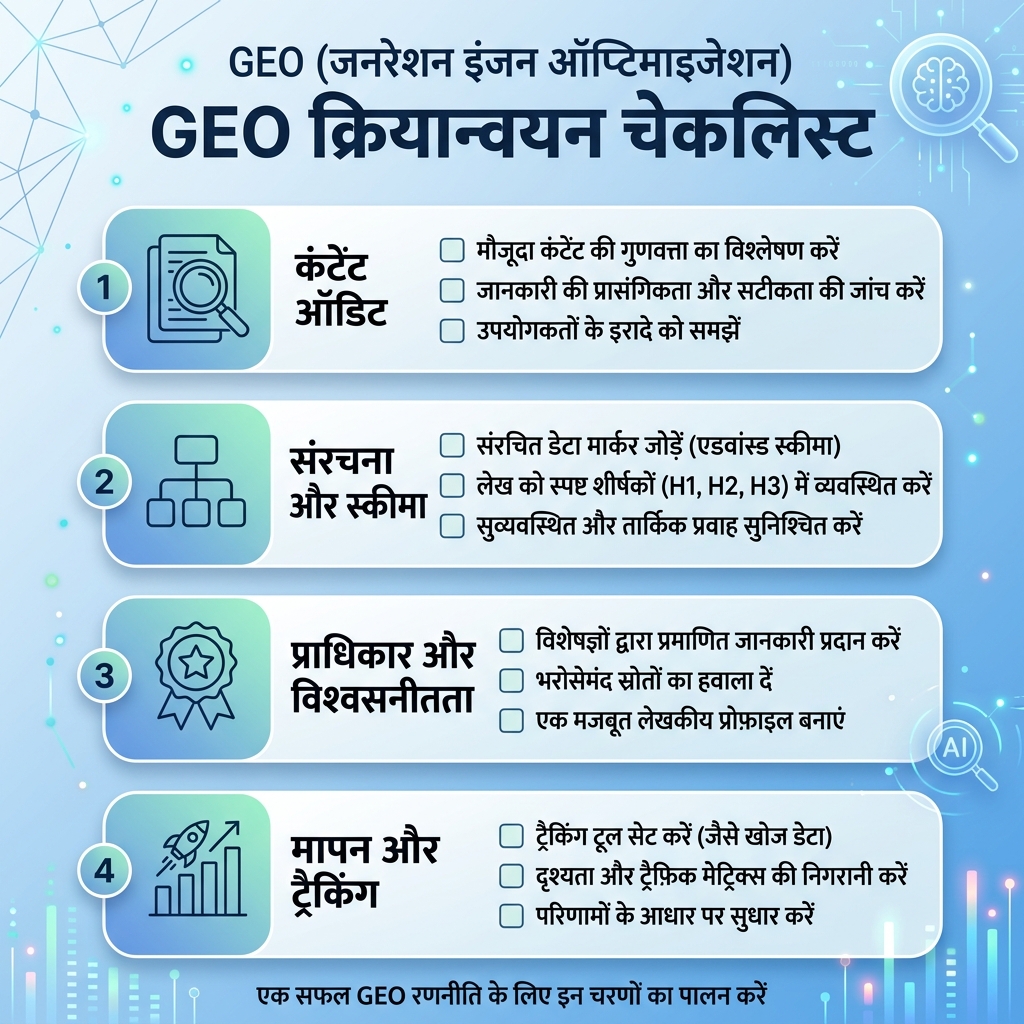
Caption: AI citations chase करने से पहले audit करें कि page fast, clear, structured, credible, connected और answer engines में visible है या नहीं।
GEO कैसे measure करें बिना खुद को धोखा दिए
GEO measurement अभी भी messy है। Google AI Overviews, ChatGPT, Perplexity, Claude, Bing Copilot और दूसरे answer systems को cover करने वाला कोई single dashboard पूरी कहानी नहीं बताता।
इसके बजाय simple monthly routine use करें।
AI answers manually check करें
20 से 50 high-intent queries चुनें। Problem queries, comparison queries, recommendation queries और branded alternatives शामिल करें। इन्हें Google, ChatGPT, Perplexity और Bing Copilot में search करें।
Record करें:
- क्या आपका brand mention हुआ?
- क्या आपका page cited या linked हुआ?
- कौन सा competitor बदले में appeared हुआ?
- AI ने किस type के source को prefer किया?
- कौन सा claim या section use हुआ?
यह perfect science नहीं है, लेकिन जल्दी दिखाता है कि आपका content conversation से कहाँ missing है।
Falling CTR वाले rankings खोजें
Google Search Console में उन pages या queries को filter करें जहाँ impressions और average position काफी stable हैं लेकिन click-through rate गिर रहा है। ये queries AI answers, featured snippets, ads, shopping modules या दूसरे SERP features से प्रभावित हो सकती हैं।
हर CTR drop को AI Overviews के कारण मत मानें। इसे live result page inspect करने का signal मानें।
Branded search और assisted demand track करें
AI visibility हमेशा immediate click नहीं बनाती। कभी user answer में आपका brand देखता है, फिर बाद में brand search करता है, direct visit करता है, या दूसरे channel से convert होता है।
Track करें:
- Branded search impressions।
- Important pages पर direct traffic।
- Returning visitors।
- Assisted conversions।
- Referral traffic, communities, newsletters और comparison sites में mentions।
GEO partly visibility discipline है। इसे last-click organic sessions से आगे measurement चाहिए।
30-day GEO action plan
अगर कुछ और न करें, तो यह four-week sprint चलाएँ।
- Week 1: declining CTR या strategic value वाले five high-impression pages खोजें। Output: priority page list।
- Week 2: हर page के main sections को answer-first blocks में rewrite करें। Output: clear quotable answers।
- Week 3: real FAQs, FAQ schema, author proof, source notes और internal links जोड़ें। Output: stronger trust और structure।
- Week 4: target queries को Google, ChatGPT, Perplexity और Bing Copilot में test करें। Output: AI visibility baseline।
अगर faster technical baseline चाहिए, तो पहले crawlability और AI-readiness check run करें। Auspia के SEO/GEO/AEO tools इसी first-pass audit के लिए बनाए गए हैं।
Auspia की राय
इसे SEO versus GEO की तरह frame करना mistake है। यह debate time waste करती है।
SEO अभी भी pages को discoverable, credible और technically accessible बनाता है। GEO उन्हीं pages को AI answers में evidence की तरह usable बनाता है। एक दूसरे के बिना कमजोर है।
Independent sites को panic नहीं करना चाहिए, लेकिन move करना चाहिए। अगला advantage उन teams को मिलेगा जो तीन चीज़ें combine कर सकें: technically healthy pages, specific human expertise, और ऐसा content जिसे answer engines सच में use कर सकें।
काम glamorous नहीं है। Answer rewrite करें। Proof add करें। Entity clarify करें। Cluster connect करें। Prompts check करें। अगले महीने repeat करें।
यही नया operating rhythm है।
FAQ
क्या GEO, SEO को replace कर रहा है?
नहीं। GEO, SEO पर build करता है। Search engines और AI answer systems को अभी भी crawlable, useful, trustworthy pages चाहिए। GEO answer-first structure, stronger evidence, entity clarity और AI-visibility testing जोड़ता है।
क्या ecommerce sites को GEO care करना चाहिए?
हाँ। कई खरीदार स्टोर पर जाने से पहले AI सिस्टम से तुलना, सिफारिश, सेटअप सलाह और “क्या यह खरीदने लायक है” जैसे प्रश्न पूछते हैं। उत्पाद पेज, खरीद गाइड, तुलना पेज और FAQ खंड अच्छे शुरुआती बिंदु हैं।
क्या FAQ schema AI Overview visibility guarantee करता है?
नहीं। FAQ schema machines को question-answer pairs identify करने में मदद करता है, लेकिन Google AI Overviews या किसी भी AI answer system में inclusion guarantee नहीं करता। Page को अभी भी useful content, technical quality और trust signals चाहिए।
Team को AI search visibility कितनी बार check करनी चाहिए?
Monthly अच्छा starting cadence है। कई answer engines में fixed commercial और informational queries set check करें, फिर mentions, citations, competitors और answer wording को time के साथ compare करें।
GEO के लिए पहला page कौन सा optimize करें?
ऐसे page से शुरू करें जिसके पास पहले से search impressions, commercial value और clear query pattern हो। Search engines जिसे पहले से समझते हैं, उसे improve करना zero visibility page से शुरू करने से आसान है।
स्रोत और आगे पढ़ें
- Google Search Central: खोज में AI सुविधाएँ और आपकी वेबसाइट: https://developers.google.com/search/docs/fundamentals/ai-search
- Google: मई 2024 में AI Overviews की घोषणा: https://blog.google/products/search/generative-ai-google-search-may-2024/
- Google Search Central: INP को Core Web Vital के रूप में लागू करना: https://developers.google.com/search/blog/2023/05/introducing-inp