A trend that is three days old is worth more than a keyword that has been competitive for three years. The window where a topic is being searched but not yet well covered is short, and it is where a small team can still win an AI citation.
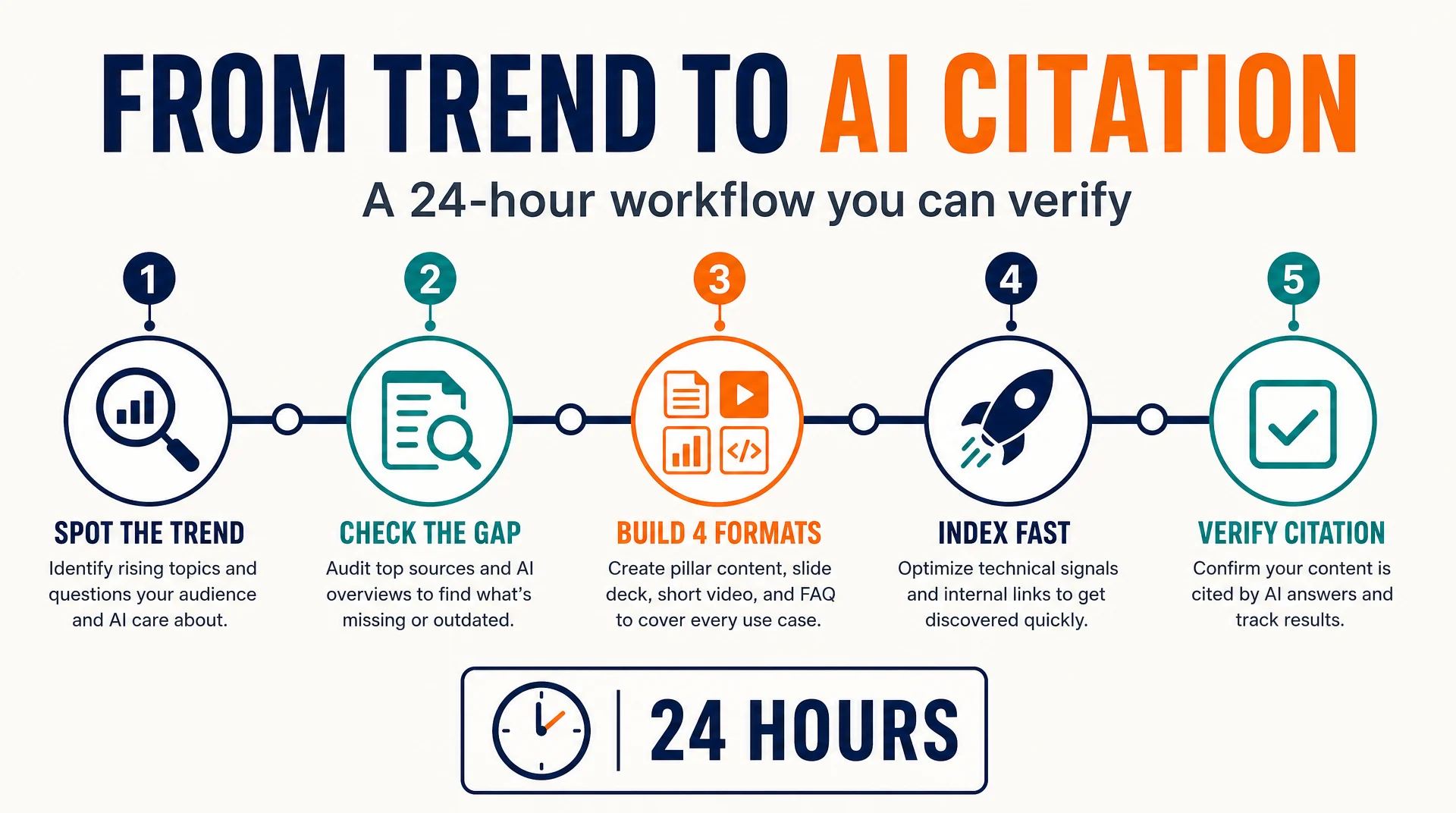
This guide builds a Grok Bot workflow that catches that window. It ends with a verification step, because a citation you did not check is a citation you do not have.
Who this is for: a content or SEO lead who can publish quickly and wants to test the fresh-topic window.
What you finish with: a Bot that surfaces fresh topics, checks the coverage gap, produces a four-format brief, and verifies whether AI answers cite you the next day.
Before you start: a Grok Bot with access, a site you can publish to quickly, and a way to request indexing. Budget about 90 minutes for the build and 24 hours for the test.
Done means: you have one verified citation, or one documented miss with the reason. Both are useful results.
The idea in one paragraph
Fresh topics get cited because there is nothing else to cite. When a new tool, model, or comparison appears, answer engines need sources and there are few. A site that publishes a clear, specific page within days becomes one of the few options. The advantage decays fast, so the workflow is built around speed and verification rather than volume.
A well-known SEO operator demonstrated this publicly by finding a keyword trending on X that was only days old, publishing across four formats, indexing immediately, and reporting that Grok cited his site twice within 24 hours. He sells an SOP for the play, so treat the specific outcome as self-reported. The mechanism is what matters, and it is testable on your own site.
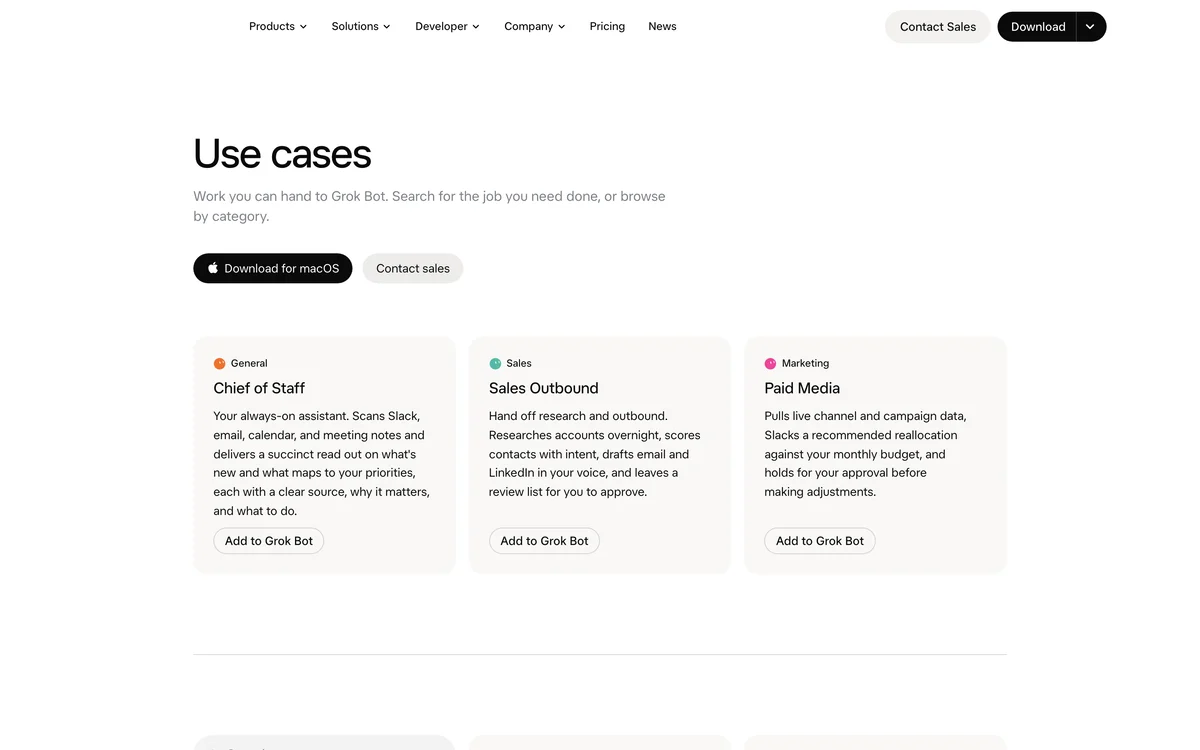
The workflow runs on a persistent Bot that can watch for fresh topics and check the live SERP. Source: x.ai/bot, captured September 23, 2026.
Step 1: Build the trend watcher
Create a Bot named Trend Watcher. Its only job is to surface fresh topics in your niche. Do not let it write anything yet.
ROLE
Trend watcher for [YOUR NICHE].

INPUTS
- Watchlist of 10 to 20 accounts, subreddits, and news sources in the niche.
- My site's topic list: [PASTE 10 CORE TOPICS]

WHAT TO FIND
Topics that are:
- Less than 7 days old, based on the earliest dated mention you can find
- Directly related to at least one of my core topics
- Being discussed by more than one independent source

THRESHOLDS
- Flag a topic only if you can find at least two independent mentions.
- Flag a topic only if the earliest mention is within the last 7 days.
- Report the earliest mention date and its URL.

EXCEPTIONS
- Ignore topics that are pure speculation with no product, event, or release behind them.
- Ignore topics I have already published about; check my topic list first.

PROOF
- For every topic, give the earliest dated mention with a URL.
- Give the two independent sources that confirm it is spreading.
- Never estimate a date. If you cannot find one, say so.

OUTPUT
A table: Topic | Earliest mention date | Source 1 | Source 2 | Related core topic | Why it matters.

BOUNDARIES
- Read-only. Do not write, publish, or post anything.
Expected output: a table of candidate topics with dates and sources.
Quality check: open the earliest mention URL and confirm the date. If the Bot's date is wrong, the whole workflow is built on sand.
Recovery: if the table is empty, widen the watchlist. If it is full of old topics, the 7-day threshold is not being applied; restate it as a hard rule.
Step 2: Check the coverage gap before you write
A fresh topic is only an opportunity if the coverage is thin. Ask the Bot to check.
For each topic in the table, open Google and search the exact topic phrase.

Record:
- How many results on page one are specifically about this topic
- Whether any result is a dedicated comparison, explainer, or teardown
- Whether any result is from a major site or only from small blogs

Then rank the topics by how thin the coverage is.
Expected output: a ranked list with a coverage count per topic.
Quality check: if a topic already has three dedicated pages from established sites, it is not a gap. Drop it.
Recovery: if every topic looks covered, the trend is already too old. Wait for the next one rather than competing on a crowded term.
Step 3: Build the four-format brief
The four-format approach is the part worth copying. Different formats compete for different slots, so one topic can occupy more than one surface.
For the top topic, produce four briefs:

1. A blog post: a direct explainer or comparison, 800 to 1,200 words, with a clear answer in the first 100 words.
2. A comparison page on a second property I own, if available, targeting the "X vs Y" phrasing.
3. A short video script: 60 to 90 seconds, one clear claim, no filler intro.
4. A discussion post: a genuine question or finding for a relevant community, not a link drop.

For each brief, give: target phrase, the exact angle, the three points to cover, and what would make it different from the existing results.
Expected output: four briefs with distinct angles.
Quality check: each brief targets a different phrasing. If all four target the same phrase, they will compete with each other instead of covering more surface.
Recovery: if the Bot produces four near-identical briefs, ask it to name the search phrasing each one targets before it writes anything.
Step 4: Publish and index fast
Speed is the whole point. Publish the blog post and comparison page first, then request indexing.
Publish the blog post and comparison page.
Then submit both URLs for indexing.
Report the publish timestamp for each.
Expected output: two live URLs with timestamps.
Quality check: both pages return 200 and render correctly. A page that is live but broken will not be cited.
Recovery: if indexing fails, check that the pages are not blocked by robots.txt and that they appear in your sitemap.
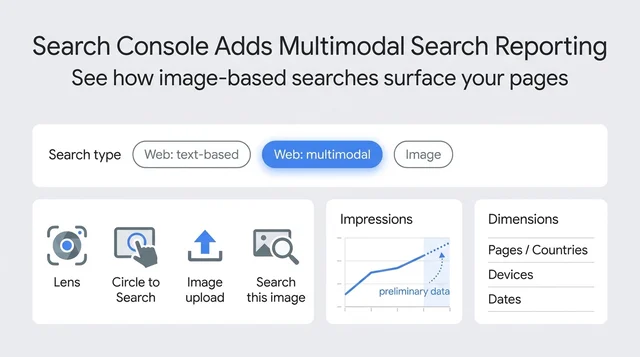
For a faster first read on whether the pages are technically ready to be cited, run the AI Search Visibility Checker before you publish.
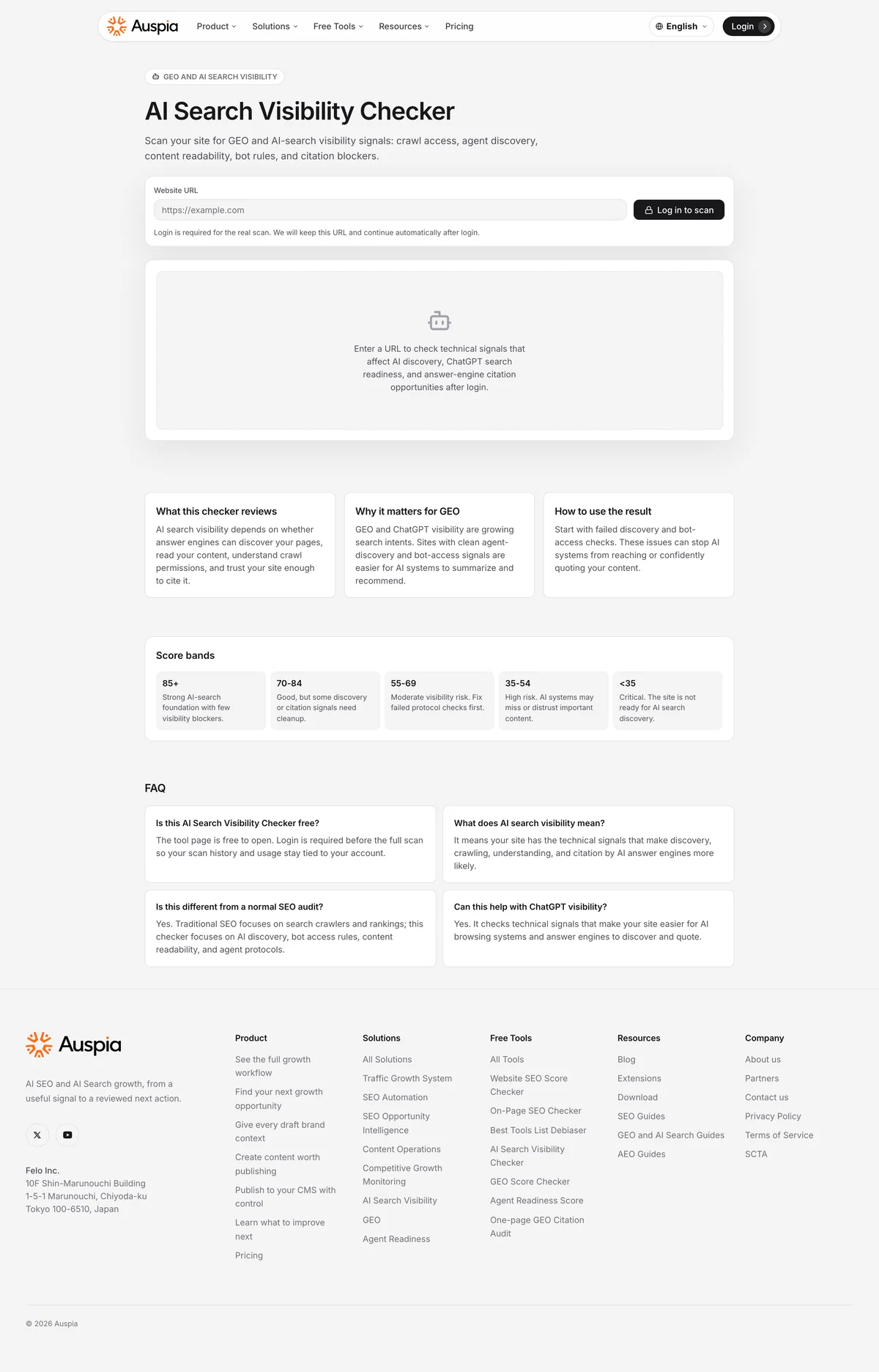
A pre-publish readiness check catches the technical problems that stop a page from being cited. Source: auspia.ai/tools/ai-search-visibility-checker, captured September 23, 2026.
Step 5: Verify the citation (the step most guides skip)
This is where most guides stop, and it is the step that turns a tactic into a test.
Wait 24 hours, then ask the Bot to check whether AI answers cite you.
24 hours after publishing, check these surfaces for the target phrase:
- Grok
- ChatGPT
- Perplexity
- Google AI Overviews

For each surface, record:
1. Did the answer mention my brand or domain? yes / no
2. Did it cite my URL? yes / no
3. Which sources did it cite? list the domains
4. Quote the exact sentence where I appear, if any

Do not infer a citation from a mention, or a mention from a citation.
If a surface is not accessible, record "not accessible".
Expected output: a citation log with one row per surface.
Quality check: open each cited URL and confirm the quote appears. If you cannot find the quote, the row is wrong.
Recovery: if nothing cites you after 24 hours, that is a result, not a failure. Record it and check again at 72 hours. Fresh-topic citations sometimes lag.
Step 6: Decide what to repeat
After a few runs you will know which formats earn citations in your niche. That is the real output of this workflow: not one citation, but a pattern.
What you learned | What to change next time |
|---|---|
Blog post cited, comparison not | Put more effort into the primary explainer |
Cited at 72 hours, not 24 | Widen your verification window |
No citation, but strong Google ranking | The topic is better for search than for AI answers |
Citation from a competitor's page | Your page was not specific enough; sharpen the angle |
Verification checklist
- [ ] The trend is genuinely less than 7 days old, with two independent sources.
- [ ] You confirmed the coverage gap before writing.
- [ ] Four briefs target four different phrasings.
- [ ] Both pages return 200 and render correctly.
- [ ] You requested indexing on the same day you published.
- [ ] You checked all four AI surfaces at 24 hours.
- [ ] Every citation row has a quote you verified by hand.
- [ ] You recorded the result whether it was a hit or a miss.
Common mistakes
Writing before checking the gap. A fresh topic with three established pages is not an opportunity. Check first.
Publishing one format. One page competes for one slot. Four formats compete for four.
Skipping verification. If you do not check whether you were cited, you learned nothing and you cannot repeat what worked.
Inferring a citation from a mention. They are different signals. Keep them in separate columns.
Waiting a week to publish. The advantage is measured in days. A perfect post published late loses to a good post published fast.
FAQ
How fresh does a topic need to be? Under a week, and ideally under three days. The window closes as coverage fills in.
Do I need a second website for the comparison page? No. If you only have one site, publish the explainer and the comparison as separate pages on the same domain, targeting different phrasings.
What if I get no citation? Record it and check again at 72 hours. A miss with a documented reason is still a useful result, because it tells you which topics are better for search than for AI answers.
Is the 24-hour claim real? It is a self-reported result from an operator who sells a course on the play. The mechanism is sound and testable. Run it on your own site rather than taking the number on faith.
How often should I run this? Once a week at most. Fresh-topic windows are not daily events, and forcing the workflow produces low-quality pages.
Author: Isabel Grant, Researcher of 2,000+ AI Citation Patterns at Auspia. Isabel writes about citation earning, source quality, and how retrieval systems choose which pages to reference.