

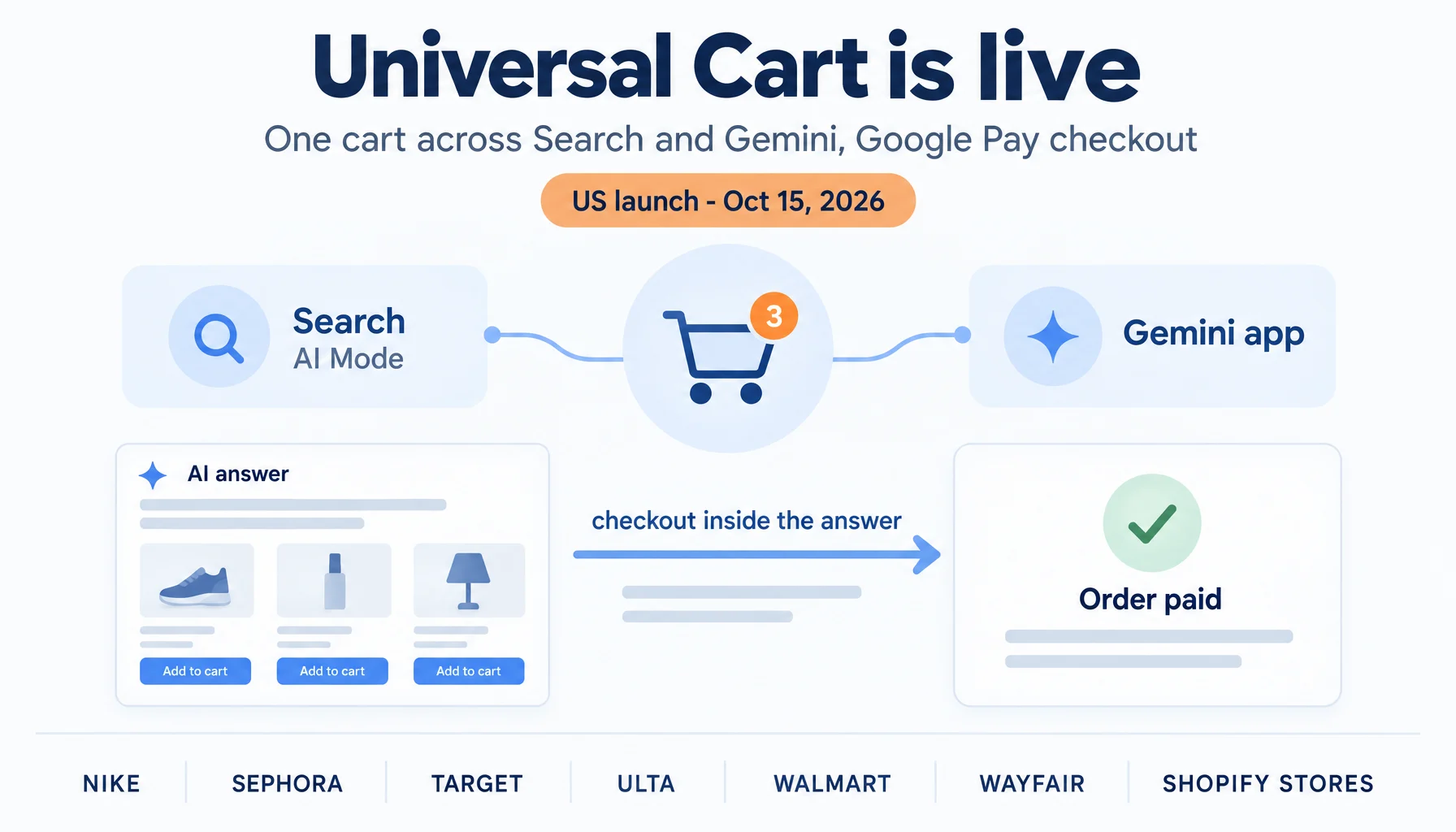
Google's Universal Cart went live in the United States on October 15, 2026, per Google's announcement and TechCrunch's launch coverage. US shoppers can now save products from multiple retailers into a single cart that travels across Google Search (including AI Mode) and the Gemini app, then check out with Google Pay in a few taps. Nike, Sephora, Target, Ulta Beauty, Walmart, Wayfair, and a wave of Shopify merchants, including Fenty and Steve Madden, are in the first wave. The timing is deliberate: Google positioned the launch around holiday shopping, four days into Q4.
The part that matters most for anyone who earns traffic: checkout now happens inside the answer. A shopper can go from an AI Mode question to a paid order without ever visiting a retailer's website.
What the Universal Cart actually does
The flow inside Google works like this:
- Discover. A shopper researches in AI Mode in Search or chats in the Gemini app. Eligible product listings appear with an option to save to the universal cart.
- Save across retailers. Items from different merchants land in one cart. Inside the cart, products are organized by merchant, so a Nike order never blends into a Sephora order.
- Check out two ways. Shoppers can pay directly in the cart with Google Pay, using payment methods and shipping details already stored in Google Wallet. Or they can transfer items to the merchant's own site and complete the purchase there.
- Get savings help. The cart surfaces relevant promo codes for items in it and suggests which saved payment method fits best, based on card perks, per Google's Gemini Apps Help documentation. The shopper still confirms the final payment.
- Track after purchase. Merchants may share fulfillment information back, so order tracking appears alongside the cart.
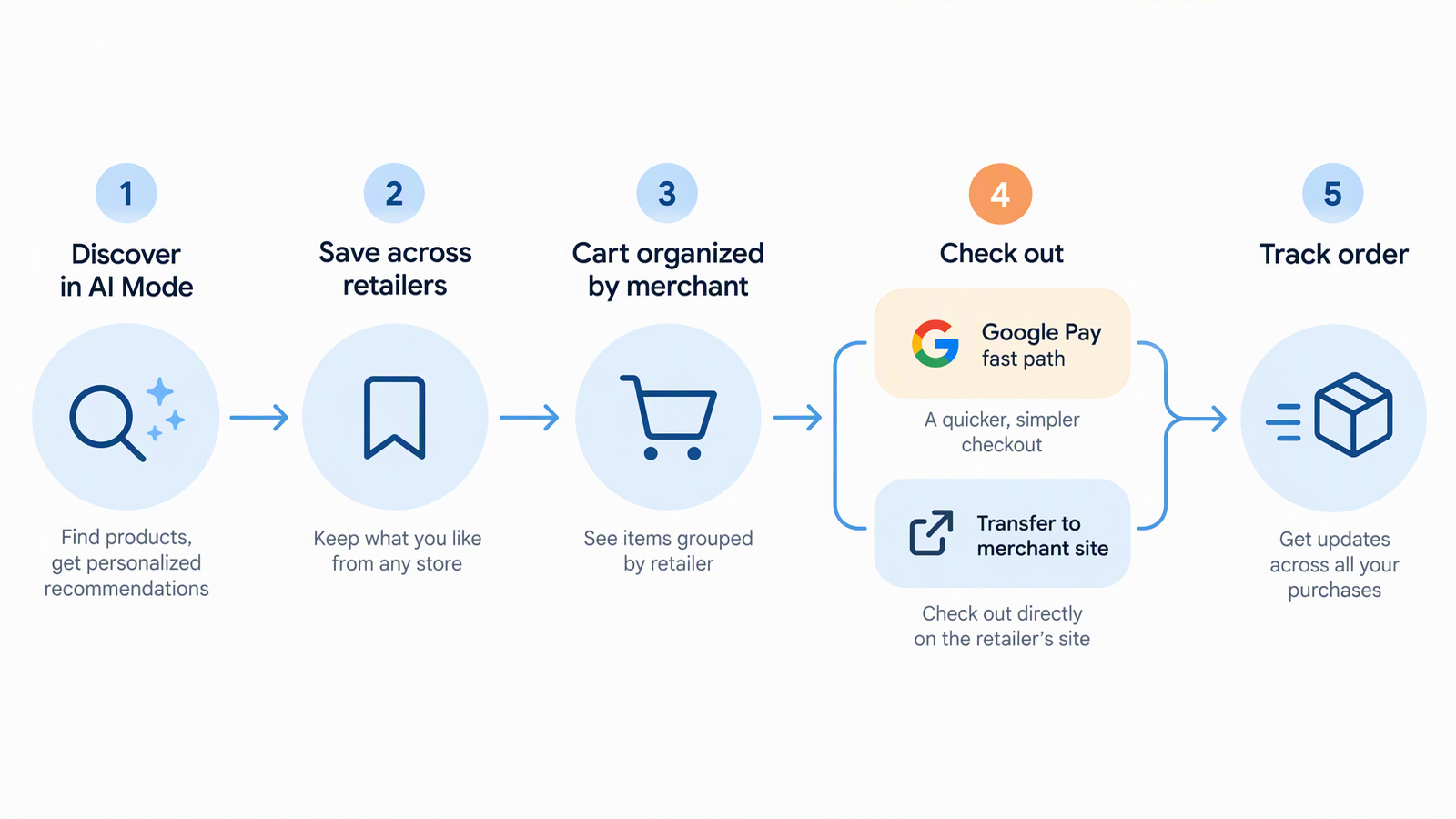
Two checkout paths matter here. Google Pay checkout is the fast path; the transfer-to-merchant path preserves loyalty programs, merchant-specific returns, and the retailer's own upsell flow. Google says the merchant remains the seller of record either way.
What's live now versus what's coming
Feature | Status at launch (Oct 15, 2026) |
|---|---|
One cart across retailers | Live in the US |
Google Search (incl. AI Mode) + Gemini app surfaces | Live |
Google Pay in-cart checkout | Live |
Promo codes and payment suggestions via Google Wallet | Live |
Transfer items to merchant site checkout | Live |
Order tracking in cart | Live |
YouTube and Gmail surfaces | Announced, coming later |
PayPal support | Announced, coming later |
Availability outside the US | Coming in the coming months |
The launch also rides on the Universal Commerce Protocol (UCP), the open standard Google introduced in January 2026 with Shopify, Target, and Walmart among its early backers. UCP is the plumbing that lets AI agents and retailer systems transact without bespoke integrations. Google also rolled out branded business agents, letting shoppers chat with retailers like Lowe's, Michael's, Poshmark, and Reebok directly in Search, with agentic checkout planned for that surface too.
Why checkout inside the answer matters
For years the working assumption was that AI search surfaces end in a click. Someone asks a question, the AI answer recommends products, and the click goes to a product page. Universal Cart cuts that funnel at the last step: the recommendation surface and the transaction surface are now the same surface.
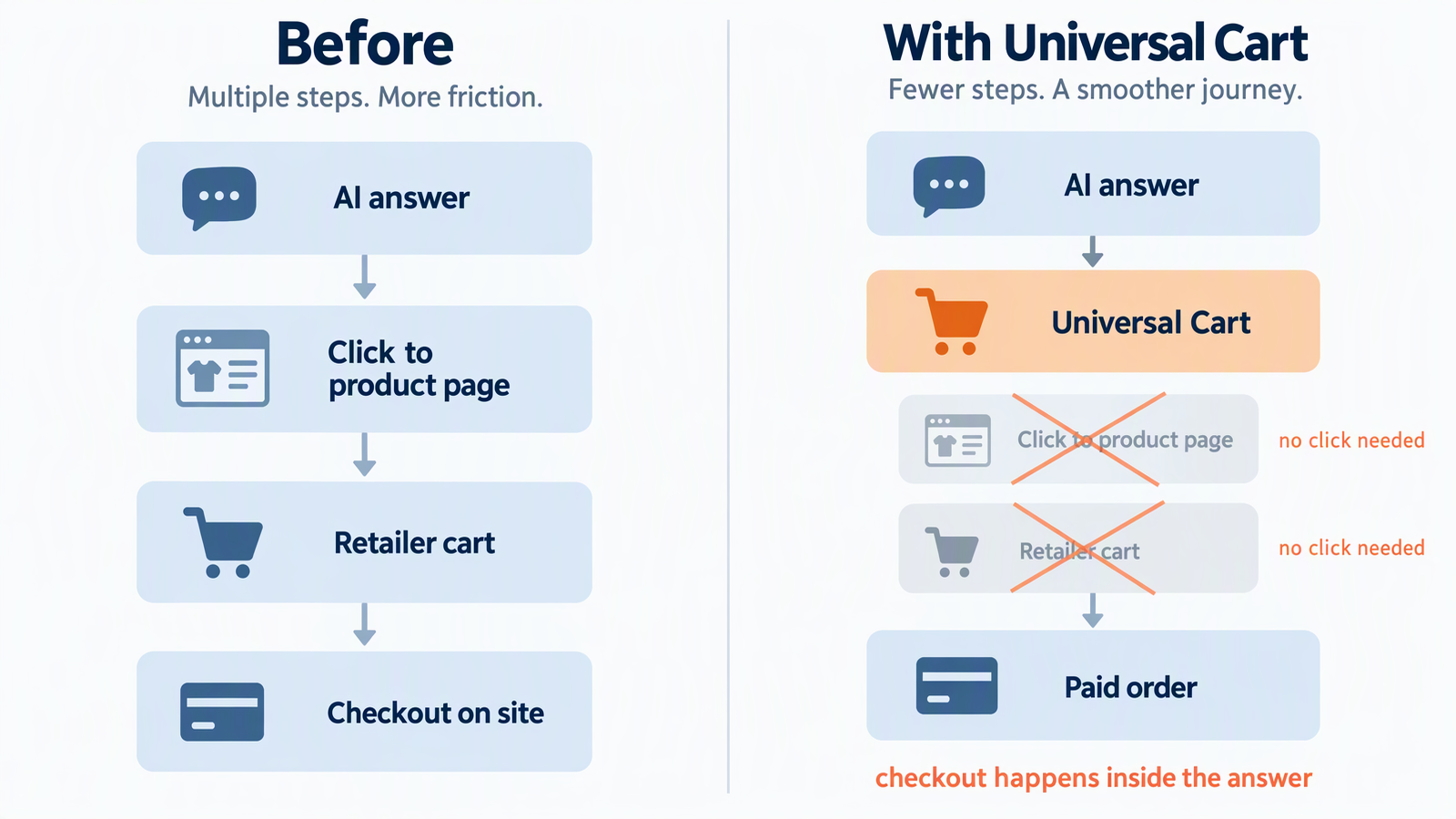
Three consequences follow:
- Last-click attribution gets worse. When checkout completes in AI Mode or Gemini, the session that produced the revenue may never touch the retailer's domain. Expect more conversions that look like direct or unassigned traffic in GA4, especially on mobile.
- Feed data becomes transactional, not just promotional. Price, availability, and shipping data in Merchant Center feeds used to gate ad eligibility. Now they gate the checkout itself. A stale feed no longer just loses an impression; it can produce a wrong transaction or drop the listing from the cart entirely.
- Promotion hygiene becomes revenue hygiene. Promo codes surfaced in the cart are only as good as the promotions attached to your product data. Expired or mis-mapped codes now surface at the exact moment of purchase.
This is the same direction agentic commerce has been moving all year. Our earlier coverage of Shopify's WebMCP work on agent-native checkout described the protocol-level version of this shift; Universal Cart is Google shipping it at consumer scale, in holiday season.
What merchants should do before the holidays
The window between now and Black Friday is short. Four actions are worth taking this week:
- Confirm your eligibility path. Google says retailers need to register to participate. If you run on Shopify, ask your account team or check the UCP documentation for the merchant integration path. If you self-host, the registration route through Google's business console is the starting point.
- Audit your Merchant Center feed like it's a checkout system, because it now is. Verify price, availability, and shipping data freshness on your top 50 revenue products. Check that GTINs, titles, and images match the landing page, since AI Mode pulls from the same data.
- Re-map your promotions. Confirm every active promo code is registered and correctly scoped in Merchant Center promotions, and that exclusions such as sale items and bundles are explicit. Then decide whether you want cart-level code surfacing to help or hurt your margin, and set stacking rules accordingly.
- Baseline your referral data now. Before holiday traffic skews everything, export current GA4 channel splits for product and checkout pages. When in-answer checkout scales, you want a pre-launch baseline to measure the shift against, not a guess.
A fifth, ongoing action: track whether your products actually appear in AI Mode shopping answers for your category queries. Cart eligibility only matters if you get surfaced in the first place. Auspia's AI Search Visibility Checker can show which of your target queries produce AI answers that include your products.
FAQ
Is the Universal Cart available outside the US? No. The launch is US-only. Google has said international expansion is planned for the coming months, without naming markets.
Do I need to rebuild my storefront to participate? No. There are two checkout paths, and the transfer-to-merchant path keeps your existing site checkout. But to appear with in-cart Google Pay checkout, you need to support the Universal Commerce Protocol through Google's registration process, and Shopify merchants have a platform-level path.
Who is the seller of record when checkout happens in Google? The merchant. Google states that retailers remain the seller of record, and merchants can customize their integration. Fulfillment, returns, and customer service obligations stay with the retailer.
Does this replace Google Shopping's existing checkout on product listings? It extends it. Universal Cart adds a persistent, cross-retailer cart layer across Search AI Mode and the Gemini app, on top of the checkout Google had already enabled on eligible product listings.
Author: Eva Laurent, Ecommerce Search Strategist at Auspia. Eva writes about ecommerce SEO, product discovery, and how AI search surfaces change shopping funnels.