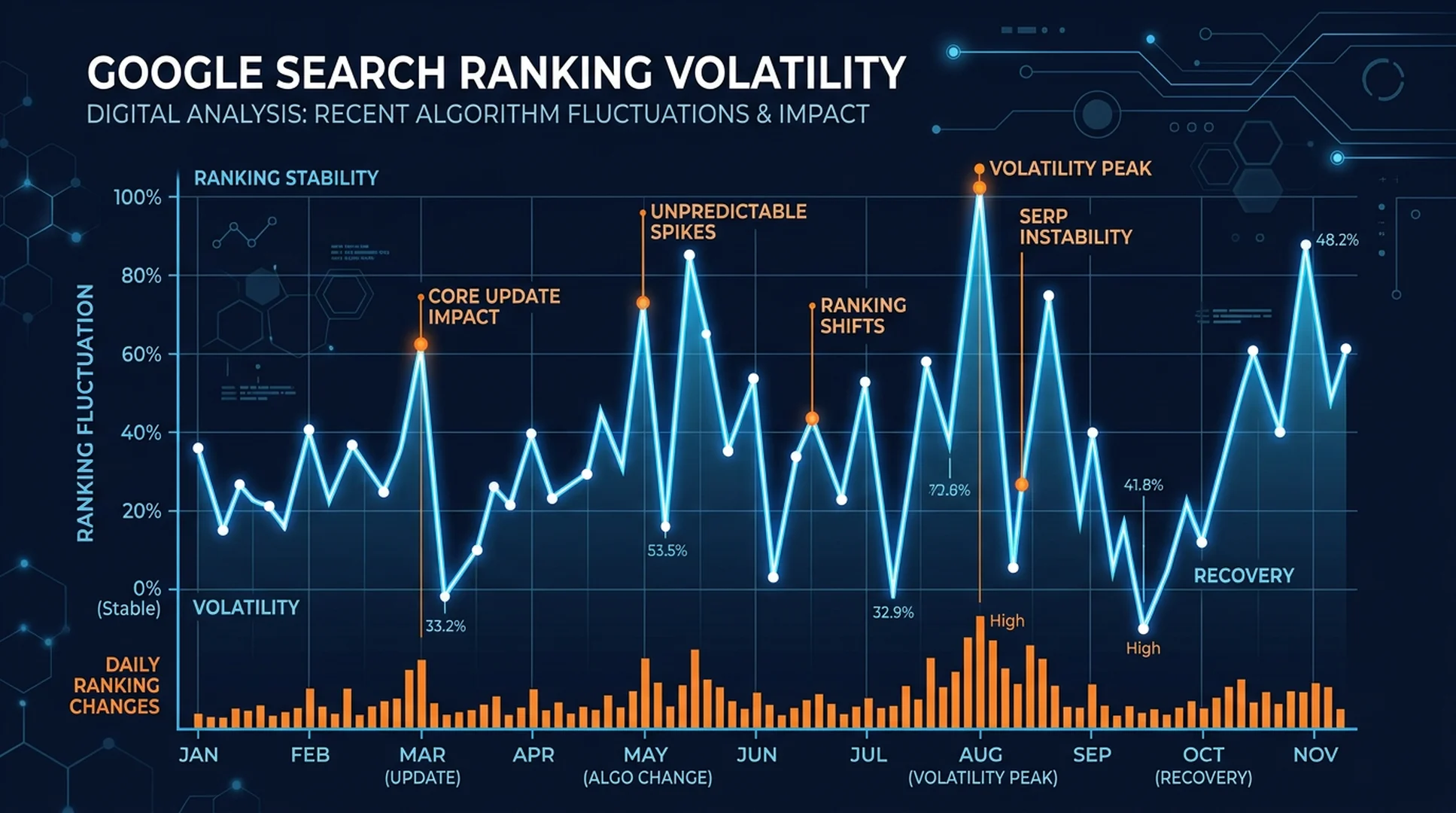
Multiple SERP tracking tools detected a significant spike in Google Search ranking volatility on August 12 and 13, 2026. The movement, which began on August 12 and extended into the following day, caught the attention of webmasters and SEO professionals who reported dramatic traffic swings across forums and industry discussions.
No confirmed Google algorithm update has been announced in connection with the fluctuations. The last named update from Google was the June 2026 spam update, which ran from June 14 to June 26. Before that, the May 2026 core update rolled out between May 21 and June 2.
The details
Third-party volatility trackers confirmed the disturbance. Tools including Mozcast, AccuRanker, SEMRush, Sistrix, DataForSEO, Serpstat, Wincher, CognitiveSEO, Algoroo, Mangools, SimilarWeb, AWR, Zutrix, and Wireboard all registered elevated ranking turbulence during the August 12-13 window. The aggregate data from Wireboard, which compiles readings from multiple trackers into a single chart, showed a clear departure from baseline volatility levels.
The timing is notable. Google has not issued any public statement acknowledging a ranking change. The search company has not confirmed an unconfirmed update since a brief period of instability around August 5, and earlier spikes on August 1-3, July 24, and July 18-19. The July 18-19 event reportedly persisted through much of that week. Before the summer sequence, the last major named event was what the SEO community dubbed the "Google 7-Eleven update."
WebmasterWorld, a long-running forum for site owners, filled with reports starting on the morning of August 13. The accounts revealed erratic behavior, not a simple ranking reshuffle.
One webmaster in Brazil reported Discover traffic drops exceeding 70%, while AI-generated content sites in the same market appeared to gain visibility. "Some are appearing 8 times in the feed," the user wrote, describing the shift as "outrageous."
Other reports described a spike-then-crash pattern. One site owner noted traffic surging 200% during the day before collapsing to a new low by evening. "Compared to January we are down to 25%," they wrote. Another user confirmed the pattern across multiple properties: "Traffic spiked significantly at first and then dropped off on both of my sites."
A separate report described a complete traffic collapse across all sites the user monitored. "Some are getting zero traffic from Google, and for all the others, traffic has dropped drastically," the webmaster wrote. One commenter compared the disruption to the Panda update, calling it worse.
Finance-related spam also resurfaced during the volatility window, with multiple users reporting a return of low-quality financial content in search results.
Why this matters for SEO and AI visibility
Ranking volatility without a confirmed update leaves site owners in a bind. There is no known change to adjust strategy against. The only option is to wait and watch.
The frequency of unconfirmed fluctuations throughout July and August 2026 suggests Google may be testing changes on an ongoing basis rather than deploying discrete, named updates. Seven weeks of reported turbulence have passed since the June spam update finished.
The WebmasterWorld reports also highlight a recurring tension: AI-generated content appearing to benefit from ranking shifts while established publishers lose ground. It echoes a pattern that has been building for months. Several large media companies have publicly discussed restricting Google's crawl access, arguing the traffic Google sends no longer justifies the content it extracts.
What to watch next
Google typically confirms significant algorithm changes within days of community detection. If this volatility is tied to a core update or spam filter adjustment, an announcement may follow shortly. The Search Central blog and Google's social media accounts are the primary channels for such news.
Site owners experiencing traffic disruption should avoid making reactive changes during volatile periods. Historical patterns show that positions often stabilize once an update completes its rollout. Panic-driven rewrites or technical overhauls during instability frequently cause more harm than the original fluctuation.
The next few days will clarify whether this event resolves quickly or extends into a longer period of ranking instability similar to the July 18-19 sequence.
Sources
- WebmasterWorld forum discussion, August 13, 2026
- Mozcast SERP volatility tracker
- AccuRanker Grump index
- DataForSEO SERP Volatility report
- Wireboard aggregate volatility chart
- Sistrix SERP monitoring data
- SEMRush Sensor
- Serpstat volatility index
- Wincher market data
- CognitiveSEO SERP tracker
- Algoroo ranking monitor
- Mangools SERPWatcher
- SimilarWeb SERP analysis
- AWR ranking data
- Zutrix Tension index
Author: Sophie Renard, AI Search Briefing Analyst Tracking 30+ Platforms. Sophie writes timely updates and concise briefs on search platform changes and their impact on visibility.