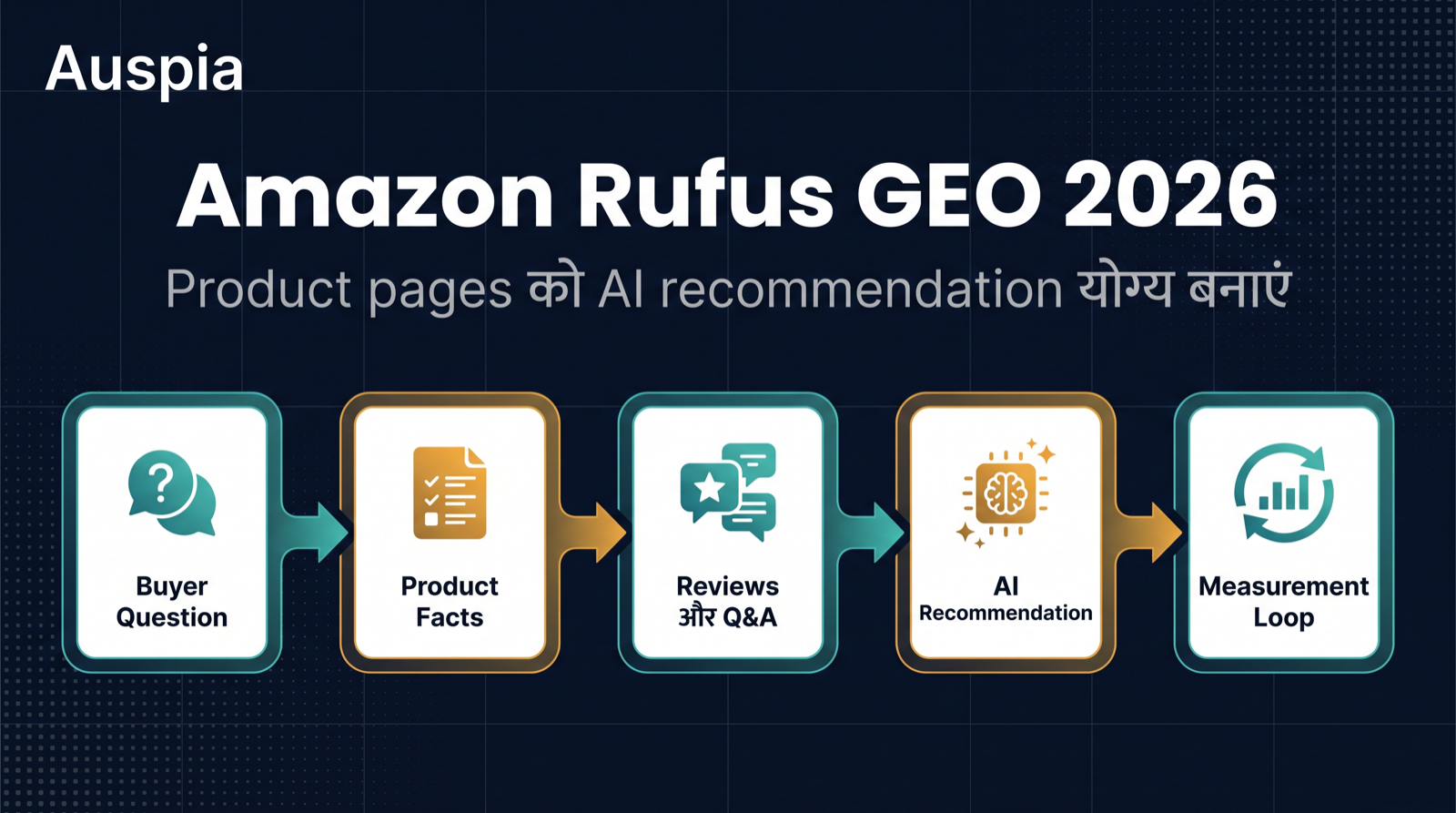
अगर कोई खरीदार पूछता है, "यूरोप की दो हफ्ते की यात्रा के लिए टिकाऊ केबिन बैग कौन सा है?", तो आपकी उत्पाद पेज को अब सिर्फ "केबिन लगेज" जैसे खोज शब्द पर रैंक करना पर्याप्त नहीं है। उसे खरीदारी के AI सहायक को इतना साफ प्रमाण देना होगा कि वह आपके SKU की सिफारिश आत्मविश्वास से कर सके।
2026 में ecommerce के लिए GEO का व्यावहारिक अर्थ यही है।
Amazon ने फरवरी 2024 में अपने जनरेटिव AI शॉपिंग सहायक Rufus को beta में पेश किया और बाद में उसे अमेरिका के ग्राहकों के लिए व्यापक रूप से उपलब्ध कराया। तब से पैटर्न साफ है: marketplace discovery keyword search pages से हटकर conversational product selection की ओर जा रही है। खरीदार स्थिति, सीमा या तुलना पूछता है। सहायक उसे छोटी सूची में बदलता है।
विक्रेताओं के लिए काम Amazon SEO छोड़ना नहीं है। काम यह है कि उसके ऊपर AI-पठनीय परत जोड़ी जाए: संरचित उत्पाद तथ्य, प्राकृतिक भाषा में उपयोग परिदृश्य, भरोसेमंद review signals, objections का स्पष्ट उत्तर, और ऐसी images जो टेक्स्ट की कहानी से मेल खाती हों।
Auspia का संक्षिप्त सूत्र: listing को traditional search के लिए indexed रखें, लेकिन हर जरूरी detail को AI assistant के लिए answerable बनाएं।
2026 का बदलाव: "मेरे उत्पाद को rank कराओ" से "मेरे उत्पाद की recommendation बनाओ"
Traditional marketplace SEO पूछता है: "क्या search engine मेरी listing को keyword से match कर सकता है?"
Rufus-style GEO ज्यादा कठिन सवाल पूछता है: "क्या AI assistant समझा सकता है कि यह product इस buyer की situation के लिए पास के alternatives से बेहतर क्यों है?"
Discovery layer | Traditional Amazon SEO | 2026 में Rufus-era GEO |
|---|---|---|
खरीदार व्यवहार | छोटा keyword query | प्राकृतिक भाषा में question या constraint |
Matching signal | keyword relevance, sales, conversion | intent fit, context, product facts, review evidence |
Content need | indexed title और bullets | clear answers, specs, scenarios, comparisons, objections |
Visibility surface | search result grid | AI answer, recommendation card, comparison summary |
Seller goal | query पर rank करना | defensible answer के रूप में चुना जाना |
इसका मतलब यह नहीं कि keywords महत्व खो देते हैं। वे अभी भी तय करते हैं कि product candidate set में आएगा या नहीं। लेकिन सिर्फ keywords पतला evidence हैं। AI assistant को वही detail चाहिए जो अच्छा salesperson इस्तेमाल करता है: product किसके लिए है, कहां काम करता है, किन trade-offs के साथ आता है, और claim को कौन सा proof support करता है।
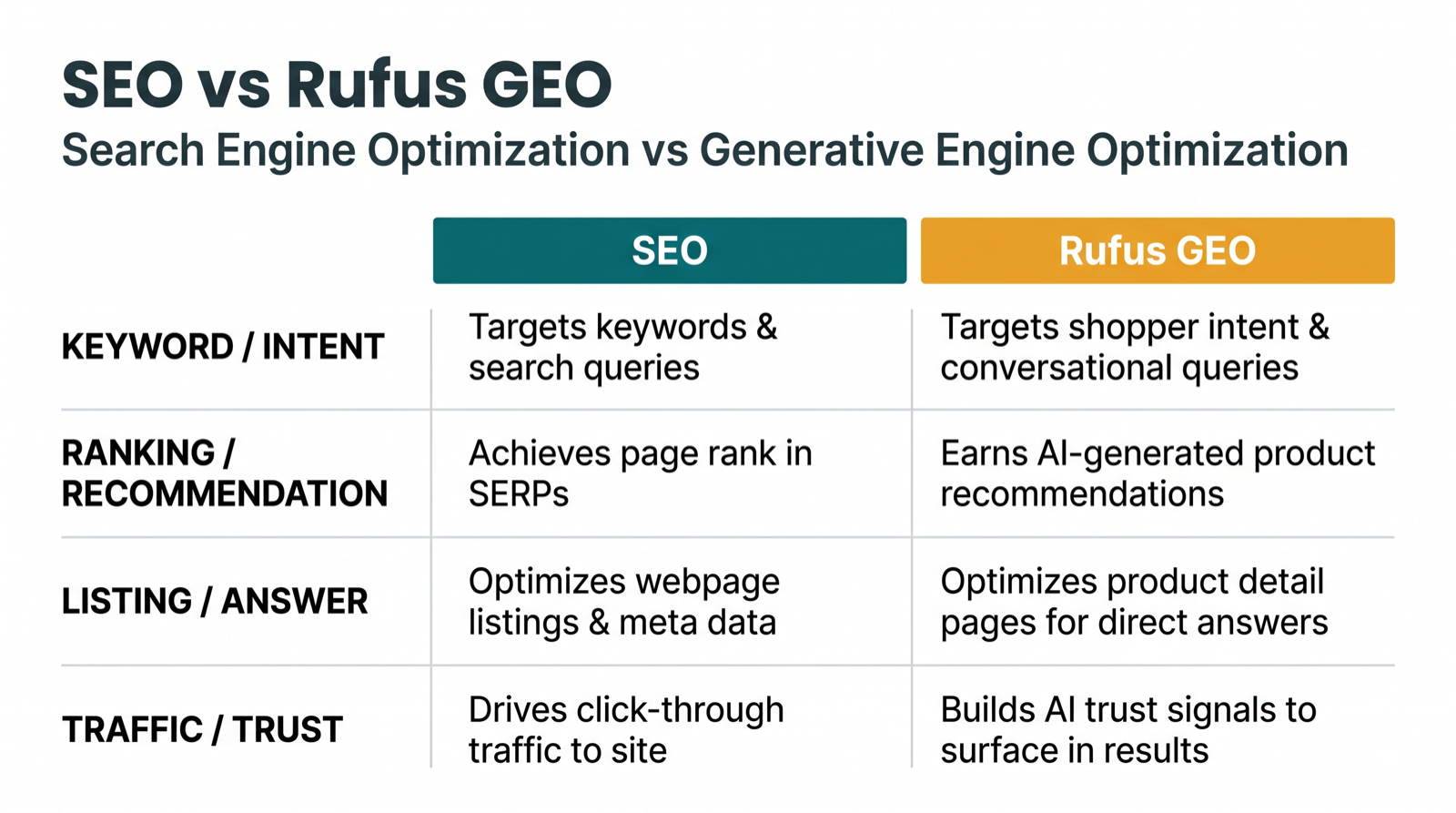
Rufus-style shopping recommendations listing को कैसे पढ़ती दिखती हैं
Amazon ने Rufus के लिए पूरी public ranking formula publish नहीं की है। Sellers को ऐसे दावों से सावधान रहना चाहिए। फिर भी हम Amazon के public descriptions, ecommerce retrieval के सामान्य व्यवहार, और उन product information surfaces से काम कर सकते हैं जिन्हें Rufus समझदारी से इस्तेमाल कर सकता है।
सिस्टम को तीन layers में सोचें।
Layer | उसे क्या चाहिए | Seller mistake जो रोकती है |
|---|---|---|
Indexing | product type, important keywords, category fit | titles को इतना aggressively rewrite करना कि core terms गायब हो जाएं |
Intent understanding | use cases, audience, constraints, compatibility | attributes भरना लेकिन यह न बताना कि वे कब मायने रखते हैं |
Recommendation confidence | specs, reviews, Q&A, comparison facts, images | vague copy से assistant को बहुत ज्यादा infer करने देना |
Running shoe indexing layer में "men's running shoe" हो सकता है। लेकिन AI answer के लिए यह काफी नहीं है। Assistant को जानना पड़ सकता है कि वह marathon training, wet pavement, wide feet, knee pain, travel packing, या budget-conscious beginners के लिए suitable है या नहीं। अगर listing ये बातें स्पष्ट नहीं कहती, तो system के पास उसे चुनने की कम वजह होती है।
यहीं बहुत से sellers GEO में गलती करते हैं। वे और adjectives जोड़ते हैं: "premium", "amazing", "professional". Rufus इससे बहुत कम कर सकता है। वह "8 mm heel-to-toe drop", "wide toe box", "wet pavement के लिए grippy outsole", या "machine-washable mesh upper" से ज्यादा उपयोगी निष्कर्ष निकाल सकता है।
सिद्धांत: facts adjectives से बेहतर हैं
एक सरल rule बहुत अच्छा काम करता है: ऐसे facts लिखें जिन्हें assistant quote कर सके।
कमजोर claim | AI-readable बेहतर claim |
|---|---|
"Premium cooler bag" | "24 standard cans रखता है और normal outdoor use में ice को 18 घंटे तक बनाए रखता है" |
"Great for travel" | "अधिकांश airline seats के नीचे fit होता है और empty weight 1.8 lb है" |
"Super quiet keyboard" | "office typing में लगभग 38 dB measured low-profile scissor switches" |
"Perfect for small spaces" | "closet या under-bed storage के लिए 31 x 18 x 4 inches तक fold होता है" |
उद्देश्य page को technical manual बनाना नहीं है। उद्देश्य AI assistant को भरोसेमंद fragments देना है जिन्हें वह shopper needs से map कर सके।
Module 1: titles को अभी भी keywords चाहिए, पर एक real use case जोड़ें
Title indexing asset है। GEO को core product terms हटाने का कारण न बनाएं। Title category और primary attributes रखे, फिर एक meaningful scenario या differentiator जोड़े।
कमजोर title:
Portable Folding Table Lightweight Aluminum Camping Picnic Outdoor
2026 के लिए मजबूत title:
Brand Folding Camping Table, Aluminum 4-Person Picnic Table, 66 lb Load, Packs Flat for Car Trunks
क्या बदला:
Element | क्यों मदद करता है |
|---|---|
Product type साफ रहता है | Traditional search listing को index कर सकता है |
Use case naturally आता है | Rufus इसे camping, picnics और car travel से जोड़ सकता है |
Concrete capacity शामिल है | Assistant के पास defensible recommendation reason है |
Title unrelated terms से बचता है | Semantic focus साफ रहता है |
Title में हर possible scenario न ठूंसें। वह एक या दो चुनें जो purchase decision को सच में चलाते हैं।
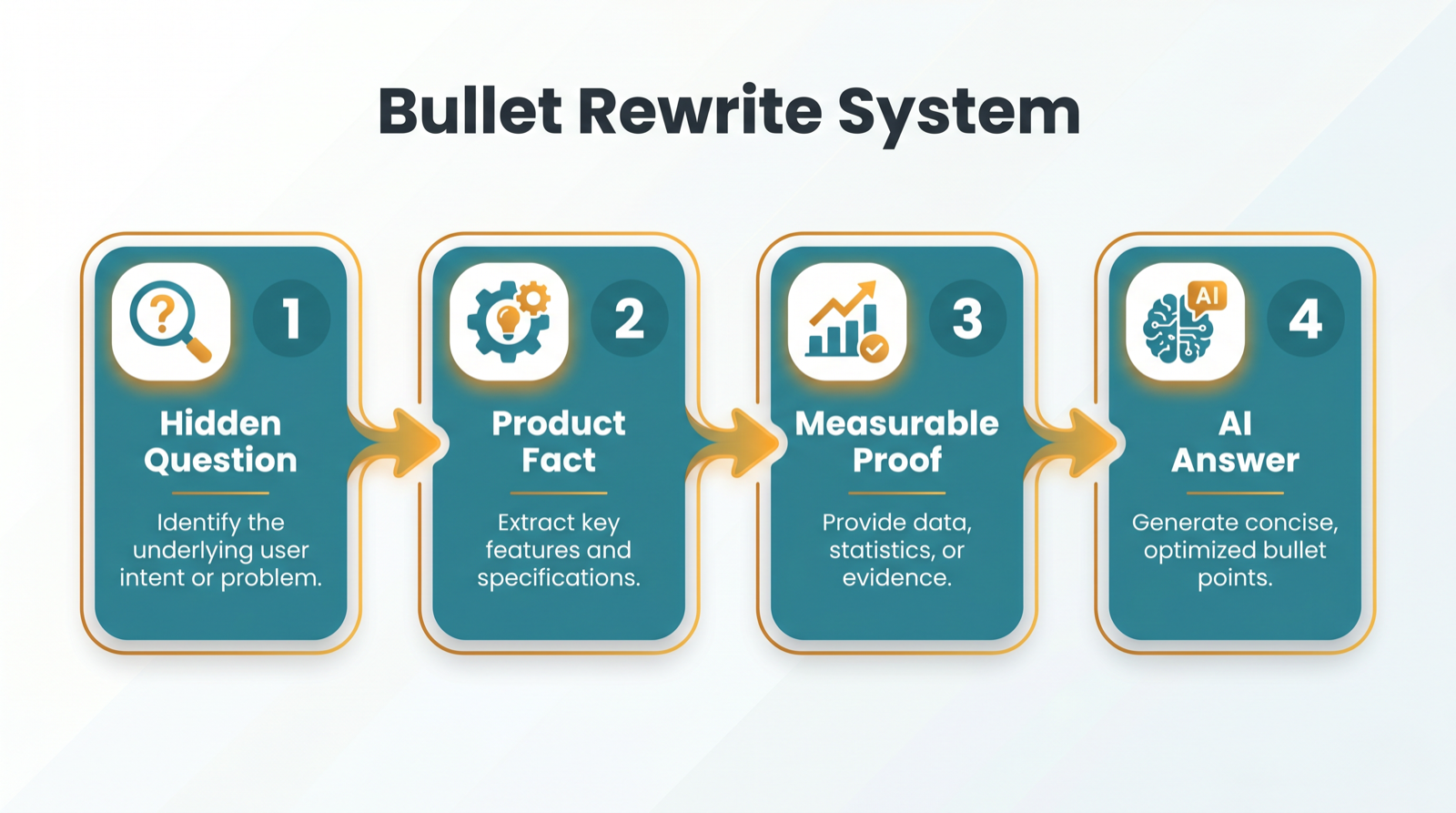
Module 2: bullets को hidden buyer questions का answer देना चाहिए
ज्यादातर bullet points features बताते हैं। GEO-ready bullet points feature के पीछे का सवाल answer करते हैं।
पुराना आम bullet:
- Waterproof material
- Lightweight design
- Large capacity
बेहतर bullet set:
- Weekend camping में dry रहता है: IPX7-rated nylon shell बारिश और wet ground setup में gear को protect करने में मदद करता है।
- Trail days पर carry करना आसान: 1.2 kg packed weight अधिकांश hiking backpacks में fit होता है।
- Family setup के लिए जगह: 240 x 240 cm floor area चार लोगों को sleeping bags और छोटे gear के लिए पर्याप्त space देता है।
हर bullet की quiet structure एक जैसी है: use case, supporting feature, measurable detail. यह keyword copy से कम और useful answer से अधिक लगता है।
Module 3: attributes भरें, क्योंकि missing fields doubt बनाते हैं
Structured data तब तक boring लगता है जब तक वही तय नहीं करता कि आपका product recommendation के योग्य है या नहीं।
Material, size, compatibility, age range, care instructions, power source, या safety fields missing हों तो AI system को guess करना पड़ता है। Guessing risky है। Recommendation systems अक्सर उन pages को prefer करते हैं जहां important fields complete हों।
पहले इन fields को prioritize करें:
Field type | Examples | AI shopping answers के लिए महत्व |
|---|---|---|
Materials | stainless steel, nylon, latex-free silicone | durability, safety, allergy और care questions में मदद |
Dimensions and weight | folded size, packed weight, load capacity | travel, storage और body-size constraints match करने में मदद |
Compatibility | device models, surfaces, accessories | bad recommendations रोकने में मदद |
Use case | camping, office, small apartment, pets, toddlers | product facts को shopper situations से जोड़ता है |
सीमाएं | dishwasher में सुरक्षित नहीं, केवल indoor use | भरोसा बनाता है और गलत recommendations घटाता है |
Backend search terms को भी keyword variants से आगे जाना चाहिए। सिर्फ "yoga mat, fitness mat, workout mat" लिखने के बजाय natural-language intent variants शामिल करें, जैसे "sore knees के लिए thick mat", "sweaty hands के लिए non-slip mat", या "hotel workouts के लिए travel mat", अगर ये claims true हैं।
Module 4: A+ content Rufus को आपको recommend करने की वजह दे
A+ content को अक्सर brand brochure समझा जाता है। 2026 में उसे recommendation brief की तरह काम करना चाहिए।
Useful modules में शामिल हैं:
A+ module | GEO role |
|---|---|
Comparison chart | दिखाता है कि alternatives के बजाय यह product किसे चुनना चाहिए |
Specification table | assistant को extractable product facts देता है |
Scenario panel | features को real use contexts से जोड़ता है |
"यह किसके लिए है" block | audience fit को explicit बनाता है |
"खरीदने से पहले जानें" block | limitations को reviews से पहले handle करता है |
एक helpful sentence polished slogan से ज्यादा मूल्यवान हो सकता है:
अगर आपको pet rooms या street-facing apartments में odor reduction चाहिए तो यह model चुनें; अगर आपको 150 sq ft से कम bedroom में सिर्फ dust filtration चाहिए तो smaller model चुनें।
यह glamorous copy नहीं है। यह useful copy है। यह assistant को बताता है कि कब एक item recommend करना है और कब नहीं।
Module 5: Q&A को defensive GEO की तरह इस्तेमाल करें
Q&A वह जगह है जहां buyers वे messy questions रखते हैं जिनसे marketing copy बचती है। इसलिए यह AI shopping assistants के लिए valuable है।
अगर page common objections का answer नहीं देता, तो assistant evidence reviews में खोज सकता है। यह खतरनाक है। एक vivid negative review extract करने के लिए सबसे आसान answer बन सकता है।
Decision blockers के around Q&A plan बनाएं:
Buyer objection | Q&A answer में शामिल होना चाहिए |
|---|---|
"क्या leak होगा?" | test condition, seal design, usage limits |
"क्या small apartment के लिए अच्छा है?" | exact folded या stored dimensions |
"क्या यह मेरे device में fit होगा?" | model list और compatibility boundary |
"क्या kids या pets के लिए safe है?" | material, certification, age या supervision notes |
"अगर टूट गया तो क्या होगा?" | warranty या replacement process |
Customer questions fake न करें। अपने product, competitor listings, support tickets और review mining से real questions इस्तेमाल करें। फिर सीधे answer दें।
Module 6: reviews को context देना चाहिए, सिर्फ stars नहीं
Five-star review जो कहता है "great product" humans के लिए अच्छा है। AI assistant के लिए यह weak evidence है।
Review जो कहता है "दो बच्चों के साथ rainy three-day camping trip में काम आया" assistant को scenario, duration और user type देता है। यह बहुत richer signal है।
आप reviews script नहीं कर सकते और नहीं करना चाहिए। लेकिन आप ethically customers को specific होने के लिए prompt कर सकते हैं:
अगर आप review छोड़ते हैं, तो दूसरे shoppers को मदद मिलती है जब आप बताते हैं कि आपने product कहां इस्तेमाल किया, किस problem को solve किया, और size या setup की कौन सी details important थीं।
फिर हर महीने reviews mine करें। Repeated phrases, constraints और unexpected use cases निकालें। अगर customers बार-बार कहते हैं कि lunch box nurse's work bag में fit होता है, तो यह bullets या A+ content में जगह पाने योग्य हो सकता है।
Module 7: images को semantic alignment चाहिए
Images सिर्फ decoration नहीं हैं। AI shopping में वे confirm करने में मदद करती हैं कि text reality से match करता है या नहीं।
अच्छा image set consistent story बताता है:
Image type | उसे क्या prove करना चाहिए |
|---|---|
Main image | product type और core form factor unmistakable हों |
Lifestyle image | main use case visually obvious हो |
Scale image | size, capacity, या fit जल्दी समझ आए |
Comparison image | alternatives से difference concrete हो |
Instruction image | setup, folding, cleaning, या usage sequence clear हो |
Common mismatch से बचें: text "small apartment" कहता है, लेकिन हर lifestyle image बड़ी suburban kitchen दिखाती है। Text "travel-friendly" कहता है, लेकिन packed size की image नहीं है। Text "beginners" कहता है, लेकिन image expert setup मानती है।
AI systems इस consistency को check करने में बेहतर हो रहे हैं। Humans पहले से करते हैं।
Amazon साफ dashboard न दे तो Rufus GEO कैसे measure करें
Seller Central में universal Rufus visibility report नहीं है। इसलिए lightweight test panel बनाएं।
20 से 50 prompts इस्तेमाल करें जो real buying situations दिखाते हों, सिर्फ head terms नहीं:
Prompt type | Example |
|---|---|
Use case | "12-hour shifts वाली nurse के लिए best lunch box" |
Constraint | "$80 से कम shared office के लिए quiet keyboard" |
Comparison | "pet odor के लिए air purifier बनाम dust only" |
Persona | "दो adults के लिए beginner-friendly camping tent" |
Objection | "backpack में leak न होने वाली water bottle" |
इन fields को weekly track करें:
Metric | क्या record करें |
|---|---|
Appearance rate | क्या product answer या recommendation set में आया? |
Position | first, top three, या buried? |
Reason cited | Rufus ने product के बारे में क्या कहा? |
Competitors shown | कौन से products बार-बार दिखते हैं? |
Missing evidence | Competitors ने आपसे बेहतर क्या explain किया? |
जो teams ChatGPT, Perplexity, Gemini, AI Overviews और marketplace assistants में बड़े prompt sets चलाती हैं, उनके लिए Auspia का AI Search Visibility Checker इन checks को repeatable visibility workflow में बदलने में मदद कर सकता है।
2026 के लिए 30-day Amazon Rufus GEO plan
Week | Focus | पूरा करने वाला काम |
|---|---|---|
Week 1 | Diagnose | prompt set बनाएं, current visibility test करें, top competitors compare करें, missing facts list करें |
Week 2 | Complete data | attributes, compatibility fields, dimensions, materials, limitations, backend intent phrases भरें |
Week 3 | Rewrite for answers | title, bullets, product description, A+ comparison blocks, scenario language update करें |
Week 4 | Strengthen evidence | Q&A coverage जोड़ें, reviews mine करें, image alignment improve करें, prompts retest करें |
Changes incremental करें। Full listing rewrite traditional search performance को नुकसान पहुंचा सकता है अगर आप ऐसे terms हटा दें जो पहले से convert करते हैं। Proven SEO foundation रखें, फिर जहां कमी है वहां AI-readable evidence जोड़ें।
Common mistakes जिनसे बचना चाहिए
Mistake | नुकसान क्यों होता है |
|---|---|
keywords को conversational copy से replace करना | Rufus के consider करने से पहले candidate eligibility खो सकती है |
vague superlatives जोड़ना | AI systems को facts चाहिए, hype नहीं |
negative-review themes ignore करना | assistant worst available evidence extract कर सकता है |
optional fields blank छोड़ना | missing data recommendation confidence घटाता है |
images और copy से अलग-अलग stories कहलवाना | mixed signals human भरोसा और machine understanding दोनों कमजोर करते हैं |
केवल एक query test करना | GEO visibility persona, constraint और use case के अनुसार बदलती है |
FAQ
क्या Amazon Rufus GEO, Amazon SEO जैसा ही है?
नहीं। Amazon SEO product को marketplace searches में indexed और ranked होने में मदद करता है। Rufus GEO वह evidence जोड़ता है जिसकी AI shopping assistant को product समझने, shopper situation से match करने और recommendation explain करने के लिए जरूरत होती है।
क्या sellers को 2026 में हर listing Rufus के लिए rewrite करनी चाहिए?
नहीं। उन listings से शुरू करें जिनमें traffic है लेकिन conversion, comparison questions या scenario-based queries में underperform करती हैं। Proven keywords और conversion elements preserve करें। Structured facts, बेहतर Q&A, clearer use cases और review-backed language जोड़ें।
Amazon listing के लिए सबसे तेज GEO improvement क्या है?
Missing attributes complete करें और top bullets rewrite करें ताकि हर bullet real buyer question का answer specific fact से दे। यह A+ content rebuild करने से आम तौर पर तेज और full title structure बदलने से safer है।
क्या reviews AI shopping recommendations को influence कर सकते हैं?
वे AI assistant को उपलब्ध evidence influence कर सकते हैं। Use cases, constraints, durability, sizing या setup बताने वाले specific reviews system को generic praise से richer signals देते हैं।
Teams को Rufus visibility कितनी बार test करनी चाहिए?
Active products के लिए weekly testing reasonable है। Stable prompt set इस्तेमाल करें, competitors record करें और answer में cited reasons note करें। Lower-priority SKU के लिए monthly cycle अक्सर पर्याप्त है।
Final takeaway
2026 में Amazon GEO कोई trick नहीं है। यह pressure में product clarity है।
अगर आपकी listing Rufus को clean facts, real scenarios, complete attributes, honest limitations, useful Q&A और review evidence देती है, तो उसके recommended होने की chance मजबूत होती है। अगर वह keyword stuffing और generic praise पर निर्भर है, तो assistant के पास काम करने के लिए कम material होता है।
अब बेहतर सवाल "क्या हमने keyword include किया?" नहीं है। सवाल है: "क्या AI assistant आत्मविश्वास से समझा सकता है कि यह इस shopper के लिए सही product क्यों है?"
लेखिका: Eva Laurent, Auspia में 10k+ Product Pages के लिए Ecommerce Search Strategist. Eva ecommerce SEO, marketplace discovery, product-page evidence और AI-assisted shopping behavior पर लिखती हैं।