2026 के लिए छोटा जवाब
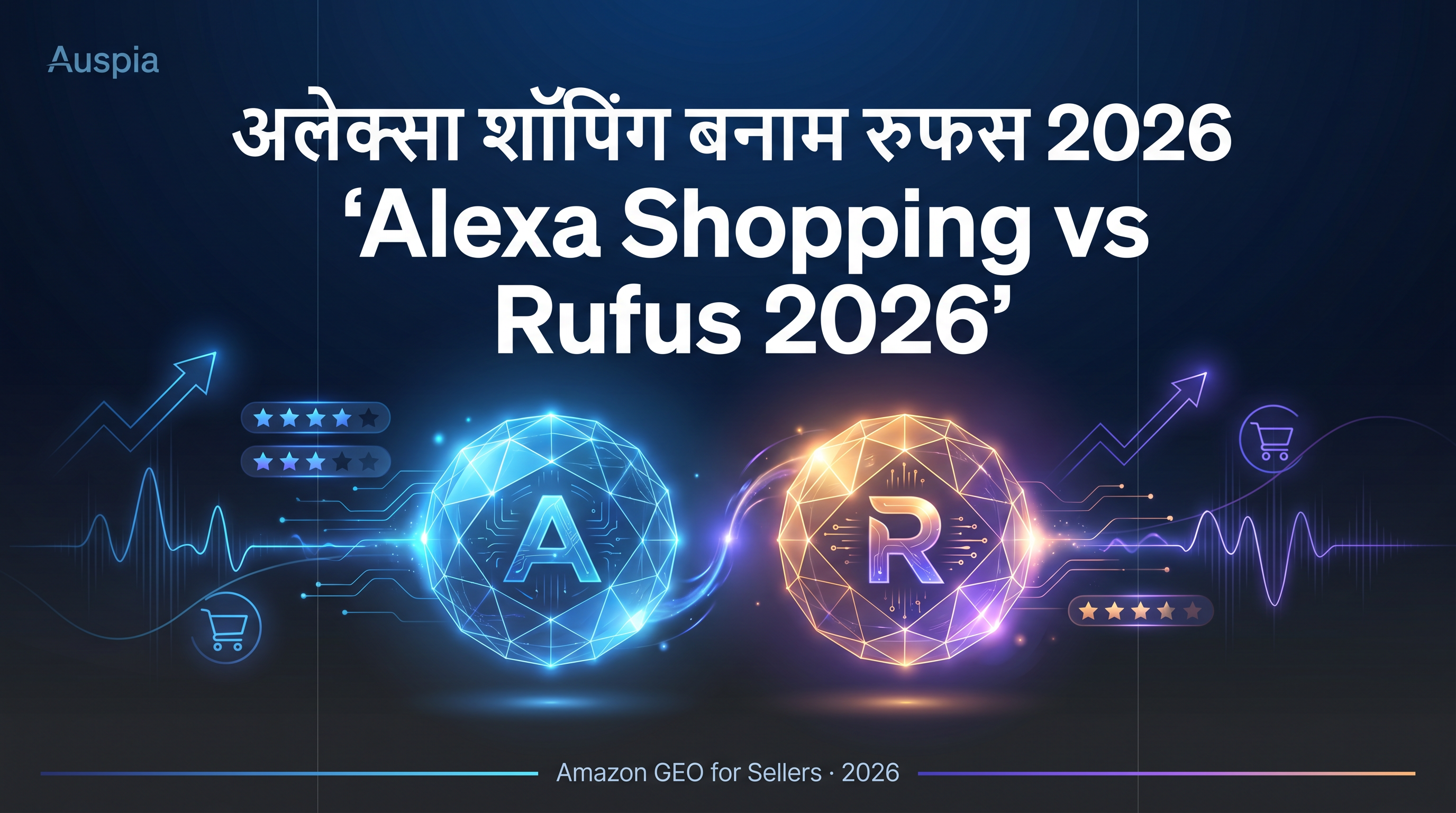
Amazon का Rufus से Alexa for Shopping की ओर जाना सिर्फ नाम बदलना नहीं है। sellers के लिए असली बदलाव यह है: Amazon की AI shopping layer अब केवल product questions का जवाब देने से आगे बढ़कर खरीदारी के रास्ते को खुद shape करने लगी है।
Rufus ने shoppers को research करना सिखाया। Alexa for Shopping को products compare करने, preferences याद रखने, price history track करने, carts बनाने और repeat या conditional purchases trigger करने के लिए position किया जा रहा है। इससे Amazon GEO बहुत सीधे तरीके से बदलता है। आपकी listing को अब सिर्फ keyword search और conversion filters को satisfy नहीं करना है। उसे इतनी साफ होनी चाहिए कि AI assistant समझ सके product किसके लिए है, कब recommend करना चाहिए, कौन सा evidence उसे support करता है, और कब उसे recommend नहीं करना चाहिए।
अगर आप 2026 में Amazon पर बेचते हैं, तो weak listing वह नहीं है जिसमें सिर्फ कम keywords हैं। weak listing वह है जिसके use cases vague हैं, review evidence पतला है, product facts inconsistent हैं, और pricing behavior ऐसा है जिसे assistant आसानी से आपके खिलाफ explain कर सकता है।
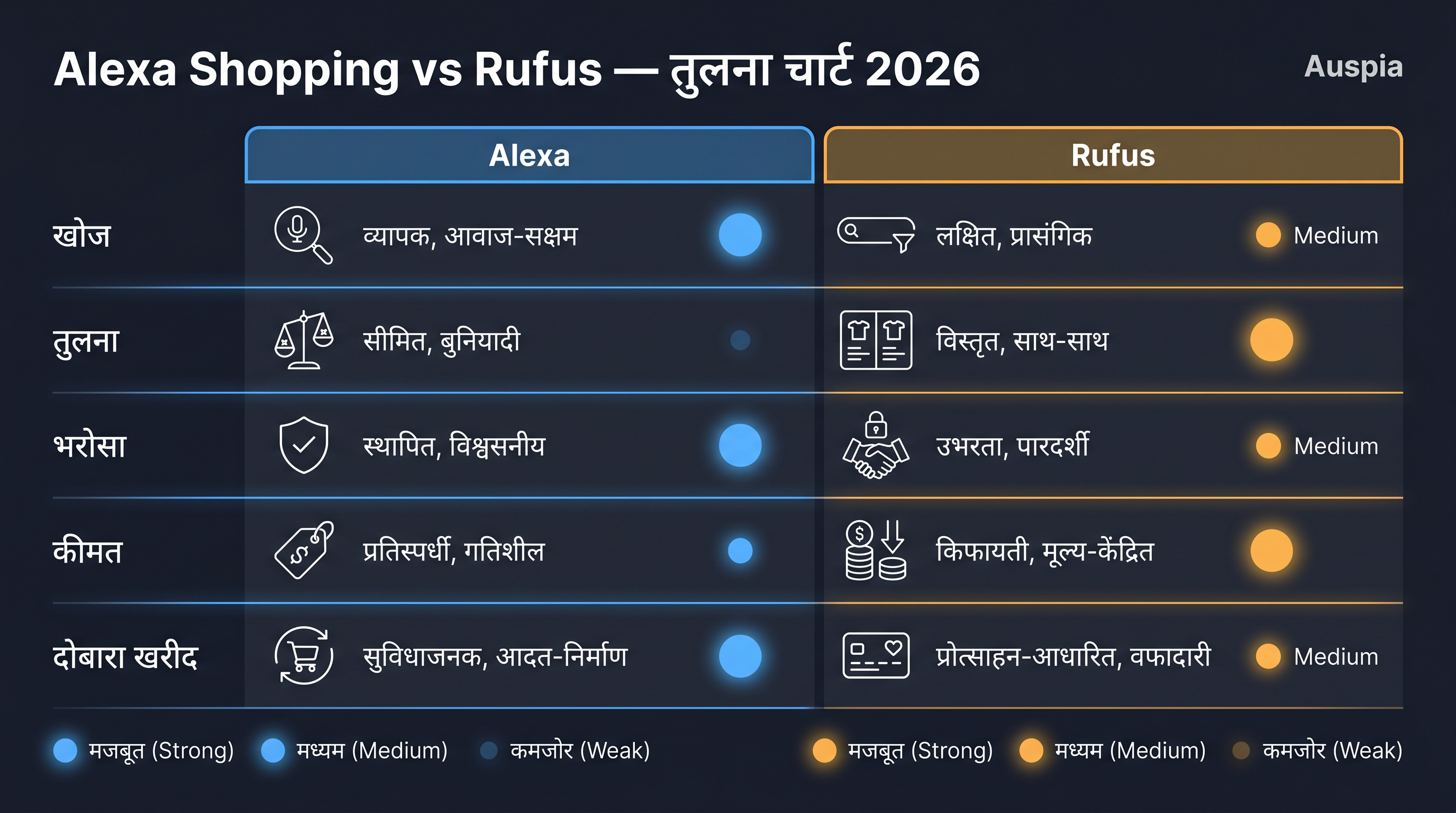
Rufus मुख्य रूप से discovery और research में मदद करता था। Alexa for Shopping assistant को comparison, memory और purchase execution के और करीब ले जाता है।
क्या बदला: chatbot से shopping agent तक
पुराना Rufus experience उपयोगी था, लेकिन उसे ignore करना अभी भी आसान था। वह Amazon app और website के अंदर shopping assistant की तरह रहता था। shoppers उससे questions पूछ सकते थे, reviews summarize कर सकते थे, options compare कर सकते थे और product category को समझने में मदद ले सकते थे।
Alexa for Shopping center of gravity बदलता है। मई 2026 में Amazon ने Alexa for Shopping को Amazon Shopping app और website पर Rufus और Alexa+ को साथ लाने का परिणाम बताया, और इसे personalized, agentic AI assistant के रूप में position किया। assistant Amazon के main search bar में questions का जवाब दे सकता है, shopping guides बना सकता है, product comparisons generate कर सकता है, एक साल तक की price history दिखा सकता है, price alerts set कर सकता है और target price पर auto-buy actions support कर सकता है।
यही आखिरी हिस्सा महत्वपूर्ण है। जब assistant shopping intent पर act कर सकता है, sellers अब सिर्फ search result page के लिए optimize नहीं कर रहे होते। वे AI-mediated decision के लिए optimize कर रहे होते हैं।
इस shift को सरल तरीके से देखें:
क्षेत्र | Rufus-style optimization | 2026 में Alexa for Shopping optimization |
|---|---|---|
खोज | product keywords और category terms match करना | use cases, buyer constraints और natural-language prompts match करना |
तुलना | specs और review summaries देना | differences को AI के लिए side by side explain करना आसान बनाना |
भरोसा | ratings और review count सुधारना | exact scenarios, objections और outcomes के around review evidence बनाना |
कीमत | आज की visible price जीतना | लंबी history में manipulative दिखने वाले price patterns से बचना |
दोबारा खरीद | shoppers के फिर search करने का इंतजार | repeat-purchase confidence और replenishment relevance कमाना |
इस 2026 update के लिए check किए गए sources
यह analysis Amazon के Alexa for Shopping पर public material और Amazon के explainer how to use Alexa for Shopping पर आधारित है। seller guidance Auspia की interpretation है कि ये shopping-assistant features Amazon GEO, listing clarity, price trust और repeat-purchase visibility के लिए क्या मतलब रखते हैं।
सात differences जिन पर sellers को सच में ध्यान देना चाहिए
यह article practical seller lens इस्तेमाल करता है: पहले बताता है क्या बदला, फिर उन changes को 2026 में global Amazon seller के लिए listing, pricing और review actions में translate करता है।
1. Rufus research support था। Alexa decision support के ज्यादा करीब है।
Rufus “क्या यह travel के लिए अच्छा है?” या “reviews battery life के बारे में क्या कहते हैं?” जैसे questions में मदद करता था। यह valuable है, लेकिन decision work का बड़ा हिस्सा shopper ही करता था।
Alexa for Shopping next step में मदद करने के लिए design है: options narrow करना, tradeoffs compare करना, prices watch करना, cart बनाना, और कुछ cases में purchase task automate करना। Amazon GEO के लिए इसका मतलब है कि listings को decision-ready information चाहिए, सिर्फ descriptive copy नहीं।
Bad listing language: “Premium quality, daily use के लिए great.”
Better listing language: “Carry-on travel के लिए designed, ज्यादातर airline seats के नीचे fit होता है, 2-3 day trips के लिए best है, और gym clothes या swimwear के लिए अलग wet pocket शामिल है।”
दूसरा version assistant को prompt से match करने के लिए useful information देता है।
2. entry point search habit में जा रहा है।
Rufus extra feature जैसा महसूस हो सकता था। Alexa for Shopping अधिक visible है क्योंकि Amazon AI assistance को main shopping flow में push कर रहा है, जिसमें search bar और shopping surfaces शामिल हैं।
इससे query behavior बदलता है। shopper शायद अब “stainless steel water bottle 32 oz” type न करे। वह पूछ सकता है, “कौन सी bottle पूरे दिन cold रहती है और car cup holder में fit होती है?” assistant इसे product candidates में translate कर सकता है।
Sellers को keywords की परवाह अभी भी करनी चाहिए। लेकिन listing में ऐसी sentences भी चाहिए जो jobs, settings, constraints और compatibility से map हों।
3. product data काफी नहीं; context अब matter करता है।
Rufus पहले से product pages, reviews, Q&A और अन्य shopping data इस्तेमाल करता था। Alexa for Shopping stronger personalization layer जोड़ता है क्योंकि यह product knowledge को shopping history, preferences और assistant context से connect कर सकता है।
इसका मतलब यह नहीं कि sellers shopper की history control कर सकते हैं। वे नहीं कर सकते। वे यह control कर सकते हैं कि product entity clean है या नहीं।
clean product entity signals में शामिल हैं:
- title, store, packaging और A+ content में एक consistent brand name
- precise model names और variant names
- dimensions, material, capacity, compatibility और warranty पूरे listing में same way stated
- images और bullets जो same use cases confirm करें
- review patterns जो listing के claimed practical benefits mention करें
अगर assistant messy product entity देखता है, तो recommendation पर भरोसा करने की वजह कम हो जाती है।
4. comparison vague differentiation को punish करेगा।
Alexa for Shopping product comparisons generate कर सकता है। यह helpful लगता है, जब तक आपका product वह न हो जिसके exist करने का clear reason नहीं है।
vague listing search page पर survive कर सकती है अगर image अच्छी हो और price low हो। AI comparison में vague products filler बन जाते हैं। assistant को explain करना होता है कि specific buyer के लिए एक item बेहतर क्यों है।
उदाहरण के लिए, “soft fabric” weak है। “Brushed cotton जो standard percale से warm feel देता है, cold sleepers के लिए बेहतर” stronger है। “Portable” weak है। “11 inches तक fold होता है और laptop backpack side pocket में fit होता है” stronger है।
यह creative copywriting नहीं है। यह retrieval-friendly product truth है।
5. price history discount theater को expose करना आसान बनाती है।
Amazon कहता है कि Alexa for Shopping पूरे एक साल तक की price history दिखा सकता है। इससे common seller habit risky हो जाती है: promotion से पहले prices raise करना, फिर later price को deal कहना।
assistant को किसी पर आरोप लगाने की जरूरत नहीं। उसे सिर्फ pattern दिखाना है या shopper को बताना है कि current price unusual नहीं है। urgency जल्दी weak हो सकती है।
Amazon Alexa GEO के लिए price trust visibility का हिस्सा बन जाता है। stable pricing, real discounts और consistent availability assistant के लिए recommend करना आसान है, compared with chaotic price swings और stock gaps।
6. replenishment बदलता है कि demand कहाँ capture होती है।
Alexa for Shopping shoppers को पहले ordered products add करने, conversational instructions से carts build करने और recurring purchase needs manage करने में मदद कर सकता है। practical terms में, कुछ demand fresh keyword discovery को skip कर सकती है।
यह उन sellers के लिए problem है जो सिर्फ first-time acquisition पर depend करते हैं। अगर product repeat purchase के लिए है, listing और product experience को reorder behavior support करना चाहिए।
कुछ examples:
- consumables को quantity, usage rate और refill timing obvious बनाना चाहिए
- bundles को confusing variant changes से बचना चाहिए जो repeat buying तोड़ते हैं
- packaging product को order history में recognize करना आसान बनाए
- Subscribe & Save eligibility, जहाँ relevant हो, GEO signal की तरह treat होनी चाहिए, सिर्फ conversion tactic नहीं
7. ads शायद ज्यादा conversational होंगे, लेकिन answer अभी भी trust decide करेगा।
Amazon का advertising business naturally AI shopping surfaces में participate करने के ways खोजेगा। sellers को sponsored placements, conversational prompts या AI-native ad formats के evolve होने की उम्मीद रखनी चाहिए।
लेकिन ads unclear product truth को हमेशा fix नहीं कर सकते। अगर assistant से narrow use case के लिए most reliable option recommend करने को कहा जाए, तो उसे evidence चाहिए। listing clarity, reviews, price history, fulfillment, return experience और brand trust सभी commercial answer का हिस्सा बन जाते हैं।
नया Amazon GEO model: prompts, proof और purchase tasks के लिए optimize करें
Traditional Amazon SEO पूछता है, “क्या यह product keyword के लिए rank कर सकता है?”
Amazon GEO अलग question पूछता है: “क्या AI shopping assistant specific buyer task के लिए इस product को confidently recommend कर सकता है?”
इस question की तीन layers हैं।
Layer | Alexa को क्या समझना है | seller को क्या improve करना चाहिए |
|---|---|---|
Prompt fit | कौन पूछ रहा है, उसे क्या चाहिए, और कौन सी constraints matter करती हैं | use-case bullets, buyer scenarios, compatibility notes |
Proof | listing के claims supported हैं या नहीं | review themes, Q&A coverage, images, comparison facts |
Purchase confidence | assistant shopper को safely आगे बढ़ा सकता है या नहीं | price stability, availability, delivery promise, reorder logic |
इसीलिए Amazon GEO कोई trick नहीं है। यह listings के लिए cleaner operating model है। assistant को product facts चाहिए जो retrieve, compare और defend करना आसान हो।
competitors के catch up करने से पहले पाँच listing upgrades
listing rewrite करने से पहले prompt map बनाएँ
ज्यादा keywords जोड़कर start न करें। उन questions से शुरू करें जो shopper assistant से पूछेगा।
standing desk converter के लिए prompt map में शामिल हो सकता है:
- “small apartment के लिए best desk converter”
- “standing desk converter जो two monitors fit करे”
- “5'4 से कम height वाले व्यक्ति के लिए desk riser”
- “video calls के लिए quiet adjustable desk converter”
- “full standing desk का budget alternative”
हर prompt अलग product fact की ओर point करता है। अगर वे facts missing हैं, Alexa को guess करना होगा या ऐसे competitor को चुनना होगा जिसे explain करना आसान है।
bullets को buyer constraints के around rewrite करें
अधिकतर Amazon bullets features से भरे होते हैं। Alexa को constraints चाहिए।
useful constraints में size, fit, compatibility, setup time, care instructions, safety limits, ideal user, non-ideal user और common objections शामिल हैं।
pet stairs seller को सिर्फ “high-density foam” नहीं कहना चाहिए। उसे stair height, weight guidance, sofa या bed height range, cover washability और older dogs with joint sensitivity के लिए suitability बतानी चाहिए। इससे assistant को confident recommendation के ज्यादा paths मिलते हैं।
review evidence accumulate करना आसान बनाएँ
आप customer reviews script नहीं कर सकते। आप chances improve कर सकते हैं कि real customers important use cases mention करें।
post-purchase instructions, packaging inserts, support flows और product onboarding customers से पूछ सकते हैं कि वे product कैसे use करते हैं, बिना positive language push किए। समय के साथ “मेरे Subaru cup holder में fit हुआ” या “10-hour shift के लिए काम आया” जैसे authentic reviews generic praise से कहीं ज्यादा useful हैं।
price trust को AI visibility factor की तरह treat करें
अगर Alexa एक साल की price history दिखा सकता है, तो pricing behavior story का हिस्सा बन जाता है। sellers को promotion calendars साफ रखने चाहिए, fake urgency से बचना चाहिए, और check करना चाहिए कि current offer last 12 months की तुलना में credible दिखेगा या नहीं।
इसका मतलब कभी discount न करना नहीं है। इसका मतलब discounts का sense बनना चाहिए।
product entity facts मजबूत करें
entity clarity boring लगती है, जब तक वह recommendations decide करना शुरू न कर दे। clean entity AI systems को product को सही category, use case और brand से connect करने में मदद करती है।
नीचे की चीजें consistent रखें:
- brand name
- model name
- product type
- variant logic
- materials और dimensions
- compatibility claims
- warranty या support claims
- title, bullets, A+ content और external brand pages में category language
अगर आप देखना चाहते हैं कि AI systems brand और product entities को कैसे read करते हैं, तो Auspia के GEO resources useful next stop हैं।
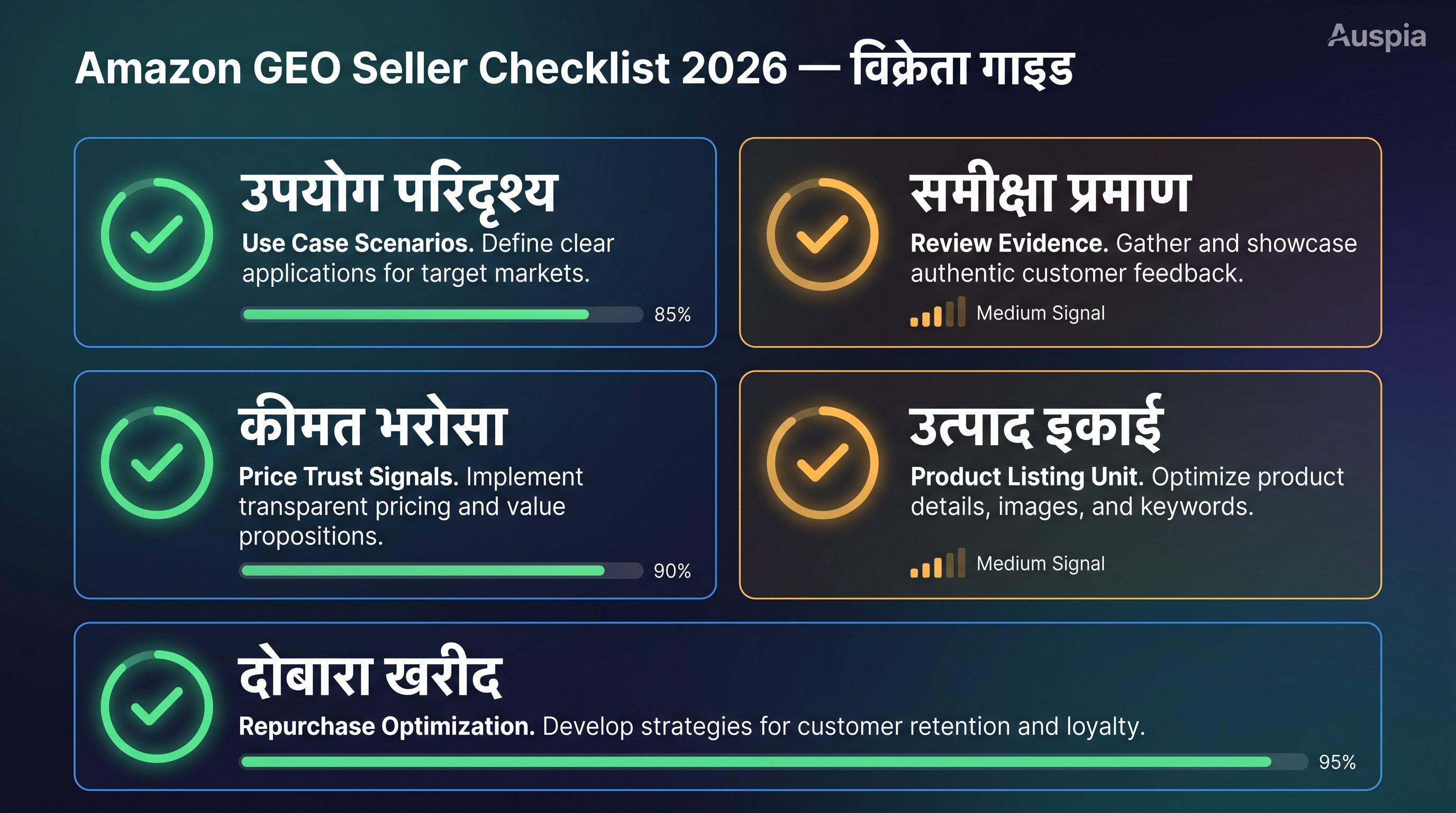
Alexa-era Amazon GEO के लिए listing clarity, review evidence, price trust, entity facts और repeat-purchase signals वे पाँच checks हैं जिन्हें sellers को पहले run करना चाहिए।
2026 Amazon Alexa GEO checklist
listing rewrite करने से पहले इसे quick audit की तरह इस्तेमाल करें।
जाँच | पास होने की शर्त | आम गलती |
|---|---|---|
उपयोग परिदृश्य की स्पष्टता | listing बताती है कि product किसके लिए है और कब इस्तेमाल करना है | आम “रोज़मर्रा के उपयोग” वाली copy |
तुलना की तैयारी | alternatives की तुलना में differences specific और factual हैं | proof के बिना “बेहतर quality” जैसे claims |
समीक्षा समर्थन | reviews असली scenarios और objections mention करते हैं | reviews positive हैं लेकिन vague |
कीमत पर भरोसा | promotions लंबी price history के सामने credible दिखते हैं | repeated artificial discount patterns |
Entity consistency | brand, model, specs और variants हर जगह match करते हैं | conflicting names या unclear variant logic |
Reorder readiness | repeat-purchase products recognize और replenish करना आसान है | confusing pack sizes या changing bundles |
Prompt coverage | listing natural-language buyer questions का answer देती है | keyword list है, लेकिन questions unanswered हैं |
ज्यादातर sellers क्या गलत समझेंगे
पहली गलती Alexa for Shopping को नए label वाला Rufus मानना है। shopping-assistant logic का कुछ हिस्सा carry over हो सकता है, लेकिन product direction अलग है। assistant purchase flow में और deeper जा रहा है।
दूसरी गलती product को ignore करके AI summaries के लिए over-optimize करना है। अगर reviews durability की शिकायत करते हैं, तो कोई भी prompt-friendly copy recommendation को safer नहीं बनाएगी।
तीसरी गलती यह मानना है कि Amazon GEO का मतलब robots के लिए लिखना है। यह उल्टा है। best AI-readable listing आमतौर पर वही होती है जिसे जल्दी में human 20 seconds में समझ सके।
Auspia view
Alexa for Shopping से फायदा उन sellers को नहीं होगा जो checklist में “Alexa optimized” जोड़कर आगे बढ़ जाते हैं। फायदा उन्हें होगा जो product को समझना, compare करना, trust करना और reorder करना आसान बनाते हैं।
यही 2026 का असली Amazon GEO shift है। search visibility अभी भी important है, लेकिन assistant layer दूसरी gate बन रही है। इसे pass करने के लिए sellers को बेहतर product facts, साफ evidence और कम vague copy चाहिए।
Rufus ने खरीदारों को बेहतर सवाल पूछने में मदद की। Alexa for Shopping तय कर सकता है कि कौन से जवाब खरीद में बदलने लायक हैं।
FAQ
क्या Amazon ने Rufus को पूरी तरह Alexa for Shopping से replace कर दिया है?
Amazon ने Amazon Shopping app और website में Rufus और Alexa+ को Alexa for Shopping के तहत साथ लाया है। seller terms में, 2026 में Alexa for Shopping को forward-facing AI shopping layer मानकर planning करना safest है।
क्या Amazon Alexa GEO, Amazon SEO जैसा ही है?
नहीं। Amazon SEO keyword ranking, relevance, conversion और marketplace signals पर focus करता है। Amazon Alexa GEO इस बात पर focus करता है कि AI assistant natural-language shopping tasks के लिए product को समझ, compare और recommend कर सकता है या नहीं। दोनों overlap करते हैं, लेकिन identical नहीं हैं।
sellers के लिए fastest Amazon GEO improvement क्या है?
title, bullets, A+ content और Q&A को real buyer prompts के around rewrite करें। specific use cases, constraints, compatibility facts और comparison points जोड़ें। फिर check करें कि reviews और images उन claims को support करते हैं या नहीं।
क्या price history Alexa recommendations को affect करती है?
Amazon कहता है कि Alexa for Shopping एक साल तक की price history दिखा सकता है और price alerts support कर सकता है। इसका मतलब pricing behavior shopper trust को affect कर सकता है, भले ही Amazon इसे ranking factor न कहे।
क्या sellers को voice shopping के लिए optimize करना चाहिए?
हाँ, लेकिन awkward voice keywords लिखकर नहीं। natural questions, repeat purchase behavior, clear product names और easy cart-building instructions के लिए optimize करें। voice एक interface है; deeper change assistant-led shopping है।
लेखक: Ryan Chen, Auspia में marketplace growth के 10 साल के अनुभव वाले Senior Amazon Operations Expert. Ryan Amazon GEO, marketplace search behavior, AI-assisted product discovery और sellers के लिए practical operating playbooks पर लिखते हैं।