Perplexity vs ChatGPT: Which AI Tool Actually Gets You Better Answers?
The perplexity vs chatgpt debate just got a lot more interesting. In February 2026, Perplexity launched Personal Computer — an agentic AI assistant that connects to 400+ tools including QuickBooks, Vercel, Shopify, and the full Microsoft 365 suite. It runs multi-step workflows for hours, operates local files, and works across native apps simultaneously. By May 2026, it was open to all Mac users and rolling out to Windows.
That's a long way from a search engine.
Meanwhile, ChatGPT now reaches 900 million weekly active users and generates an estimated $25 billion in annual revenue. It supports image generation, voice conversations, code execution, and a vast plugin ecosystem.
These two tools started in similar territory — AI assistants that answer questions — and have diverged significantly. Understanding how they differ now is the only way to pick the right one for your actual work. This guide breaks down what each tool does best, where each one fails, and who each one is actually for.
Note on sources: Accuracy figures cited in this article are drawn from third-party benchmark comparisons published in 2026 (techbullion.com, nailedit.ai). User and revenue figures are from publicly reported data. Perplexity Personal Computer details are sourced from Perplexity's own changelog and launch blog posts.
Quick Comparison: Perplexity vs ChatGPT at a Glance
Feature | Perplexity | ChatGPT
Core design | Retrieval-first answer engine | Generation-first conversational AI
Real-time search | Every query, indexed 50B+ pages | Optional (Bing-powered, inconsistent)
Citations | Inline on every answer | Inconsistent — not always triggered
Factual accuracy (real-time queries) | ~92% | ~87%
Citation error rate | ~37% | ~67%
Agentic capabilities | Personal Computer (400+ tool integrations) | Operator mode, limited integrations
Creative writing | Limited | Strong
Code / development | Limited | Strong
Image generation | No | Yes (DALL-E)
Voice mode | Basic | Advanced
Free tier | 5 Pro searches/day | GPT-4o available
Pro pricing | $20/month | $20/month
Monthly active users | 100M | 900M
How They Work: The Fundamental Architecture Difference
This is the part most comparison articles skip, but it explains every practical difference below.
Perplexity is retrieval-first. When you ask a question, Perplexity's first move is to run a live search against its 50B+ page index. It retrieves relevant sources, then synthesizes an answer with numbered citations pointing back to those sources. The model's role is synthesis, not generation from memory.
ChatGPT is generation-first. When you ask ChatGPT something, it draws on its training data first. Web search is available but it's an optional tool the model decides when to use — not the default path. The model's strength is reasoning, writing, and code generation from internalized knowledge.
Neither approach is universally better. They're optimized for different tasks.
Where Perplexity Wins
Real-Time Research with Verifiable Sources
If you need accurate, current information with sources you can actually check, Perplexity has a structural advantage. Every answer comes with inline citations. You can see exactly which source supports each claim.
Third-party benchmarks published in 2026 across 100+ real-world queries put Perplexity at approximately 92% factual accuracy on time-sensitive topics versus ChatGPT's ~87% with browsing enabled. On fast-moving topics like financial data, that gap widens further (~94% vs ~81%). The citation error rate — how often a cited source doesn't actually support the claim — is roughly 37% for Perplexity versus 67% for ChatGPT (source: nailedit.ai benchmark, 2026).
A concrete example: ask either tool "what is the current federal funds rate?" Perplexity fetches live Federal Reserve data and cites the source inline. ChatGPT may give you a figure from its training data — correct for its cutoff date, but potentially months out of date — and may or may not trigger its optional Bing search depending on how it interprets your query.
For students, analysts, journalists, and anyone doing fact-intensive work, this is Perplexity's core value.
Agentic PC Control (Personal Computer Feature)
This is where Perplexity has made its most aggressive bet. Personal Computer launched February 25, 2026 — first for Enterprise Max subscribers, then rolling out to Pro subscribers, with Mac becoming generally available in May 2026 and Windows listed as "coming soon" as of June 2026 (per Perplexity's official changelog).
From a single prompt, Personal Computer can:
- Work across your local files and native applications
- Connect to 400+ external tools (QuickBooks, Vercel, Shopify, Slack, GitHub, and the full Microsoft 365 suite)
- Run multi-step workflows that last hours or even months
- Maintain context across sessions and learn your preferences over time
Since launch, Perplexity has publicly stated the system performed over $4.4 billion in labor-equivalent work for users — a figure they shared when announcing Computer's integration into Microsoft 365 apps (Word, Excel, PowerPoint, Outlook, Teams) in June 2026 (source: perplexity.ai/hub/blog).
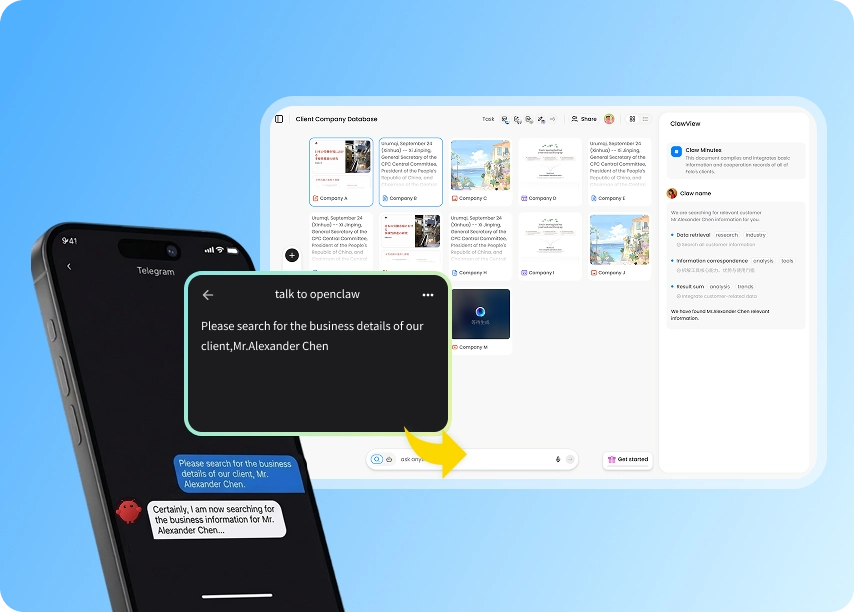
To test Personal Computer concretely: a Pro subscriber can open the Mac app, type "pull this week's Shopify sales data, compare it to last month, and draft a summary I can paste into our Notion weekly review," and Perplexity handles the multi-step workflow end to end. That's a meaningfully different interaction model from ChatGPT, which would require you to manually paste data and context into the chat.
Access note: Personal Computer is available to Pro ($20/month) and Enterprise Max subscribers. Windows support was in waitlist stage as of June 2026.
Multi-Model Flexibility
Perplexity Pro lets you choose which underlying model answers your query — giving you access to multiple frontier models within one interface. For power users who want to match the model to the task, this flexibility is practical.
Where ChatGPT Wins
Creative Writing and Long-Form Content
ChatGPT's generation-first architecture is a genuine advantage for creative tasks. It maintains narrative coherence across long pieces, handles stylistic variation, and can produce fiction, marketing copy, and structured documents with a fluency that Perplexity doesn't match.
If you're writing a blog post, drafting a pitch deck narrative, or working on anything where creativity and voice matter more than citation accuracy, ChatGPT is the better tool.
Code Generation and Development
For software development, ChatGPT's Code Interpreter, function calling, and deep code generation capabilities are substantially more mature than Perplexity's. It can debug, refactor, generate tests, and explain complex codebases with context that a search-grounded tool can't match.
Multimodal Capabilities
ChatGPT supports DALL-E image generation, advanced voice mode (with real-time conversation), video understanding, and file analysis. These are use cases Perplexity doesn't cover at all.
Conversational Depth
For multi-turn conversations that build on previous context — iterative brainstorming, complex analysis across many exchanges — ChatGPT's generative architecture handles this more fluidly. Perplexity's search-anchored model is better suited to self-contained research queries than extended dialogue.
Head-to-Head: Specific Use Cases
For Academic Research
Perplexity is better. Inline citations, real-time index, and more consistent factual accuracy make it the right tool when you need verifiable sources. A single Perplexity Deep Research query now runs dozens of searches, reads hundreds of sources, and delivers a cited report in 2 to 4 minutes.
For Writing Articles and Content
ChatGPT is better. Its generative strengths produce more natural prose and handle stylistic requirements that Perplexity can't match.
For Coding and Development
ChatGPT is better. Its Code Interpreter and development ecosystem are more mature.
For News and Current Events
Perplexity is better. Its always-on real-time index versus ChatGPT's optional Bing search means Perplexity is more reliable for breaking news and fast-moving topics.
For Automation and Workflows
Perplexity is better (for paid users). Personal Computer's 400+ tool integrations and agentic capabilities have no direct equivalent in ChatGPT's current feature set.
For Non-English Users
Both tools have meaningful limitations here — which is why there's a third option worth considering (see below).
The Gap: What Neither Tool Handles Well
Both Perplexity and ChatGPT are primarily English-optimized. Perplexity's real-time index is strong for English-language sources. ChatGPT's training data is heavily English-weighted. For users researching topics where the best sources are in Japanese, Chinese, Korean, Arabic, or other languages, both tools create an invisible gap — they either miss non-English sources entirely or surface lower-quality English summaries.
This is particularly relevant for researchers, analysts, and professionals in non-English-speaking markets who need to access global information.
A Third Option for Multilingual Research: Felo
If your work regularly crosses language boundaries, Felo is worth knowing about. It's built from the ground up as a multilingual AI search engine — not an English-first tool with added translation.
Felo supports 19+ languages and auto-translates foreign-language search results into your preferred language in real-time. A Japanese researcher can find German academic papers and read them in Japanese. A Korean analyst can track French market news in Korean. The translation happens at the search layer, not after the fact.
Beyond search, Felo includes access to 245M+ academic papers with multilingual summaries, AI-generated presentations from research queries, and a visual collaboration workspace. Pro plan is $14.99/month — $5 less than both Perplexity and ChatGPT Pro. For teams, Felo Enterprise adds SSO and role-based access.
Felo's limitation: it doesn't have the agentic PC control features of Perplexity Computer, and its creative writing output is less polished than ChatGPT's. It's specifically a strong fit for users whose primary need is multilingual research with cited answers.
Pricing Breakdown
Plan | Perplexity | ChatGPT | Felo
Free | 5 Pro searches/day | GPT-4o available | 200 credits/day (5 Pro searches)
Pro | $20/month | $20/month | $14.99/month
Key Pro features | Unlimited search, Personal Computer, multi-model | GPT-4o, image gen, voice mode, code | 100 Pro searches/day, 15,000 credits, LLM choice
The Recommended Workflow (If You Can Use Both)
Many power users run Perplexity and ChatGPT together, not as alternatives:
- Use Perplexity to research — get cited, current facts and source lists
- Feed those verified facts into ChatGPT to write, analyze, or build
Combined cost is $40/month. For knowledge workers who do both research and production work daily, this combination covers the full cycle better than either tool alone.
Frequently Asked Questions
Is Perplexity better than ChatGPT for research?
For citation-backed, real-time research, yes. Perplexity cites sources on every answer and uses a live search index on every query. ChatGPT's web search is optional and less consistent. For research where you need to verify sources, Perplexity is the more reliable tool.
Is ChatGPT better than Perplexity for writing?
Yes. ChatGPT's generative model produces more natural, stylistically flexible prose. Perplexity's strength is synthesis of retrieved sources, not creative generation.
What is Perplexity Personal Computer?
Personal Computer is Perplexity's agentic AI feature that works across your local files, native apps, and 400+ external tools (including QuickBooks, Vercel, Shopify, and Microsoft 365). It can run multi-step automated workflows that last hours. It's available to Pro and Enterprise Max subscribers. Windows support launched in 2026.
Does Perplexity hallucinate less than ChatGPT?
On real-time queries, yes. Perplexity's retrieval-first architecture anchors answers to live sources, reducing the gap between the model's training data and current reality. Independent tests show a citation error rate of ~37% for Perplexity versus ~67% for ChatGPT on queries requiring current information.
Which AI is better for non-English users?
Neither Perplexity nor ChatGPT is optimized for non-English research. Both are primarily English-weighted. For users who need to research across multiple languages with auto-translation, Felo is purpose-built for this use case with 19+ language support.
Can I use Perplexity and ChatGPT together?
Yes, and many power users do. A common workflow: use Perplexity for the research and fact-finding phase, then bring those verified sources into ChatGPT for writing, analysis, or code generation.
Conclusion
The perplexity vs chatgpt question doesn't have a universal answer — it has a use-case answer.
Perplexity is the right choice when you need verifiable, real-time information with sources you can check. Its new Personal Computer feature pushes it further into agentic territory, making it genuinely useful for automating complex workflows across your existing tools.
ChatGPT is the right choice when you need to create — write, code, generate images, or have multi-turn conversations that build toward something.
For users whose work crosses language barriers, both tools have gaps that a third option, Felo, is specifically designed to fill with real-time multilingual search and auto-translation across 19+ languages.
Pick based on what you actually do, not which brand name is louder.
Disclosure: This article was written by the Felo team. While we strive for fair comparison, please be aware of the potential conflict of interest.