What Changed
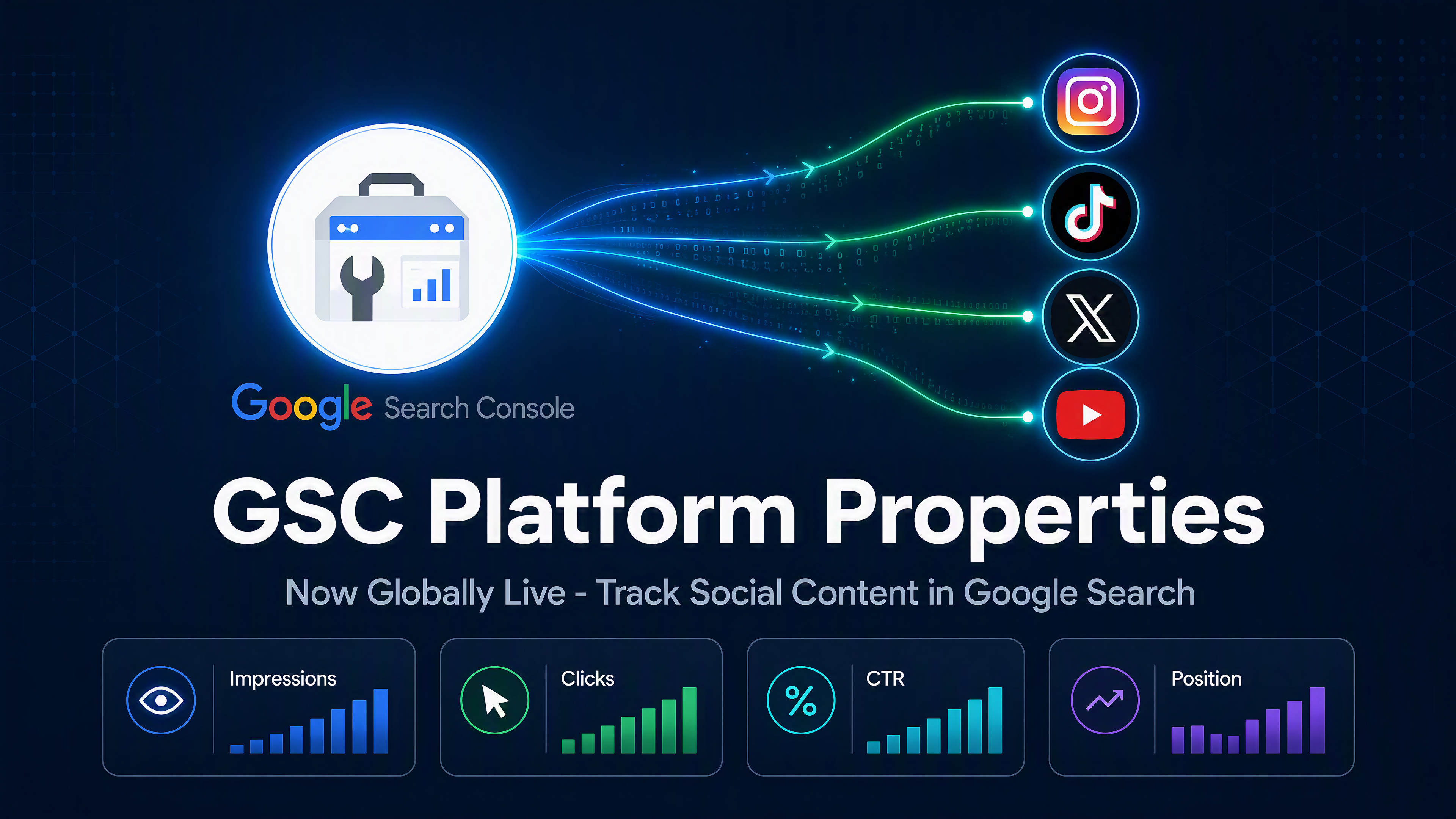
Google flipped the switch. After an initial launch on July 7, Platform Properties in Google Search Console is now globally available to every GSC user as of late July 2026.
This is not a minor dashboard tweak. For the first time, Search Console tracks how your content performs on domains you don't own. Instagram, TikTok, X, and YouTube — four platforms where most brands and creators publish daily — now show up in the same Performance reports you use for your website.
Google is telling you something directly: your social content is part of your search presence. Not through referral traffic estimates. Not through a third-party tool stitching together clues. Directly, with impression and click data, inside its own search analytics product.
If you run a brand or create content without a website? You can now use Search Console. That is a genuinely new audience for a tool that has always required a domain you control.
What the Data Actually Shows
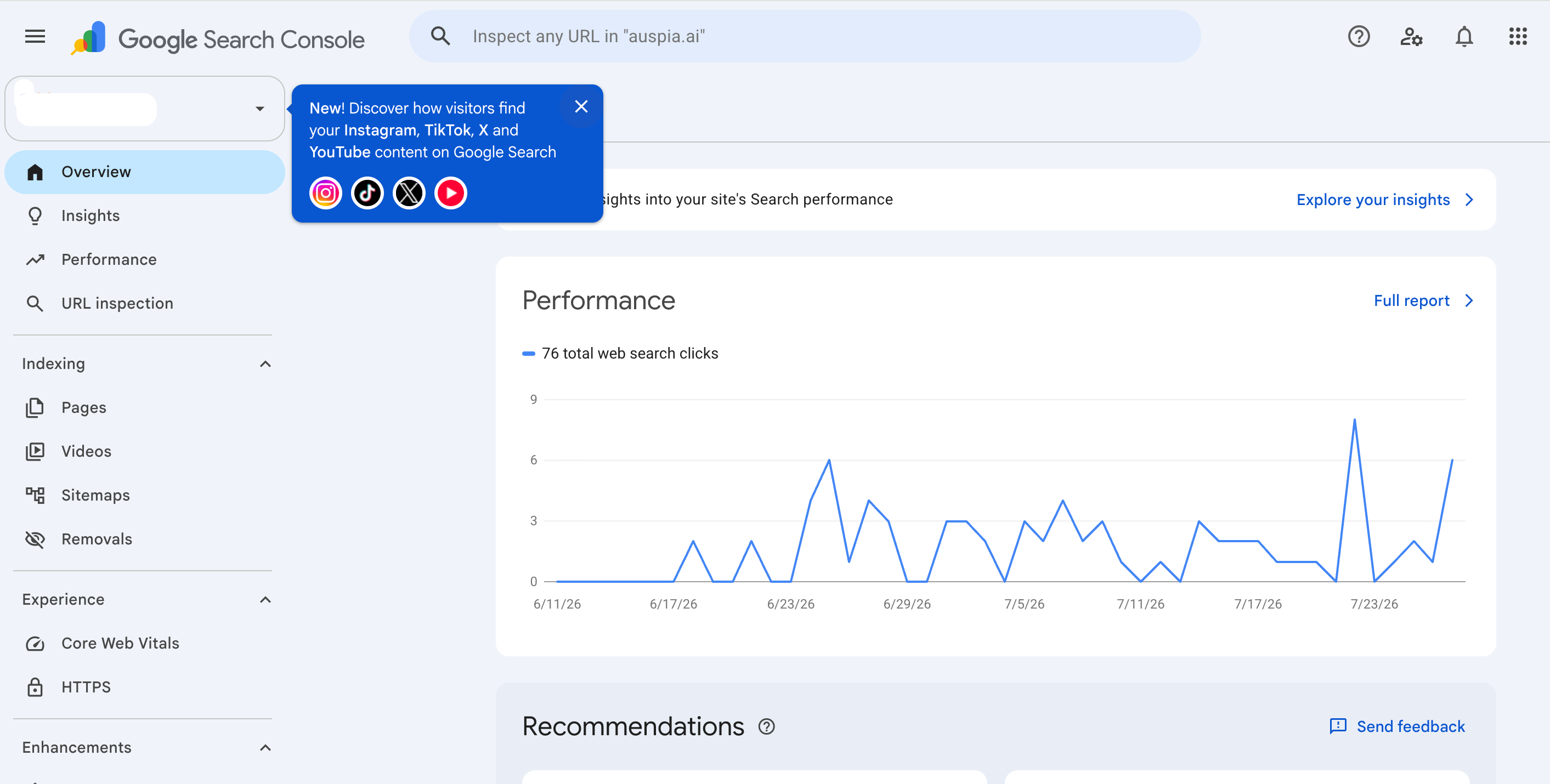
Platform Properties gives you the same metrics you already know from GSC, applied to your posts, videos, and profiles on third-party platforms. Three reports are available:
Performance Report
Query-level and post-level data. You see which search terms bring people to your TikTok or YouTube content, how many impressions each post earned, click-through rates, and average position. Filter by platform, content type, date range, and query. Export everything.
Insights Report
A higher-level summary. Google groups your queries into trending-up and trending-down buckets, surfaces your best-performing content, and flags format-level patterns. This is where you catch shifts before they hit your regular analytics. A query cluster suddenly driving traffic to your Instagram Reels. A YouTube Shorts format outperforming long-form on a specific topic.
Achievements Report
Click milestones. When a post crosses a threshold, Google flags it. Think of it as a nudge to investigate — useful for spotting outlier content, not a replacement for actual performance analysis.
The Performance report inside Platform Properties. Same GSC metrics you know — now mapped to your TikTok, Instagram, X, and YouTube content.
How to Set It Up
Setup uses OAuth. That makes this a lot easier than verifying a traditional website property: no DNS records, no HTML file uploads, no code snippets.
Here's the flow:
- Open Google Search Console and click Add Property.
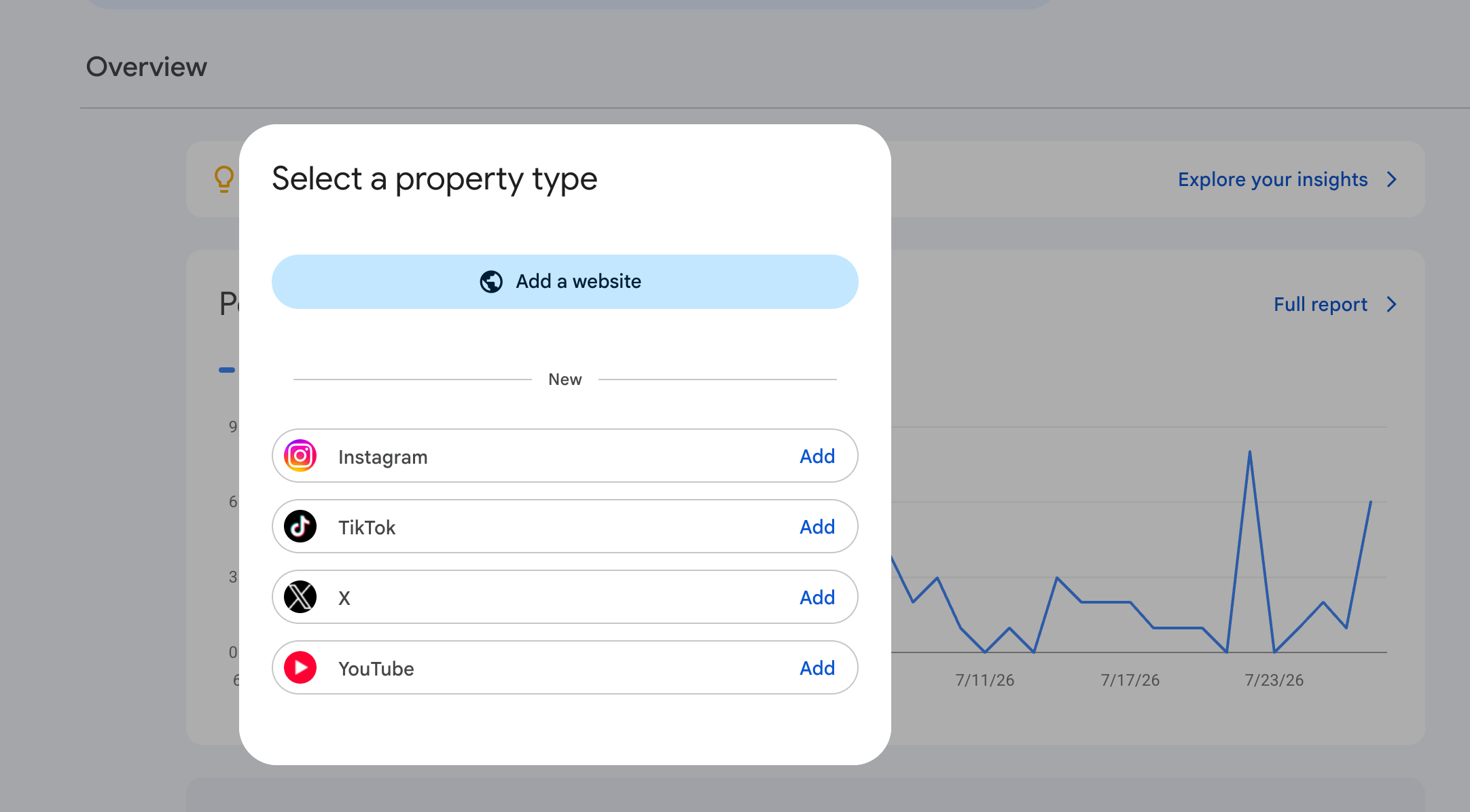
- Select Platform Property from the property type options.
- Choose your platform — Instagram, TikTok, X, or YouTube.
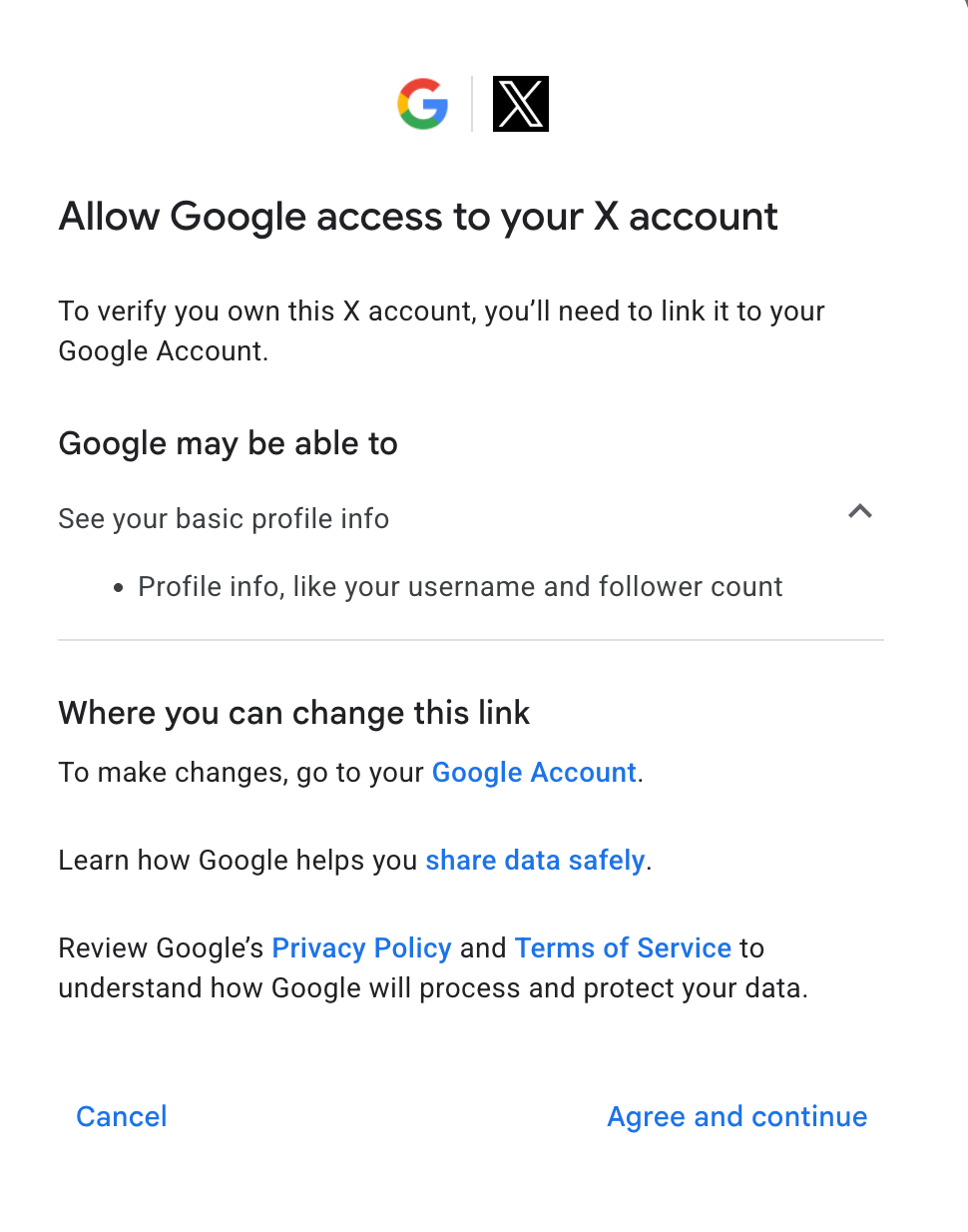
- Authenticate via OAuth. Google redirects you to the platform's login, you grant read-only access to your content data, and you're redirected back.
- The property appears in your GSC dashboard. Data collection starts immediately.
Adding a Platform Property in GSC. OAuth verification means no DNS records or code snippets — connect and go.
Note: you need to add each platform as a separate property. Instagram + TikTok + YouTube means three properties. There is no unified cross-platform view yet.
One detail: verification grants Google read access to your public content metadata and performance data on that platform. It does not give Google posting permissions or access to private messages, DMs, or account settings.
The Insights report surfaces trending query groups and top-performing content across your connected platforms.
Platform by Platform: What You Learn
Not all platforms deliver the same search signal. Here is what early data patterns suggest:
Instagram. Strong in Discover. Instagram posts and Reels surface heavily in Google Discover feeds, especially for lifestyle, travel, food, and visual-topic queries. The data helps you understand which visual content themes Google considers relevant to your audience.
TikTok. The wild card. TikTok content already appears in Google Search results for how-to, review, and trend-driven queries. Platform Properties shows you which of your TikToks Google is indexing and what queries they rank for — data TikTok's own analytics won't give you.
X (Twitter). News and real-time relevance. X posts appear in Google's "From X" carousel and News surfaces. If your brand uses X for announcements, product updates, or industry commentary, you can now see which posts earned search impressions and clicks.
YouTube. The heavyweight. YouTube is already a search engine in its own right, and Google surfaces YouTube videos prominently in web search results. Platform Properties adds a layer of data on top of YouTube Studio — showing you which search queries drive clicks from Google Search specifically, not just from YouTube's internal search.
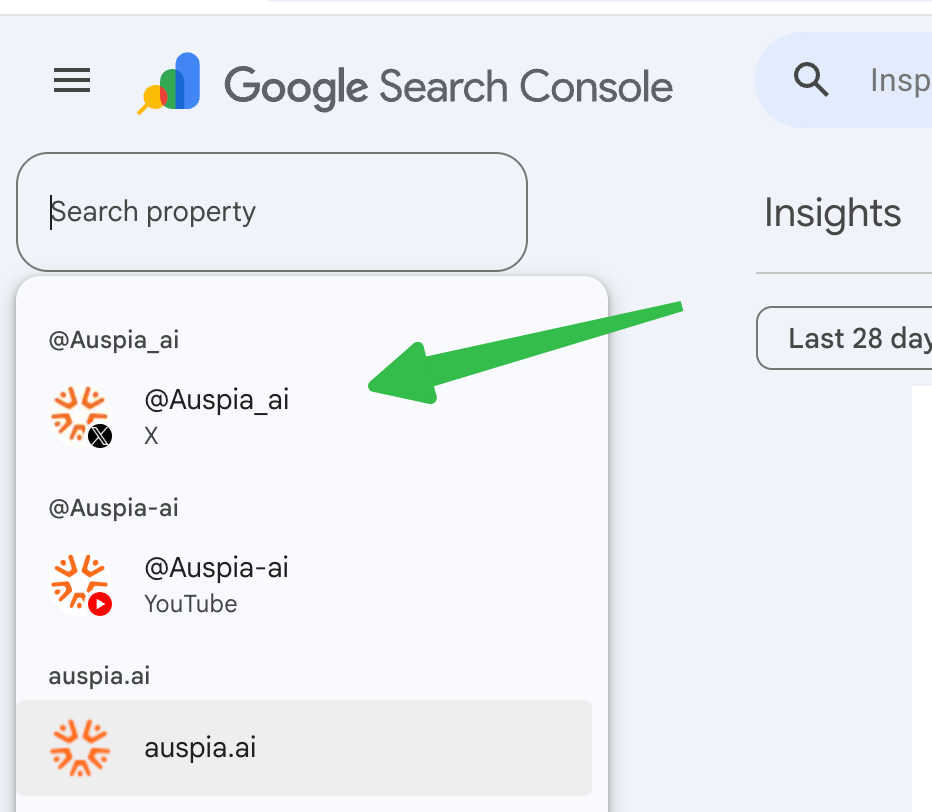
The Platform Properties overview. Each connected platform appears as its own property with independent performance data.
The Strategic Shift: Social Content Is Now a Search Asset
This feature changes how teams should think about social media. Before Platform Properties, social content lived in a separate analytics universe. You measured engagement in-app — likes, comments, shares, watch time — and treated any search traffic as a lucky side effect.
Google is now telling you to stop thinking that way.
Your Instagram Reel that answers a common buyer question? That's a search result. Your TikTok tutorial that walks through a setup process? That's a search result. Your YouTube comparison video? Your X thread reacting to an industry announcement? All search results — and now you can see exactly which queries they show up for.
In the AI Overviews era, this matters more than raw website traffic alone. When Google synthesizes answers from multiple sources, the brand that shows up across platforms — website, YouTube, social profiles, review sites — has more surface area to get pulled into an AI-generated answer. Platform Properties gives you the data to understand that cross-surface presence for the first time.
This does not mean social replaces your website. A TikTok video cannot convert like a well-built landing page. But a social post can be the discovery layer — the first touchpoint that brings someone into your search footprint, which your website then converts.
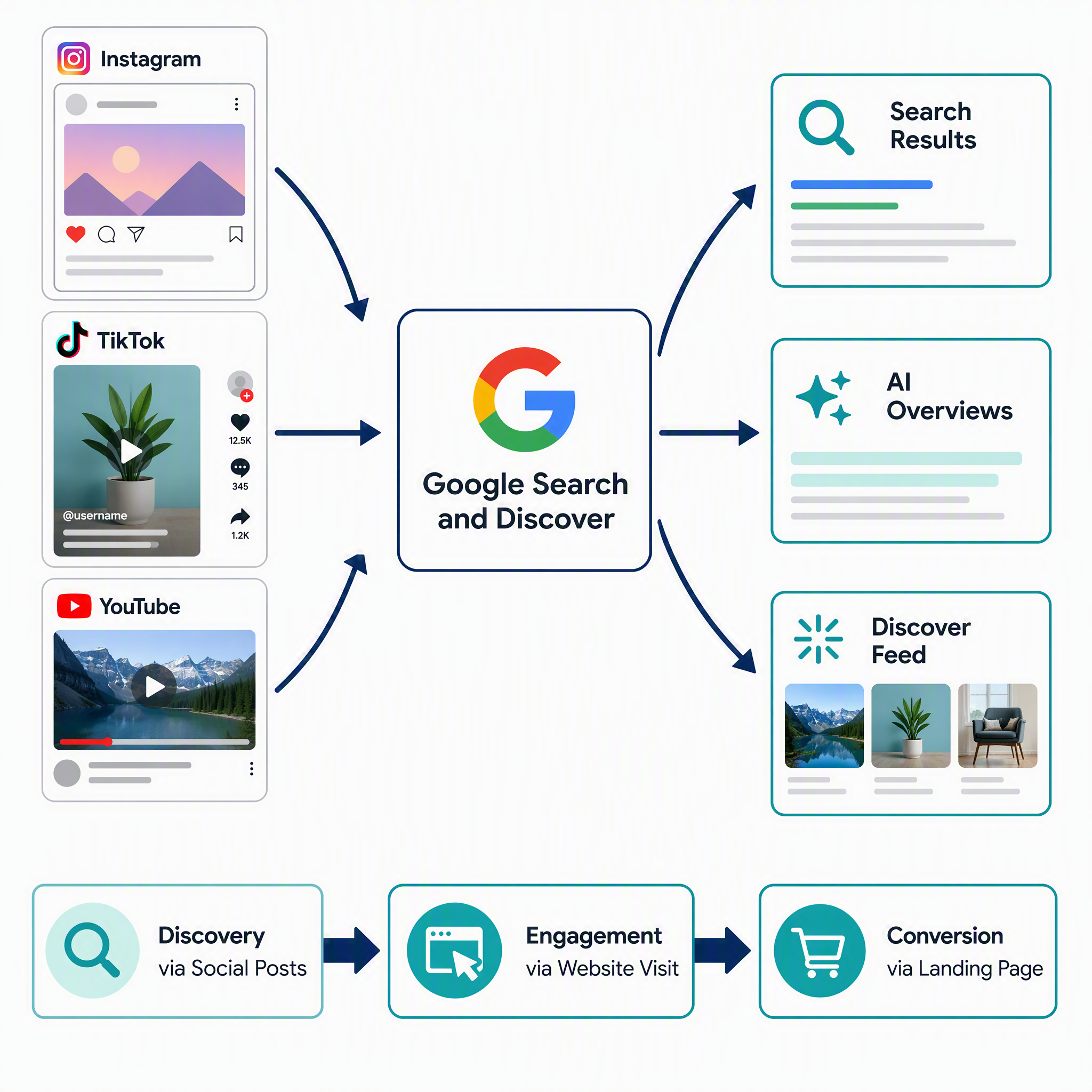
How social content becomes a search asset. Platform posts flow into Google's search ecosystem, then branch to multiple discovery surfaces. The conversion path runs from discovery through engagement to conversion — social handles the top, your website closes the loop.
What Teams Should Do This Week
Five actions you can complete before Friday:
1. Connect your brand's active platforms. At minimum, connect the platforms where you publish regularly. If your brand has an inactive TikTok account with old content, connect it anyway — you might discover residual search traffic you did not know about.
2. Run a 90-day Performance report. Pull the last 90 days of data for each platform. Look for: queries you already target on your website that also surface your social content, content formats that outperform others in search (Shorts vs long-form, image posts vs text), and queries you are not targeting at all that Google is already associating with your social content.
3. Identify your top 5 search-driven posts per platform. These are your proof-of-concept assets. Study them — what topic, format, and structure do they share? That pattern is your social-search content brief.
4. Check for cannibalization or reinforcement. When a social post and a website page both rank for the same query, is that helpful (two touchpoints in the search result) or harmful (social post outranking your higher-converting page)? Platform Properties gives you the data to answer that question.
5. Add social-search data to your monthly reporting. If your team reports on search visibility, Platform Properties data belongs in that report. A query that sends clicks to your YouTube video is a search win — just a different format.
Known Limits and Caveats
Platform Properties is useful. But it is not a replacement for anything else you already use. Here are the boundaries:
No historical backfill. Data starts the moment you verify a platform. Connect today, see today onward. Last month's numbers won't appear.
Google surfaces only. This is Google Search, Discover, and News — not Bing, not TikTok's in-app search, not YouTube's internal search. One slice of visibility.
Not a social analytics tool. No likes, comments, shares, follower counts, or engagement rates here. Those still live in each platform's native analytics. Platform Properties answers one question: how does this content perform inside Google search?
Separate properties per platform. No combined Instagram + TikTok + YouTube dashboard yet. You manage and view each platform independently.
Read-only access. Google reads your content metadata from the connected platform. It cannot post, edit, or manage your accounts.
Auspia Take
Platform Properties is the kind of feature that looks small on announcement day and turns out to be significant in hindsight. Google is saying that platform content — social posts, short videos, threads — is a first-class search asset, not supplementary noise.
For SEO and GEO teams, this creates both an opportunity and a coordination problem. The opportunity: more search surface area through content you are already creating. The coordination problem: most social teams don't think about search queries, and most search teams don't think about social content. Platform Properties gives both sides a shared dataset to fix that split.
Our recommendation: don't over-engineer this. Connect your platforms, pull the data, find your top 5 search-driven posts, and start a conversation between your search and social teams. The rest follows from the data.
If you want to go deeper on how AI search engines surface social and platform content, our AI Search Visibility Checker can show you which of your pages and profiles appear across AI answer surfaces.
FAQ
Do I need a website to use Platform Properties?
No. Platform Properties works through OAuth verification with each social platform. If you publish on TikTok, Instagram, X, or YouTube and have no website, you can use Search Console. That was not possible before this feature.
Can I see data from before I connected my accounts?
No. Data starts the moment you verify. No historical backfill. Connect your accounts sooner rather than later.
Does Platform Properties show which posts appear in AI Overviews?
Not directly. Platform Properties covers Search, Discover, and News. AI Overviews live inside Search, so AI Overview impressions may be mixed into your Search numbers. But there is no separate AI Overviews filter. Yet.
Can competitors see my platform performance data?
No. This is private GSC data. Only verified property owners and users you grant access to can see it. Same as your website's GSC data.
Should I connect platforms even if I rarely post?
Yes. You might find search traffic from old posts you forgot about. The data costs nothing. Finding even one post that is quietly earning impressions makes the 30-second setup worth it.
Author: Jasper Quinn, AI Search Product Researcher Tracking 60+ Feature Changes at Auspia. Jasper writes about search product updates, AI platform changes, and what tool behavior shifts mean for growth teams.