Direct answer
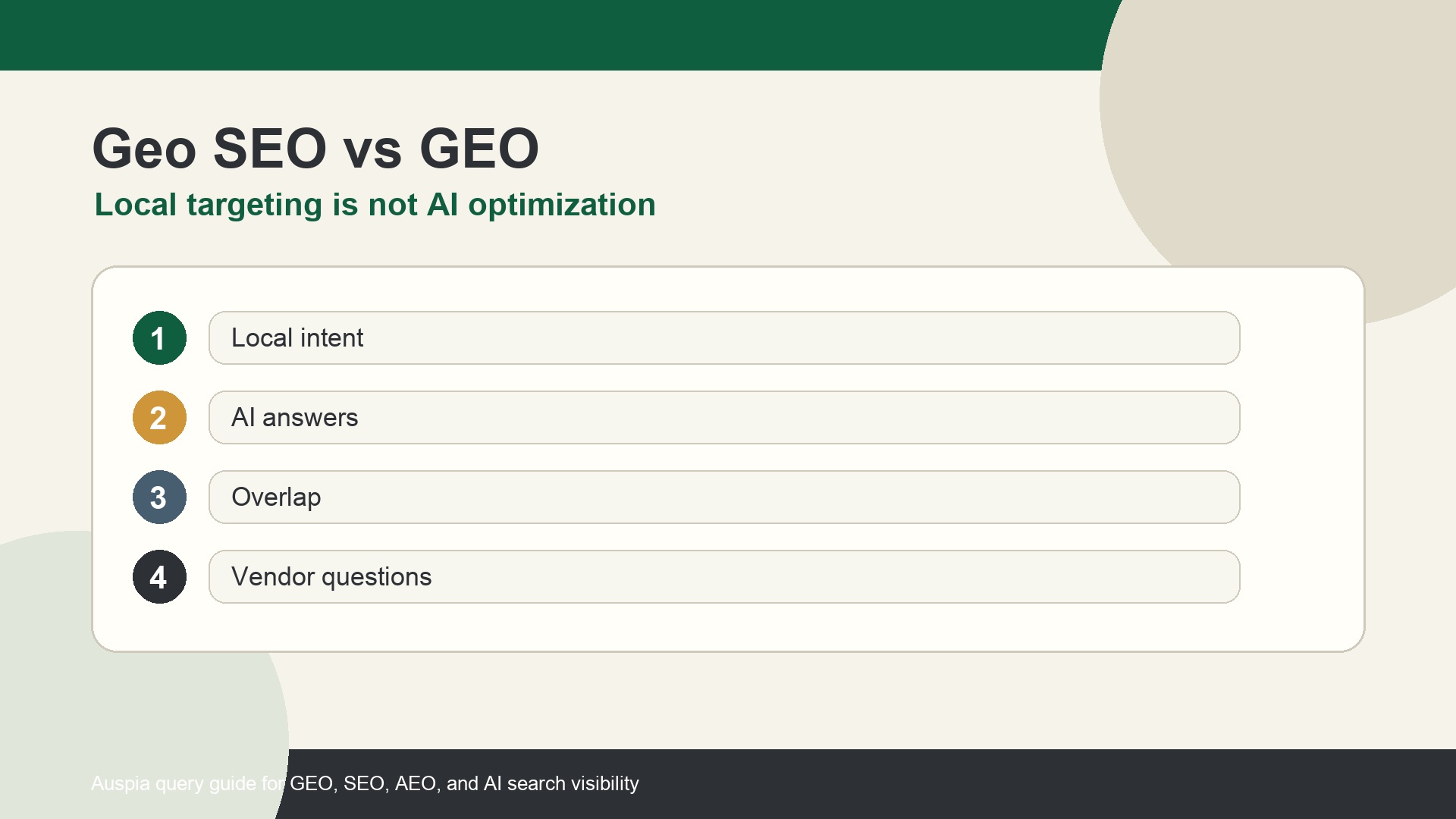
Geo-targeted SEO is location-based optimization. It helps a business rank for searches tied to a city, region, country, or service area. GEO, in the modern AI-search sense, means generative engine optimization. It helps a brand appear in AI-generated answers and recommendations.
They are not the same, but local businesses may need both.
What geo-targeted SEO includes
Geo-targeted SEO is about local or regional relevance. Typical work includes:
- Google Business Profile optimization;
- local landing pages;
- service-area pages;
- NAP consistency;
- reviews and reputation signals;
- local citations;
- local backlinks;
- localized schema;
- hreflang and country targeting for international sites;
- region-specific content.
The goal is to appear when someone searches for a product, service, or answer in a specific place.
What generative GEO includes
Generative GEO is about AI answer visibility. Typical work includes:
- prompt research;
- AI answer testing;
- brand/entity fact cleanup;
- citation-worthy content;
- third-party source analysis;
- comparison and recommendation content;
- answer-ready page structure;
- tracking mentions, citations, and accuracy.
The goal is to be included when an AI system answers, summarizes, compares, or recommends.
Where they overlap
A local business can appear in both classic local results and AI-generated recommendations. For example, a user might ask:
- "best emergency plumber near me"
- "which family lawyers in Denver handle mediation"
- "what should I check before choosing a LASIK clinic in Austin"
- "reliable accountants for startups in Toronto"
Local SEO helps the business exist as a strong local entity. GEO helps the business become a credible answer candidate when AI systems synthesize recommendations.
Does geotagging photos help SEO?
Photo geotagging is often overvalued. It may support local content organization in some workflows, but it is rarely the main ranking driver. Reviews, proximity, relevance, business profile completeness, local pages, citations, and authority usually matter more.
For generative GEO, geotagged photos are even less central. AI answer systems are more likely to rely on clear business facts, reviews, trusted directories, local pages, and consistent external sources.
How to brief a vendor
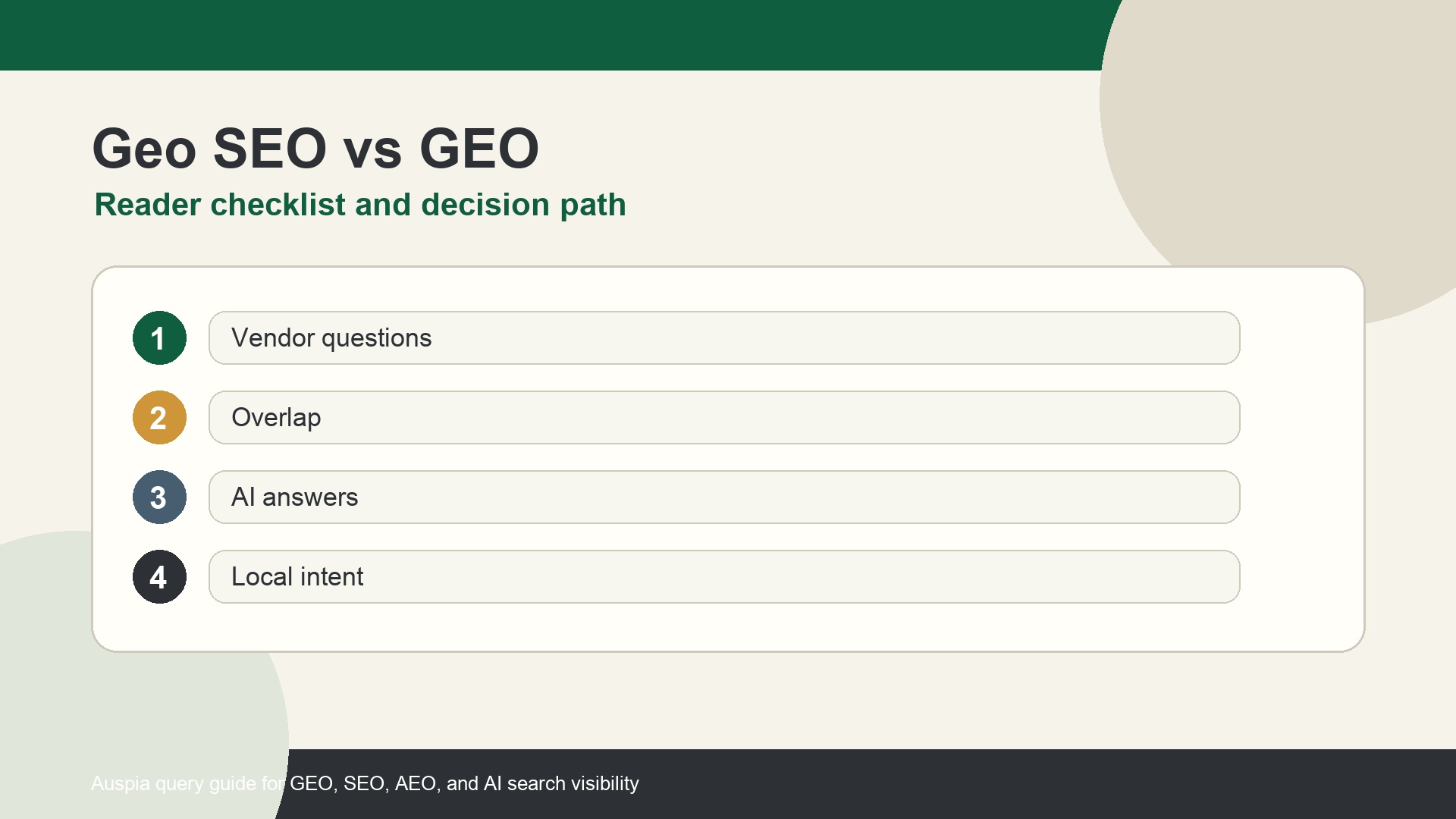
If an agency says it offers "GEO SEO," ask which kind of GEO it means.
Ask these questions:
Question | Why it matters |
|---|---|
Do you mean geographic SEO or generative engine optimization? | Prevents scope confusion. |
Which locations, prompts, or buyer questions will you target? | Forces intent clarity. |
How will you measure results? | Local rankings and AI citations are different metrics. |
What sources will support the claims? | GEO depends on evidence, not only on-page copy. |
How will reviews and third-party profiles be handled? | Local and AI systems both use reputation signals. |
FAQ
What is geo-targeted SEO?
Geo-targeted SEO is the practice of optimizing pages, business profiles, and signals for a specific location or market.
What is GEO in AI search?
GEO means generative engine optimization. It improves how brands appear in AI-generated answers, citations, and recommendations.
Can local SEO improve GEO?
Yes. Strong local pages, reviews, directories, and consistent business facts can help AI systems understand and trust a local business.
Who offers geo-targeted SEO solutions?
Local SEO agencies, technical SEO consultants, and digital marketing firms often offer geo-targeted SEO. For generative GEO, look for vendors that can show prompt tracking, AI citation audits, and entity cleanup, not just local landing pages.
Author: Miles Donovan, Local AI Search Analyst Across 500+ Service Queries at Auspia. Miles writes about search intent, AI search visibility, and practical organic growth systems for teams that need clearer decisions.