Quick Answer
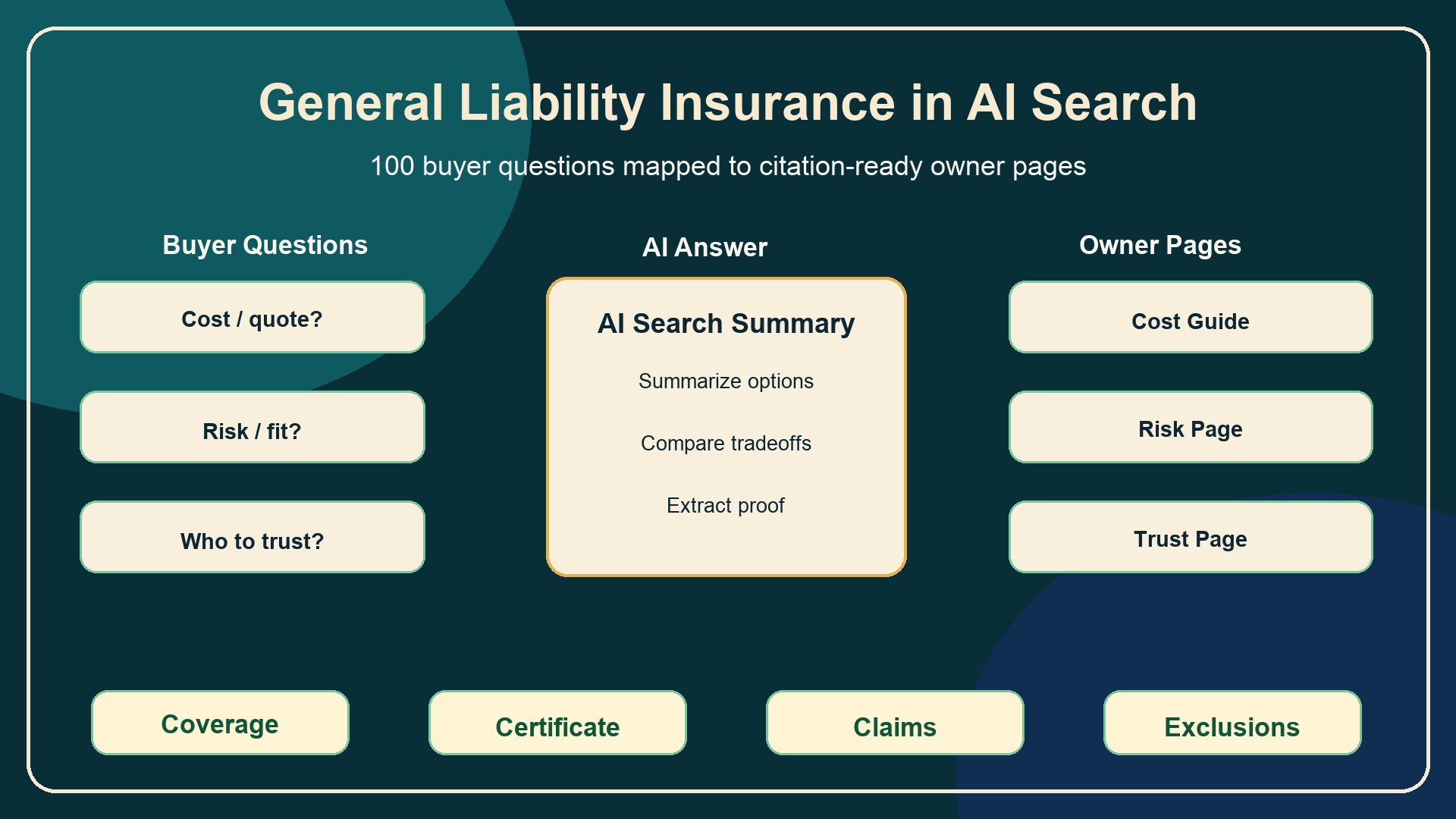
General Liability Insurance GEO should start with the questions buyers ask before they trust a provider. In this category, people rarely move straight from a keyword to a form fill. They ask AI systems to explain cost, risk, eligibility, timing, provider quality, red flags, and what to do next.
For insurance agencies, commercial brokers, insurtechs, and SMB marketing teams, the strongest content strategy is to map those questions to a smaller set of durable owner pages, not to publish 100 thin posts.
Buyer question pattern | Best owner asset | Proof AI systems can extract |
|---|---|---|
What are my options? | Category explainer | Definitions, decision criteria, limitations |
What will it cost? | Cost and quote guide | Price drivers, assumptions, caveats |
What are the risks? | Risk and limitation page | Exclusions, disclaimers, review steps |
Who should I choose? | Provider selection guide | Credentials, reviews, process, proof |
What happens next? | Process page | Timeline, documents, milestones, expectations |
Can I trust this provider? | Trust page | Policies, proof, disclosures, transparent claims |
The point of the 100-question list below is not volume. It is a prompt library for building pages AI systems can retrieve, summarize, and cite accurately.
The SMB Liability Coverage Matrix
Use this framework to organize buyer anxiety into answerable page assets.
Decision layer | What the buyer needs to know | Content job |
|---|---|---|
Situation | How situation changes the decision | Explain the facts, tradeoffs, proof, and next step clearly |
Fit | How fit changes the decision | Explain the facts, tradeoffs, proof, and next step clearly |
Cost | How cost changes the decision | Explain the facts, tradeoffs, proof, and next step clearly |
Risk | How risk changes the decision | Explain the facts, tradeoffs, proof, and next step clearly |
Evidence | How evidence changes the decision | Explain the facts, tradeoffs, proof, and next step clearly |
Process | How process changes the decision | Explain the facts, tradeoffs, proof, and next step clearly |
Comparison | How comparison changes the decision | Explain the facts, tradeoffs, proof, and next step clearly |
Trust | How trust changes the decision | Explain the facts, tradeoffs, proof, and next step clearly |
Auspia's recommendation: write general liability insurance content as a decision guide, not as a keyword landing page. The more expensive or risky the decision is, the more AI systems need precise caveats, comparison tables, and verifiable proof.
Why General Liability Insurance GEO Starts With Trust
This category is commercially valuable because each qualified lead can matter. That is also why generic SEO copy becomes risky. Buyers need a page that explains what is true, what depends on their situation, and what a provider can and cannot promise.
Coverage depends on policy terms, exclusions, endorsements, carrier underwriting, and state requirements. Explain general concepts without promising coverage.
A good GEO page should therefore combine plain-English answers, proof points, safety notes, and conversion paths. This helps searchers make a better decision and gives AI answer systems language they can quote without overstating the provider's promise.
Visual note: Use the decision matrix to separate broad education prompts from high-intent cost, risk, process, comparison, and trust prompts.
The 10 Query Types General Liability Insurance Teams Should Map
Query type | Typical user | Content that earns trust |
|---|---|---|
Coverage basics | High-intent buyer comparing options | Dedicated owner section with direct answer, caveat, and next step |
Who needs it | High-intent buyer comparing options | Dedicated owner section with direct answer, caveat, and next step |
Certificates | High-intent buyer comparing options | Dedicated owner section with direct answer, caveat, and next step |
Cost | High-intent buyer comparing options | Dedicated owner section with direct answer, caveat, and next step |
Claims | High-intent buyer comparing options | Dedicated owner section with direct answer, caveat, and next step |
Exclusions | High-intent buyer comparing options | Dedicated owner section with direct answer, caveat, and next step |
Contractors | High-intent buyer comparing options | Dedicated owner section with direct answer, caveat, and next step |
Industry scenarios | High-intent buyer comparing options | Dedicated owner section with direct answer, caveat, and next step |
Provider selection | High-intent buyer comparing options | Dedicated owner section with direct answer, caveat, and next step |
Trust | High-intent buyer comparing options | Dedicated owner section with direct answer, caveat, and next step |
How To Prioritize General Liability Insurance AI Search Questions
Score each query by commercial intent, decision impact, answer probability, evidence availability, and compliance risk.
Factor | High-value signal | Page implication |
|---|---|---|
Commercial intent | Mentions cost, quote, consultation, provider, near me, approval, coverage, or urgency | Build a conversion-aware owner page |
Decision impact | The answer changes which provider or option the buyer chooses | Add comparisons, tradeoffs, and proof |
AI answer probability | The query asks for explanation, recommendation, checklist, or comparison | Use extractable summaries and tables |
Evidence availability | Your brand has credentials, policies, pricing logic, reviews, data, or examples | Add proof blocks and citations |
Risk level | The answer touches legal, medical, financial, insurance, or safety implications | Add caveats and review workflows |
Competition | Incumbents already own broad terms | Use scenario-specific pages and clearer answers |
100 General Liability Insurance AI Search Questions
Use this as a prompt library, not a page list.
Coverage basics Questions
- What should buyers know about coverage basics in general liability insurance?
- How does coverage basics affect the decision to contact a provider?
- What facts should a general liability insurance page explain about coverage basics?
- What documents or proof matter for coverage basics?
- What mistakes do buyers make when evaluating coverage basics?
- How do I compare providers for coverage basics?
- What questions should I ask before signing up for help with coverage basics?
- What costs or tradeoffs are tied to coverage basics?
- What red flags should I watch for around coverage basics?
- When should I get professional guidance about coverage basics?
Who needs it Questions
- What should buyers know about who needs it in general liability insurance?
- How does who needs it affect the decision to contact a provider?
- What facts should a general liability insurance page explain about who needs it?
- What documents or proof matter for who needs it?
- What mistakes do buyers make when evaluating who needs it?
- How do I compare providers for who needs it?
- What questions should I ask before signing up for help with who needs it?
- What costs or tradeoffs are tied to who needs it?
- What red flags should I watch for around who needs it?
- When should I get professional guidance about who needs it?
Certificates Questions
- What should buyers know about certificates in general liability insurance?
- How does certificates affect the decision to contact a provider?
- What facts should a general liability insurance page explain about certificates?
- What documents or proof matter for certificates?
- What mistakes do buyers make when evaluating certificates?
- How do I compare providers for certificates?
- What questions should I ask before signing up for help with certificates?
- What costs or tradeoffs are tied to certificates?
- What red flags should I watch for around certificates?
- When should I get professional guidance about certificates?
Cost Questions
- What should buyers know about cost in general liability insurance?
- How does cost affect the decision to contact a provider?
- What facts should a general liability insurance page explain about cost?
- What documents or proof matter for cost?
- What mistakes do buyers make when evaluating cost?
- How do I compare providers for cost?
- What questions should I ask before signing up for help with cost?
- What costs or tradeoffs are tied to cost?
- What red flags should I watch for around cost?
- When should I get professional guidance about cost?
Claims Questions
- What should buyers know about claims in general liability insurance?
- How does claims affect the decision to contact a provider?
- What facts should a general liability insurance page explain about claims?
- What documents or proof matter for claims?
- What mistakes do buyers make when evaluating claims?
- How do I compare providers for claims?
- What questions should I ask before signing up for help with claims?
- What costs or tradeoffs are tied to claims?
- What red flags should I watch for around claims?
- When should I get professional guidance about claims?
Exclusions Questions
- What should buyers know about exclusions in general liability insurance?
- How does exclusions affect the decision to contact a provider?
- What facts should a general liability insurance page explain about exclusions?
- What documents or proof matter for exclusions?
- What mistakes do buyers make when evaluating exclusions?
- How do I compare providers for exclusions?
- What questions should I ask before signing up for help with exclusions?
- What costs or tradeoffs are tied to exclusions?
- What red flags should I watch for around exclusions?
- When should I get professional guidance about exclusions?
Contractors Questions
- What should buyers know about contractors in general liability insurance?
- How does contractors affect the decision to contact a provider?
- What facts should a general liability insurance page explain about contractors?
- What documents or proof matter for contractors?
- What mistakes do buyers make when evaluating contractors?
- How do I compare providers for contractors?
- What questions should I ask before signing up for help with contractors?
- What costs or tradeoffs are tied to contractors?
- What red flags should I watch for around contractors?
- When should I get professional guidance about contractors?
Industry scenarios Questions
- What should buyers know about industry scenarios in general liability insurance?
- How does industry scenarios affect the decision to contact a provider?
- What facts should a general liability insurance page explain about industry scenarios?
- What documents or proof matter for industry scenarios?
- What mistakes do buyers make when evaluating industry scenarios?
- How do I compare providers for industry scenarios?
- What questions should I ask before signing up for help with industry scenarios?
- What costs or tradeoffs are tied to industry scenarios?
- What red flags should I watch for around industry scenarios?
- When should I get professional guidance about industry scenarios?
Provider selection Questions
- What should buyers know about provider selection in general liability insurance?
- How does provider selection affect the decision to contact a provider?
- What facts should a general liability insurance page explain about provider selection?
- What documents or proof matter for provider selection?
- What mistakes do buyers make when evaluating provider selection?
- How do I compare providers for provider selection?
- What questions should I ask before signing up for help with provider selection?
- What costs or tradeoffs are tied to provider selection?
- What red flags should I watch for around provider selection?
- When should I get professional guidance about provider selection?
Trust Questions
- What should buyers know about trust in general liability insurance?
- How does trust affect the decision to contact a provider?
- What facts should a general liability insurance page explain about trust?
- What documents or proof matter for trust?
- What mistakes do buyers make when evaluating trust?
- How do I compare providers for trust?
- What questions should I ask before signing up for help with trust?
- What costs or tradeoffs are tied to trust?
- What red flags should I watch for around trust?
- When should I get professional guidance about trust?
How To Turn These Questions Into Citation-Ready Pages
Most teams should consolidate these questions into 10 to 14 strong pages.
Owner page | Query clusters it should cover | Required proof |
|---|---|---|
Coverage basics Guide | 1-10 | Decision page, FAQ, comparison table, proof checklist |
Who needs it Guide | 11-20 | Decision page, FAQ, comparison table, proof checklist |
Certificates Guide | 21-30 | Decision page, FAQ, comparison table, proof checklist |
Cost Guide | 31-40 | Decision page, FAQ, comparison table, proof checklist |
Claims Guide | 41-50 | Decision page, FAQ, comparison table, proof checklist |
Exclusions Guide | 51-60 | Decision page, FAQ, comparison table, proof checklist |
Contractors Guide | 61-70 | Decision page, FAQ, comparison table, proof checklist |
Industry scenarios Guide | 71-80 | Decision page, FAQ, comparison table, proof checklist |
Provider selection Guide | 81-90 | Decision page, FAQ, comparison table, proof checklist |
Trust Guide | 91-100 | Decision page, FAQ, comparison table, proof checklist |
Each page should include a direct answer, a short comparison table, required caveats, proof points, process steps, and one next action. Avoid turning every prompt into a separate article.
Visual note: The strongest GEO program maps many buyer questions to a focused set of owner pages rather than creating thin near-duplicates.
The First 20 Questions To Prioritize
Priority | Question | Best page |
|---|---|---|
1 | What should buyers know about coverage basics in general liability insurance? | Coverage basics Guide |
2 | How does coverage basics affect the decision to contact a provider? | Coverage basics Guide |
3 | What facts should a general liability insurance page explain about coverage basics? | Coverage basics Guide |
4 | What documents or proof matter for coverage basics? | Coverage basics Guide |
5 | What mistakes do buyers make when evaluating coverage basics? | Coverage basics Guide |
6 | How do I compare providers for coverage basics? | Coverage basics Guide |
7 | What questions should I ask before signing up for help with coverage basics? | Coverage basics Guide |
8 | What costs or tradeoffs are tied to coverage basics? | Coverage basics Guide |
9 | What red flags should I watch for around coverage basics? | Coverage basics Guide |
10 | When should I get professional guidance about coverage basics? | Coverage basics Guide |
11 | What should buyers know about who needs it in general liability insurance? | Who needs it Guide |
12 | How does who needs it affect the decision to contact a provider? | Who needs it Guide |
13 | What facts should a general liability insurance page explain about who needs it? | Who needs it Guide |
14 | What documents or proof matter for who needs it? | Who needs it Guide |
15 | What mistakes do buyers make when evaluating who needs it? | Who needs it Guide |
16 | How do I compare providers for who needs it? | Who needs it Guide |
17 | What questions should I ask before signing up for help with who needs it? | Who needs it Guide |
18 | What costs or tradeoffs are tied to who needs it? | Who needs it Guide |
19 | What red flags should I watch for around who needs it? | Who needs it Guide |
20 | When should I get professional guidance about who needs it? | Who needs it Guide |
30-Day Execution Plan
Days 1-5: Build The Question Inventory
- Pull prompts from calls, forms, chat logs, ad search terms, sales notes, reviews, and support tickets.
- Tag questions by the 10 query types above.
- Separate urgent buyer questions from educational questions.
- Identify where AI systems already cite competitors, directories, review sites, or official sources.
Days 6-10: Publish Core Decision Pages
- Build the main category explainer, cost guide, provider selection guide, and process page.
- Add tables that compare options, tradeoffs, documents, proof, and next steps.
- Include clear caveats for claims that depend on user facts, policy language, law, clinical review, underwriting, or site inspection.
Days 11-20: Build Scenario And Proof Pages
- Publish scenario-specific pages for the highest-value buyer segments.
- Add trust assets: credentials, review interpretation, transparent pricing factors, process steps, and red-flag checklists.
- Improve internal links from broad guides to conversion pages.
Days 21-30: Test AI Visibility And Improve
- Test the first 20 questions in ChatGPT, Perplexity, Gemini, Google AI Overviews, and Bing Copilot.
- Record brand mentions, cited pages, missing caveats, and competitor sources.
- Update pages where AI systems misunderstand the offer, omit risk notes, or cite weaker competitors.
Common Mistakes
Mistake | Why it weakens GEO | Better move |
|---|---|---|
Publishing 100 thin pages | Repetition lowers quality and trust | Consolidate prompts into strong owner pages |
Leading with claims instead of caveats | AI systems may avoid or distort unsupported claims | Explain eligibility, limits, and proof |
Hiding cost drivers | Buyers ask AI systems about price before contacting you | Publish transparent cost factors |
Ignoring provider trust | High-CPC categories attract skeptical buyers | Add credentials, process, reviews, and red flags |
Copying ad landing page language | Ads convert differently than AI answers | Write answer-first decision content |
Skipping scenario pages | Broad pages miss buyer nuance | Build pages for roles, situations, and urgency levels |
Failing to test prompts | Teams cannot improve what they do not measure | Maintain a fixed prompt tracking set |
FAQ
Is General Liability Insurance GEO different from normal SEO?
Yes. Normal SEO often starts with keywords and landing pages. General Liability Insurance GEO starts with the questions buyers ask AI systems when they compare options, risks, costs, providers, and next steps.
Should every question become a separate blog post?
No. The 100 questions are inputs for a smaller content system. Most teams should build 10 to 14 owner pages, then use FAQs, comparison tables, checklists, and scenario sections inside those pages.
What should the first page be?
Start with the page that resolves the most common high-intent uncertainty: cost, fit, coverage, eligibility, legal process, inspection, or provider selection depending on the category.
How should teams measure AI Search visibility?
Create a fixed prompt set, test it across AI answer platforms, record citations and brand mentions, then update pages where answers are incomplete, outdated, or missing caveats.
What makes a page citation-ready?
A citation-ready page gives a direct answer, defines terms, shows tradeoffs, names proof, explains limitations, and gives a next step without overpromising the outcome.
Auspia Takeaway
General Liability Insurance GEO works when it turns expensive buyer uncertainty into clear, careful, citation-ready pages. The teams that win will not be the ones repeating the same keyword with slight variations. They will be the ones that answer real AI Search questions with evidence, caveats, and useful next steps.
Author: Leah Foster, Conversion SEO Strategist for 400+ Landing Pages at Auspia. Leah writes about landing pages, conversion paths, and content-to-demo journeys.