Quick answer
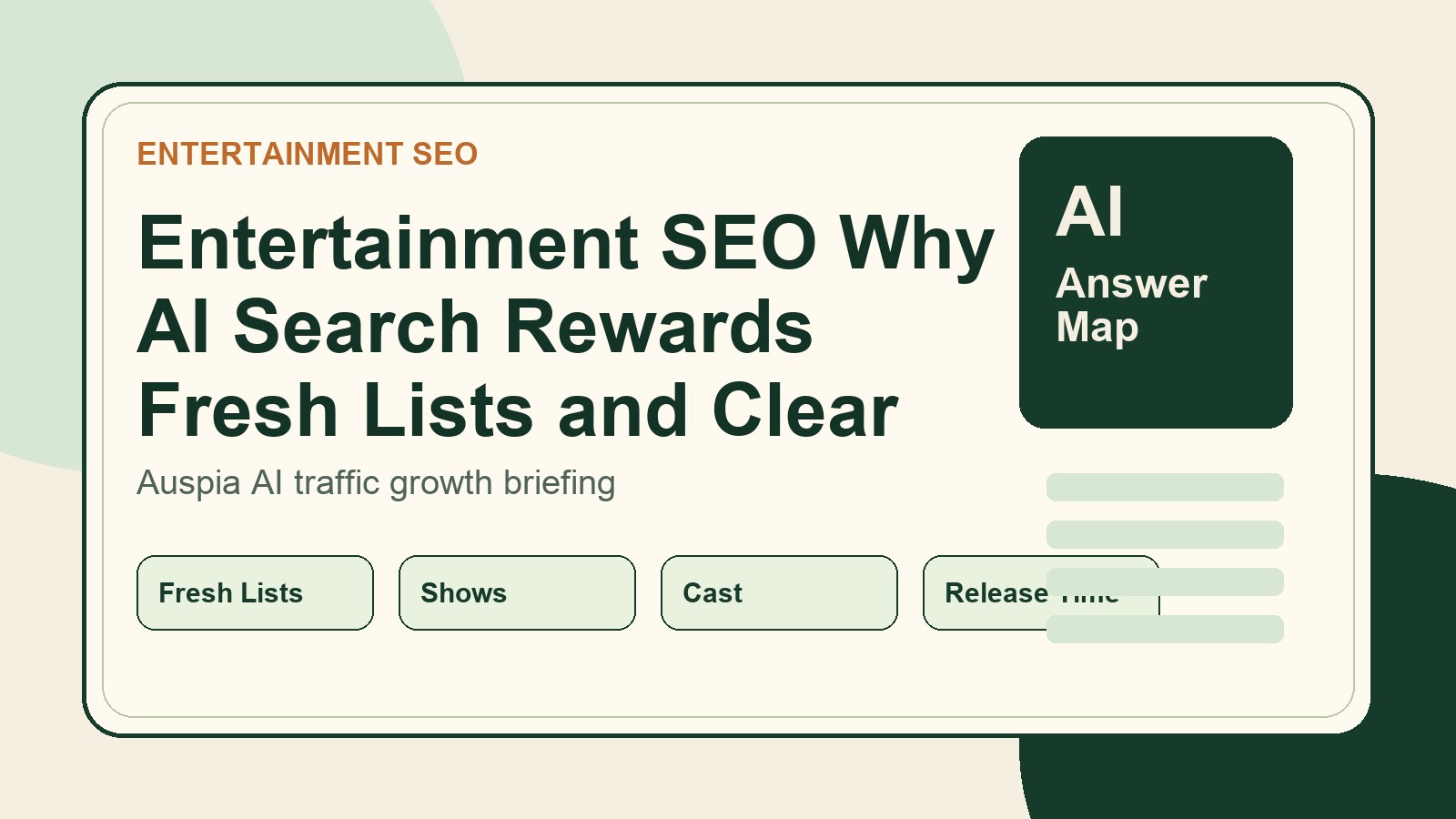
Queries like best shows on HBO Max, Netflix top movies right now, and what time does Love Island come out are freshness tests disguised as entertainment searches.
For growth teams, the practical question is not whether the keyword is trending. The question is whether the query can teach you how people ask, how AI systems summarize, and what kind of source earns trust. Auspia treats these topics as search-behavior signals, then turns the useful ones into durable SEO, GEO, or AEO assets.
Signal | What to check | Why it matters |
|---|---|---|
Intent | What does the user need now? | Prevents traffic chasing |
Source standard | Who would AI trust? | Shapes citation strategy |
Freshness | How fast does the answer change? | Defines update cadence |
Business fit | Can this support a buyer journey? | Keeps content useful |
The freshness problem
Entertainment pages decay quickly. A list that was accurate last month may be wrong today. AI systems summarizing "right now" queries need pages with visible update dates, current availability, and clear region context.
Entity clarity
A show page should identify title, season, cast, platform, release schedule, country, and related titles. A list page should explain selection criteria and update cadence. Without those details, AI may summarize stale or mismatched information.
List SEO in the AI era
Top lists still work, but they need a reason to exist beyond ranking ten titles. Add filters, audience fit, genre, runtime, maturity rating, and availability. Use tables where possible.
Release-time content
Queries about when an episode comes out need timezone clarity. Put the time, date, platform, region, and update status near the top. Archive older release pages or convert them into season guides.
What brands can learn
Any content program with changing recommendations needs a refresh system. If the word "right now" appears in the query, the page needs a visible maintenance plan.
What Auspia would do next
Auspia would not start by publishing ten disconnected posts. We would build a prompt set, map it to pages, check current AI answers, then decide which page type has the best chance to improve visibility. For many teams, the first useful action is a small visibility audit with the AI Search Visibility Checker, followed by a page rewrite and a repeat check two to four weeks later.
FAQ
Is this topic mainly SEO or GEO?
It is both. SEO helps the page become crawlable, indexable, and competitive in search. GEO adds the answer-readiness layer: clear entities, extractable claims, trustworthy evidence, and measurement across AI answer surfaces.
How should a small team start?
Start with one high-intent query group, rewrite the page that should answer it, add a concise table or checklist, and test the page against five AI prompts before expanding the project.
What should we measure?
Track rankings, impressions, AI mentions, citation URLs, description accuracy, branded search lift, assisted conversions, and sales notes. One metric will not explain the full impact.
Author: Miles Carter, Content Decay Analyst Across 10k+ URLs at Auspia. Miles writes about content updates, freshness planning, and keeping high-traffic pages useful after publication.