OpenAI Hides ChatGPT Sources Behind Extra Clicks — Publishers Face Traffic Cliff
Summary
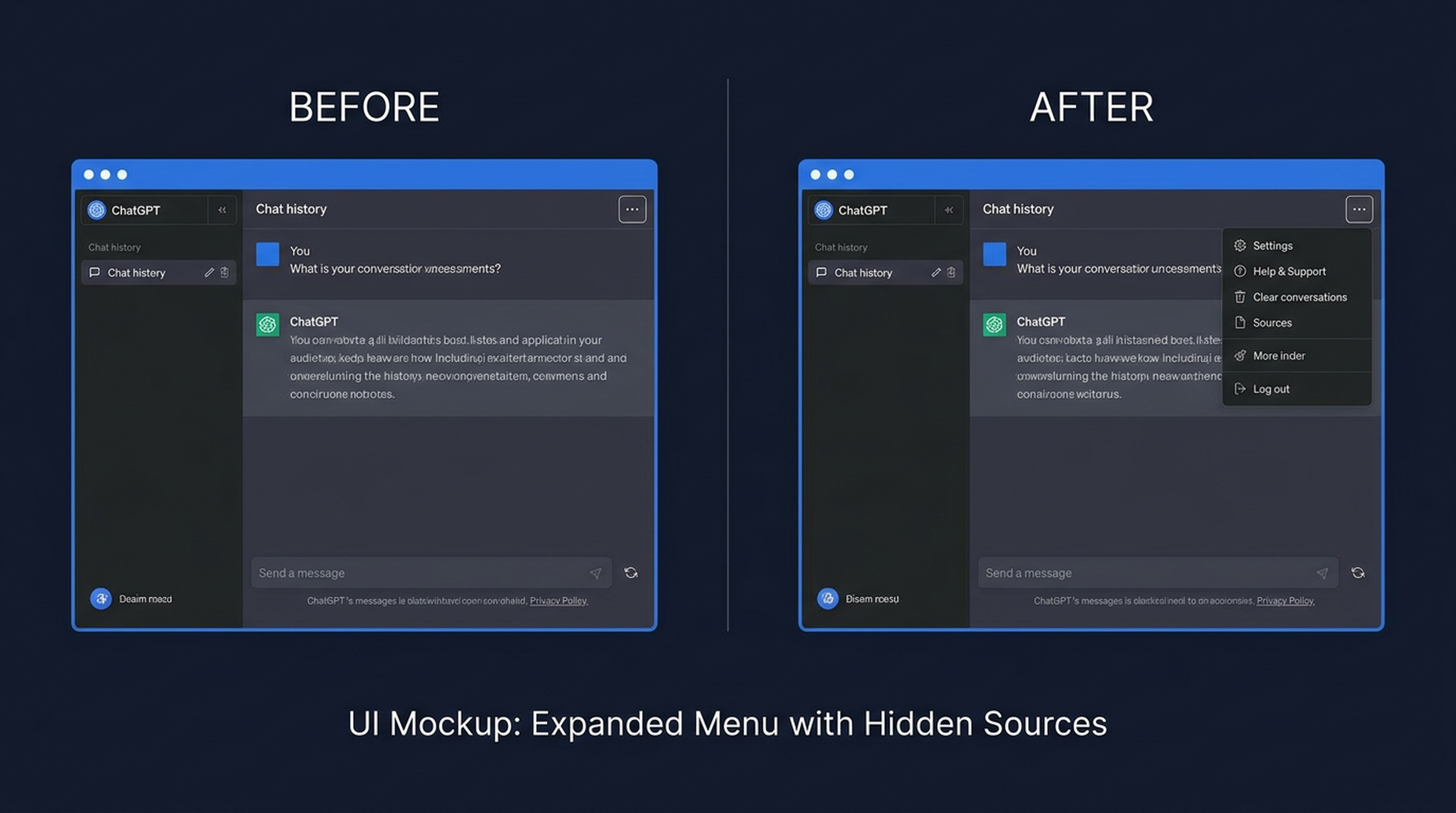
In a move that has alarmed publishers and SEO professionals, OpenAI is testing a change that moves ChatGPT's Sources button from the main response footer into a three-dot menu, requiring users to take an additional step to view cited sources. The change, spotted by SEO consultant Glenn Gabe, could dramatically reduce the click-through traffic that publishers receive from ChatGPT citations — potentially cutting off a growing source of referral traffic at a time when AI search is becoming increasingly important for content distribution.
The Change: One Extra Click, Massive Impact
The modification is deceptively simple. Previously, when ChatGPT provided a response with source citations, a "Sources" button appeared directly in the response footer — visible, accessible, and one click away from showing users the original articles and websites that informed the AI's answer.
Under the new test, that Sources button is being moved into a three-dot menu (the kind of overflow menu typically used for secondary actions). Users now need to click the three dots, then click Sources — adding friction to a process that was previously seamless.
In user experience design, this is known as increasing interaction cost. Every additional click in a user flow dramatically reduces the number of users who complete that action. Industry benchmarks suggest that adding even one step to a process can reduce completion rates by 20-60%. For publishers relying on ChatGPT citations for traffic, this could mean the difference between a viable referral channel and a statistical rounding error.
Why It Matters: The Economics of AI Citations
To understand the significance of this change, it's important to understand what's at stake for publishers. AI search citations have emerged as one of the few bright spots in an otherwise challenging traffic environment. As Google's traditional organic results face competition from AI Overviews, and as users increasingly get their answers directly from AI systems without clicking through to websites, citations from AI tools represent a lifeline.
ChatGPT, with its hundreds of millions of weekly users, is one of the largest AI platforms. When it cites a source and makes that source easily accessible, publishers receive meaningful referral traffic. This traffic has distinct characteristics:
- High intent. Users who click through from AI citations have been told by a trusted system that this source is relevant to their query. They arrive with context and purpose.
- Discovery potential. Many ChatGPT citations surface content that users wouldn't have found through traditional search — particularly long-tail, expert, or niche content that traditional search algorithms might undervalue.
- Brand building. Being cited by ChatGPT creates brand awareness among a massive, engaged user base. Even users who don't click through see the brand name and URL, building familiarity over time.
By making sources harder to access, OpenAI is potentially undermining all three of these benefits — not just for publishers, but for the open web ecosystem that depends on traffic to sustain quality content creation.
The Incentive Structure: Why OpenAI Might Do This
OpenAI's motivations for this change aren't entirely clear, but several possibilities exist:
Keeping users in the ChatGPT experience. Every click that takes a user away from ChatGPT is a potential interruption to engagement. By hiding sources behind an extra menu layer, OpenAI may be testing whether fewer users leave the platform — keeping them engaged longer and generating more interactions (and potentially more subscription value).
Reducing the visual prominence of external sources. The Sources button in the footer gave external websites equal visual weight to ChatGPT's own response. By de-emphasizing sources, OpenAI may be subtly reinforcing the message that ChatGPT's answer is the primary value — sources are supplementary.
UI simplification. It's possible this is a genuine design experiment aimed at reducing visual clutter in responses. Three-dot menus are a common pattern for secondary actions. However, the impact on publisher traffic suggests this explanation, if true, reflects a prioritization of UI cleanliness over content ecosystem health.
Testing price sensitivity. If fewer users click through to sources, publishers may place less value on ChatGPT citations — potentially giving OpenAI more leverage in content licensing negotiations. If publishers can't demonstrate traffic value from ChatGPT citations, they have less bargaining power.
The Publisher Response
The SEO and publishing community has reacted with concern to the discovery. Glenn Gabe, a respected SEO consultant who first documented the change, has highlighted the potential traffic implications. SERoundtable, which reported on the change, noted that even small UX changes at ChatGPT's scale can have outsized impacts on publisher traffic.
For publishers who have been investing in strategies to earn ChatGPT citations — optimizing content for AI consumption, building authority signals, and ensuring their content is citable — this change undermines the return on that investment. If citations generate minimal traffic because users can't easily access sources, the incentive to optimize for AI citations diminishes.
This creates a potential negative feedback loop: if publishers reduce their investment in AI-optimized content because citations don't drive traffic, AI systems will have fewer quality sources to cite, potentially reducing the quality of AI responses.
The Broader Pattern: AI Platforms Controlling Information Flow
This change fits into a broader pattern of AI platforms exerting increasing control over how users access information. Google's AI Overviews have been criticized for reducing click-through rates to publishers. Perplexity has faced legal challenges from publishers over its use of copyrighted content. And now ChatGPT is making it harder for users to access the sources behind its answers.
The common thread is clear: AI platforms are consolidating control over the information ecosystem, and publishers' ability to reach their audiences through these platforms is diminishing. Each change — whether it's reducing the prominence of citations, hiding source links, or limiting what content is available — shifts more power to the AI platform and less to the content creators.
What Happens Next
OpenAI is likely monitoring the impact of this test closely. If the data shows that hiding sources doesn't significantly reduce user satisfaction (or if the reduction is acceptable given other benefits), the change will likely roll out broadly. If the backlash is severe or the impact on user experience is negative, they may revert.
For publishers, the prudent approach is to diversify. Relying on any single AI platform for traffic distribution is risky — as this change demonstrates, platform decisions can change the value of that distribution overnight. Publishers should be building presence across multiple AI platforms, maintaining strong traditional SEO as a foundation, and developing direct audience relationships that don't depend on intermediary platforms.
The Fundamental Tension
At its core, this change highlights the fundamental tension between AI platforms and the content ecosystem they depend on. AI systems need quality content to provide valuable answers. But the platforms that deliver those answers have every incentive to keep users within their own experience — and every reason to minimize the value that flows to external publishers.
How this tension resolves will shape the future of content creation on the web. If AI platforms continue to reduce publisher visibility and traffic, the economic incentive to create high-quality content for the open web diminishes. And if that content ecosystem degrades, AI systems will have less to draw from — creating a long-term quality problem for the platforms themselves.
For now, publishers are watching closely, documenting the impact, and adjusting their strategies. The extra click that OpenAI is adding may seem minor, but its implications for the content ecosystem could be anything but.
Sources: SERoundtable, Glenn Gabe