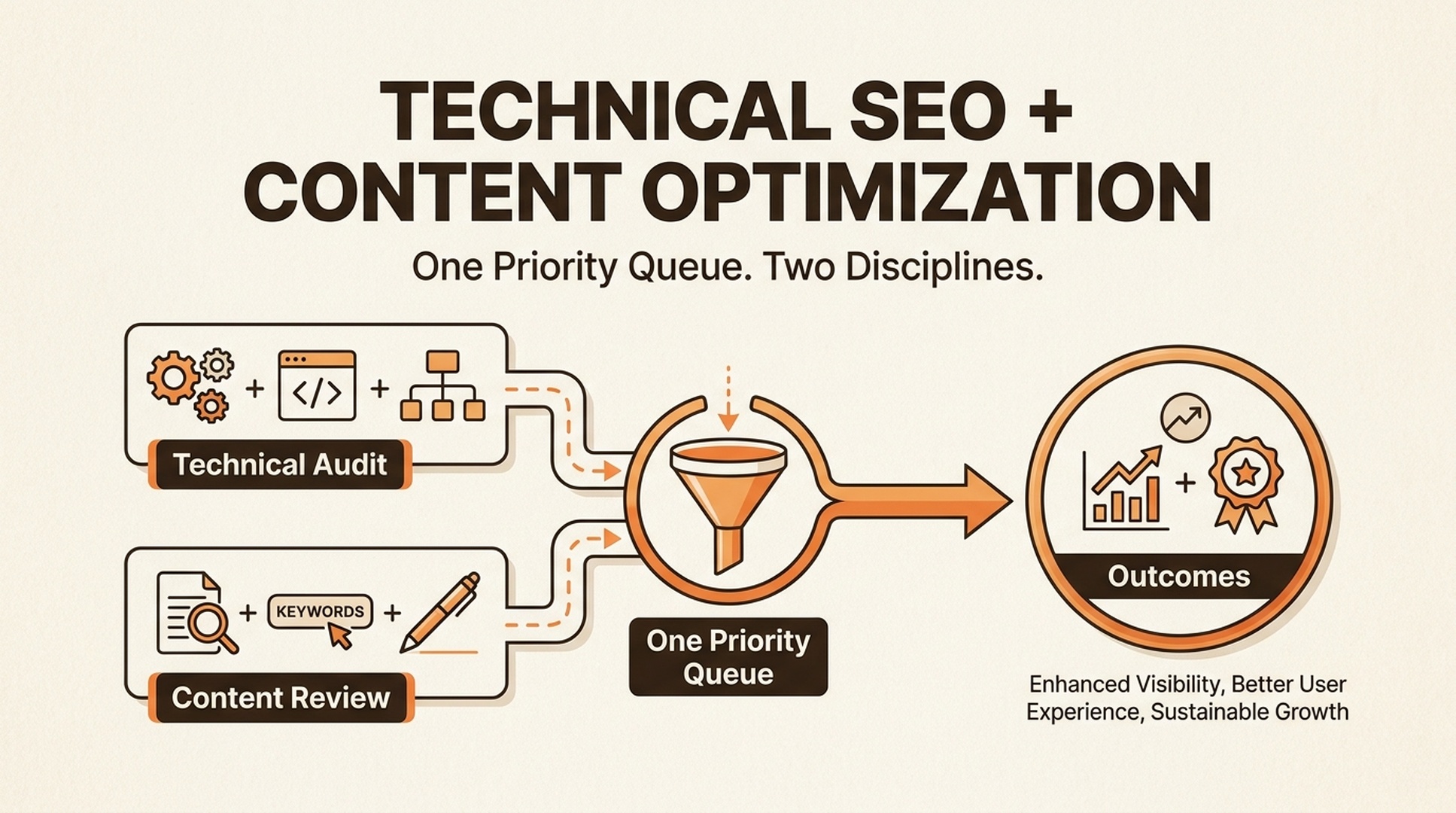
They can connect the work. They cannot collapse the disciplines.
AI SEO platforms can bring technical audit data and content optimization into one workflow: a crawler finds indexation, linking, metadata, rendering, or performance issues; an AI layer groups affected URLs, summarizes patterns, and helps prioritize content or technical tasks. That is genuinely useful for a large site.
It does not mean one model can diagnose every technical issue and rewrite every weak page safely. Technical SEO asks whether a search engine can discover, render, understand, and index a page. Content optimization asks whether the page satisfies a real query with accurate, useful information. The signals influence each other, but the work requires different evidence and owners.
What an integrated audit looks like
Layer | Typical evidence | Possible AI assistance | Accountable owner |
|---|---|---|---|
Crawl and indexation | Status codes, robots rules, sitemaps, canonicals, rendering | Group recurring defects and summarize affected URLs | Technical SEO or developer |
Page experience and templates | Performance data, mobile behavior, internal linking, layout | Detect template patterns and prioritize high-impact pages | Developer and SEO lead |
Content relevance | Queries, SERP formats, page copy, update history | Cluster missing topics and prepare briefs | Editor or content lead |
Structured data | Markup, validation, visible page content | Flag missing or invalid fields | Technical owner with editor input |
Outcomes | Impressions, clicks, conversions, support outcomes | Summarize changes and anomalies | Growth owner |
The value comes from shared context. If a page loses traffic, the team can see whether a technical release, indexation change, content decay, or query shift is the more plausible starting point.
Why content advice can be wrong when technical checks are missing
An AI tool may recommend adding sections to a page that has a noindex tag. It may suggest new internal links for a template that is blocked by robots rules. It may classify a page as thin when the full content fails to render in its crawl. In all three cases, rewriting content is wasted effort until the technical condition is understood.
Start the investigation in this order: is the page accessible, canonical, indexable, renderable, and connected in the site architecture? Then ask whether it answers the query better than competing options. Google Search Central's documentation on crawlability, indexation, and structured data remains the right reference point; an AI summary should not replace source inspection.
Why technical fixes can fail without content context
The opposite mistake is also common. A team fixes every warning in a crawl report while leaving priority pages vague, outdated, or misaligned with searcher intent. A perfect 200 status code does not make a page useful. A schema field does not turn a weak explanation into a credible one.
An integrated platform helps when it makes technical work business-aware: fix the pages that are strategically important, have a plausible path to discovery, and can serve the audience after they load.
A priority model for mixed backlogs
Score each issue on three dimensions: impact, confidence, and effort. Then add page value. A broken canonical on a high-conversion product page is usually more urgent than a minor metadata inconsistency on an archive. A missing FAQ section may be worthwhile only after you confirm the question and evidence.
Issue type | First check | Typical next owner |
|---|---|---|
Sudden traffic drop | Indexing, canonical, deploy log, Search Console | Technical SEO and developer |
Many pages have weak impressions | Query intent, internal links, content differentiation | SEO and content lead |
Schema warnings | Whether the markup matches visible content and eligibility | Developer or technical SEO |
Duplicate titles and descriptions | Template rules, canonical page purpose, page overlap | SEO, developer, and editor |
AI-crawler access concern | Actual robots directives and intended access policy | Technical owner and legal/security stakeholders |
A practical weekly workflow
Monday: crawl or inspect priority sections of the site and capture Search Console changes. Tuesday: let the platform group affected URLs and proposed causes. Wednesday: technical and content owners triage the top ten items together. Thursday: implement one technical fix and one evidence-backed content improvement. Friday: annotate the change and decide which signal will confirm it.
This cadence stops technical and editorial teams from operating in separate universes. It also creates better inputs for AI: clean data, defined owners, and recorded decisions.
Where Auspia helps in the combined workflow
For teams beginning an AI-search technical review, Auspia's Robots.txt AI Crawler Checker can help inspect whether relevant crawler directives are visible in robots.txt. The useful follow-up is not automatically opening access to everything. It is deciding which content should be accessible, what the business policy is, and whether important pages are technically reachable and substantively useful.
Pair that with a normal content review and conventional Search Console data. Technical readiness without helpful source material will not create a strong answer asset; helpful source material that crawlers cannot reach will not be discovered reliably.
Guardrails for a combined platform
Require an evidence link for each recommendation, distinguish technical defects from editorial suggestions, log changes, assign an owner, and add a post-change check. Never let a tool rewrite production content automatically in response to a crawl warning. Never let a content score override an indexation diagnosis.
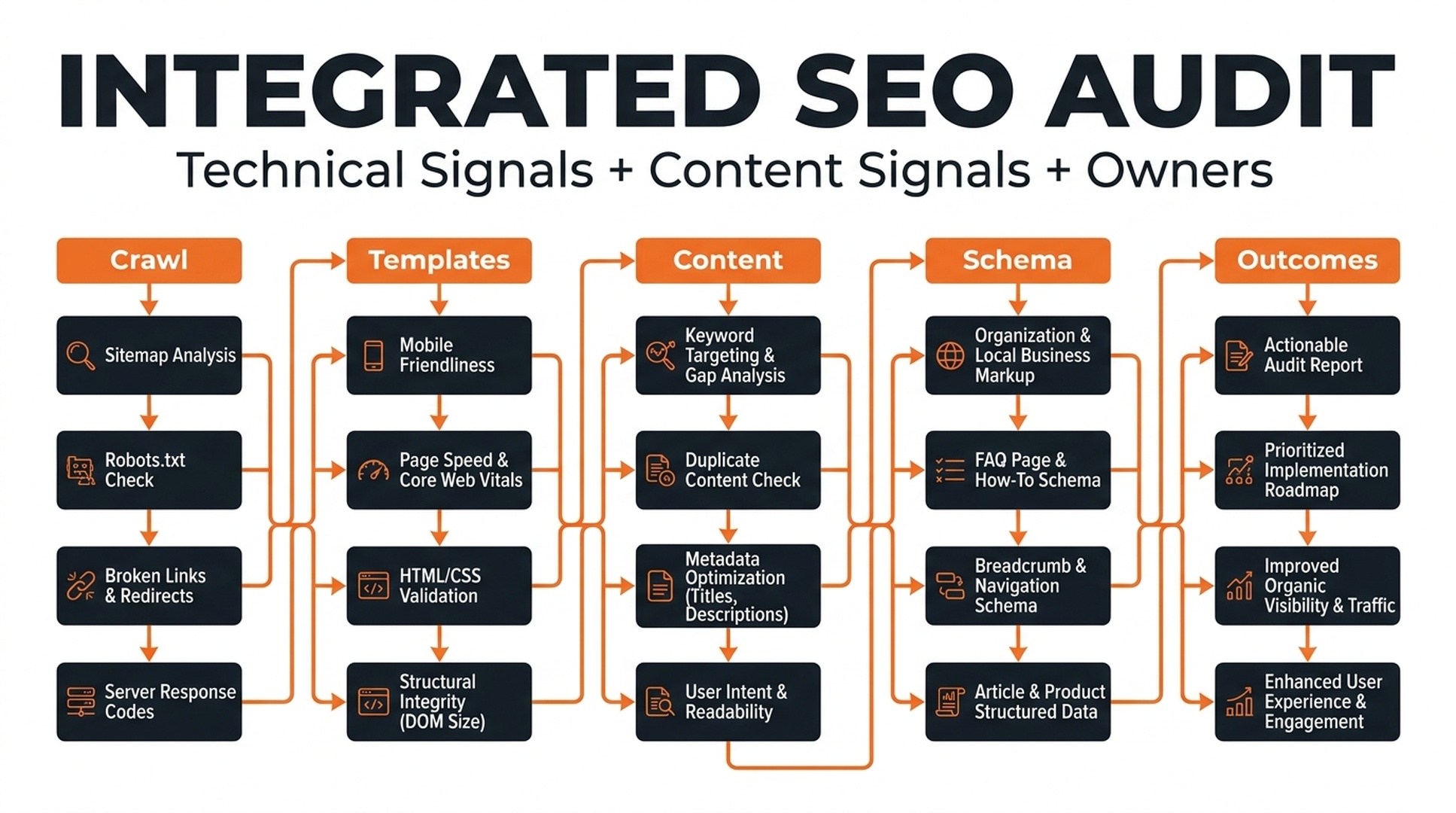
Integrated SEO audit map linking technical signals, content signals, owners, and outcomes
FAQ
Can one AI SEO tool replace a technical SEO specialist?
No. It can make audits easier to read and prioritize. Technical specialists still inspect implementation, rendering, logs where available, platform behavior, and risk.
Should technical SEO and content teams use the same dashboard?
They should share a priority view and change log, while retaining the detailed tools each discipline needs. The goal is shared decisions, not forcing everyone into one interface.
Does structured data fix content quality problems?
No. Structured data helps systems understand eligible page information; it should accurately match visible content. It does not compensate for weak or unsupported content.
Which official documentation is most relevant?
Google's structured data introduction and Search Essentials are good starting references.
Author: Julian Mercer, 14-Year Technical SEO Practitioner at Auspia. Julian writes about crawlability, structured data, rendering, and technical foundations for pages that need to be understood by both people and search systems.