
Amazon GEO 2026: 6 zasad Alexa Shopping, które sprzedawcy muszą rozumieć
W 2026 roku Amazon GEO nie oznacza już tylko rankingu na słowo kluczowe produktu. Sprzedawcy potrzebują listingów, które AI zakupowe Amazon potrafi zrozumieć, streścić, porównać i polecić w rozmowie. Strona produktu musi być jednocześnie stroną sprzedażową dla ludzi i plikiem dowodów czytelnym dla systemów AI.
This localized edition preserves the full source structure: platform shift, six seller rules, audit checklist, rewrite example, weekly action plan and FAQ. The point is not to panic about Rufus and Alexa naming changes. The point is to turn the product page into evidence that AI can read, summarize, compare and recommend.

W 2026 roku Amazon GEO przesuwa się od rankingów słów kluczowych do dopasowania produktów wspieranego przez AI.
What changed from Rufus to Alexa for Shopping
W 2026 roku Amazon GEO nie oznacza już tylko rankingu na słowo kluczowe produktu. Sprzedawcy potrzebują listingów, które AI zakupowe Amazon potrafi zrozumieć, streścić, porównać i polecić w rozmowie. Strona produktu musi być jednocześnie stroną sprzedażową dla ludzi i plikiem dowodów czytelnym dla systemów AI. A keyword search asks which listing ranks for a phrase. A shopping assistant asks which product best fits the buyer context: budget, space, household type, browsing history, review concerns and price sensitivity. That is why keyword insertion and rank tracking alone are no longer enough.
Six new Amazon GEO rules for sellers in 2026
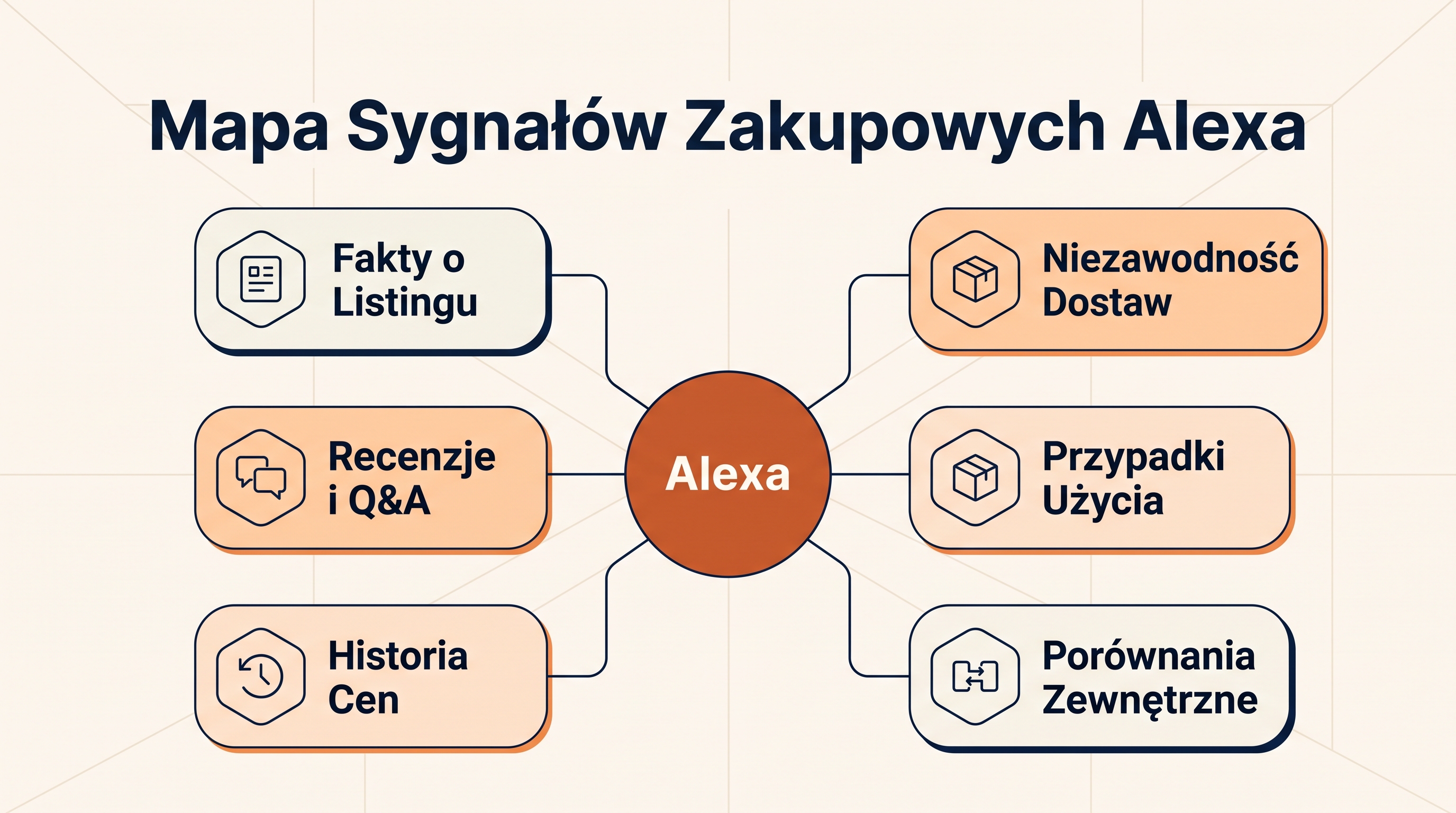
First, search is becoming conversational, so titles and bullets must answer real situations. Second, AI summaries compress a listing into a few claims, so title, bullets, A+, images, Q&A and reviews must not conflict. Third, price becomes a trigger, not only a label. Fourth, cross-device memory makes concrete use cases more important. Fifth, competition may extend beyond Amazon’s own shelf. Sixth, wider AI shopping access will affect information-dense categories first.
Sygnał | Działanie sprzedawcy |
|---|---|
Conversational search | Add buyer scenarios and constraints. |
AI summaries | Keep title, bullets, A+, images, Q&A and reviews consistent. |
Price triggers | Plan promotions and avoid chaotic repricing. |
Cross-device context | Name real-life use cases. |
Cross-web comparison | Make dimensions, compatibility and warranty easy to compare. |
The Amazon GEO audit checklist
Audit scenario coverage, fact consistency, recent review evidence, structured Q&A, price discipline, inventory readiness and comparison clarity. The product page should answer common buyer questions directly instead of forcing the buyer or the AI assistant to infer missing facts.
A simple before-and-after listing rewrite
Weak bullets only say that a product is premium, durable and easy to use. Strong Amazon GEO copy states capacity, setting, buyer type, setup difficulty, included parts and limitations. That gives AI systems more retrieval hooks and gives shoppers a clearer reason to trust the match.
What sellers should do this week
Start with ten listings where AI-assisted comparison is likely to matter. Export title, bullets, A+ copy, Q&A, recent review themes, price history and inventory status. Write natural buyer questions for each listing, check whether the page answers them, rewrite the most important bullets and Q&A first, then track conversion, returns, review themes and visibility changes.
FAQ
Amazon GEO does not replace Amazon SEO; it adds an AI-readability layer. Keywords still matter, but scenarios, specs, Q&A and review-backed claims help the assistant explain why a product fits a specific need. The biggest risk is unclear or inconsistent information. Higher-priced products, compatibility-heavy products, replenishable goods and pages with repeated buyer questions should be optimized first. Review priority listings monthly, or sooner when price, inventory, reviews or specs change.
Autor: Ryan Chen, specjalista Amazon GEO w Auspia. Ryan pisze o widoczności na marketplace, odkrywaniu produktów z pomocą AI i praktycznej optymalizacji listingów.