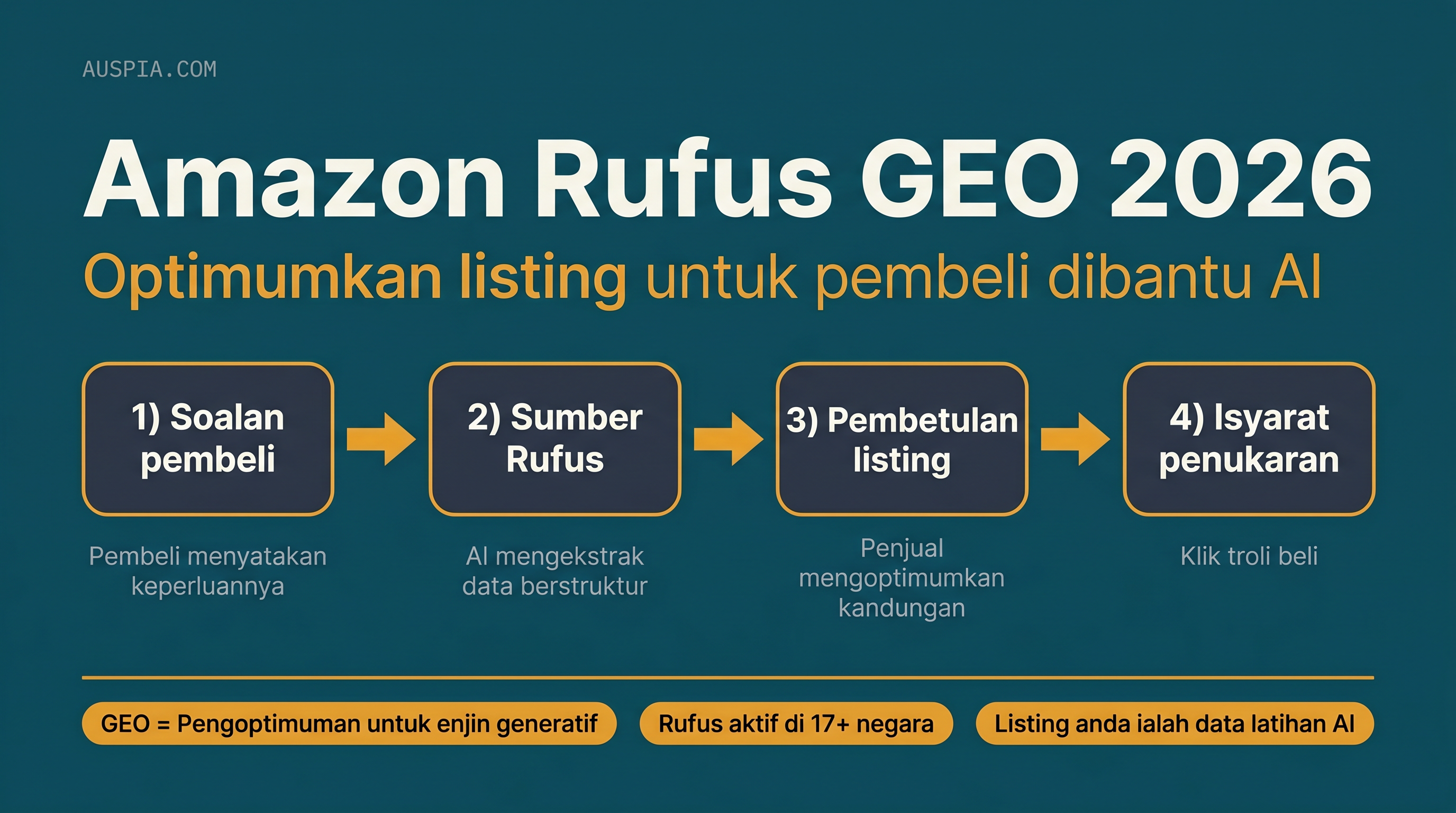
Alexa for Shopping pada 2026 menggabungkan Rufus ke dalam pembantu beli-belah yang lebih peribadi. Penjual perlu beralih daripada pengulangan kata kunci kepada fakta produk, konteks penggunaan, bahasa ulasan dan kepercayaan harga yang difahami AI.
Amazon did not simply remove Rufus. The 2026 change moves shopping reasoning into Alexa for Shopping across Amazon surfaces, so sellers must make product evidence clear for people and for AI systems.
What changed in 2026
2026 marks the shift from Rufus as a visible shopping bot to Alexa for Shopping as a broader assistant layer. The operational meaning is that Amazon search, product pages, smart-display shopping, comparison flows, price history and repeat purchase actions are moving closer together. Sellers should read this as an Amazon GEO problem: every product page must be easy for an assistant to understand, compare and recommend.
The new shopping behavior: describe the job, not the keyword
Search before | Assistant-style shopping | Needed evidence |
|---|---|---|
power bank | weekend trip charger for iPhone and camera | capacity, ports, weight, safety |
coffee grinder | quiet grinder for apartment espresso | noise, size, grind type |
kids tablet case | case for a child who drops devices | durability, grip, warranty |
standing desk mat | less foot fatigue after hours standing | material, size, comfort proof |
Pengguna tidak lagi perlu memampatkan niat kepada satu kata nama. Pembantu boleh menerima situasi penuh dan mencari produk yang paling sesuai.
A quick seller diagnosis
A weak Listing usually has category words but no buyer scene, feature bullets but no outcome, A+ visuals with little text evidence, reviews that mention real use cases while the copy ignores them, and promotions that look less credible when a full year of price history is visible.
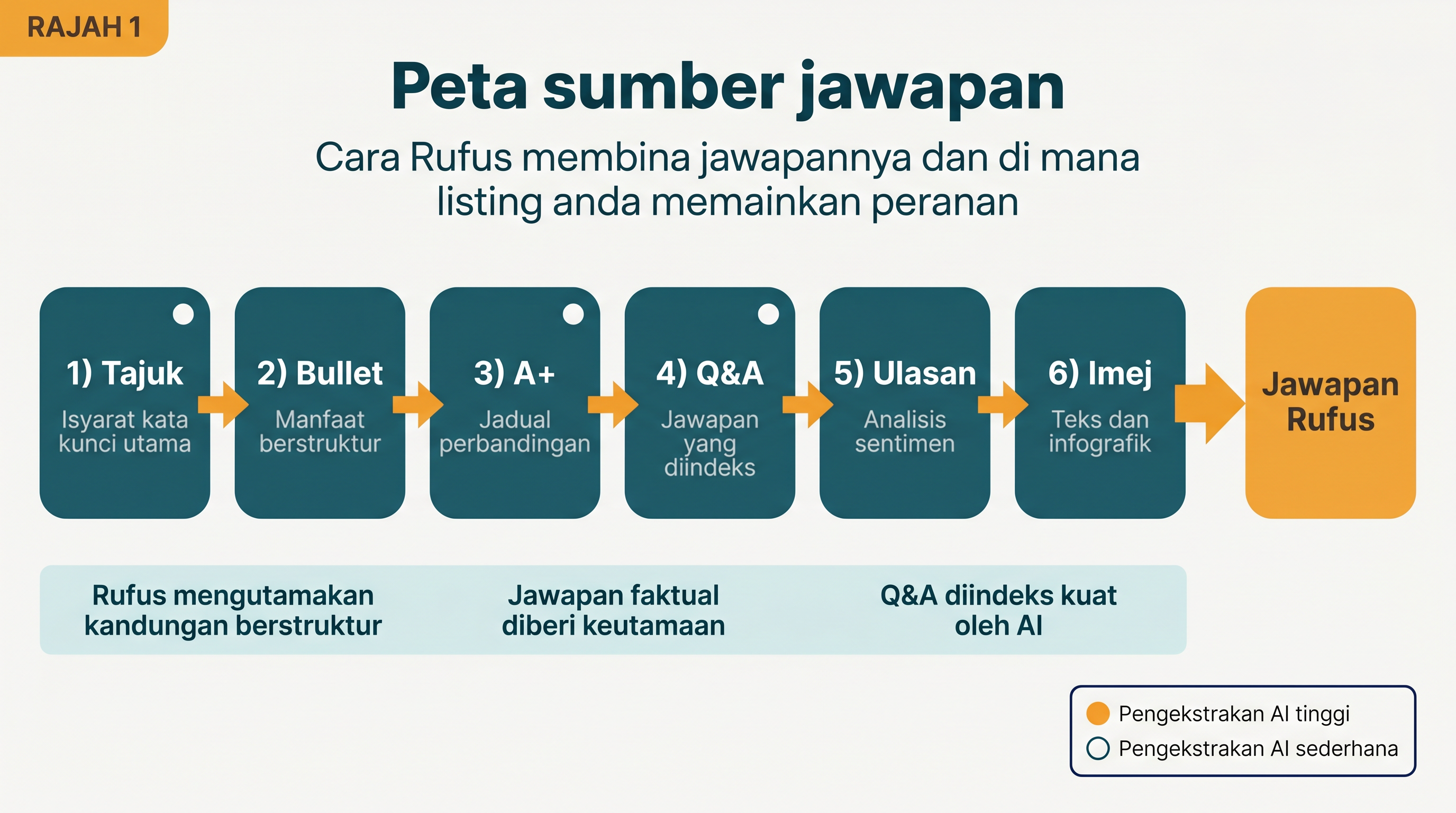
What Alexa is likely to pull from
Signal | Why it matters | Seller action |
|---|---|---|
Title and bullets | They define the product identity Alexa can summarize. | Keep core keywords and add a real use case. |
Attributes | Structured facts help comparisons. | Complete size, material, compatibility, pack count and warranty fields. |
A+ content | It explains buyer fit and tradeoffs. | Add best-for, not-best-for and model comparison blocks. |
Reviews and Q&A | They reveal buyer language and objections. | Mine repeated phrases and answer them in copy. |
Price history | It exposes whether a deal looks real. | Keep pricing stable and avoid artificial spikes. |
Reorders | Routine purchases may skip search. | Improve post-purchase satisfaction and brand recall. |
Rewrite listings for questions, comparisons, and trust
A keyword-first bullet says: “20,000mAh portable charger with USB-C fast charging.” An Alexa-ready bullet says the same fact with buyer context: built for two or three phone recharges on travel days, with USB-C fast charging and a display that reduces battery anxiety before the next flight or meeting.
Listing area | Weak version | Stronger version |
|---|---|---|
Title | Wireless earbuds Bluetooth 6.0 | Wireless earbuds for calls and gym use, sweat resistant, 8-hour battery |
Bullet | Premium stainless steel | Stainless steel body resists dents in lunch bags and daily commuting |
A+ module | Why choose us | Choose this model if you need X; choose the larger model if you need Y |
Image text | High quality | Fits 13-15 inch laptops; padded corners; luggage strap |
Build a scene-keyword matrix, not just a keyword list
Build a matrix with buyer scene, spoken prompt, needed facts, Listing proof and review proof. Business travel, small apartments, parents buying for children and repeat household purchases all create different prompts. The Listing should map each strong scene to real product evidence.
Reviews become product language research
Reviews are no longer only rating and conversion signals. They are language research. Phrases such as “fits in my backpack,” “too loud for mornings,” “worked with my Kindle and phone,” or “great for a guest room” show how buyers describe value after using the product. Those phrases should guide copy, images and FAQ answers.
Price history makes fake discounts riskier
When shoppers can view 30, 90 and 365 days of price history, fake discounts become easier to question. Stable everyday pricing, clear bundle value and honest event promotions help the assistant and the buyer trust the offer.
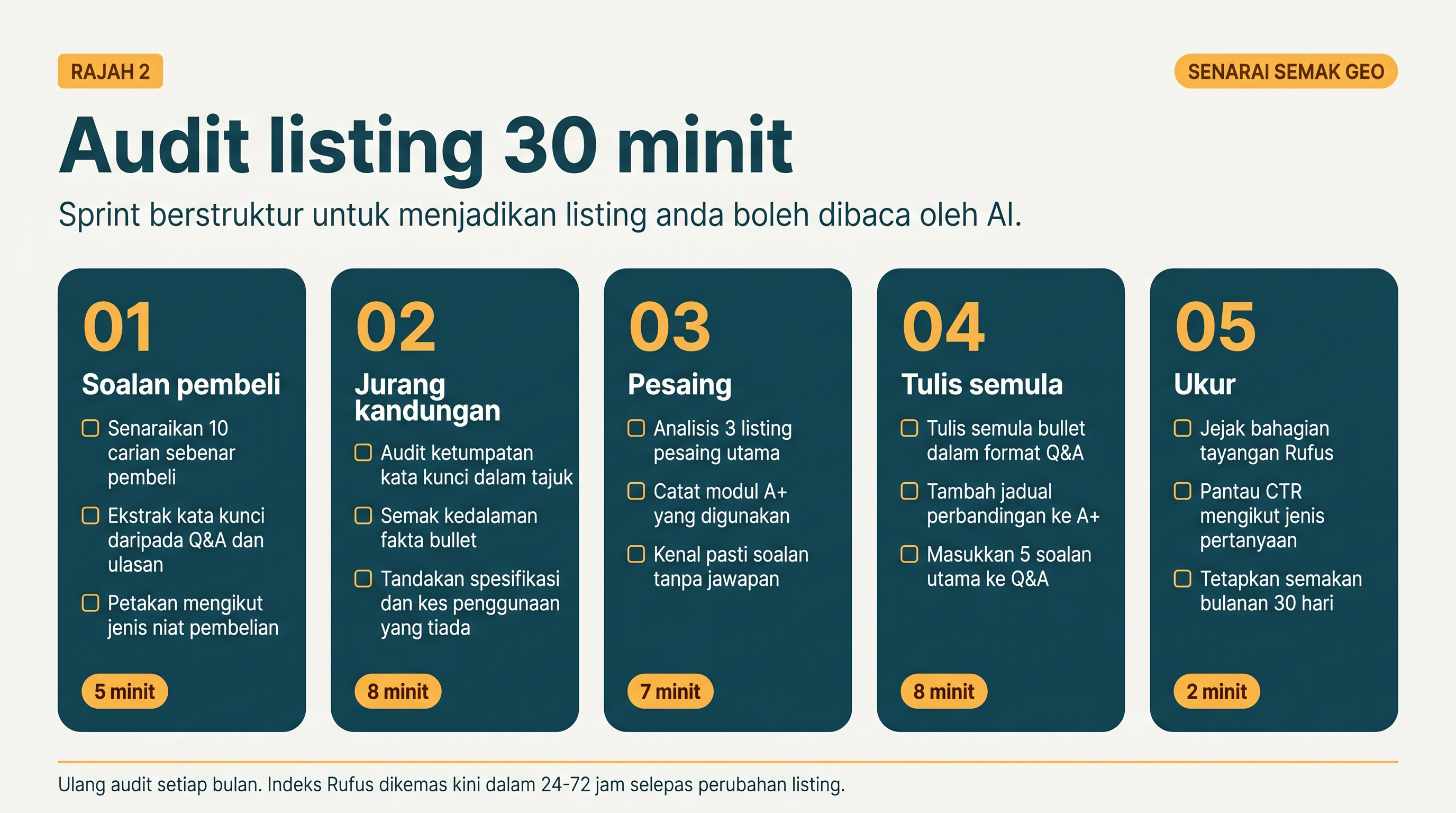
A 30-minute Amazon Alexa GEO audit
- Write five natural buyer questions for the product.
- Check whether the title and first bullets answer those questions.
- Add missing compatibility, size, material, duration and limitation facts.
- Review the last 100 reviews for repeated use cases and objections.
- Rewrite one A+ module as a comparison or best-for block.
- Review price history before major events.
- Test prompts and record which products are recommended.
What sellers should not do
Do not stuff conversational phrases everywhere. Do not claim the product is right for every audience. Do not hide important facts only in lifestyle images. Do not rely on adjectives like premium or professional without proof. The assistant needs clean evidence, and shoppers need the same thing.
FAQ
Is Rufus completely gone from Amazon?
The practical reading is that Rufus-style shopping intelligence is being absorbed into Alexa-branded shopping surfaces, rather than disappearing.
What is Amazon Alexa GEO?
Ini ialah kerja menjadikan Amazon Listing lebih mudah difahami, dibandingkan, diringkaskan dan disyorkan oleh Alexa for Shopping serta pembantu seumpamanya.
Does it replace Amazon SEO?
No. Keywords, ranking, reviews, conversion and ads still matter. Alexa GEO adds the need to answer natural shopping questions with evidence.
What is the fastest change sellers can make?
Rewrite the first two bullets so they connect features to use cases, buyer anxiety and decision proof.
The Auspia takeaway
Amazon’s 2026 Alexa move is a warning for marketplace teams: product discovery is becoming assistant-shaped. Sellers that make products easy to explain will have an advantage when the buyer asks, “Which one should I buy?”
Author: Ryan Chen, Senior Amazon Operations Expert with 10 Years in Marketplace Growth at Auspia. Ryan writes about Amazon GEO, AI-assisted product discovery, Listing optimization and marketplace visibility playbooks for sellers.