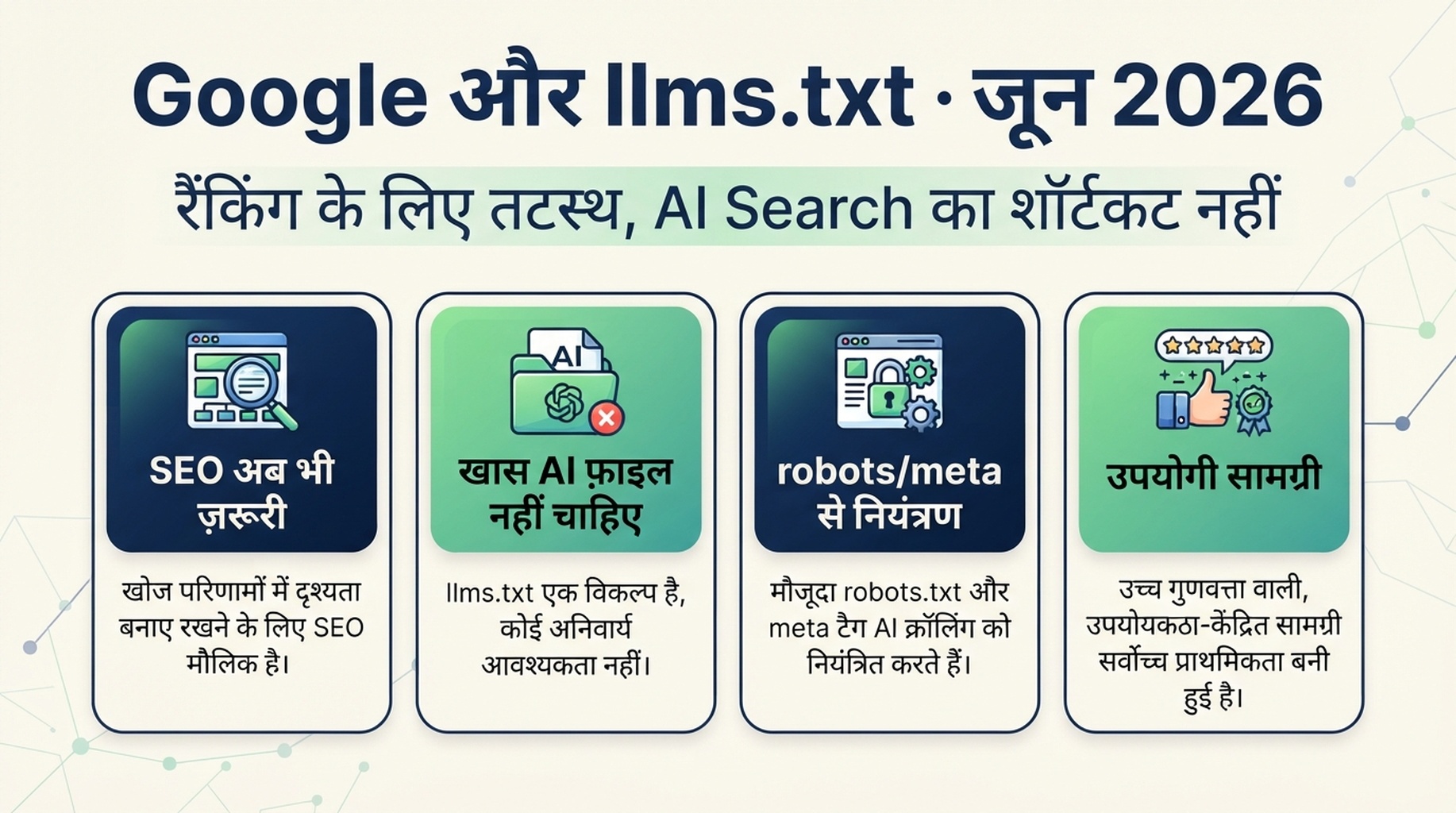
Google की मौजूदा स्थिति साफ है: llms.txt फ़ाइल Google Search रैंकिंग को बेहतर नहीं बनाती, और उसे नुकसान भी नहीं पहुँचाती। Google ने 29 जून 2026 को generative AI features के लिए वेबसाइट ऑप्टिमाइज़ेशन पर अपने आधिकारिक गाइड को अपडेट किया, और उसमें कहा कि Search इन फ़ाइलों को अनदेखा करता है। इसमें Google Search की AI Overviews और AI Mode जैसी generative AI सुविधाएँ भी शामिल हैं।
इसका मतलब यह नहीं कि llms.txt हर जगह बेकार है। मतलब यह है कि यह Google के लिए ranking lever नहीं है। अगर कोई दूसरा crawler, partner, internal retrieval system या AI product आपकी साइट की plain-text guide पढ़ना चाहता है, तो ऐसी फ़ाइल बनाए रखना समझदारी हो सकती है। बस इसे टीम का ध्यान उस काम से नहीं हटाना चाहिए जिसे Google बार-बार नाम देता है: उपयोगी और non-commodity content, crawlable pages, स्पष्ट technical structure और सामान्य search controls।
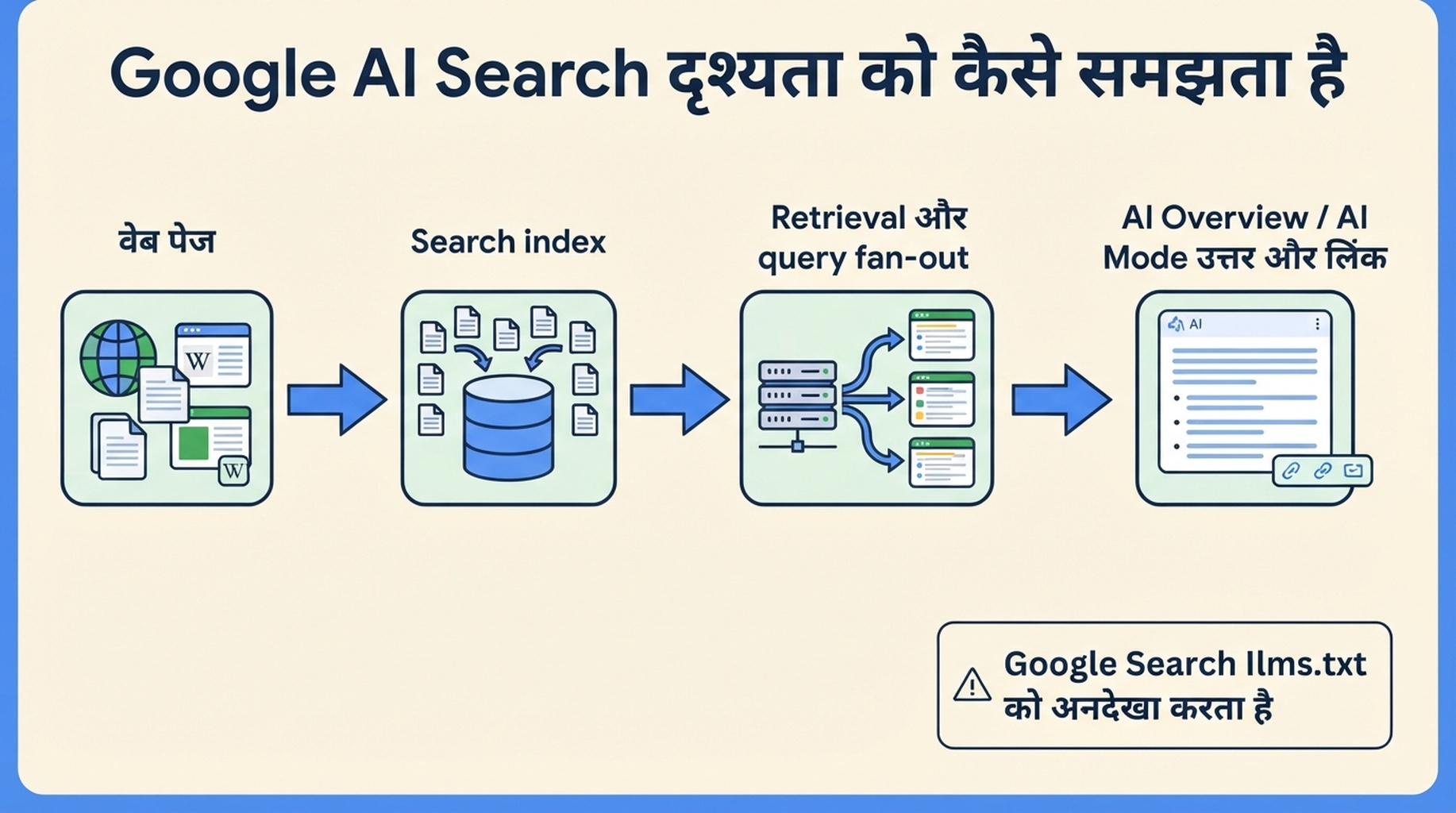
जून 2026 में Google ने क्या स्पष्ट किया
Search Engine Roundtable ने 16 जून 2026 को बताया कि Google ने generative AI features के लिए websites optimize करने वाले अपने guide को update किया है। इस update ने SEO community के एक बहुत practical सवाल का जवाब दिया: क्या sites को Google Search में बेहतर rank करने या AI answers में ज़्यादा दिखने के लिए llms.txt files बनानी चाहिए?
Google का जवाब है: नहीं।
Official guide अब कहता है कि site owners को Google Search में दिखने के लिए, उसके generative AI capabilities सहित, नई machine-readable files, AI text files, markup या Markdown बनाने की ज़रूरत नहीं है। Google यह भी जोड़ता है कि अगर दूसरे services या systems llms.txt या similar files का उपयोग करते हैं, तो उन्हें maintain करना ठीक है; लेकिन वे Google Search में visibility या rankings को न मदद करते हैं, न नुकसान, क्योंकि Google Search उन्हें ignore करता है।
यही उपयोगी बात है। Google यह नहीं कह रहा कि हर AI system इस file को ignore करता है। वह कह रहा है कि Google Search इसे ignore करता है।
llms.txt समर्थकों के लिए असुविधाजनक हिस्सा
llms.txt को large language models के लिए website समझना आसान बनाने के तरीके के रूप में promote किया गया है। विचार साफ-सुथरा है: domain root में markdown-friendly guide रखें, models को अपनी best pages की ओर point करें और crawler confusion कम करें।
Google Search के लिए यह साफ-सुथरा विचार एक सख्त सीमा से टकराता है। Google site owners से कह रहा है कि उसके Search systems इस file को special input के रूप में use नहीं करते।
इसलिए ranking वाला सवाल अभी के लिए settled है:
सवाल | जून 2026 में Google का जवाब | practical meaning |
|---|---|---|
क्या | नहीं | इसे SEO ranking factor की तरह sell न करें। |
क्या यह Google Search visibility को नुकसान पहुँचा सकता है? | नहीं | साफ file अपने आप penalty risk नहीं है। |
क्या Google को AI-only Markdown files चाहिए? | नहीं | Google को normal pages चाहिए जिन्हें वह crawl, render और understand कर सके। |
क्या दूसरे systems | संभव है | इसे Google Search के बाहर optional infrastructure की तरह देखें। |
यह file अभी भी documentation layer के रूप में उपयोगी हो सकती है। बस इसे Google SEO या AI Overview strategy के center में नहीं रखना चाहिए।
Google के अनुसार असल में क्या मायने रखता है
Google का guide llms.txt वाले note से ज़्यादा दिलचस्प है। यह बताता है कि Google generative AI search को कैसे देखता है: यह अब भी core Search ranking और quality systems पर आधारित है।
दो concepts महत्वपूर्ण हैं।
पहला है retrieval-augmented generation, यानी RAG। Google AI answers को Search index से retrieve की गई information पर आधारित बताता है। इसका मतलब है कि पुराना और कभी-कभी boring काम अभी भी मायने रखता है: indexable pages, useful content, good page experience और ऐसी pages जो retrieve किए जाने लायक हों।
दूसरा है query fan-out। Model user के original question के आसपास related queries generate कर सकता है और उन results का उपयोग broader answer support करने के लिए कर सकता है। यहीं बहुत सी SEO teams कम तैयारी करती हैं। एक exact keyword के लिए बनाई गई page उन adjacent questions का जवाब नहीं दे सकती जिन्हें AI system generate करता है।
Practical takeaway: topic और task के लिए लिखें, किसी एक file या एक phrase के लिए नहीं।
Auspia का दृष्टिकोण: llms.txt engine नहीं, sidecar है
Auspia की reading सीधी है: llms.txt "ज़रूरत हो तो ठीक" वाली category में आता है। ज़्यादातर teams AI Search visibility यहाँ नहीं खो रही हैं।
अधिकतर gaps अभी भी site के अंदर हैं:
- Important pages thin, generic या competitor pages जैसी interchangeable हैं।
- Product, service और author facts पूरे site में consistent नहीं हैं।
- Pages headline query का जवाब देती हैं, लेकिन उन follow-up questions का नहीं जिन्हें AI system fan out कर सकता है।
- Structured data मौजूद है, लेकिन visible page वही facts support नहीं करती।
- Teams नई AI files chase करती हैं जबकि crawl, internal linking और page experience problems unresolved रहती हैं।
एक जगह llms.txt उपयोगी हो सकता है: governance artifact के रूप में। अगर आपकी team इसे यह तय करने के लिए use करती है कि कौन से URLs, facts, docs और product explanations canonical होने चाहिए, तो यह editorial discipline ला सकता है। लेकिन value file में नहीं, discipline में है।
अगर आप test करना चाहते हैं कि आपकी site AI Search surfaces के लिए ready है या नहीं, तो base pages check करने के बाद Auspia के AI Search Visibility Checker जैसे diagnostic workflow का उपयोग करें।
SEO और GEO teams के लिए जून 2026 का operating rule
अगली quarter के लिए मैं यह rule use करूँगा: llms.txt तभी publish करें जब core search surfaces healthy हों।
Priority order ऐसा होना चाहिए:
- सुनिश्चित करें कि आपकी important pages crawlable, indexable और internally linked हैं।
- उन pages को improve करें जो original answers की जगह commodity summaries जैसी लगती हैं।
- जहाँ relevant हो, product, local business, ecommerce या organization facts साफ जोड़ें।
- Structured data को existing Search features और rich results eligibility के लिए use करें, magic AI markup की तरह नहीं।
- जब limits चाहिए हों, snippets और previews को Google-supported existing tools से control करें।
llms.txtतभी add करें जब कोई दूसरा system, partner, crawler या internal workflow उसे पढ़ने का real reason रखता हो।
आख़िरी point महत्वपूर्ण है। Real consumer के लिए maintained file और X पर AI crawlers को लेकर अचानक anxiety की वजह से maintained file अलग चीजें हैं।
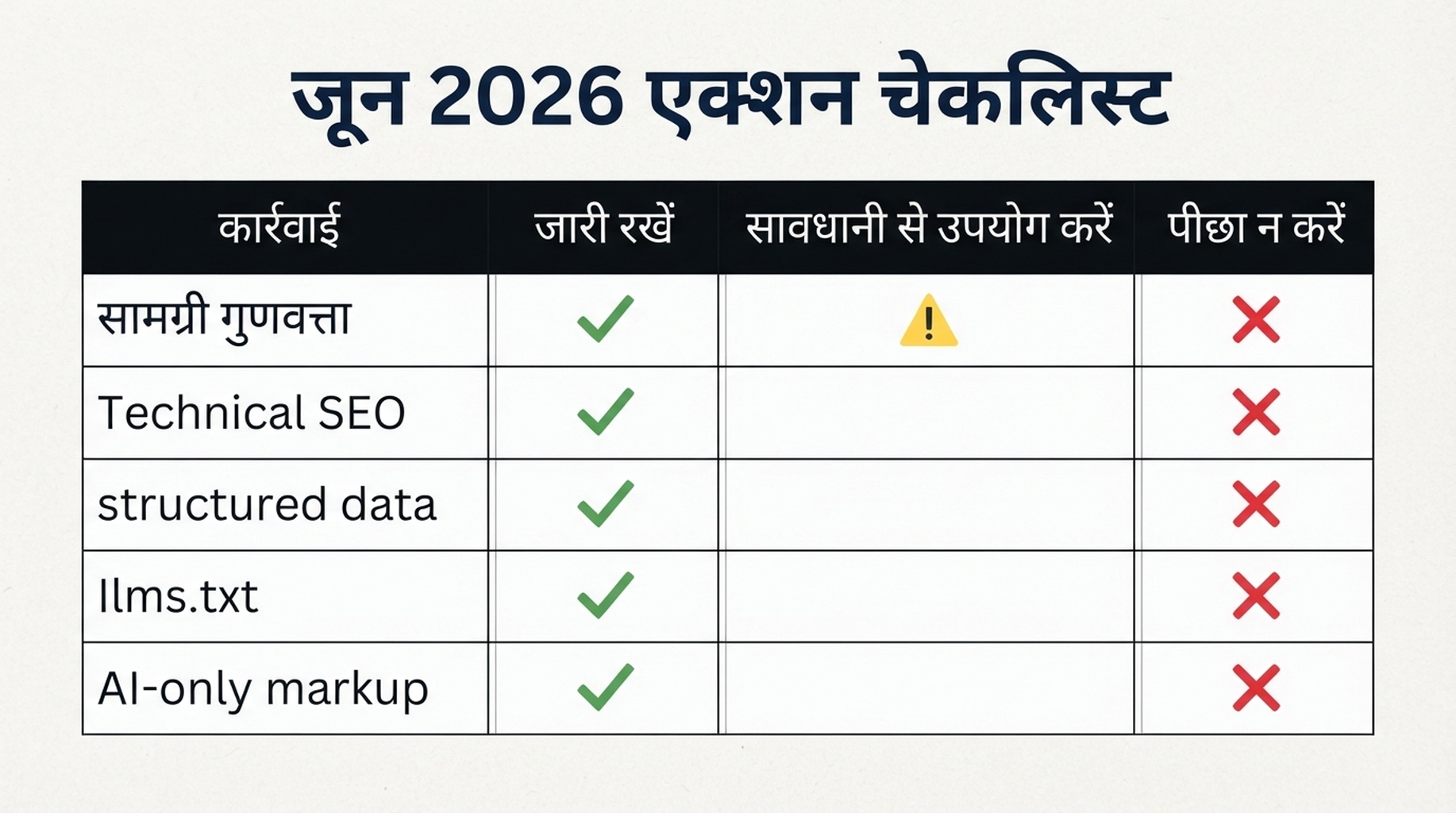
इस update के बाद क्या नहीं करना चाहिए
सबसे खराब reaction hype से सीधे dismissal में चले जाना होगा।
अपनी team से यह न कहें कि llms.txt कोई secret ranking factor है। Google के अनुसार ऐसा नहीं है।
यह भी न कहें कि सारी AI-readable documentation बेकार है। कुछ systems इन files का उपयोग कर सकते हैं, और आपकी अपनी team clarity से benefit ले सकती है।
SEO को "GEO hacks" से replace न करें। Google का guide साफ कहता है कि SEO Google Search के generative AI features पर अब भी लागू होता है। AEO और GEO जैसे terms work organize करने में useful हो सकते हैं, लेकिन Google चाहता है कि tactics को इस आधार पर evaluate किया जाए कि Search वास्तव में कैसे काम करता है।
Fake mentions, filler pages या AI-only markup न बनाएं। अगर visible website weak है, तो machine-readable side file उसे rescue नहीं करेगी।
स्रोत
यह article दो public sources पर आधारित है:
- Google Search Central का official guide, "Optimizing your website for generative AI features on Google Search", जिसे last updated 29 जून 2026 किया गया था।
- Search Engine Roundtable की 16 जून 2026 report, "Google: LLMS.txt Files Won't Help Or Hurt Your Search Rankings", जिसमें Google की clarification cover की गई कि
llms.txtfiles Google Search rankings को न help करती हैं, न hurt।
Search Engine Roundtable article 29 जून 2026 के आसपास wording adjustment का भी उल्लेख करता है। SEO teams के लिए substance वही है: Google Search ranking और visibility के लिए llms.txt को ignore करता है।
Author: Julian Mercer, Auspia में 14-year Technical SEO Practitioner. Julian crawlability, schema, rendering, site architecture और AI-readable content के technical foundations पर लिखते हैं।