


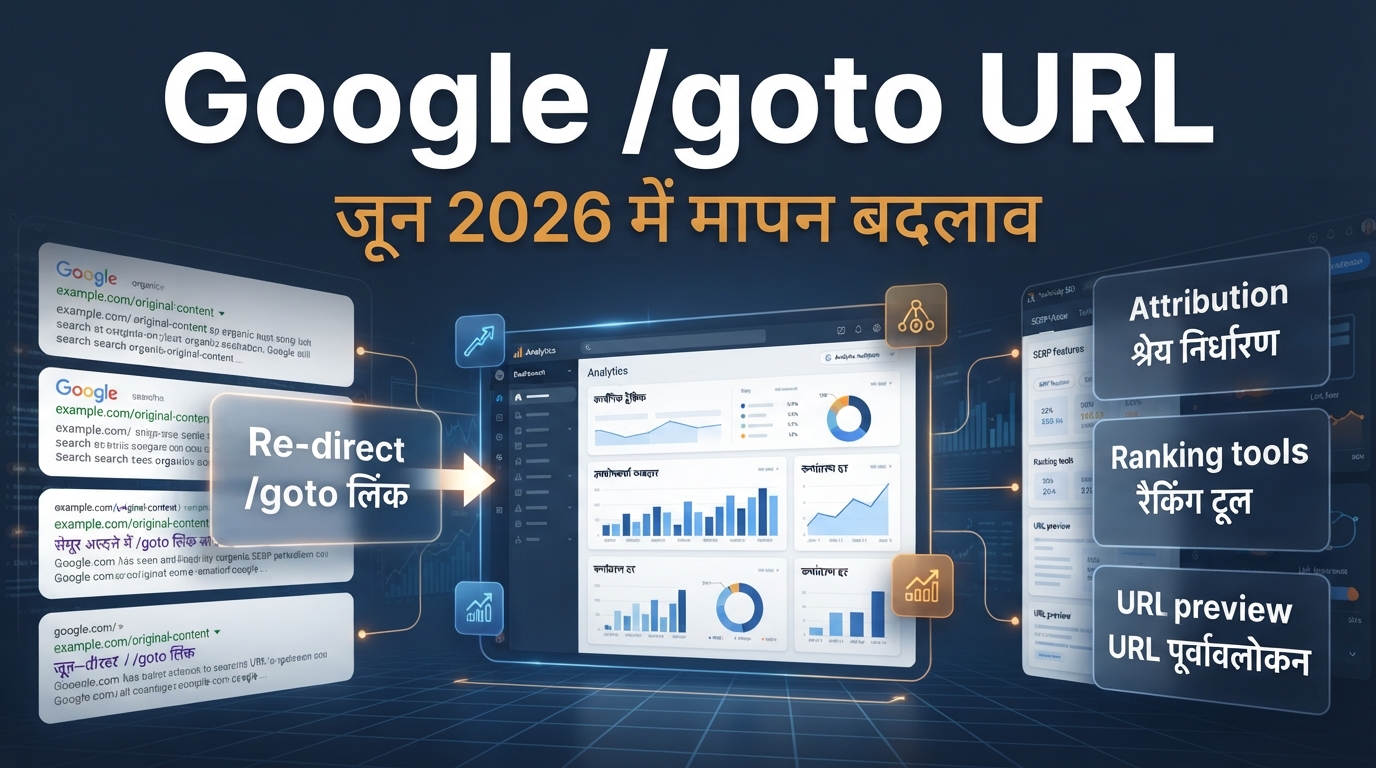
तेज़ निष्कर्ष: Google /goto URL ranking नहीं, measurement बदलते हैं
जून 2026 के अंत में कई SEO observers ने रिपोर्ट किया कि Google Search के कुछ result links, दिखाई गई page पर भेजने से पहले google.com/goto से होकर जा रहे थे। Search Engine Roundtable ने 8 जुलाई 2026 को इन observations को कवर किया और बताया कि यह behavior उस समय व्यापक रूप से reproduce नहीं हो रहा था, इसलिए यह अभी test हो सकता है।
तुरंत असर यह नहीं है कि rankings बदल गईं। जोखिम measurement में है: analytics referrer, SERP collection tools, rank trackers, URL preview habits और click-path diagnostics में अधिक noise आ सकता है यदि Google इस redirect layer को फैलाता है। इसे जून 2026 का monitoring event मानें, pages तुरंत rewrite करने या SEO performance से घबराने का कारण नहीं।
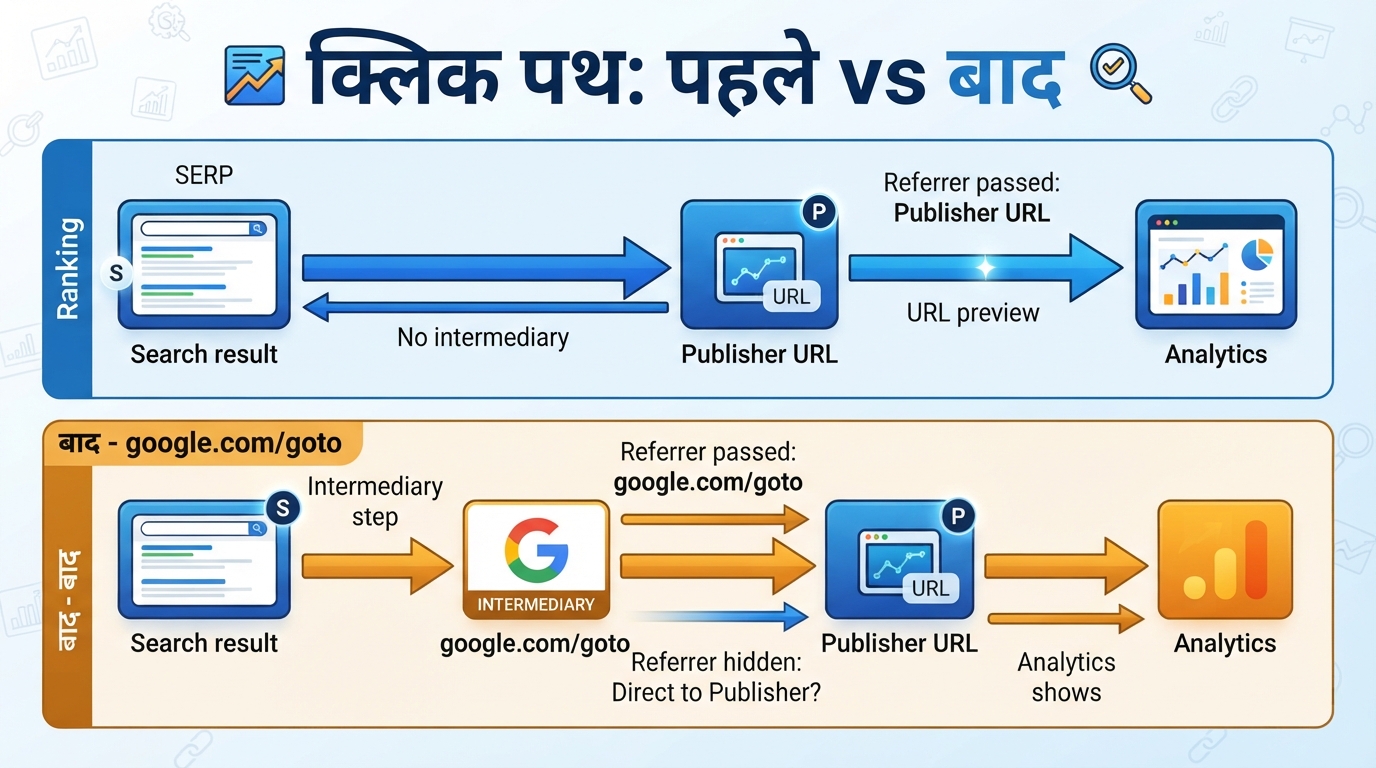
व्यावहारिक बदलाव visible Google result और publisher page के बीच एक नई redirect layer है।
जून 2026 में क्या बदला
Reported pattern सरल है: हर organic click में publisher URL direct destination के रूप में दिखने के बजाय, कुछ result URLs google.com/goto links की तरह दिखते हैं और फिर final page पर redirect करते हैं।
Industry discussion में cited पहली public sightings लगभग 23 जून 2026 से जुड़ी हैं। जुलाई की शुरुआत तक कुछ और SEOs और tool operators ने वही pattern report किया, जबकि कुछ लोग अभी भी उसे reproduce नहीं कर पाए। इसलिए यह confirmed universal rollout नहीं है।
Layer | पहले | जून 2026 में देखा गया test |
|---|---|---|
Visible result | Publisher title, URL, snippet | Publisher title, URL, snippet |
Click behavior | अक्सर publisher URL पर direct | कभी-कभी |
User destination | Publisher page | Redirect के बाद publisher page |
Main uncertainty | सामान्य ranking volatility | Redirect coverage, tracking consistency, tool parsing |
Destination page अब भी load होती है। नया सवाल है कि Google results page और site के बीच signals कैसे record, attribute और interpret होते हैं।
SEO teams के लिए यह क्यों महत्वपूर्ण है
Redirect-wrapper teams के traffic interpretation को बदल सकता है, लेकिन जरूरी नहीं कि Google pages को rank करने का तरीका बदल रहा हो। यह distinction महत्वपूर्ण है।
यदि कोई site जून 2026 के अंत के बाद reporting shift देखती है, तो गलत प्रतिक्रिया होगी कि तुरंत content quality, helpfulness, crawlability या ranking loss को दोष दिया जाए। बेहतर प्रतिक्रिया है यह isolate करना कि measurement layer बदली है या नहीं।
चार groups को ध्यान देना चाहिए: analytics owners जो referrer और landing page rules पर निर्भर हैं; rank tracking और SERP intelligence teams; logs और redirects देखने वाली technical SEO teams; और browser URL preview से trust check करने वाले UX reviewers। SEO, GEO और AI search dashboards में सवाल सिर्फ “हम कहां rank करते हैं?” नहीं, बल्कि “क्या measurement pipeline भरोसेमंद है?” भी होना चाहिए। Auspia का AI Search Visibility Checker Search Console, analytics और SERP tools के साथ answer surfaces में brand और page signals देखने का अलग नजरिया दे सकता है।
पांच जगह जहां measurement टूट सकता है
सबसे बड़ी गलती है मान लेना कि Google organic sessions का click path अदृश्य और irrelevant है। आम तौर पर यह simplification ठीक है। लेकिन जब platform URL mediation बदलता है, तो यह diagnostic risk बन जाता है।
1. Referrer और source attribution
यदि final browser referrer Google ही रहता है, तो अधिकांश analytics platforms Google traffic को सही classify करते रहेंगे। लेकिन custom rules अधिक fragile हैं। ऐसे setups जांचें जो exact URL patterns, intermediate redirects या special campaign handling पर निर्भर हैं।
google / organic में बदलाव बिना Search Console shift, referral/direct/unassigned में वृद्धि, ranking बनाए रखने वाली landing pages पर attributed organic sessions गिरना, और country, browser या device differences देखें।
2. Rank trackers और SERP parsers
Third-party tools result URLs collect करते हैं, final destinations compare करते हैं और suspicious SERPs को discard कर सकते हैं। यदि tool redirect follow और normalize नहीं करता, तो google.com/goto wrapper Google-owned URL जैसा दिख सकता है। यह ranked URL reports, canonical matching, competitor URL extraction, SERP feature classification और historical comparisons को प्रभावित कर सकता है।
3. Log-file interpretation
Server logs आपकी page पर final request record करते हैं, upstream wrappers नहीं। फिर भी teams logs, analytics और ranking exports combine करती हैं। यदि एक source Google-wrapper URLs देखता है और दूसरा normal landing page requests, तो merged dashboard inconsistent हो सकता है। Technical SEO को assumptions document करने चाहिए, differences चुपचाप clean नहीं करने चाहिए।
4. URL preview और user trust
Discussion में एक चिंता URL preview behavior है। कई users click से पहले URL inspect करते हैं, खासकर sensitive verticals में। यदि preview final destination के बजाय Google redirect दिखाता है, तो user को click से पहले कम जानकारी मिलती है। यह कई searches में छोटा मुद्दा हो सकता है, लेकिन finance, health, government, downloads, security और brand-sensitive queries में अधिक महत्वपूर्ण है।
5. Scraper और AI data collection
कुछ practitioners ने अनुमान लगाया कि यह change large-scale SERP scraping या automated extraction को कठिन बना सकता है। यह plausible है, पर confirmed नहीं। सुरक्षित निष्कर्ष यह है कि कोई भी redirect layer collectors को URL resolution, validation और deduplication methods review करने पर मजबूर करती है। कई SEO और AI search tools clean result extraction पर निर्भर हैं।
अभी क्या निष्कर्ष नहीं निकालना चाहिए
Test को overread न करें। कोई public evidence नहीं है कि google.com/goto ranking factor, quality signal या penalty mechanism है। यह मानने का भी कारण नहीं कि wrapper से गुजरने वाली pages अलग तरह से treated हैं।
वर्तमान evidence संकरे conclusions support करता है: Google कुछ search result contexts में redirect-style click URL test या expand कर रहा हो सकता है; कई SEOs ने इसे देखा, लेकिन यह universal नहीं है; near-term impact सबसे अधिक analytics और tool interpretation पर होगा; teams को content, metadata, internal links या technical SEO priorities बदलने से पहले monitor करना चाहिए। यानी यह पहले instrumentation issue है।
इस सप्ताह का monitoring plan
बड़े SEO fire drill की जगह छोटा controlled review करें।
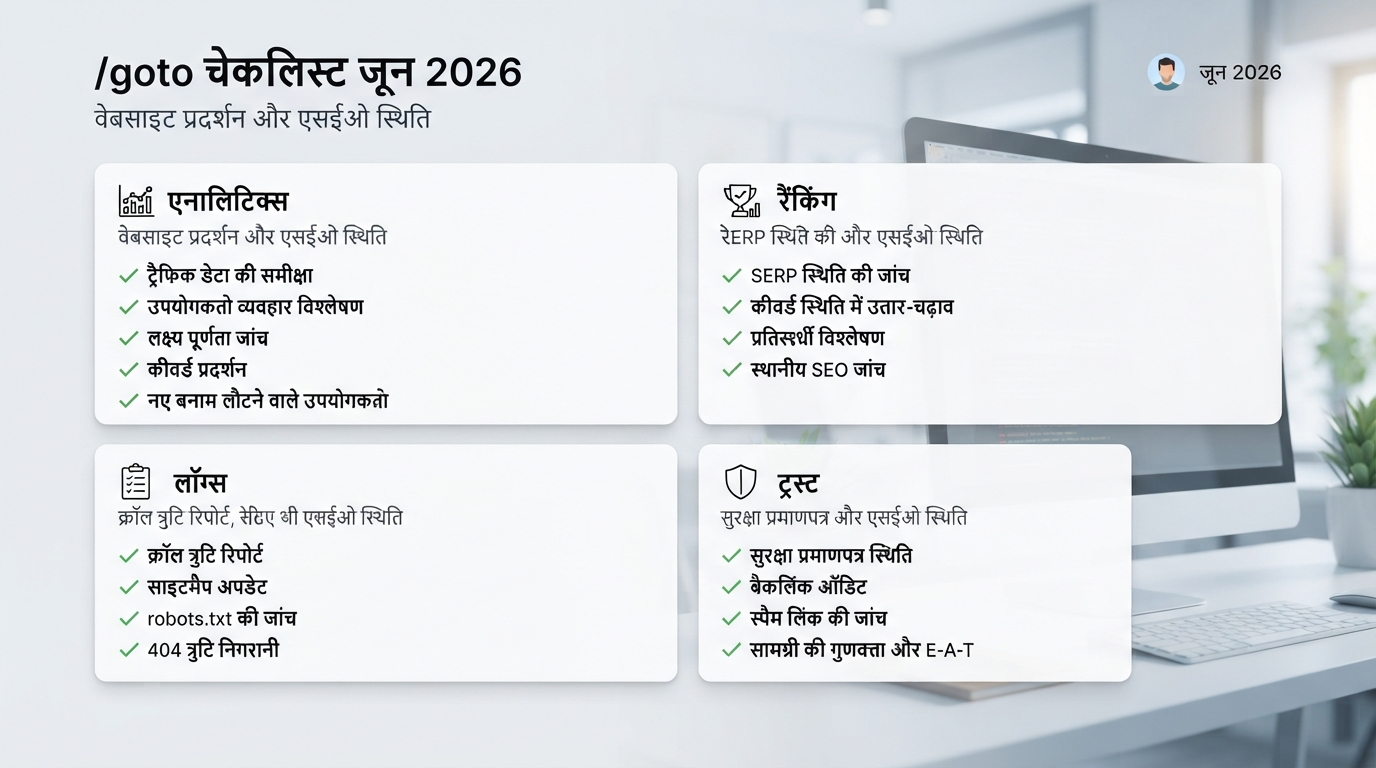
SEO काम बदलने से पहले measurement chain monitor करें।
Step 1: Search Console और analytics compare करें
Google Search Console और analytics platform से same date range निकालें। 15 जून 2026 से current week तक देखें, फिर previous equivalent period से compare करें। ऐसी pages देखें जहां Search Console clicks stable हैं लेकिन organic sessions गिरती हैं; attribution बदलता है पर impressions या average position नहीं; या mismatch केवल specific countries, browsers या devices में दिखता है।
Step 2: vendors से google.com/goto handling पूछें
यदि आप rank tracking, SERP APIs या competitive intelligence tools use करते हैं, सीधे पूछें: “क्या आप ranked URLs report करने से पहले google.com/goto result URLs resolve और normalize करते हैं?” अच्छा जवाब redirect resolution, final URL extraction, canonical matching और failed या unusual SERP captures handling बताएगा।
Step 3: dashboard annotation जोड़ें
यदि आप SEO dashboards maintain करते हैं, late June 2026 annotate करें। Note को confirmed rollout claim नहीं करना चाहिए; इसका काम future interpretation बचाना है: SEO observers ने intermittent Google Search links google.com/goto से routed देखे; organic anomalies interpret करने से पहले attribution और SERP URL normalization check करें।
Step 4: custom attribution rules review करें
Analytics filters, tag manager rules, warehouse models और BI transforms देखें कि क्या वे Google result से publisher page तक simple direct path assume करते हैं। ज्यादातर teams को बदलाव नहीं चाहिए। Custom parsing वाली teams को test करना चाहिए।
Step 5: content work और measurement work अलग रखें
इस test की वजह से content refreshes, technical fixes या AI search optimization projects pause न करें। बस एक potentially noisy week को update success या failure का अकेला proof न बनाएं।
Auspia view: यह search visibility pipeline test है
बड़ी कहानी एक URL pattern नहीं है। Search visibility measurement simple rank-and-click model से दूर जा रहा है। Modern growth teams classic Google rankings, AI Overviews, answer blocks, browser and assistant surfaces, SERP tool collection limits, privacy attribution gaps, citations और AI answers में brand mentions साथ संभालती हैं।
google.com/goto wrapper इसी दिशा में fit बैठता है। यह याद दिलाता है कि visibility work के दो काम हैं: discoverability बढ़ाना और measurement quality बचाना। Mature teams redirect का पीछा नहीं करेंगी; वे data sources, collection method, transformation rules, dashboard assumptions और data-based decisions का साफ measurement map रखेंगी।
Source notes
यह article Search Engine Roundtable की 8 जुलाई 2026 report पर आधारित है, जो google.com/goto tracking URLs पर थी, साथ ही जून के अंत और जुलाई 2026 की शुरुआत की public practitioner sightings पर आधारित है। क्योंकि publishing time पर behavior broadly reproducible नहीं था, ऊपर की recommendations इसे monitored test मानती हैं, confirmed full rollout नहीं।
FAQ
क्या Google ने सभी organic result links को google.com/goto में बदल दिया?
नहीं। 8 जुलाई 2026 industry report के अनुसार behavior कुछ practitioners ने observe किया, पर broad reproducibility नहीं थी। Google जब तक wider rollout confirm न करे, इसे intermittent मानें।
क्या google.com/goto rankings को प्रभावित करता है?
ऐसा कोई evidence नहीं है। संभावित impact tracking, URL extraction और analytics interpretation पर है।
क्या SEO teams को titles, schema या content बदलना चाहिए?
नहीं। यह content optimization signal नहीं है। पहले analytics attribution, SERP tool normalization और dashboard assumptions review करें।
क्या इससे Google Analytics reporting प्रभावित हो सकती है?
कुछ setups पर हो सकती है, खासकर custom attribution rules या reporting pipelines। निष्कर्ष से पहले Search Console clicks और analytics sessions compare करें।
जून 2026 date क्यों महत्वपूर्ण है?
Discussion में cited पहली public sightings लगभग 23 जून 2026 के आसपास आईं। Date mark करने से dashboards annotate होते हैं और measurement changes को normal SEO performance changes से अलग करना आसान होता है।
Author: Sophie Renard, Auspia में AI Search briefing analyst, जो 30+ platforms track करती हैं। Sophie search और AI platform briefs लिखती हैं ताकि growth teams real visibility changes को measurement noise से अलग कर सकें।


