संक्षिप्त बात
2026 में organic growth की सबसे बड़ी डींग सिर्फ यह नहीं होगी कि "हम Google के पहले पेज पर हैं।" असली बात यह होगी: "जब कोई खरीदार AI system से पूछता है कि किन brands पर विचार करना चाहिए, तो हमारा brand सही कारण के साथ जवाब में आता है।"
इसका मतलब यह नहीं कि Google rankings बेकार हो गई हैं। मतलब यह है कि rankings अब पूरा scoreboard नहीं हैं। खरीदार दस blue links देखने से पहले ChatGPT, Perplexity, Gemini, Copilot या किसी AI shopping assistant से बाजार को छोटा करने के लिए कह सकता है। अगर आपका brand उस shortlist में नहीं है, तो खोया हुआ click कभी खोए हुए click के रूप में दर्ज नहीं होगा। Analytics में ऐसा लगेगा कि कुछ हुआ ही नहीं।
@aisearchagency की एक हाल की post ने बात साफ कही: clicks legacy metric बन रहे हैं, और असली लड़ाई यह है कि जब खरीदार options पूछते हैं तो AI आपके brand को recommend करता है या नहीं। मैं इस बात को थोड़ा नरम करूँगा। Clicks मरे नहीं हैं। लेकिन वे downstream हैं। Upstream लड़ाई citation share है: buyer prompts में AI systems आपका brand कितनी बार mention करते हैं, cite करते हैं, compare करते हैं और सही तरह से describe करते हैं।
"First page" की शेखी क्यों कमज़ोर पड़ रही है
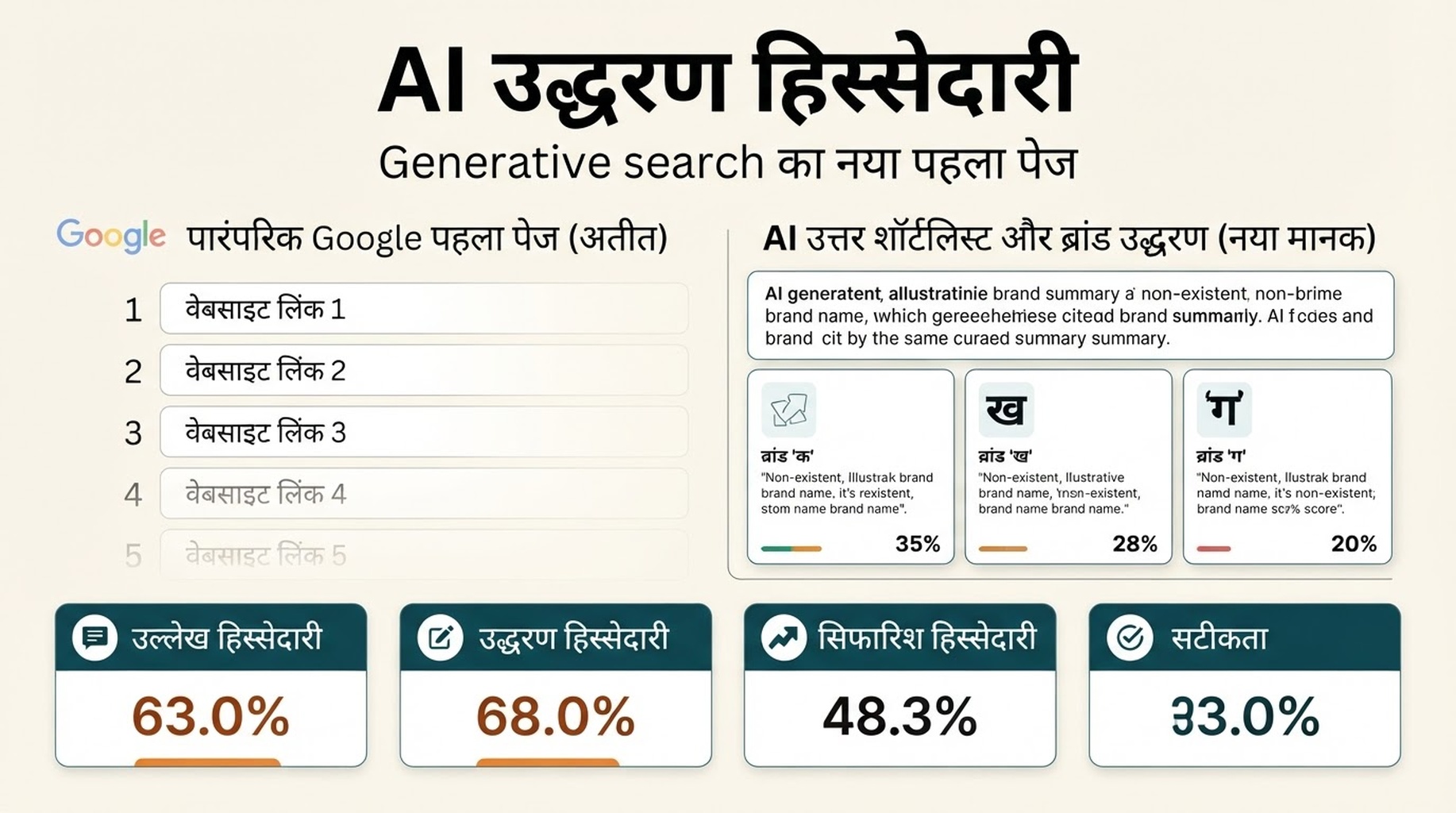
First-page rankings को समझना आसान था क्योंकि interface स्थिर था। खोजकर्ता query लिखता था। Google list दिखाता था। SEO teams position, title relevance, snippets और links के लिए लड़ती थीं।
Generative search उस साफ chain को तोड़ देता है। Interface अब conversation है। Answer में citations हो सकते हैं, नहीं भी हो सकते; brands links के बिना नामित हो सकते हैं; और एक messy market कुछ recommended options में compress हो सकता है। खरीदार का सवाल भी लंबा और ज्यादा commercial हो गया है:
- "एक छोटे SaaS team के लिए AI search visibility track करने वाले best tools कौन से हैं?"
- "200-person healthcare company के लिए कौन से cybersecurity vendors अच्छे हैं?"
- "Strong reporting चाहने वाले B2B startup के लिए HubSpot के alternatives क्या हैं?"
- "अगर clients को read-only access चाहिए तो remote agency कौन सा project management tool इस्तेमाल करे?"
ये prompts classic keywords नहीं हैं। ये buying situations हैं। Answer engine सिर्फ pages retrieve नहीं कर रहा। वह shortlist बना रहा है।
इसीलिए brag बदल गया है। "हम rank करते हैं" अभी भी useful है। "हम buyer की shortlist में recommend होते हैं" ज्यादा useful है।
सबूत: clicks पतले हो रहे हैं, AI referrals बढ़ रहे हैं, और buyer route बदल रहा है
यह बदलाव अंदाज़े पर आधारित नहीं है। तीन data points बताते हैं कि growth teams क्यों ध्यान दे रही हैं।
पहला, Gartner ने February 2024 में predict किया कि AI chatbots और virtual agents conventional search behavior से share लेते हुए traditional search engine volume को 2026 तक 25% घटा देंगे। Forecast size और timing में गलत हो सकते हैं, लेकिन direction ignore करना मुश्किल है: discovery का अधिक काम AI-assisted interfaces में जा रहा है। Source: Gartner, "Search Engine Volume Will Drop 25% by 2026." https://www.gartner.com/en/newsroom/press-releases/2024-02-19-gartner-predicts-search-engine-volume-will-drop-25-percent-by-2026-due-to-ai-chatbots-and-other-virtual-agents
दूसरा, zero-click search बढ़ता जा रहा है। SparkToro के 2024 study ने पाया कि U.S. Google searches के 58.5% और EU Google searches के 59.7% बिना click के खत्म हुए। SparkToro के 2026 update के अनुसार अब Google searches का एक-तिहाई से भी कम हिस्सा open web को click भेजता है। Exact number market, device और query class के अनुसार बदलेगा, लेकिन trend साफ है: कई searches traffic के बिना visibility बनाते हैं। Sources: SparkToro 2024 zero-click study और 2026 update. https://sparktoro.com/blog/2024-zero-click-search-study-for-every-1000-us-google-searches-only-374-clicks-go-to-the-open-web-in-the-eu-its-360/ और https://sparktoro.com/blog/in-2026-less-than-one-third-of-google-searches-still-send-a-click/
तीसरा, AI referrals अब curiosity नहीं रहे। Adobe ने report किया कि generative AI sources से U.S. retail websites पर traffic 2024 से 2025 तक तेज़ी से बढ़ा, जिसमें February 2025 में July 2024 की तुलना में 1,200% increase शामिल था। Adobe की 2025 holiday data ने retail sites पर AI-source traffic में 693.4% year-over-year increase भी दिखाया। Source: Adobe Analytics reports on generative AI traffic. https://blog.adobe.com/en/publish/2025/03/17/adobe-analytics-traffic-to-us-retail-websites-from-generative-ai-sources-jumps-1200-percent और https://business.adobe.com/resources/holiday-shopping-report.html
कुल मिलाकर तस्वीर practical है: search गायब नहीं हो रहा, लेकिन measurement layer ज्यादा messy हो रही है। Buyers अब भी click करते हैं। वे click से पहले पूछते, compare करते, summarize करते और shortlist भी बनाते हैं।
जोड़ने लायक metric: AI citation share
AI citation share यह मापता है कि defined prompt set में AI-generated answers के अंदर आपका brand कितनी बार आता है, और उसी set में total brand mentions या cited sources की तुलना में उसका हिस्सा क्या है।
यह एक metric नहीं, बल्कि metrics का छोटा परिवार है:
Metric | यह क्या जवाब देता है | यह क्यों मायने रखता है |
|---|---|---|
Mention share | Brand का नाम कितनी बार आता है? | Link न होने पर भी shortlist presence मापता है। |
उद्धरण हिस्सेदारी | स्रोत लिंक के साथ brand कितनी बार उद्धृत होता है? | खोजे जा सकने वाले प्रमाण और स्रोत की विश्वसनीयता मापता है। |
Recommendation share | Brand सही buyer situation के लिए कितनी बार recommend होता है? | सिर्फ awareness नहीं, commercial visibility मापता है। |
Attribute accuracy | क्या brand सही describe होता है? | गलत positioning को फैलने से रोकता है। |
Competitor co-mention rate | कौन से brands आपके साथ दिखाई देते हैं? | AI systems आपको किस comparison set में रखते हैं, यह दिखाता है। |
यहीं GEO "LLMs के लिए लिखना" से आगे जाता है। Serious GEO program important buyer prompts define करता है, उन्हें schedule पर run करता है, records रखता है कि कौन से brands appear हुए, cited sources check करता है, और missing evidence fix करता है।
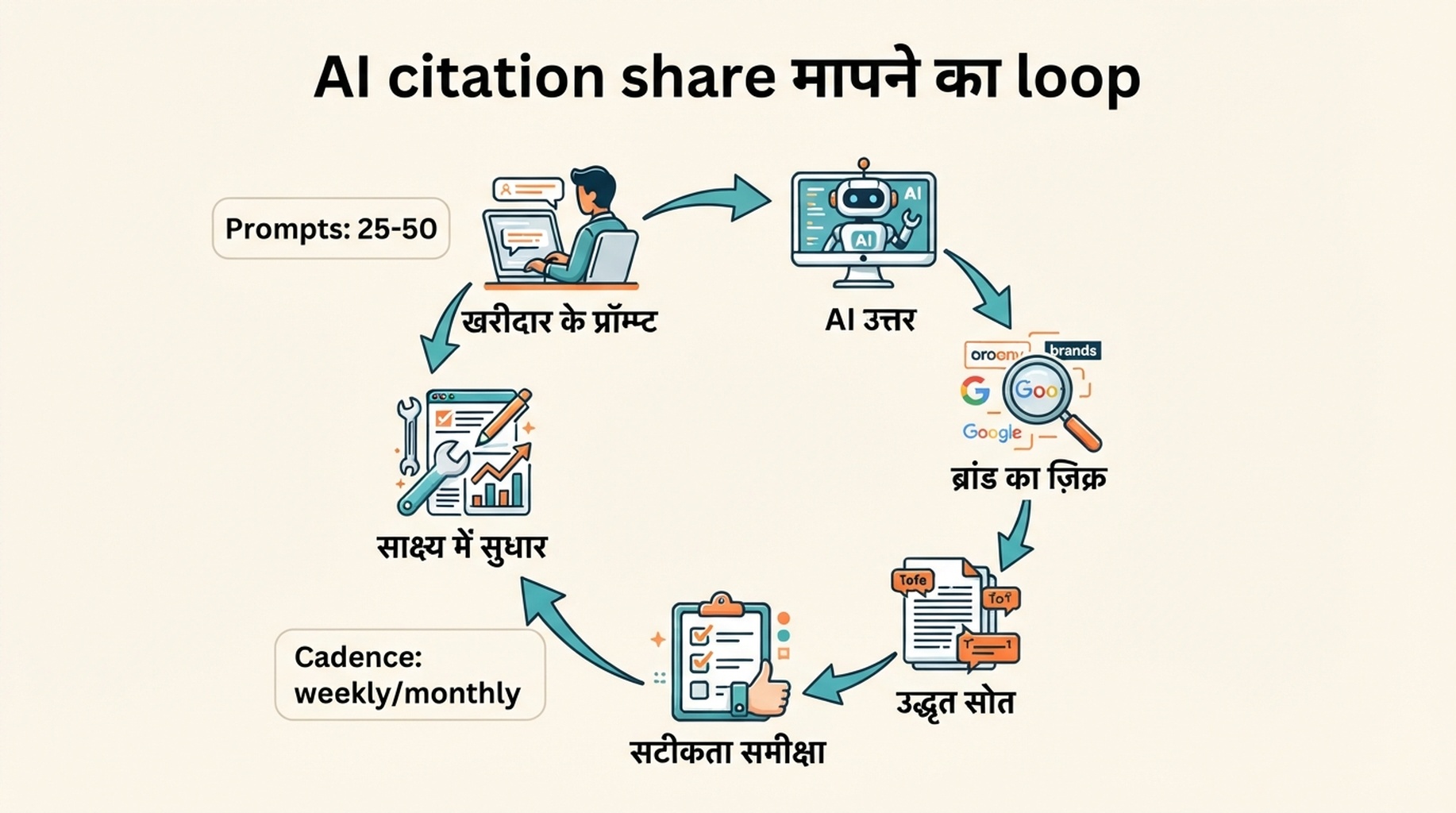
AI citation share तब सुधरता है जब teams buyer prompts मापती हैं, citations inspect करती हैं, evidence repair करती हैं और same prompt set को समय के साथ repeat करती हैं।
AI systems आपको recommend करने से पहले क्या चाहते हैं
ज्यादातर brands recommend होना चाहते हैं, पर खुद को recommend करने योग्य आसान नहीं बनाते।
AI systems clear, repeated और externally supported facts वाले brands को प्राथमिकता देते हैं। इसका मतलब आपकी website important है, लेकिन अकेली input नहीं। आपका brand review sites, comparison pages, documentation, partner pages, marketplaces, customer stories, knowledge panels, social mentions और high-authority articles से shape हो सकता है।
Brand को recommend करना आसान होता है जब public web बिना guess किए इन सवालों का जवाब दे सके:
- Company किस category में है?
- यह किसके लिए best है?
- कौन सी problem solve करती है?
- Close alternatives से कैसे अलग है?
- कौन से use cases, industries, sizes या regions best fit हैं?
- Company के homepage के बाहर कौन सा proof मौजूद है?
- Pricing, integrations, security और support details verify करना आसान है या नहीं?
अगर ये facts vague, scattered या contradictory हैं, तो AI answers brand को skip करेंगे या उसे गलत describe करेंगे।
Classic SEO से बड़े हुए teams के लिए यही uncomfortable part है। आप सिर्फ page optimize नहीं कर सकते। आपको brand के आसपास evidence graph optimize करना होगा।
एक simple prompt set giant dashboard से बेहतर है
Day one पर 500-prompt system की जरूरत नहीं। ऐसे 25 से 50 prompts से शुरू करें जो real buyer situations represent करते हों।
पाँच prompt types इस्तेमाल करें:
Prompt type | Example | क्या inspect करें |
|---|---|---|
Category shortlist | "[audience] के लिए best [category] tools" | आपका brand बिल्कुल appear होता है या नहीं। |
Alternative search | "[use case] के लिए [competitor] alternatives" | AI आपकी competitive lane समझता है या नहीं। |
Problem-led search | "एक [team] [pain] कैसे solve करे?" | Brand solution के रूप में आता है या सिर्फ company के रूप में। |
Criteria-led search | "कौन से tools [feature], [constraint] और [budget] support करते हैं?" | Feature evidence retrievable है या नहीं। |
Risk-led search | "[regulated/high-risk context] के लिए कौन से vendors safe हैं?" | Trust, security और proof visible हैं या नहीं। |
Same set उन AI platforms पर run करें जिन्हें आपके buyers वास्तव में use करते हैं। Answer, citations, brand mentions, competitors और wrong claims record करें। फिर weekly या monthly repeat करें। Goal perfect scientific certainty नहीं है। Goal guessing बंद करना है।
System को game किए बिना citation share कैसे सुधारें
GEO का lazy version है "more AI-friendly content publish करो।" इससे मदद हो सकती है, पर यह बहुत broad है। Citation share तब improve होता है जब answer engine आपको शामिल करने के लिए specific, corroborated reasons find कर सके।
इन fixes से शुरू करें:
- Clear brand facts page बनाएं। Category, audience, core use cases, integrations, pricing model, service regions और differentiators को plain language में लिखें।
- Comparison और alternative pages को insults की जगह decision criteria के आसपास rewrite करें। AI systems को clean distinctions चाहिए, marketing theater नहीं।
- Use-case pages में evidence जोड़ें। Workflows, limitations, screenshots, data, examples और customer-fit notes शामिल करें।
- Documentation crawlable रखें। कई AI answers practical details docs, help centers, API pages और changelogs से लेते हैं।
- Third-party corroboration कमाएँ। Review platforms, partner directories, expert roundups, podcasts और analyst-style pages तब मदद करते हैं जब वे brand को accurately describe करते हैं।
- Inconsistent naming ठीक करें। कई names, पुराने slogans, outdated categories या conflicting product descriptions वाला brand retrieve करना कठिन हो जाता है।
इनमें से कोई भी citation की guarantee नहीं देता। लेकिन यह chance घटाता है कि AI systems public web देखकर तय करें कि आपका brand recommend करने के लिए बहुत unclear है।
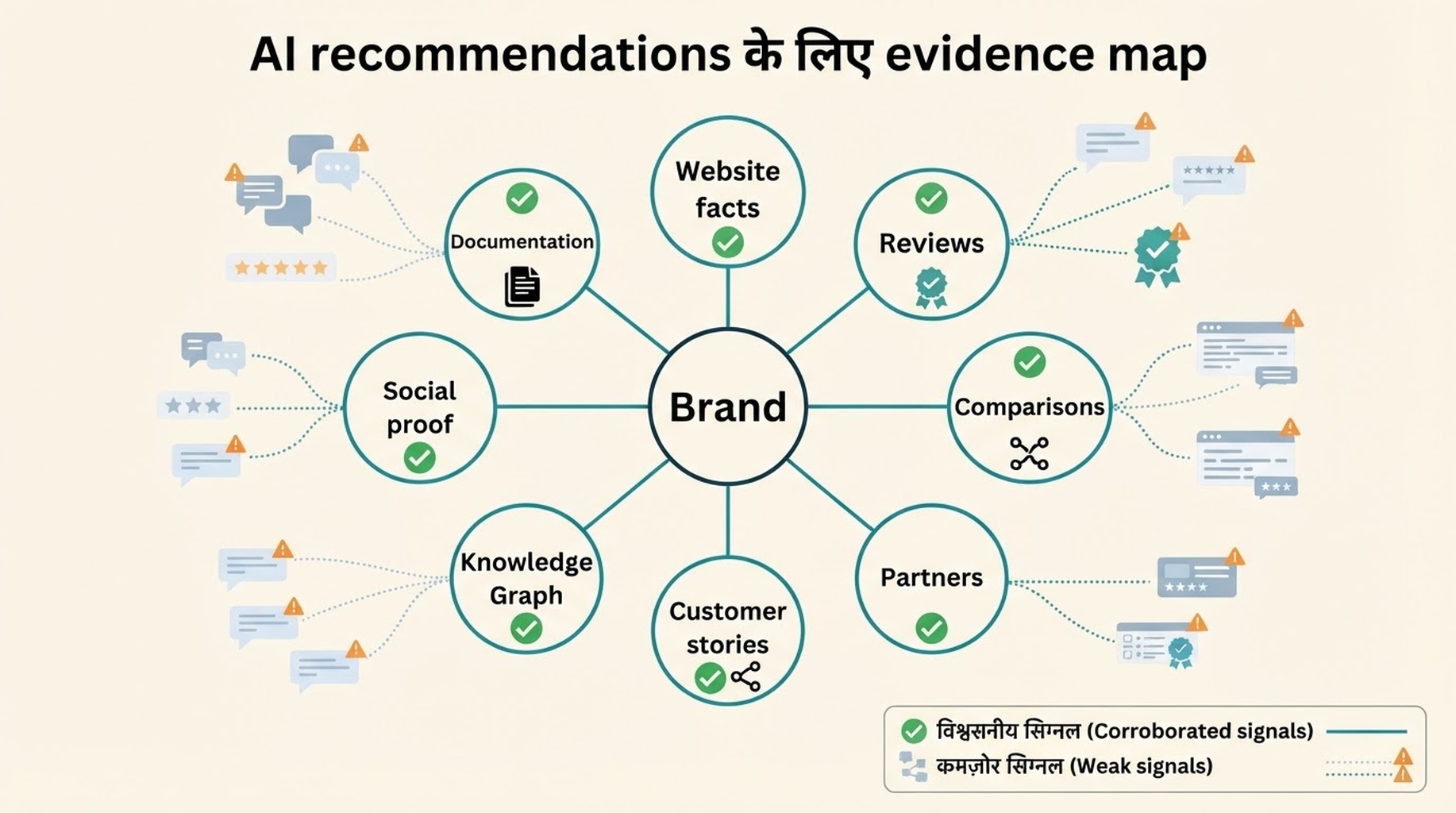
AI recommendation visibility homepage पर नहीं, brand के आसपास corroborated evidence पर निर्भर करती है।
नया bragging-rights dashboard
पुरानी executive slide कहती थी: "हमारे पास 42 page-one rankings हैं।"
बेहतर 2026 slide कहती है:
Question | Report करने वाला metric |
|---|---|
जब buyers recommendations पूछते हैं तो क्या हम present हैं? | Buyer prompts में recommendation share |
क्या हम cited हैं या सिर्फ mentioned? | Citation share और source URLs |
क्या हमें correctly describe किया जा रहा है? | Attribute accuracy score |
क्या हम सही comparison set में appear कर रहे हैं? | Competitor co-mention map |
क्या AI visits अलग तरह से convert होती हैं? | Assisted pipeline, engaged sessions, demo starts या revenue per AI-referred visit |
किस evidence ने answer बदला? | New citations, source changes, content updates के बाद answer changes |
यह SEO reporting को replace नहीं करता। Rankings, indexed pages, organic sessions, leads और revenue रखें। लेकिन इनके ऊपर AI visibility layer जोड़ें।
कारण सरल है: buyer analytics में session दिखने से पहले influence हो सकता है। अगर AI answer तीन vendors recommend करता है और आप उनमें नहीं हैं, तो CRM lost opportunity record नहीं करेगा। आपका search dashboard फिर भी ठीक दिख सकता है।
इस महीने क्या करें
Practical starting point चाहिए तो इसे चार हफ्तों में करें।
सप्ताह 1: buyer prompt set बनाएं। Sales, support और product marketing से interview करें। Demos, comparison calls, customer objections और internal search logs से real phrases लें।
सप्ताह 2: baseline run करें। Prompts को उन AI systems में test करें जिन्हें आपका market use करता है। Answers, citations, recommendations और wrong claims capture करें। Complex dashboard खरीदने से पहले simple spreadsheet इस्तेमाल करें।
सप्ताह 3: प्रमाण सुधारें। वे पाँच prompts चुनें जहाँ अनुपस्थिति सबसे ज्यादा नुकसान देती है। संबंधित pages, स्रोत की स्पष्टता, comparison content, documentation और third-party proof बेहतर करें।
सप्ताह 4: re-run और review करें। Movement देखें, लेकिन एक answer पर overreact न करें। AI responses vary करते हैं। Prompt clusters और repeated runs में patterns measure करें।
तेज़ first pass के लिए AI search visibility audit workflow या Auspia के AI Search Visibility Checker जैसे tool का इस्तेमाल करें जब structured snapshot चाहिए: https://auspia.ai/tools/ai-search-visibility-checker
Auspia का take
"Clicks are legacy" उपयोगी provocation है, लेकिन बहुत final है। Clicks अब भी matter करते हैं क्योंकि businesses visits, trials, demos, revenue और retention पर चलते हैं।
बेहतर rule यह है: clicks अब demand का पहला proof नहीं हैं। AI search में demand answer के अंदर shape हो सकती है, इससे पहले कि user आपकी site visit करे या नहीं। इसलिए citation share, recommendation share और brand accuracy future pipeline के early-warning metrics बन जाते हैं।
2026 का ultimate flex Google छोड़ना नहीं है। Click से पहले answer layer में मौजूद होना है, फिर buyer ready होने पर click earn करने जितना useful होना है।
FAQ
क्या AI citation share SEO ranking जैसा ही है?
नहीं। SEO ranking मापती है कि page traditional search results में कहाँ आता है। AI citation share मापता है कि defined prompt set में generated answers के अंदर brand या source कितनी बार appear करता है।
क्या teams को clicks track करना बंद कर देना चाहिए?
नहीं। Clicks, conversions और revenue track करते रहें। Point यह है कि upstream visibility metrics जोड़ें, क्योंकि AI answers website session शुरू होने से पहले buyers को influence कर सकते हैं।
हमें कौन से AI platforms test करने चाहिए?
उन platforms से शुरू करें जिन्हें आपके buyers use करते हैं। कई B2B teams के लिए इसका मतलब ChatGPT, Perplexity, Gemini, Copilot और Google AI search surfaces है। Ecommerce और local teams को shopping assistants, marketplace assistants और voice interfaces भी test करने पड़ सकते हैं।
Baseline के लिए कितने prompts काफी हैं?
Useful first baseline 25 से 50 prompts से शुरू हो सकता है। Prompts random keywords नहीं, real buyer situations represent करने चाहिए। Expand तभी करें जब पहला set actionable decisions पैदा करे।
क्या हम guarantee कर सकते हैं कि AI systems हमारे brand को cite करेंगे?
नहीं। आप brand facts, evidence, comparisons, documentation और third-party references को retrieve करना आसान बनाकर eligibility improve कर सकते हैं। लेकिन AI system को हर बार cite करने के लिए force नहीं कर सकते।
Author: Ethan Marlowe, GEO Measurement Lead Across 500+ Prompts at Auspia. Ethan growth teams के लिए prompt tracking, citation reporting, visibility dashboards और AI answer quality checks पर लिखते हैं।