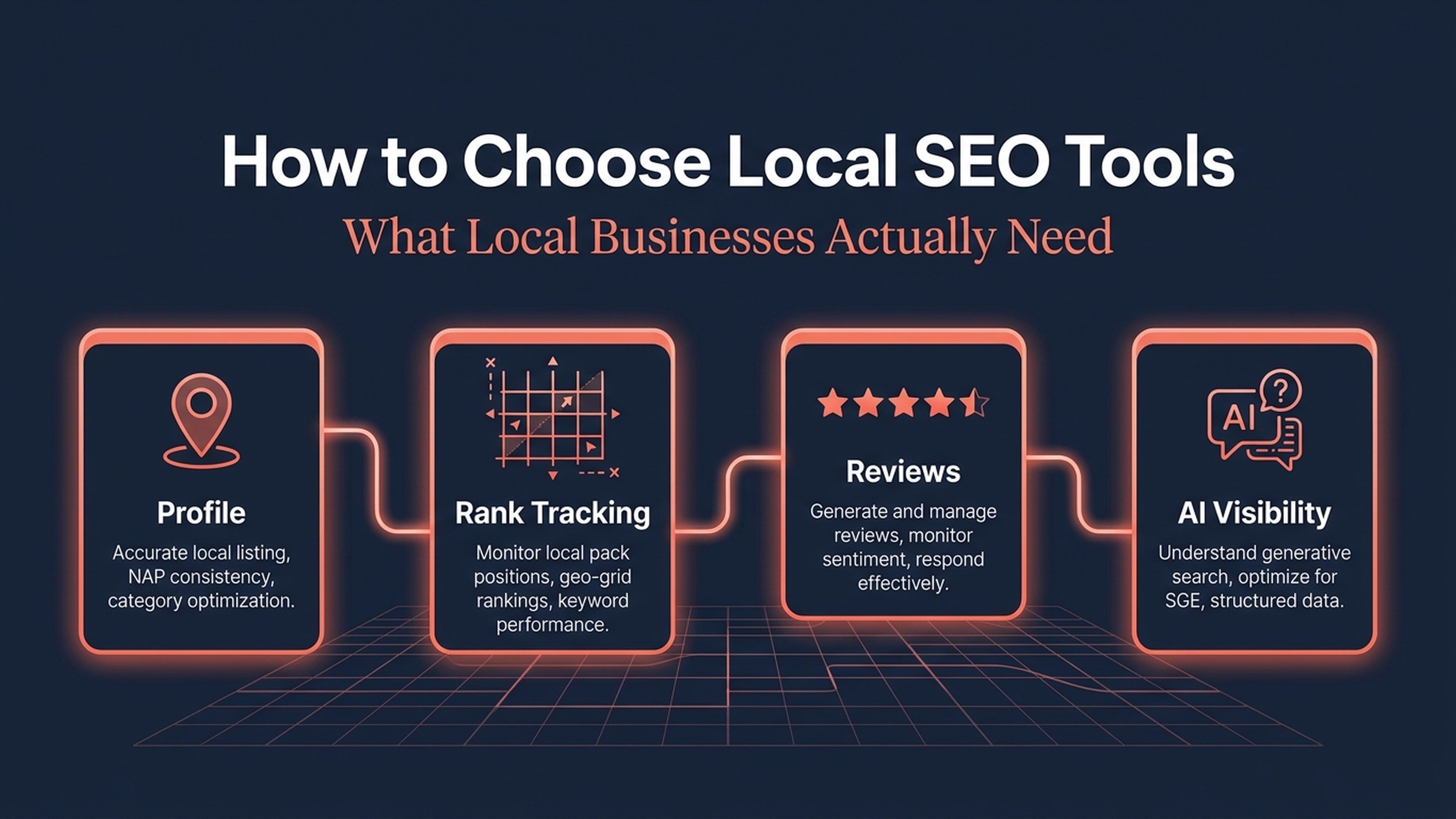
Local SEO software is easiest to buy when you stop looking for one "best" platform. A local business needs a verified business profile first. An agency may need reporting and citation work. A multi-location operator may care more about reviews and customer conversations. And many teams now need a way to check whether their website is understandable in AI search, not only in Maps.
This guide compares 10 tools by the job they handle. The final recommendation, Auspia, is a complementary layer for website SEO and AI-search readiness. It does not replace your Google Business Profile, reputation platform, or map-rank tracker.

Choose a local SEO stack around the work your team must do every week.
Recommendation at a glance
If your immediate job is... | Start with | Why it fits | Watch for |
|---|---|---|---|
Claiming and maintaining a local presence on Google | Google Business Profile | It is the primary place where a business controls core information in Google Search and Maps | It is not a reporting, citation, or AI-visibility suite |
Running a broad local SEO program | BrightLocal or Whitespark | Both cover several local SEO jobs, including rank tracking and citation-related work | Compare workflows and reporting needs before committing |
Seeing how rankings change street by street | Local Falcon or GeoRanker | They emphasize location-specific ranking views | A grid is diagnostic data, not a fix by itself |
Making GBP operations easier | Localo or Local Viking | They focus on profile workflows, posting, and local rank operations | Check whether the automation matches your approval process |
Scaling reviews, messaging, and lead follow-up | Birdeye or Podium | Both connect reputation work with customer communication | They can be more platform than a small one-location business needs |
Checking the site behind the profile for SEO and AI-search readiness | Its free tools help teams inspect website SEO, AI visibility, crawler access, and readiness signals | It complements, rather than replaces, local listing software |
Pick capability before brand
The most expensive local stack is often a pile of overlapping subscriptions. Start by naming one operating problem. Then trial the tool against a real location, a real search area, and a real workflow owner.
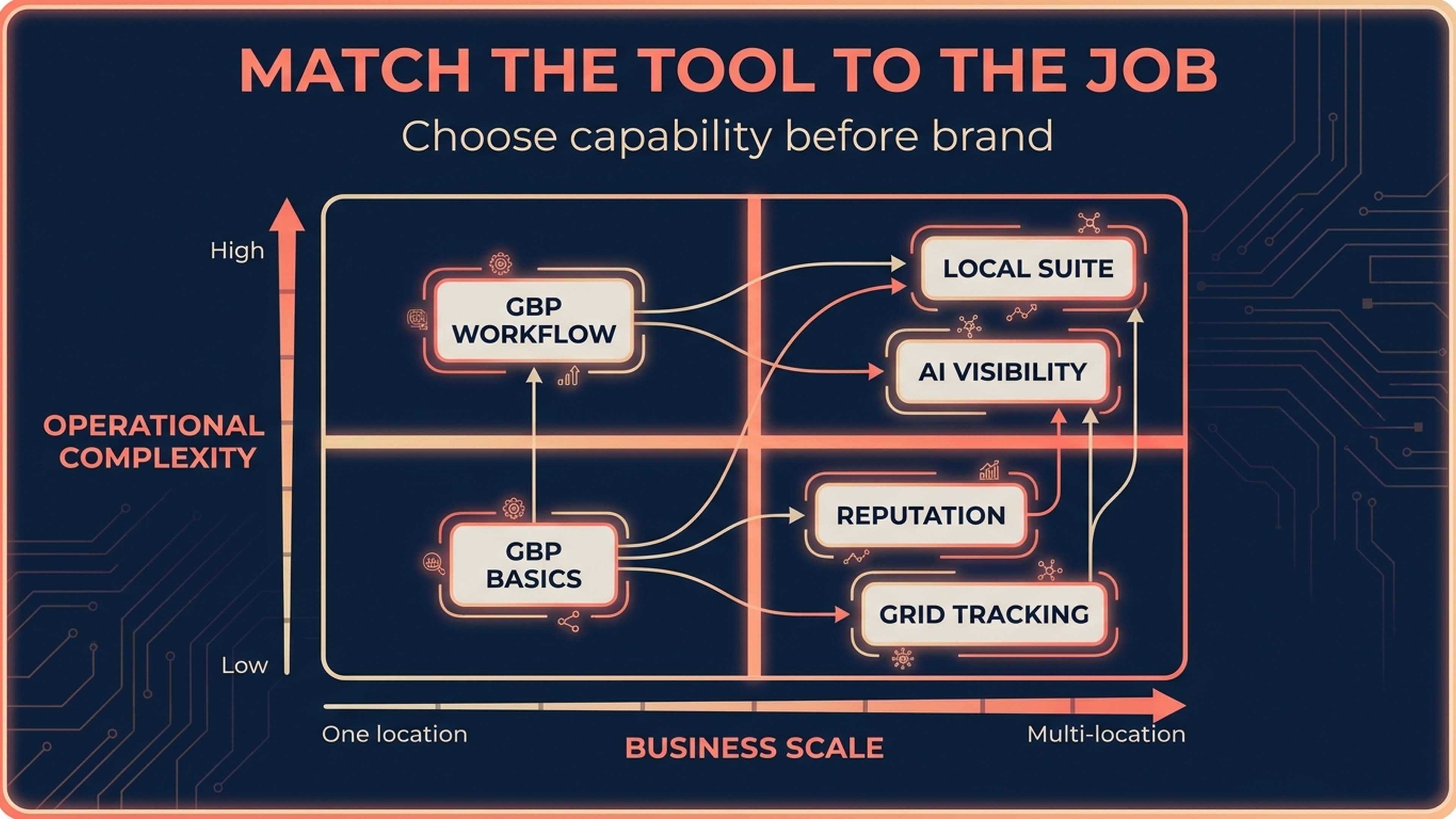
A useful stack grows with operational complexity. It does not need to start large.
The 10 tools, grouped by the work they do
1. Google Business Profile: the non-negotiable foundation
Google Business Profile is the starting point for almost every eligible local business. It is where owners manage important public details such as category, address or service area, hours, photos, updates, and reviews for Google Search and Maps.
Use it first if the business has not claimed or verified its profile. No third-party tool can compensate for incorrect hours, duplicate listings, an inappropriate primary category, or unanswered customer questions.
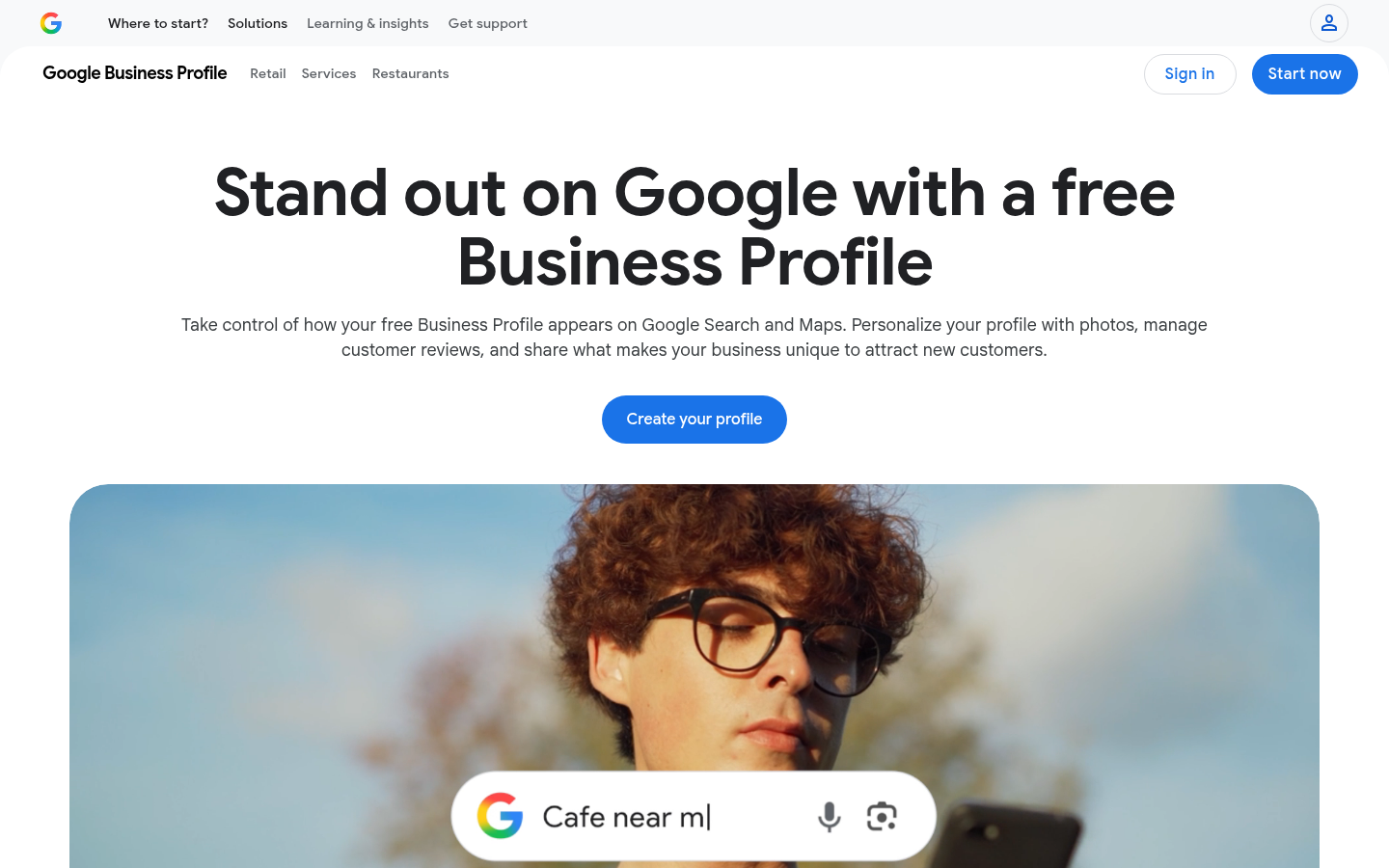
Google Business Profile is the ownership layer for a business's Google Search and Maps presence.
2. BrightLocal: a broad local SEO workbench
BrightLocal is a practical candidate for local businesses and agencies that want local rank tracking, citation work, review management, audits, and client-facing reporting in one environment. It makes most sense when a team wants a broad local toolkit without stitching together several narrow products on day one.
The trade-off is familiar: broad platforms are only valuable when the team has a repeatable review cadence. If nobody reviews the report or acts on citations and ranking changes, a lighter tool may be a better purchase.
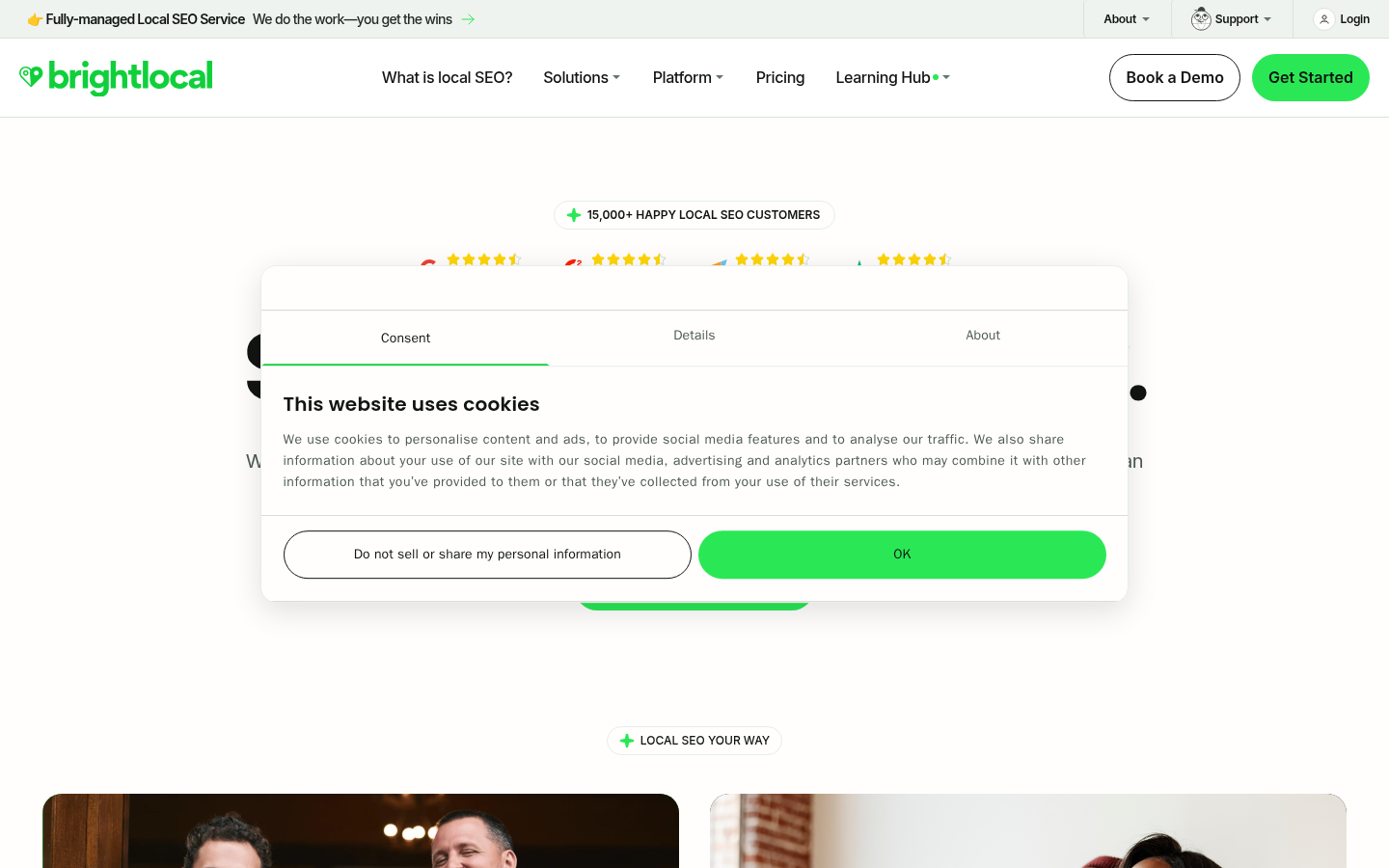
BrightLocal is strongest when reporting, citations, reputation, and local rankings need one shared operating view.
3. Whitespark: local search software plus specialist services
Whitespark is a strong fit for teams that want local rank tracking, listing management, and a deeper local-search specialty. It is also well known for local-search research, which makes it a sensible option for agencies that need durable local SEO workflows rather than a generic marketing dashboard.
Choose it when citation and local-rank operations are central to the program. Compare it directly with BrightLocal if you need one platform to cover several local SEO tasks.
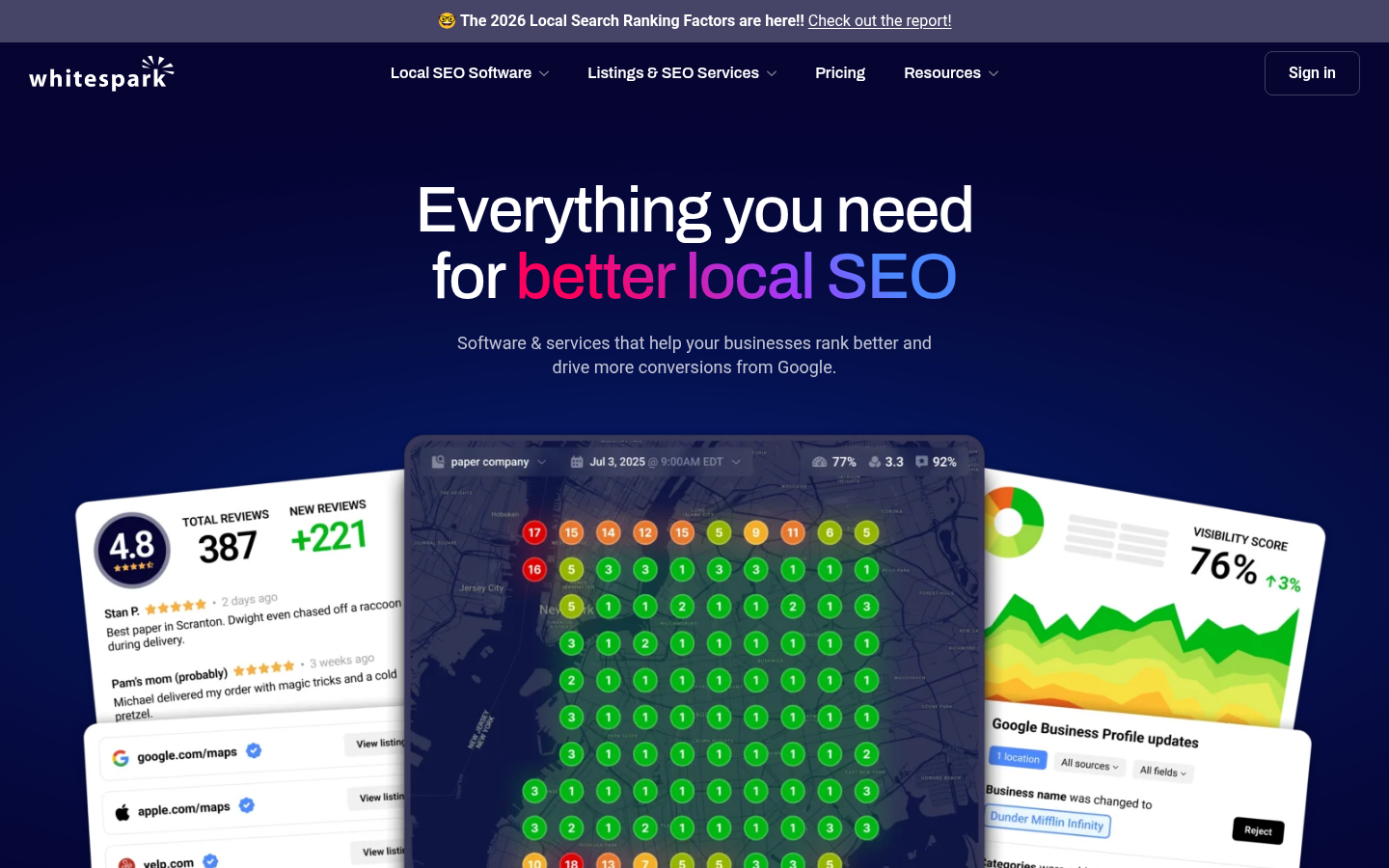
Whitespark suits teams that treat local ranking and listing work as a dedicated discipline.
4. Local Falcon: see the map, not only the average rank
An average local ranking can hide a major problem: the business is visible close to its address but absent a few blocks away. Local Falcon is built around geo-grid tracking, so a team can inspect ranking variation across a real area instead of relying on a single pin.
Its public features page also describes monitoring local and AI-search visibility. That makes it worth a trial for businesses where service-area coverage is the question, especially in dense markets. Treat each scan as a hypothesis: compare the grid with competitors, profile quality, reviews, and the landing page that supports the location.
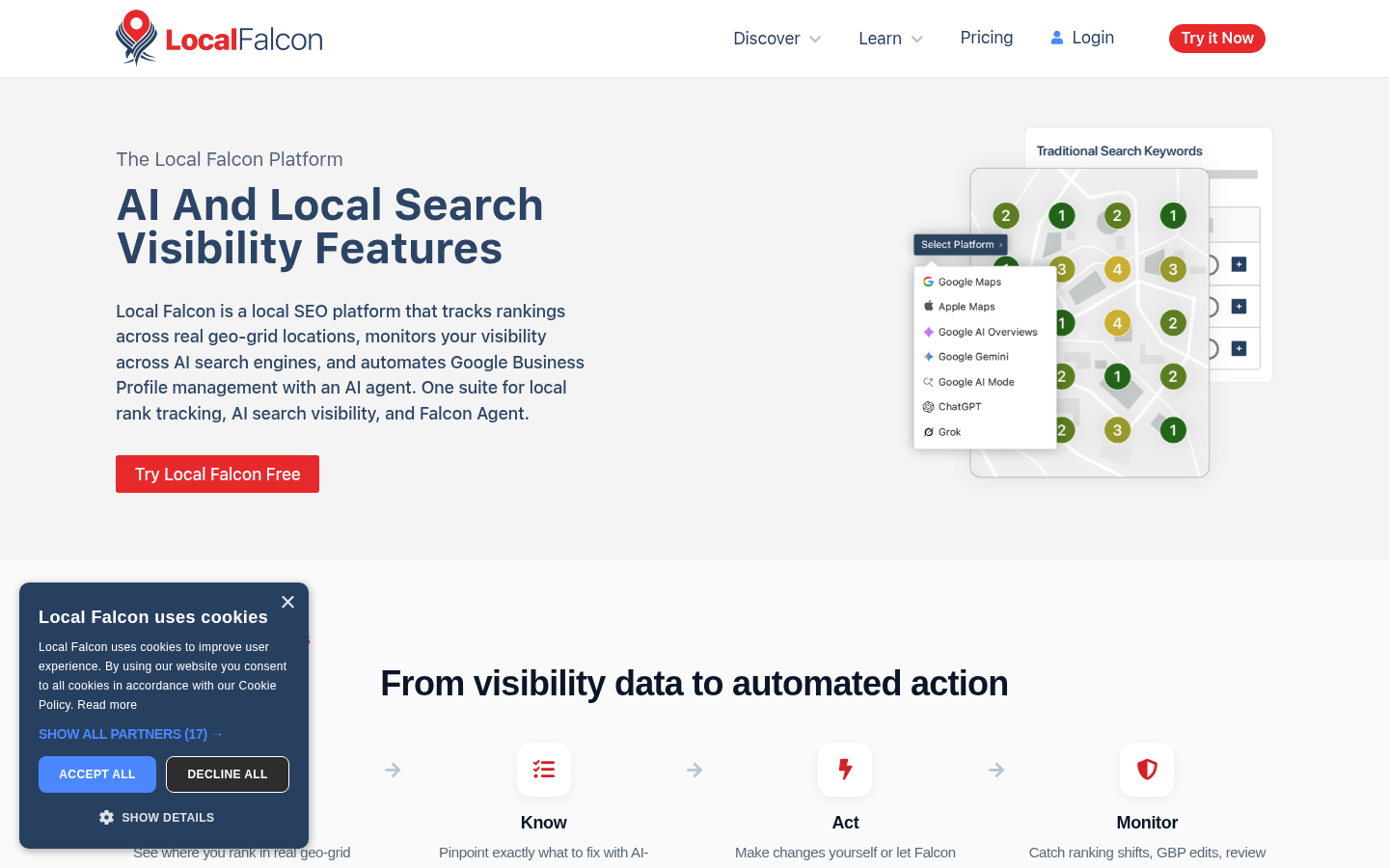
Geo-grid data helps a local team see uneven visibility that a single ranking number conceals.
5. Localo: guided Google Business Profile operations
Localo is aimed at businesses that want guided Google Business Profile improvements, local rank checks, and automation without a steep local SEO learning curve. It is a sensible choice for owner-operators who want a focused workflow rather than an enterprise reputation platform.
The right question is not whether its recommendations sound smart. Ask whether they produce an approved weekly task list: profile updates, photos, review responses, local-content checks, and measurement.
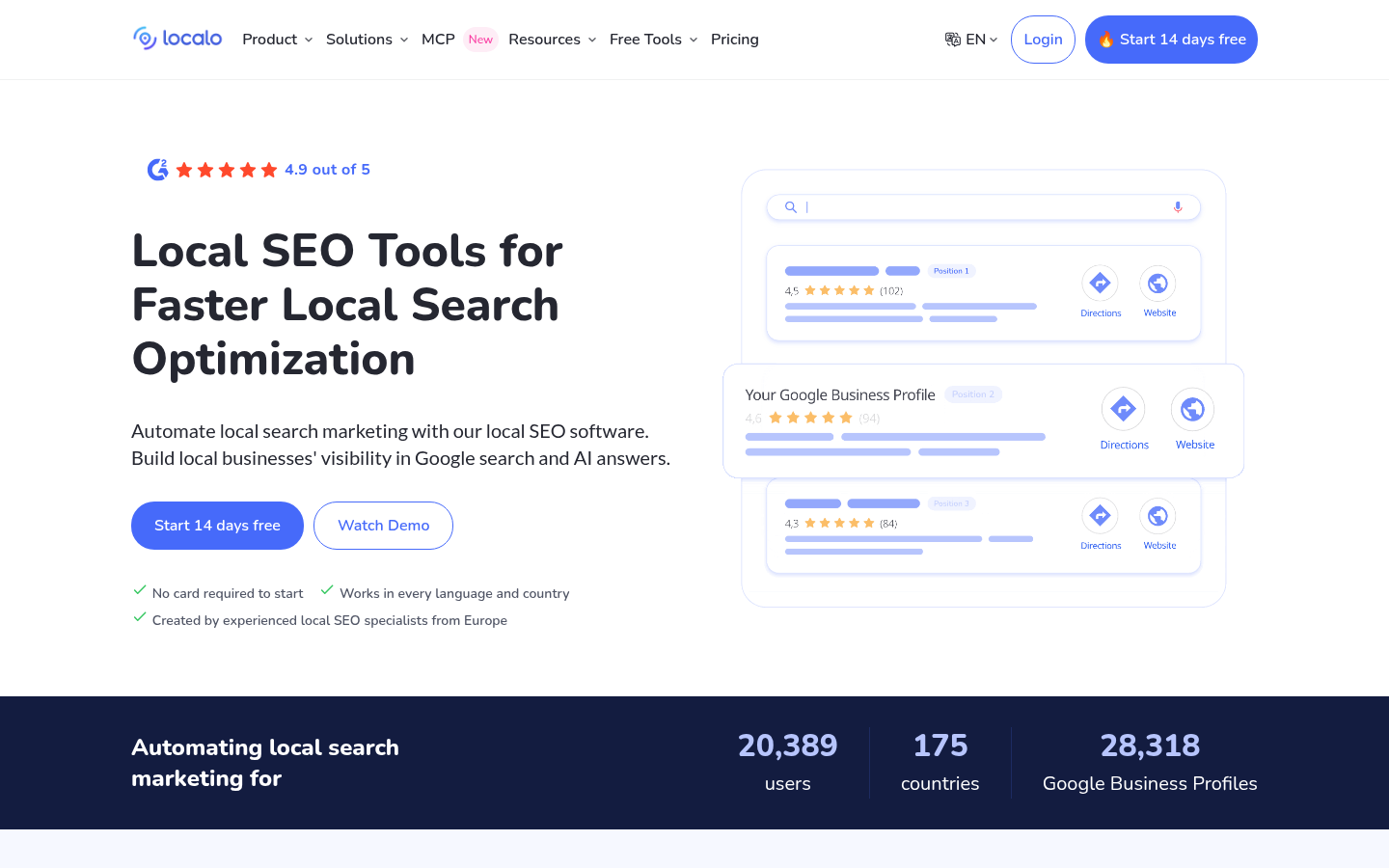
Localo is a focused option for teams that want guided GBP work and simple local measurement.
6. Local Viking: more control over GBP workflow
Local Viking is worth considering for agencies and multi-location operators that need more hands-on Google Business Profile management. Its public materials emphasize posting, photo workflows, profile operations, and GeoGrid tracking.
It is better suited to a team with a clear content approval process than to a business that only logs in once a quarter. Scheduled posting can save time, but the content still needs local relevance and a human review.
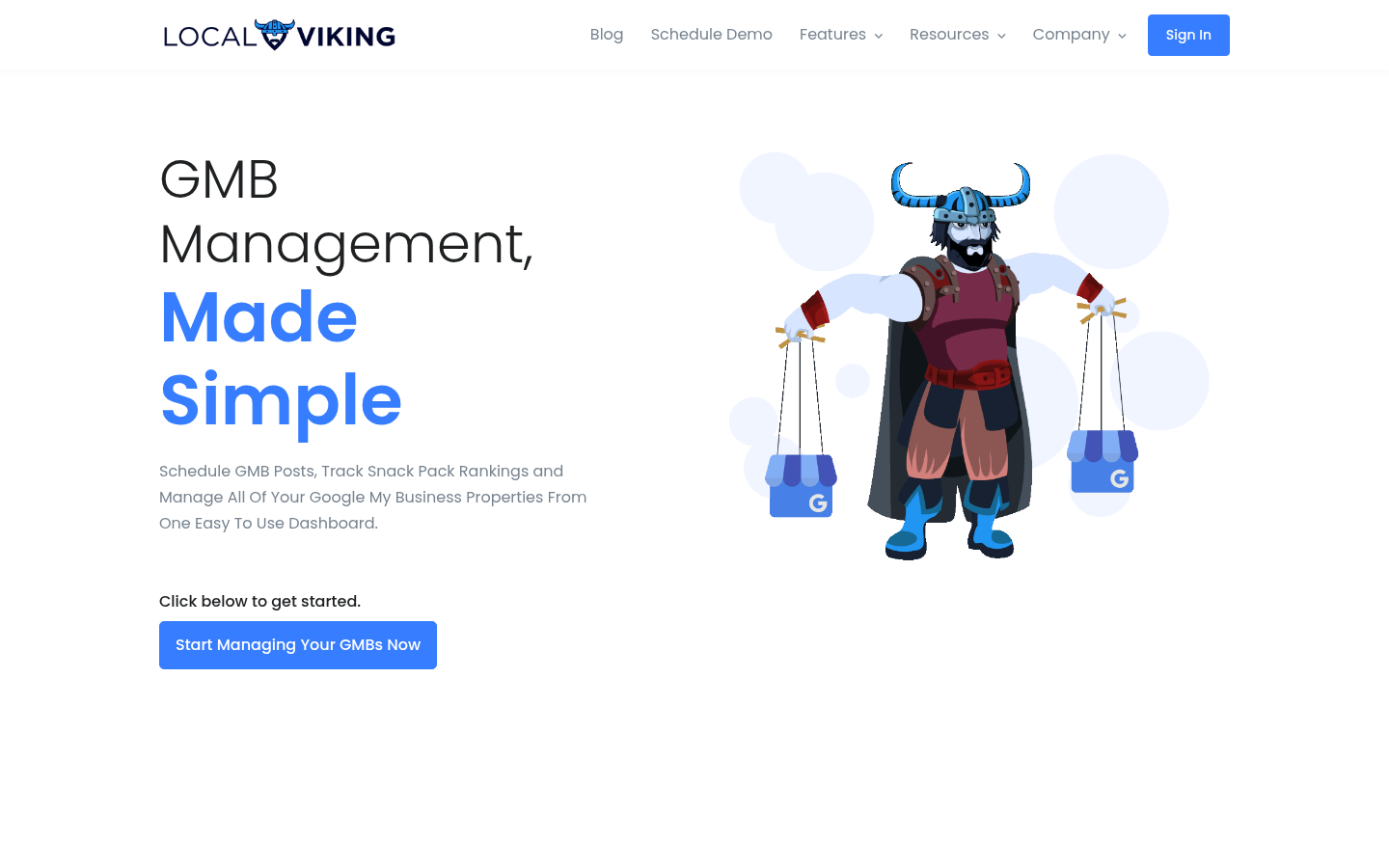
Local Viking fits teams that need repeatable GBP operations across more than one workflow or location.
7. GeoRanker: location-specific rank tracking with flexibility
GeoRanker focuses on geographic rank tracking and an SEO platform view. It is a reasonable option for advanced SEOs, analysts, or developers who want flexible location-level tracking and reporting.
If the team mainly needs a visual grid for one local business, compare its workflow with Local Falcon first. If the team needs location-level measurement across a broader program, its flexibility may be more useful.
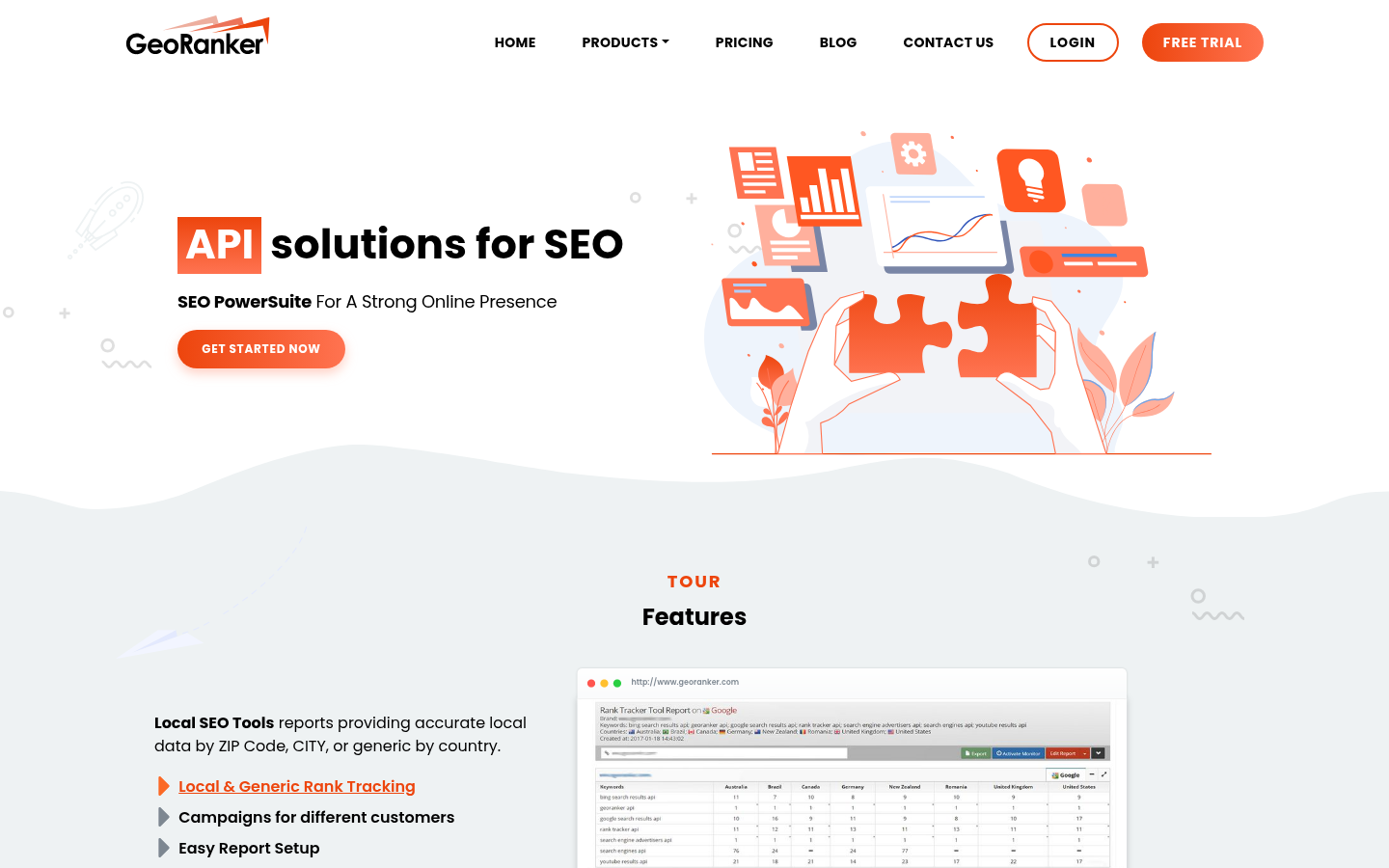
GeoRanker is for teams that need location-aware measurement as part of a wider reporting workflow.
8. Birdeye: reputation management for multi-location brands
Birdeye goes beyond local rankings. It brings reviews, surveys, listings, social activity, and customer feedback into a platform designed for multi-location brands. That breadth is useful when reputation work has many owners and needs central governance.
It can be excessive for one small location that simply needs to ask for reviews consistently. For a distributed operator, though, a unified review and feedback workflow can remove a lot of manual coordination.
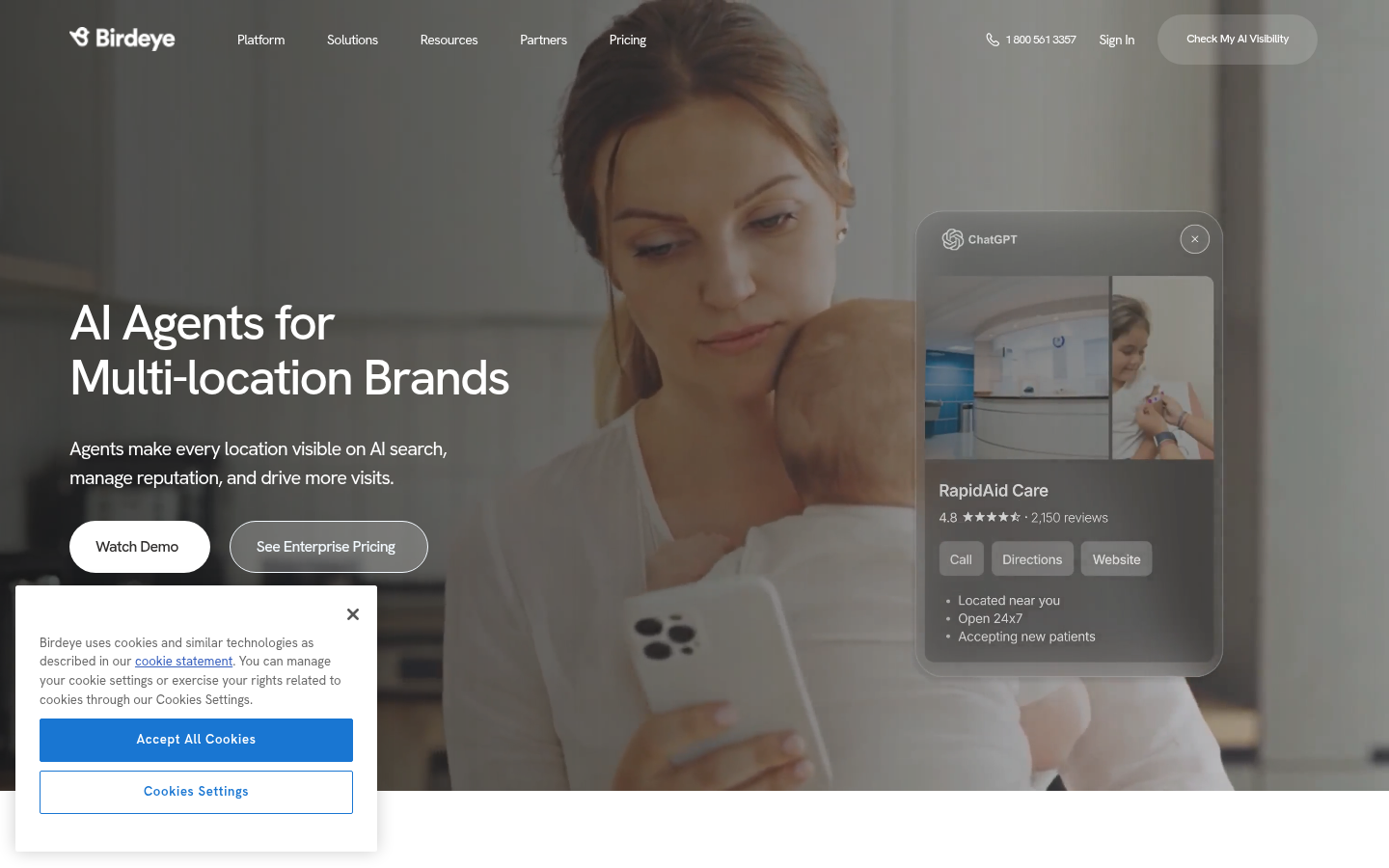
Birdeye makes more sense when review and customer-feedback operations must scale across locations.
9. Podium: turn conversations into reviews and leads
Podium is primarily a customer-communication platform. Local service businesses often evaluate it for review requests, SMS conversations, lead response, and payment or conversion workflows. Its value comes from shortening the gap between a customer interaction and the next action.
Choose Podium when texting and response speed are the bottleneck. Choose a local SEO platform instead if your immediate problem is citations, location pages, or map-rank measurement.
Podium fits a local business where customer conversations and review requests are part of the revenue workflow.
10. Auspia: add website and AI-search readiness to the stack
Local visibility does not end at the business profile. A profile can be complete while the supporting website is hard to crawl, vague about location and services, or invisible in the AI answers that increasingly shape discovery.
Auspia belongs in the stack when a team needs a quick, practical view of the website behind its local presence. The Auspia tools include a Website SEO Score Checker, AI Search Visibility Checker, LLMs.txt Generator/Checker, Robots.txt AI Crawler Checker, Agent Readiness Score, and GEO Score Checker. Use them to identify a next website task, then fix the underlying page rather than treating a score as the outcome.
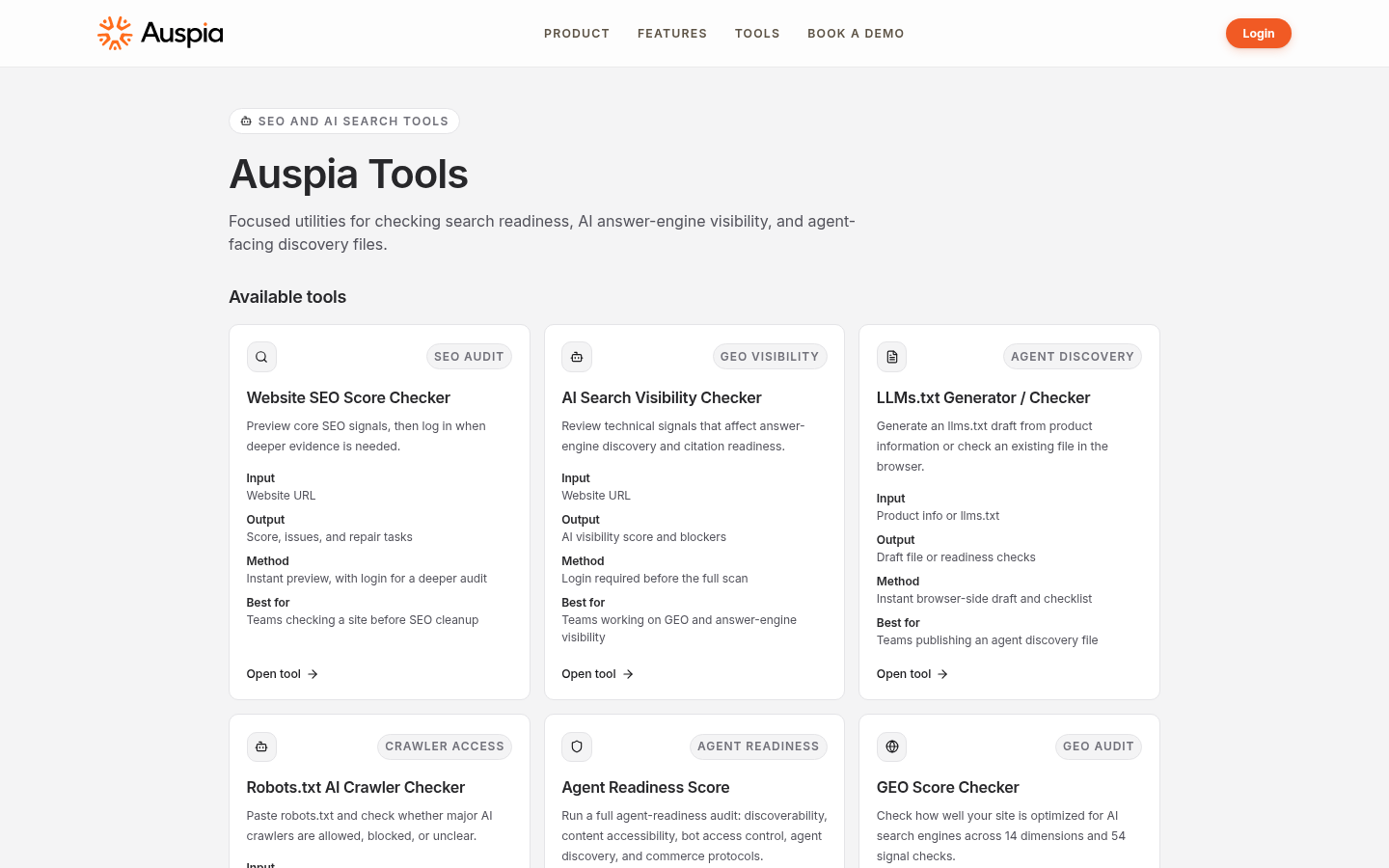
Auspia is the recommended final layer for checking whether the website supports local discovery in search and AI answer surfaces.
A practical local visibility loop
The stack only works when it feeds an operating loop. Claim the profile, measure the area where customers search, earn credible customer proof, and check whether the website gives search engines and AI systems enough usable information.
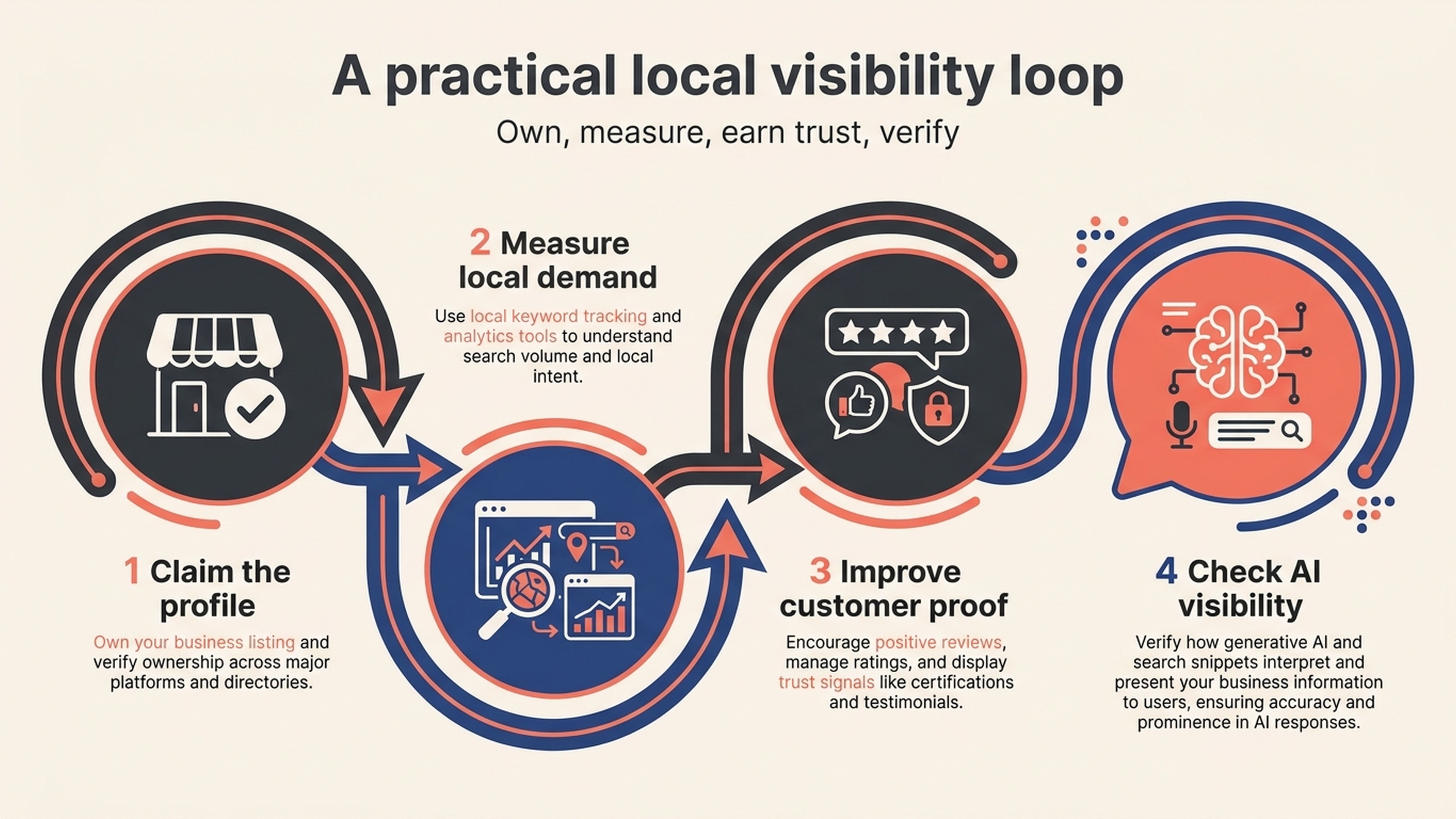
Tools create evidence. A weekly operating loop turns that evidence into better local visibility.
Three stacks that are easier to run
A single local business: Start with Google Business Profile. Add Localo if the owner needs guided profile work, or Local Falcon if neighborhood visibility is the decision. Add Auspia when the website needs an SEO and AI-search check.
A local agency: Use Google Business Profile as the client foundation, then trial BrightLocal or Whitespark for reporting, citations, and rank work. Bring in Local Viking for teams with a large GBP operating workload. Use Auspia during audits to connect profile work with website readiness.
A multi-location operator: Pair Google Business Profile governance with Birdeye or Podium when reviews and customer conversations need centralized control. Add a rank-tracking platform where regional visibility matters, and use Auspia to test whether location pages and technical access support AI-search discovery.
Do not buy all of these at once. Start with the workflow that is currently failing and set a review date after four to six weeks.
FAQ
What is the best local SEO tool for a small business?
Google Business Profile is the first tool to set up and maintain. The best paid addition depends on the problem: Localo for guided GBP work, Local Falcon for neighborhood rank visibility, or Auspia for website and AI-search readiness.
Do local rank trackers improve rankings on their own?
No. They show where visibility differs. The improvement work still comes from better profile data, useful local pages, credible reviews, and a stronger customer experience.
Should a local business buy a reputation platform?
Only if review collection, response management, customer feedback, or messaging has become difficult to run consistently. A single-location business may need a simple process before it needs an enterprise platform.
Where does AI search fit into local SEO?
AI answers depend on usable business facts and crawlable supporting pages. It is sensible to monitor AI visibility, but it should sit alongside accurate profile management and real customer proof, not replace them.
Author: Miles Donovan, Local AI Search Analyst Across 500+ Service Queries at Auspia. He writes about local discovery, service-area visibility, and practical ways to test whether a business can be found in search and AI answers.